
Home battery prices are coming down in 2026, and the drop is becoming hard to ignore. The battery cells inside modern storage systems cost far less than they did a few years ago.
Still, homeowners are not seeing the same dramatic drop on installation quotes.
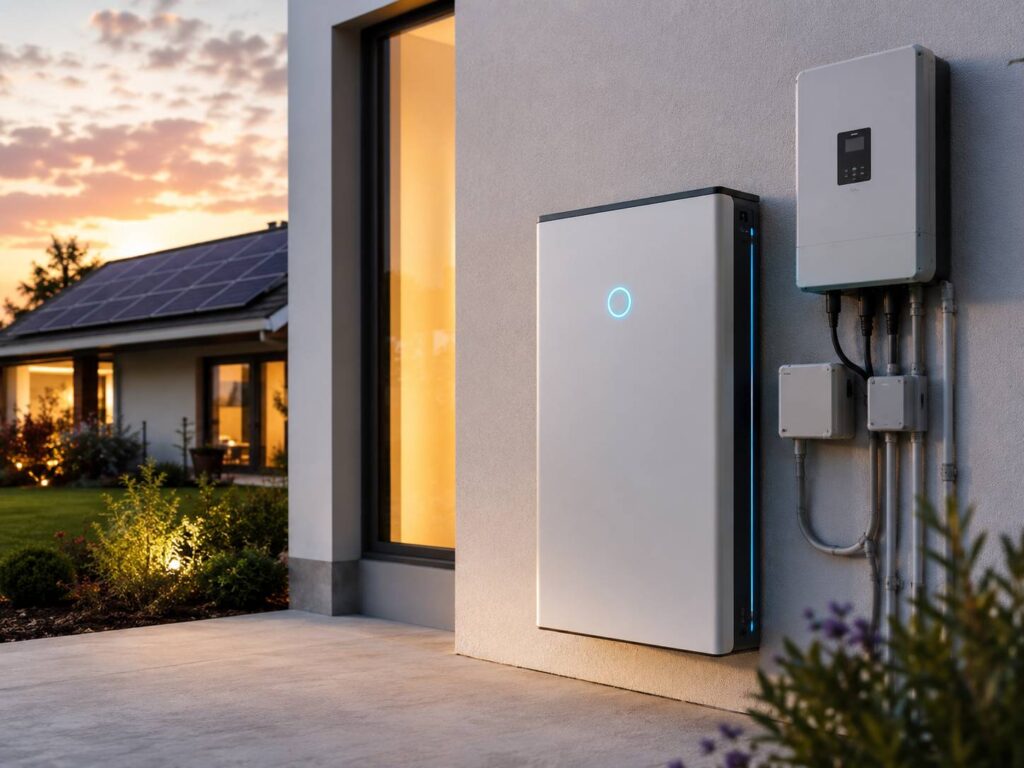
A complete home battery system includes far more than battery cells. You are paying for the inverter, electrical hardware, backup equipment, wiring, permits, labor, inspections, and sometimes a new electrical panel.
That gap explains why headlines about record-low battery prices can sound very different from the quote you get from a local installer.
For homeowners looking at backup power, solar storage, or lower electricity bills, the market is getting more attractive. Yet the final cost still needs a closer look.
How Much Does a Home Battery Cost in 2026?
A typical residential battery installation in the United States still lands around the mid-$15,000 range before local incentives.
That price often covers a system with about 13.5 kWh of storage, which is a common size for residential backup.
The price per usable kilowatt-hour varies quite a bit. Some systems come in below $800 per kWh, and premium installations can reach $1,500 per kWh or more.
Battery capacity matters, but it is only one piece of the bill.
A normal home battery installation can include:
- Battery modules
- Inverter hardware
- Backup gateway
- Electrical wiring
- Circuit modifications
- Installation labor
- Permits
- Inspection fees
- System setup
- Electrical panel upgrades
- Load-management hardware
This is why the retail price of the battery itself rarely tells you what the project will really cost.
A battery advertised at $7,000 can easily become a much more expensive installation once everything else is added.
Why Home Battery Prices Keep Falling
Several changes have pushed battery manufacturing costs lower.
One of the biggest is the rapid shift toward lithium iron phosphate batteries, better known as LFP.
LFP has become the main battery chemistry used in stationary energy storage. It works well for home batteries since weight matters less than it does in an electric car.
That gives manufacturers more freedom to focus on cost, lifespan, thermal stability, and storage capacity.
Manufacturing volume has grown too. Battery companies have built more factories, production has improved, and competition between suppliers has become stronger.
Raw-material prices have moved down from earlier highs as well.
Put those factors together and the result is fairly simple. Battery packs cost less to produce.
Cheaper Cells Do Not Mean Equally Cheap Installations
This is where the numbers can get confusing.
The battery pack represents only part of the cost of a residential storage system.
The installer still needs to connect the battery safely to your home. Electricians still need time to run cables, modify circuits, connect backup equipment, and commission the system.
Local permits and inspections have not suddenly disappeared either.
Older homes can create another expense. A dated electrical panel might need to be replaced or upgraded before a large battery system can be installed.
Equipment often represents roughly half of the complete project cost. Labor, engineering, permits, sales costs, and installer margins make up much of the remaining amount.
So a 20% fall in battery cell prices does not mean your final quote will fall by 20%.
That detail gets missed surprisingly often.
The Federal Tax Credit Changed the Buying Calculation
American homeowners need to pay close attention to incentives in 2026.
The Residential Clean Energy Credit previously covered 30% of qualifying residential clean-energy expenses. Eligible battery storage systems needed at least 3 kWh of capacity.
That federal credit no longer covers expenditures made after December 31, 2025.
The difference can be substantial.
Take a $15,000 battery installation.
A 30% credit was worth:
$15,000 × 0.30 = $4,500
That reduced the effective cost to:
$15,000 – $4,500 = $10,500
Now compare that with a newer battery installation priced at $13,000.
The equipment may be cheaper, yet the homeowner can still pay more out of pocket without the old federal credit.
State incentives and utility programs can still make a big difference. Some utilities pay battery owners for joining virtual power plant programs. Others provide rebates or incentives for reducing electricity demand during peak periods.
Check your local programs before deciding whether a quote is expensive or competitive.
Tariffs Can Slow Down Price Drops
The global price of batteries and the retail price paid by American homeowners do not always move in the same direction.
Trade policy is one reason.
The United States scheduled a 25% Section 301 tariff rate on certain lithium-ion batteries imported from China starting in 2026.
That does not mean every residential battery suddenly costs 25% more.
The impact varies with manufacturing location, product classification, supply contracts, assembly location, and the parts used inside each system.
Still, tariffs can absorb part of the savings created by cheaper cells.
So manufacturers might be paying less for battery technology, yet homeowners can see a smaller price reduction at the retail level.
Bigger Batteries Are Starting to Make More Sense
Falling battery costs are changing the way homeowners think about backup systems.
A few years ago, many installations focused on keeping only a handful of important circuits alive.
That usually meant the refrigerator, Wi-Fi router, lights, outlets, and perhaps a home office.
Larger storage systems make whole-home backup more realistic.
Depending on system size and power output, modern batteries can support:
- Air conditioning
- Heat pumps
- Well pumps
- Refrigerators
- Freezers
- Electric cooking
- Home office equipment
- Garage doors
- Selected EV charging
There is one important catch.
Battery capacity and battery power are not the same thing.
Capacity is measured in kilowatt-hours, or kWh. It tells you how much energy the battery can store.
Power is measured in kilowatts, or kW. It tells you how much electricity the battery can supply at one time.
A large battery with limited power output can still struggle with several heavy appliances running together.
That makes both numbers important.
Solar Changes the Value of a Home Battery
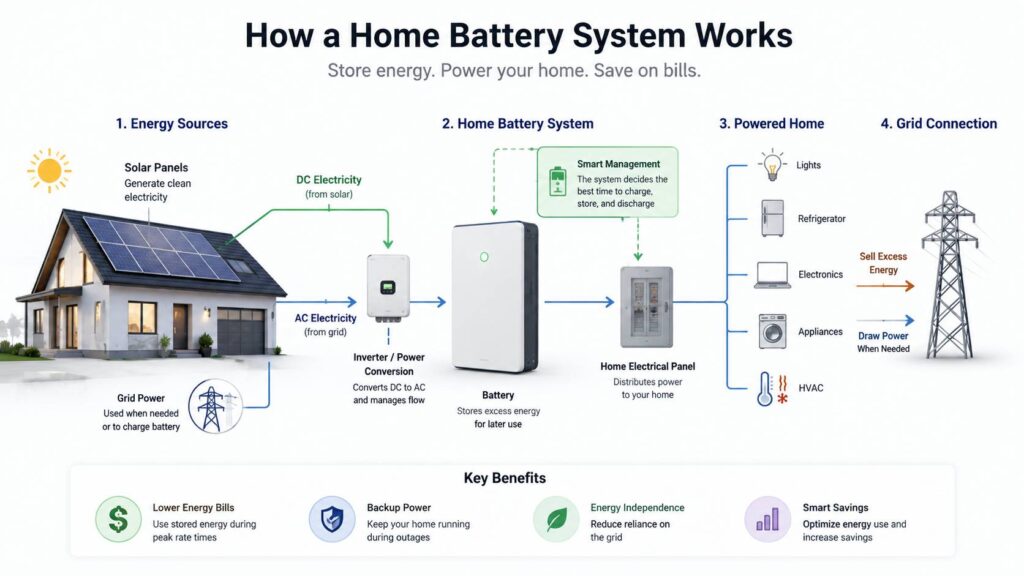
You do not need solar panels to install a home battery.
A standalone system can charge from the grid and provide backup power during an outage. Some electricity plans can make grid charging useful too.
For example, a homeowner can charge the battery during cheaper off-peak hours and use that stored energy when electricity prices rise.
Solar adds another layer.
Panels can recharge the battery during a prolonged outage, depending on available sunlight and system design. They can also fill the battery during the day so the stored electricity can be used in the evening.
That setup can become more attractive in areas where utilities pay little for excess solar energy sent back to the grid.
Instead of exporting cheap electricity, the homeowner stores more of it and uses it later.
Still, a battery does not automatically make every solar system a better financial deal.
Electricity prices, solar export rates, installation costs, battery lifespan, and local incentives all change the result.
Should You Wait for Home Battery Prices to Fall More?
This is probably the hardest part of the buying decision.
Battery manufacturing costs still have room to fall. Residential storage technology is improving, and competition continues to push prices down.
Yet waiting does not guarantee a better deal.
A cheaper battery next year can be offset by higher labor costs, new tariffs, weaker incentives, or higher installation charges.
Consumer technology often creates the same buy-now-or-wait problem. Buyers following other fast-changing categories can see a similar pattern in coverage such as more iOS 27 features are coming this fall, where timing matters almost as much as the product itself.
For home batteries, the better choice is to judge the full project rather than focusing on the hardware price alone.
Get several quotes and compare the complete installation.
Look closely at:
- Total installed price
- Usable battery capacity
- Cost per usable kWh
- Continuous power output
- Peak power output
- Warranty length
- Capacity retention terms
- Backup features
- Solar compatibility
- Generator compatibility
- Expansion options
- Electrical upgrade costs
- Local incentives
Safety deserves attention too.
Residential battery systems need to meet local electrical and fire-safety rules. Reputable systems commonly rely on certifications and standards such as UL 9540, UL 9540A, and NFPA 855 requirements where applicable.
A cheap quote loses much of its appeal if the hardware cannot meet local installation rules.
Home Battery Prices Are Better, but the Full Quote Matters More
Home battery prices are moving in a favorable direction.
Battery packs have become cheaper, LFP chemistry has lowered manufacturing costs, and homeowners now have more storage options than they did only a few years ago.
The final installation price still tells the fuller story.
Labor, electrical work, permitting, backup hardware, tariffs, and the loss of some incentives can keep total costs higher than expected.
For homes with frequent outages, poor solar export rates, expensive peak electricity, or strong local battery incentives, a 2026 installation can already make financial and practical sense.
Homes with reliable electricity and favorable solar export rates have less pressure to buy right now.
The best way to judge the market is simple. Compare several complete quotes, look beyond the battery price, and calculate what the system will actually do for your home.