
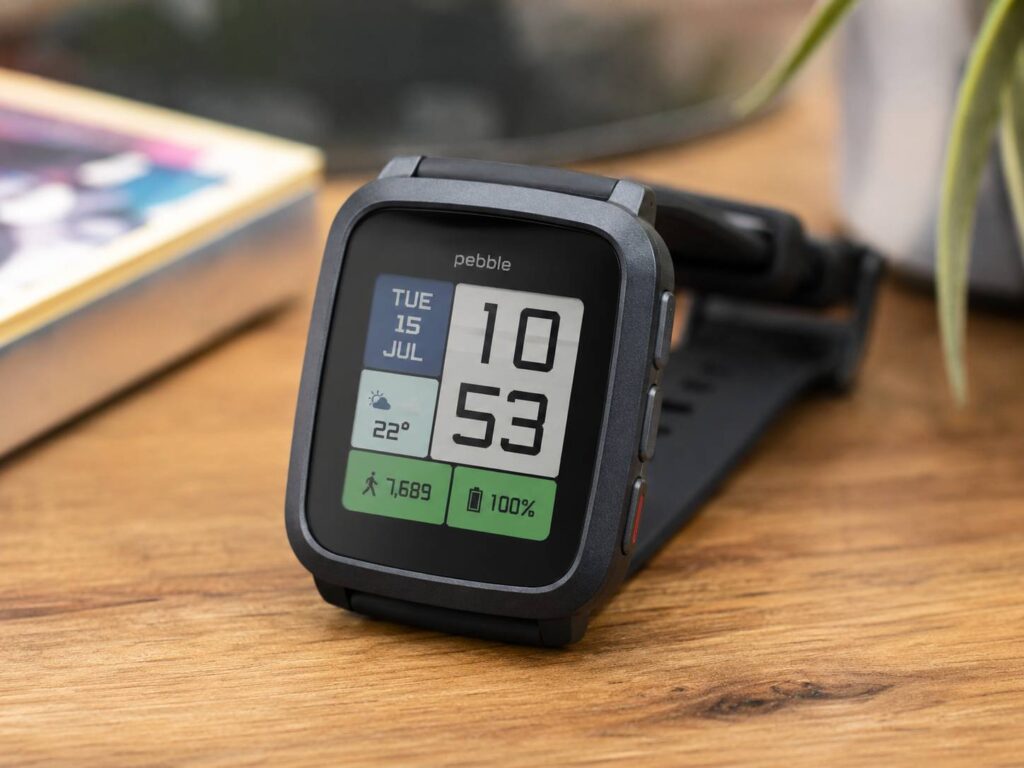
Pebble Time 2 takes a refreshingly different approach to the modern smartwatch. Instead of packing in every possible feature, it focuses on the basics people actually use every day, such as notifications, an always-on display, physical controls, simple health tracking, and, most importantly, battery life that can last for weeks.
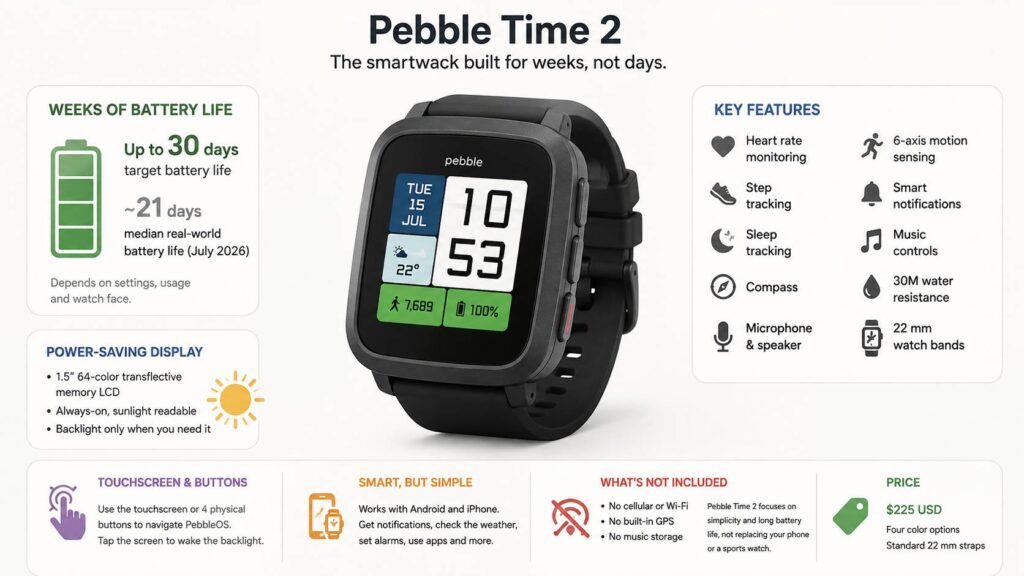
Pebble is aiming for around 30 days of battery life with the Time 2. Real-world results have not consistently reached that figure yet, but they are still impressive. In July 2026, Pebble reported a median battery life of roughly 21 days among Time 2 users.
That is around three weeks between charges.
For anyone used to charging an Apple Watch or Wear OS device every day or two, that feels like a major change. Pebble has also continued improving power efficiency through PebbleOS updates, so battery performance could get better as the software matures.
Pebble Time 2 Battery Life Is Already Measured in Weeks
The most eye-catching Pebble Time 2 specification is its estimated 30-day battery life.
Still, it helps to separate the official target from what users are currently seeing in normal use.
During early production in March 2026, Pebble reported average battery life of around 14 days. By July, the company said the median had increased to roughly 21 days.
Much of that improvement came from software optimization rather than a hardware change.
Pebble has already shown how much software can affect battery performance with the Pebble 2 Duo. Its median battery life reportedly increased from about 17 days to more than 30 days as updates improved power management.
There is no guarantee that every Pebble Time 2 will eventually reach the full 30-day target. Even so, three weeks of typical use is already far beyond what many mainstream smartwatches manage.
Battery life will also depend on how you use the watch. Some of the biggest factors include:
- Backlight brightness and frequency
- Animated watch faces
- Watch faces that refresh every second
- Heart-rate tracking
- Sleep and health monitoring
- Number of daily notifications
- Bluetooth activity
- Apps that update frequently in the background
A simple setup can stretch battery life much further than one filled with animations and constant updates.
The Display Is a Big Reason Battery Life Is So Good
The Pebble Time 2 uses a 1.5-inch, 64-color transflective memory LCD.
That may sound less exciting than the bright OLED panels used on many premium smartwatches, but it is one of the main reasons Pebble can deliver such long battery life.
The display remains visible without constantly using power to illuminate every pixel. In fact, bright outdoor light often makes the screen easier to read.
The backlight is mainly needed indoors or at night.
This is very different from a typical OLED smartwatch. Those displays look beautiful, but keeping them visible continuously can consume a noticeable amount of power.
Pebble Time 2 can keep the screen genuinely always on without turning it black after a few seconds. You can simply glance at your wrist and see the time.
It sounds like a small detail, but it makes the watch feel more like an actual watch.
PebbleOS Updates Keep Improving Power Efficiency
Hardware only explains part of the Pebble Time 2 battery story.
Pebble has also spent a lot of time improving power consumption through software updates.
Several PebbleOS updates released during July and August 2026 addressed battery drain and related bugs.
PebbleOS 4.33.1, released on August 6, fixed multiple problems that could cause unusually high battery usage. One issue involved the touchscreen and could reduce battery life to less than five days in some situations.
Another fix addressed Bluetooth advertising that could continue consuming power even after airplane mode had been enabled.
Pebble has also introduced more battery controls for users. You can lower backlight intensity, shorten the backlight timeout, select a Battery Saver backlight mode, and use less demanding watch faces.
These changes may look minor individually, but they add up over several weeks of use.
Pebble Time 2 Still Has Plenty of Smartwatch Features
Long battery life does not mean Pebble Time 2 is just a basic digital watch.
It uses a 1.5-inch color display with a resolution of 200 x 228 pixels and a pixel density of roughly 202 pixels per inch.
The hardware includes:
- Four physical buttons
- Touchscreen controls
- Heart-rate monitoring
- Step tracking
- Sleep tracking
- Six-axis motion sensing
- Compass
- Dual microphones
- Built-in speaker
- RGB backlight
- Linear vibration motor
- 30-meter water resistance
- Standard 22 mm interchangeable watch bands
The watch measures about 43 x 36.04 x 10.9 mm and weighs around 33 grams without the strap.
It works with both Android phones and iPhones through the Pebble mobile app.
So, while it is intentionally simpler than something like an Apple Watch, it still covers most everyday smartwatch functions.
Touch Controls Add Flexibility Without Replacing the Buttons
Pebble watches have always been known for physical buttons, and the Time 2 keeps that design.
The four side buttons remain an important part of the interface. They let you move through menus without touching the screen, which is handy when wearing gloves or when your hands are wet.
The touchscreen simply adds another way to interact with the watch.
PebbleOS 4.33.1 expanded touchscreen support across more parts of the operating system in August 2026. Developers can also use Pebble’s touchscreen API to create touch controls inside their own apps.
You can also tap the display to activate the backlight.
It feels like a sensible middle ground. Pebble keeps the tactile controls longtime users like, while adding the convenience expected from a modern smartwatch.
Pebble Time 2 Is Not Trying to Be an Apple Watch or Garmin
The long battery life comes with trade-offs.
Pebble Time 2 does not include cellular connectivity or Wi-Fi. It depends on a nearby phone for many connected features.
There is no built-in GPS either, and the watch is not designed to replace a dedicated Garmin for serious running, cycling, or outdoor navigation.
Pebble includes heart-rate monitoring, sleep tracking, and step counting, but advanced sports metrics are not the main focus.
The Time 2 is better suited to someone who wants a lightweight smartwatch that handles notifications, alarms, calendar information, weather, music controls, basic health data, and apps without demanding constant attention.
That simpler approach may appeal to people who feel current smartwatches have become too complicated.
Price can matter too. Some shoppers compare cheaper models before spending more on a smartwatch, and it is useful to understand why the Apple Watch SE 3 is cheaper when comparing different smartwatch strategies and feature sets.
Pebble is clearly competing on simplicity and battery life rather than raw hardware power.
Android and iPhone Support Is Slightly Different
Pebble Time 2 works with both Android and iOS, but the experience is not completely identical.
Android gives third-party smartwatches more freedom to interact with notifications. For example, supported messages can offer predefined replies or voice responses.
Apple places tighter restrictions on third-party smartwatch integration.
iPhone users can still receive notifications, check calendar information, view weather data, control music, and use other common Pebble features. Still, someone switching from an Apple Watch should expect fewer deep system integrations.
That is more of an iOS limitation than a Pebble hardware problem.
Older Pebble Apps Are Still Part of the Appeal
One of Pebble Time 2’s more unusual advantages is its software history.
The watch can use apps and watch faces from the wider Pebble ecosystem, including software originally created for earlier generations.
That gives the platform a much larger starting library than you might expect from a newly revived smartwatch brand.
Developers can also create new software using Pebble development tools, and PebbleOS itself is open source.
Recent developer features include APIs for the touchscreen, speaker, and RGB backlight.
This matters because Pebble’s long-term usefulness does not depend entirely on one company maintaining every feature itself. The developer community can continue building apps, watch faces, and tools around the platform.
Your Watch Face Can Make a Noticeable Difference
It is surprisingly easy to reduce smartwatch battery life with the wrong watch face.
A simple Pebble face that updates once per minute uses very little processing power.
A heavily animated face that refreshes every second wakes the processor far more often. Multiply that across an entire day and the difference becomes noticeable.
Weather updates, Bluetooth requests, animations, complications, and background processes can all increase battery drain.
If battery life matters most, a simple watch face is usually the better choice.
The same applies to the backlight. Because the transflective display remains readable during the day without illumination, you can reduce brightness or shorten the timeout without making the watch difficult to use.
Small changes like these can help push the Time 2 closer to its advertised battery target.
What 30-Meter Water Resistance Actually Means
Pebble Time 2 has a 30-meter, or 3 ATM, water-resistance rating.
That does not mean you should take it diving 30 meters underwater.
The rating is better understood as protection against normal everyday water exposure. Rain, hand washing, splashes, and brief swimming are closer to the intended use.
Pebble advises against diving, extended exposure to water, hot water, and high-pressure water.
As with any water-resistant electronic device, seals can also degrade after damage or extended use.
So, the Time 2 should cope well with normal daily life, but it is not a dedicated diving watch.
Pebble Time 2 Price and Availability
Pebble Time 2 is priced at $225 in the United States.
It comes in four color options and uses standard 22 mm straps, so replacement bands should be easy to find.
The watch includes a silicone strap and Pebble charging hardware.
Production has also increased considerably. Pebble reported producing more than 23,000 Time 2 units by mid-July 2026.
The company has gradually moved away from early pre-order fulfillment toward more normal stock availability, although availability can still vary by region and color.
Can Pebble Time 2 Really Last 30 Days?
The honest answer is that 30 days remains a target rather than a guaranteed result for every user.
Pebble’s strongest published real-world figure so far is a median battery life of around 21 days as of July 2026.
That is still impressive.
Three weeks between charges can completely change how you use a smartwatch. There is less need to think about charging overnight, carrying another cable, or checking the battery percentage before leaving home for a weekend.
Recent PebbleOS updates have also addressed several power-related bugs, so battery life may continue improving.
The Pebble Time 2 does not try to win a specification contest. It does not have cellular connectivity, Wi-Fi, advanced GPS navigation, or the massive fitness feature sets found on some competitors.
Instead, it focuses on being useful, readable, lightweight, and easy to live with.
For many people, that may be exactly the point.
A smartwatch that lasts several weeks and still handles notifications, basic health tracking, apps, alarms, music controls, and an always-on display feels surprisingly practical.
And if Pebble eventually manages to make the 30-day target normal rather than exceptional, the Time 2 could become one of the more interesting alternatives to mainstream smartwatches.