
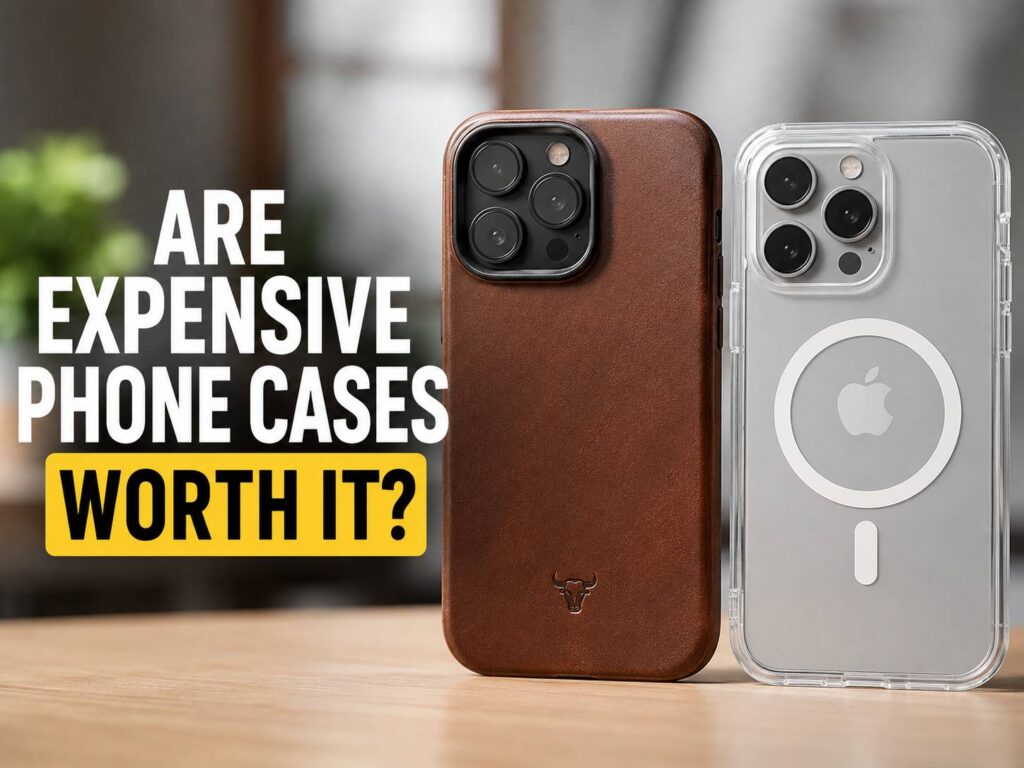
Phone cases sit in a strange price range. Some cost less than a takeaway meal, yet others cost nearly as much as a pair of wireless earbuds. That difference leaves many buyers asking the same thing: are expensive phone cases worth it, or are you mostly paying for a brand name?
The honest answer is mixed. A good premium phone case can offer stronger materials, better drop protection, more accurate cutouts, dependable magnets, and a longer useful life. Still, a high price does not prove that a case protects your phone better.
Plenty of mid-range cases give excellent everyday protection. At the same time, some designer cases focus on looks and offer only basic coverage. The smarter move is to check how the case is built, not how expensive it appears.
Your daily habits matter too. Someone who works from home and rarely drops a phone has different needs from a cyclist, warehouse worker, parent, or frequent traveler.
What Makes an Expensive Phone Case Different?
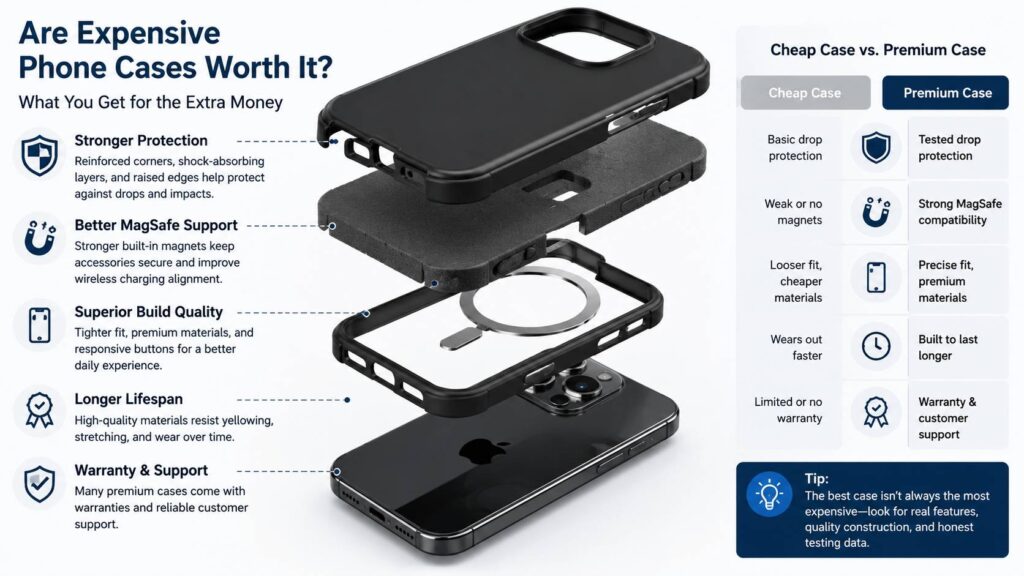
Premium cases often feel better from the first moment you pick them up. The frame fits more tightly, the buttons click cleanly, and the edges line up with the phone. These details sound small, but they affect daily use.
More expensive models often include:
- Reinforced corners
- Raised edges around the screen
- A taller camera border
- Softer inner lining
- Stronger magnetic rings
- Better button covers
- More accurate speaker and port cutouts
- Tested drop protection
- Longer warranties
- Materials that resist stretching and cracking
None of these features comes with every costly case. A luxury leather case can feel great but offer limited impact protection. A thin aramid fiber case can look sleek, yet it often leaves the screen and corners more exposed.
Pay for useful construction, not fancy packaging.
Do Expensive Phone Cases Protect Better?
Some premium cases protect phones very well. Others rely on marketing terms and dramatic product photos.
Real protection comes from the shape and construction of the case. Corners need enough material to absorb impact. The sides need enough grip to reduce the chance of a drop. Raised borders should sit above the screen and camera lenses.
A case must stay attached during impact too. Loose corners or stretched sides reduce protection, even when the material feels thick.
Very hard plastic is not always the best choice. It can crack or transfer more force into the phone. Soft silicone absorbs some impact, but low-quality silicone often stretches and becomes loose. Many strong cases use two layers, with a firmer outer frame and a softer inner section.
No case makes a glass phone unbreakable. The drop height, landing angle, surface type, and point of impact still matter. Concrete is far less forgiving than carpet.
Is Military-Grade Protection Worth Paying For?
“Military-grade protection” appears on many phone case listings. The term sounds reassuring, but it needs more detail.
A useful claim should explain:
- The height used during the drop test
- The number of drops
- The tested phone model
- The surface used for testing
- The corners or sides that took the impact
- The testing method
A vague military-grade badge gives little useful information. Clear test details carry far more value.
Some affordable cases publish better test information than premium competitors. For that reason, price should never replace basic research.
When Is a Premium Phone Case Worth It?
Paying more makes sense in a few common situations.
You Own an Expensive Flagship Phone
Modern flagship phones can cost well over $1,000. Screen repairs, rear glass repairs, and camera damage can become costly. Spending a little more on a dependable case feels reasonable next to the price of the phone.
You Drop Your Phone Often
Some people know they drop their phones. There is no shame in that. Better grip, thicker corners, and a secure frame can reduce the risk of serious damage.
You Use Magnetic Accessories
Weak magnets create daily frustration. A wallet can slide off, a car mount can lose its grip, and a wireless charger can sit out of alignment.
A well-made MagSafe or Qi2-compatible case keeps accessories centred and firmly attached. This is one area where very cheap cases often disappoint.
You Work in a Rough Environment
Construction sites, workshops, warehouses, kitchens, and outdoor jobs expose phones to hard floors, tools, dirt, moisture, and repeated knocks. A rugged case has a clear purpose in those settings.
You Keep the Same Phone for Years
A durable case can save money over time. Replacing a cheap case three times is not a bargain.
When Is a Cheap Phone Case Good Enough?
A low-cost case works well for many people. The price matters less than the basic design.
Look for these features:
- A tight fit with no loose corners
- Raised edges around the screen
- Camera protection higher than the lenses
- Covered corners
- A textured or grippy finish
- Clean port and speaker openings
- Buttons that press easily
- No sharp plastic seams
A careful user with a budget phone rarely needs a huge rugged case. A simple model with decent grip and raised borders can do the job.
Cheap cases become risky when quality changes from one unit to another. Product photos can hide loose edges, weak magnets, stiff buttons, or poor molding. Buyer photos often reveal these flaws faster than the official listing.
Can an Expensive Case Improve Wireless Charging?
A better case can make wireless charging more reliable, especially with MagSafe or Qi2 accessories.
Case thickness affects the distance between the phone and charger. Very thick materials can reduce charging performance. Metal parts, card holders, and poorly placed magnetic rings can create more trouble.
Magnetic alignment matters just as much. A weak or badly positioned ring can leave the charger slightly off-centre. The phone still charges in some cases, but it can run warmer or charge more slowly.
Premium magnetic cases often use stronger rings and more accurate placement. Still, plenty of mid-range models do this well too.
Check reviews from people who use the same phone and charger. Generic claims such as “wireless charging compatible” do not say much.
Are Official Apple, Samsung, and Google Cases Worth It?
Official cases often offer accurate fit, clean button response, matching colours, and strong compatibility with first-party chargers and accessories.
They do not always offer the strongest drop protection.
Phone makers often prefer slim designs that keep the device feeling light. Third-party brands tend to offer thicker corners, kickstands, port covers, straps, and more rugged frames.
Official cases make sense for people who care about fit and accessory compatibility. Buyers who need serious impact protection should compare them with rugged third-party options.
The official logo alone does not justify the price.
How Much Should You Spend on a Phone Case?
Most buyers do not need the cheapest or most expensive option.
A good mid-range case often gives the best mix of protection, comfort, grip, and charging compatibility. You usually get stronger materials and better fit without paying a large designer markup.
A practical spending guide looks like this:
- Budget phone and careful user: Choose an affordable case with raised edges.
- Flagship phone and average use: Pick a tested mid-range case.
- Frequent drops: Spend more on reinforced corners and better grip.
- Outdoor or physical work: Choose a rugged case with clear test details.
- MagSafe or Qi2 accessories: Prioritise magnet strength and alignment.
- Style-first purchase: Accept that some of the price pays for appearance.
This buying logic applies to many accessories. Our guide on whether expensive mice are worth it in 2026 looks at the same price-versus-quality question for computer gear.
How Can You Spot a Good Premium Case?
Marketing language can make almost any case sound impressive. A few checks make the choice much easier.
Ask yourself:
- Does the maker state a drop height?
- Are the corners reinforced?
- Do the edges rise above the screen?
- Is the camera area fully protected?
- Does the case have an integrated magnetic ring?
- Do buyers report strong magnetic attachment?
- Does the warranty cover case defects?
- Do long-term reviews mention stretching?
- Does the clear version turn yellow quickly?
- Can the case come off without stressing the phone?
Product listings that skip basic details deserve caution. Words such as “extreme,” “ultimate,” and “shockproof” mean very little without test information.
Are Expensive Clear Cases Worth It?
Clear cases often cost more when they promise better resistance to yellowing. Some premium models do stay attractive for longer, but no soft transparent material looks new forever.
Sunlight, heat, hand oils, and daily use slowly change the material. Clear cases often become yellow, cloudy, or scratched.
Paying extra makes sense when the case has firm sides, strong corners, good magnets, and a decent warranty. Paying a luxury price just for transparency is harder to justify.
Hybrid clear cases often work best. They pair a hard transparent back with softer protective edges. The back stays clearer, and the sides absorb more impact.
Are Leather Cases Worth the Extra Cost?
Leather cases feel warm and comfortable in the hand. They can age in an attractive way, though marks and colour changes appear over time.
Most buyers choose leather for feel and appearance, not maximum protection.
Water, sweat, and rough surfaces can damage natural leather. Some modern “leather” cases use synthetic materials, so read the description carefully.
A leather case suits someone who wants a more refined look and accepts visible wear. People who drop phones often should pick a case with reinforced corners under the leather layer.
Are Aramid Fiber Cases Worth It?
Aramid fiber cases are light, thin, and stiff. They appeal to people who dislike bulky covers.
Their main strength is scratch protection with very little added weight. Many models feel grippy too.
Drop protection varies. Thin aramid cases often provide less cushioning around the corners and display. Some leave the buttons partly exposed.
Choose this material for a slim feel, not for the strongest impact resistance.
Do Premium Phone Cases Last Longer?
A well-built case can stay tight and useful for years. Cheap materials tend to stretch, peel, crack, or lose shape much sooner.
Signs that a case needs replacement include:
- Loose corners
- Cracks around the camera
- Stretched button areas
- Peeling layers
- Weak magnets
- Warped sides
- Sharp broken edges
- A loose fit around the phone
A case that no longer fits tightly cannot protect the phone properly.
Warranty terms matter here. Some brands cover manufacturing faults but exclude scratches, yellowing, and normal wear. Read the details before paying extra for a “lifetime warranty.”
Should You Use a Screen Protector Too?
A phone case and screen protector do different jobs.
The case protects the frame, corners, back, and camera area. A screen protector adds a replaceable layer over the display.
Raised edges help when a phone lands flat. They do not protect against every stone, key, or uneven surface. A screen protector adds more peace of mind, especially on a costly device.
Check that the protector is case-friendly. Thick glass that reaches the very edge can lift when the case presses against it.
Are Expensive Phone Cases Worth It?
Expensive phone cases are worth the money when the higher price buys stronger construction, better grip, clear drop-test details, accurate fit, dependable magnets, and useful warranty support.
They are not worth it when the main selling points are a logo, luxury packaging, or vague protection claims.
Most people will find the best value in the middle of the market. A solid mid-range case often gives the protection needed for everyday life without adding too much bulk or cost.
Choose the case around your habits. Think about where you use the phone, how often you drop it, and which accessories you attach. A little honest self-awareness leads to a better purchase than any marketing slogan.