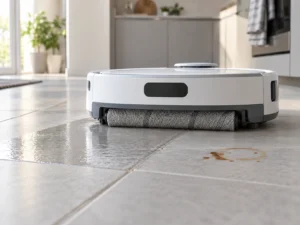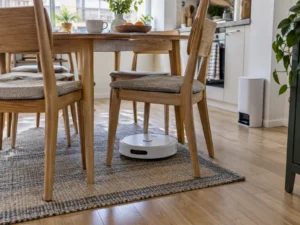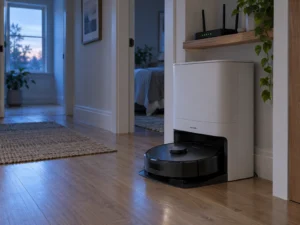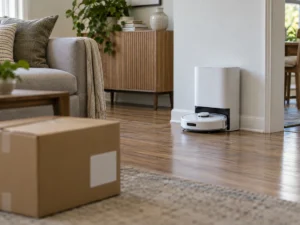
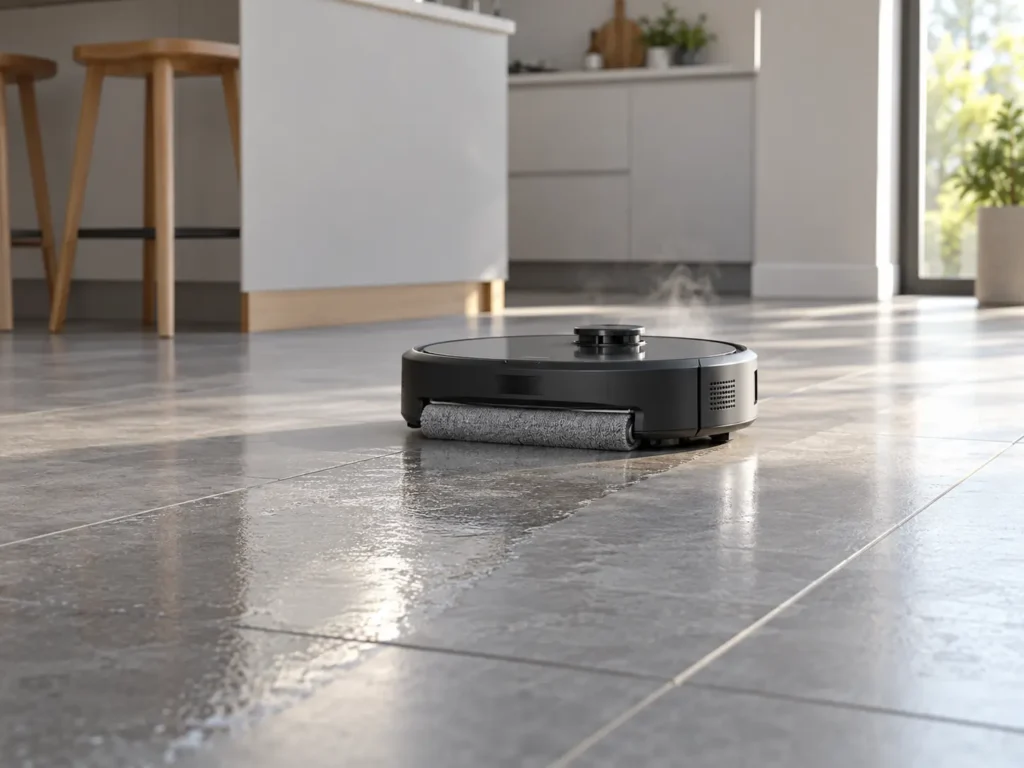
Steam was the theme of the floor-care hall at IFA 2026 in Berlin. Dreame showed its first robot vacuum built around steam. Roborock brought a second-generation steam floor washer. Narwal and Tineco both showed steam machines of their own. The marketing language around all of them talks about heat and hygiene, and the headline numbers are large. What those numbers describe, though, is a temperature inside the machine rather than a temperature at your skirting board. This guide separates what steam does from what the specification sheet says, and flags the floors where you should keep it away entirely.
What was announced, and on what date
Dreame introduced the Aqua20 Pro Ultra Roller X Complete at IFA 2026, its first robot vacuum to combine steam pretreatment with a roller mop. Coverage from the show floor on September 4, 2026 put the detail on record. Dreame says an internal system produces steam at a core temperature of 180C, delivered through four outlets that pretreat dried-on stains before the roller follows with hot-water mopping.
The supporting figures are all manufacturer claims. Dreame lists 40,000 Pa of maximum suction, a roller turning at 300 rpm with 18 newtons of downward pressure, a MopExtend mechanism that pushes the roller out by up to 8 centimeters, and a dock that washes the roller with water heated to 100C. Dreame’s footnote says SGS measured a 99.999 percent kill rate in steam condensate collected five minutes after steam mode started, with test bacteria added to the robot’s fresh-water tank. Availability was announced for the United Kingdom, with no United States pricing or date given.
Roborock’s steam product is a different kind of machine. The F25 Ultra Steam Gen 2 is a push-along wet-dry floor cleaner. Roborock says its Turbo Steam Mode produces up to 2.5 times the steam volume of the previous generation and reaches stable 180C steam in roughly 30 seconds, with a late-September 2026 launch planned for the United States.
That distinction matters for shoppers. Two of the loudest steam announcements at the show were not robots at all.
Why a 180C rating is not a 180C floor
Here is the part that marketing leaves out. A stated core temperature describes the water inside the boiler. Between that boiler and your tiles, three things happen to it.
Steam leaves the outlet and expands, which drops its temperature immediately. It then mixes with room air, which drops it again. Finally it meets a cool, thermally massive surface and condenses, giving up its heat into the floor and the surrounding air.
Contact time finishes the job. A robot vacuum crosses a given square centimeter of floor in a fraction of a second. A handheld steam cleaner held over one spot behaves very differently from a machine that never stops moving.
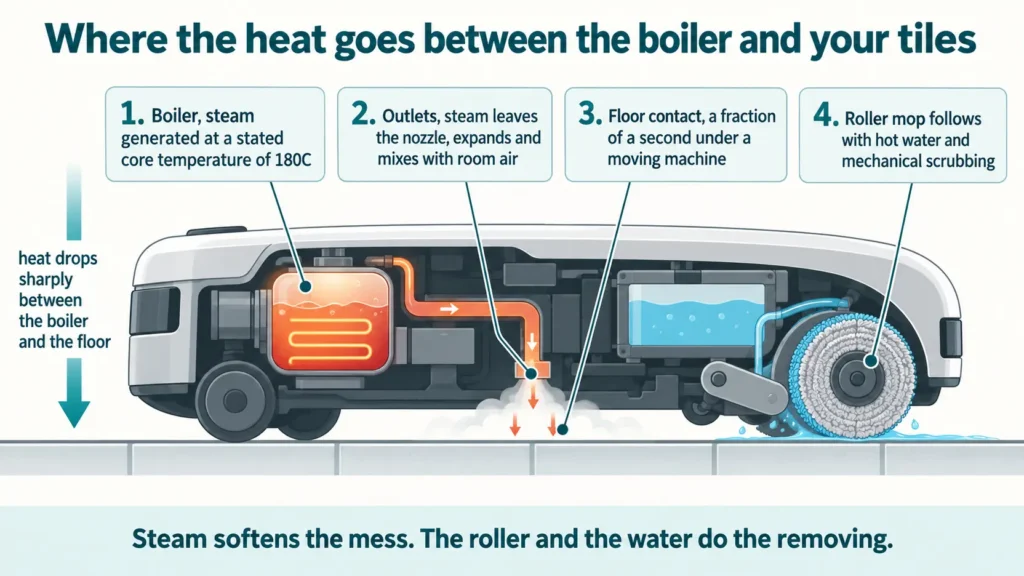
None of that makes steam useless. Heat and moisture soften dried food, sugar residue and grease far better than cold water, and softening is what the design is for. Dreame describes its own system as pretreatment, with the roller and the hot water doing the removal afterwards. Read the claim as written and it is reasonable. Read it as sterilization and it is not.
How to read a 99.999 percent claim
A five-log reduction figure is a laboratory result. It comes from a defined protocol with chosen test organisms and a chosen sampling point. In Dreame’s test that point was the steam condensate, so the figure describes the steam itself and says nothing about a floor surface. A third-party laboratory such as SGS runs the protocol supplied to it and reports the outcome accurately.
What the number does not tell you is how the same machine performs on a grouted kitchen floor with a week of traffic on it, at whatever pace and mode the app defaults to. That is not an accusation against the manufacturer. It is the difference between a controlled test and a home.
Treat any sanitizing figure as evidence that the mechanism works under favorable conditions, and nothing more.
The floors where steam is a bad idea
This is the practical part, and it is where a purchase can go expensively wrong.
Solid and engineered wood come first. Shaw Floors states the rule in its own hardwood care instructions: do not use wet mops or steam mops. Heat plus moisture drives water into the boards and into the joints between them, which leads to swelling, cupping and finish damage. Several flooring warranties exclude that damage outright.
Laminate follows the same logic, because a fibreboard core reacts badly to water reaching it through a seam. Unsealed stone and old, worn grout are also poor candidates, since steam pushes moisture into porous material.
Sealed porcelain and ceramic tile, along with most vinyl rated by its maker for wet cleaning, are the surfaces where these machines make sense. Check the care sheet from the flooring manufacturer, because the flooring warranty is the document that will decide any dispute.
Carpet is handled in hardware. Dreame’s design covers the wet roller when it detects carpet, which tells you the machine is not intended to steam a rug.
Does the feature justify the price?
Steam sits at the very top of every range that offers it, and the rest of those machines are premium in every other respect too. Separating the value of the steam from the value of the 40,000 Pa suction, the extending mop arm and the self-washing dock is close to impossible from a spec sheet.
A fairer comparison is a current roller-mop flagship without steam. The Dreame Aqua10 Ultra Roller already feeds continuous fresh water to the roller and washes it at the dock, which is the mechanism that removes most everyday mess. Steam adds softening power for dried-on stains on hard tile, and it adds a heating element, a boiler and more things to descale.
In an all-tile home with dried spills to fight in the kitchen, steam is a real upgrade with a real limitation. Where wood or laminate covers the main rooms, the feature you are paying extra for is one you should not use there anyway.
What to check before buying
Ask four questions of any steam machine on your shortlist.
- Is it a robot or a push-along washer? Several of the IFA steam announcements were the latter.
- Which floor types does the maker approve for steam mode, in writing?
- Can steam be disabled per room or per zone in the app?
- What is the descaling routine, and does it need distilled water?
The last question catches people out. A boiler that runs on hard tap water scales up, and a scaled boiler is a warranty conversation nobody enjoys.