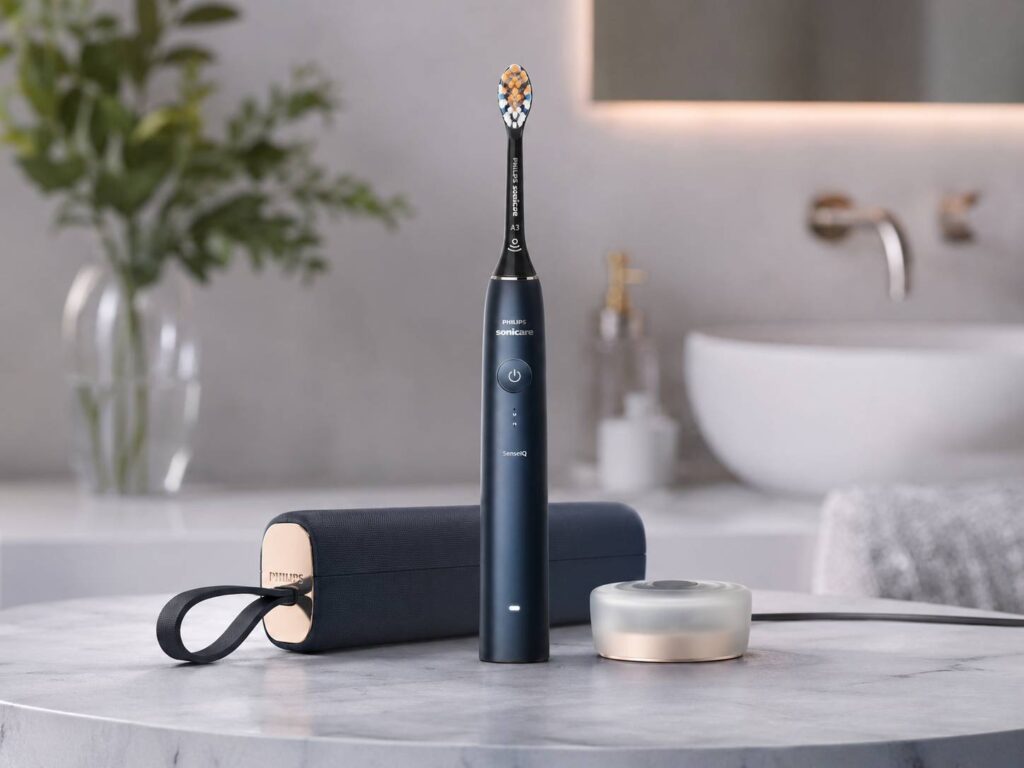
Philips has introduced a new smart electric toothbrush that tackles a familiar problem. You brush for two minutes, rinse, and assume every tooth received the same care. In reality, the back molars, inner surfaces, and gumline are easy to shortchange because they are harder to reach.
The new Philips Sonicare Next-Generation DiamondClean 9900 Prestige aims to fix that. It uses an on-handle display, a light ring, and built-in tracking to show where you brushed well and where you need another pass.
The main attraction is a 12-zone Mouth Map. After each brushing session, the screen shows which parts of the mouth need more attention. You can then return to those areas before putting the toothbrush away.
Philips plans to launch the new DiamondClean range in Europe and the United States during fall 2026. More countries are expected to receive it later in 2026 and throughout 2027.
The Mouth Map makes missed areas easier to spot
The Mouth Map splits the mouth into 12 brushing zones. The toothbrush tracks how well you cover each section and displays the results on the handle.
This makes the feedback easy to understand. You do not need to study a detailed chart or scroll through an app after brushing. The screen simply points out the areas that need another pass.
A light ring at the bottom of the handle gives guidance during the session. Yellow means a section needs more work. Blue tells you that it is time to move to another area.
This type of feedback could be useful for people who often rush through their routine. The rear teeth and inner tooth surfaces are easy to overlook, mainly during a busy morning. A quick visual reminder can help turn a rushed clean into a more complete one.
Philips is not the only company adding smarter displays to home products. The brand has used technology in other parts of the home too. For example, the Philips Skylight brings natural daylight indoors without a roof window, showing how the company is trying to make everyday spaces feel more comfortable and practical.
Built-in AI reduces the need for a phone
Many connected toothbrushes keep their best features inside a mobile app. That can work well during the first week, but opening an app every morning and evening soon starts to feel like extra work.
Philips has taken a more practical route with the new DiamondClean 9900 Prestige. Its main feedback appears directly on the toothbrush. Users can view the Mouth Map, check brushing coverage, and select settings from the handle.
The Sonicare app still provides deeper tracking. It can store brushing history, session length, pressure data, and coverage information. Users can track habits such as flossing, tongue cleaning, and mouth rinsing too.
The phone remains optional for the basic routine. That is a smart design choice. You can pick up the toothbrush, clean your teeth, and move on with your day without another screen demanding attention before breakfast.
Pressure feedback helps prevent aggressive brushing
It is easy to press too hard when brushing, and more force does not mean cleaner teeth. In practice, hard scrubbing can feel uncomfortable and may irritate sensitive gums.
The new Philips toothbrush monitors brushing pressure and responds with lights and gentle vibrations. It can tell users when they apply too much force, too little force, or the right amount.
Philips has paired this feature with SenseIQ technology. The brush can lower its intensity after detecting too much pressure. Users can pick from three intensity levels, so the overall feel can stay soft, medium, or strong.
This could help people who have developed an aggressive brushing habit over the years. The automatic response acts as a quiet reminder. It does not stop the session or force the user to restart.
Pressure guidance is not new on premium toothbrushes, but the combination of lights, vibration, and automatic intensity changes makes the feedback easier to notice.
Eight brushing modes give users more choice
The Next-Generation DiamondClean 9900 Prestige includes eight brushing modes and three intensity settings.
Confirmed options include settings for sensitive teeth, gum health, and a deeper Max Clean session. Users can swipe across the handle display to select the mode they prefer.
Eight modes may sound excessive for someone who uses the same setting every day. Still, the extra choices can make sense in a shared household. One person may prefer a gentle setting for sensitive gums. Another may want a stronger clean after coffee or a long day.
The handle display makes switching modes fairly simple. Older smart toothbrushes often buried these controls inside their apps. Philips has moved them back to the device, where they are quicker to reach.
Sonicare Fluid Action remains at the center of the cleaning system
The new model still uses the sonic cleaning system found across the Philips Sonicare range. Philips calls the movement Fluid Action. The fast bristle motion pushes liquid between the teeth and along the gumline.
The brush is designed to clean areas that bristles may not reach directly. Philips has paired the system with a newer drivetrain that should produce less noise than older premium DiamondClean models.
Philips claims the toothbrush can remove up to 20 times more plaque than a manual brush when used with the A3 brush head. The company claims users can see healthier gums after several weeks of regular use.
These figures come from Philips testing under set conditions. Real results will vary with brushing habits, brush-head condition, dental health, and technique.
The coverage tracking may turn out to be more useful than the headline numbers. A powerful toothbrush cannot clean a tooth surface that the user skips. The Mouth Map is designed to point out those gaps before the session ends.
The toothbrush keeps smart features simple
Smart home products often add features that sound impressive but feel awkward during daily use. Philips has tried to avoid that issue here.
The main guidance happens during brushing and appears on the toothbrush itself. You pick a mode, start brushing, follow the light ring, and check the Mouth Map at the end.
There is no need to position a phone beside the sink. There is no need to start a live tracking session from an app. The toothbrush handles the main work on its own.
People who enjoy data can still open the Sonicare app and view longer-term patterns. They can check whether their pressure improved or whether certain areas get missed on a regular basis.
This balance feels sensible. The device provides instant guidance, and the app stores extra information for users who care about it.
Premium accessories complete the package
Philips is positioning the new DiamondClean 9900 Prestige as a premium bathroom product.
The toothbrush will come in five colors:
- Silver White
- Satin Mauve
- Quartz Black
- Storm Blue
- Midnight Green
The package includes a rechargeable travel case and a charging glass. The case should suit people who travel often and do not want to pack a separate charging dock.
The charging glass gives the toothbrush a cleaner look on a bathroom counter. It feels less clinical than a basic plastic stand.
Philips says the packaging uses paper-based materials. Compatible brush heads contain 70 percent bio-based plastic through a mass-balance allocation method.
The company has also mentioned battery encapsulation aimed at easier battery replacement and repair. The final repair process and service costs are not yet clear.
Release date and expected availability
Philips says the new DiamondClean family will include the 8000, 8500, 9000, and 9900 models.
The 9900 Prestige sits at the top of the range. It is expected to arrive at selected retailers in Europe and the United States in fall 2026. More regions should follow later in the year and during 2027.
Philips has not announced an official retail price.
That missing detail matters. Premium smart toothbrushes can cost several times more than basic electric models. The Mouth Map and built-in display need to offer enough day-to-day value to justify the price.
Replacement brush-head costs deserve attention too. Buyers should look beyond the handle price and check how much they will spend on brush heads over two or three years.
Who is this smart toothbrush for?
The DiamondClean 9900 Prestige looks most useful for people who miss the same areas during brushing, press too hard, or rush through parts of their routine.
The Mouth Map could help users notice patterns that are hard to spot on their own. A person may think they brush evenly, yet the map may reveal that the inner lower teeth receive less attention every day.
The pressure system may suit people with sensitive gums or those who tend to scrub.
People with braces, crowded teeth, or dental work may value the extra coverage guidance. The toothbrush does not diagnose dental problems, and it does not replace check-ups with a dentist. It simply helps users pay closer attention to brushing technique.
Someone who already brushes carefully and has no interest in smart features may prefer a cheaper Sonicare model. Many lower-priced options still include timers, pressure alerts, and sonic cleaning.

Does the new Philips AI toothbrush make sense?
The most useful part of this toothbrush is not the AI label. It is the simple visual feedback.
Showing missed areas on the handle makes the feature easy to understand. Users can correct their brushing straight away instead of checking a report hours later.
The phone-free design is another strong point. A toothbrush should not turn a basic morning routine into a complicated tech session.
The real test will come after launch. Independent testing will need to show how accurately the brush tracks different areas and brushing styles. Price will play a major role too.
The idea itself feels practical. It focuses on a real problem, gives immediate feedback, and keeps the app optional. That gives it a better chance of remaining useful after the initial excitement fades.