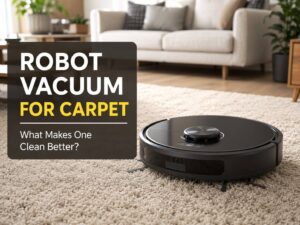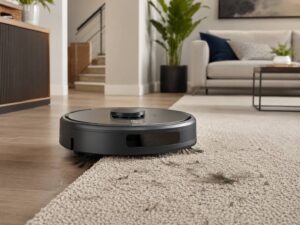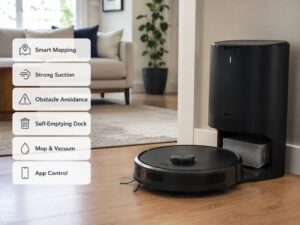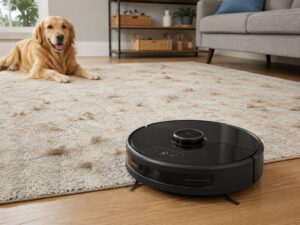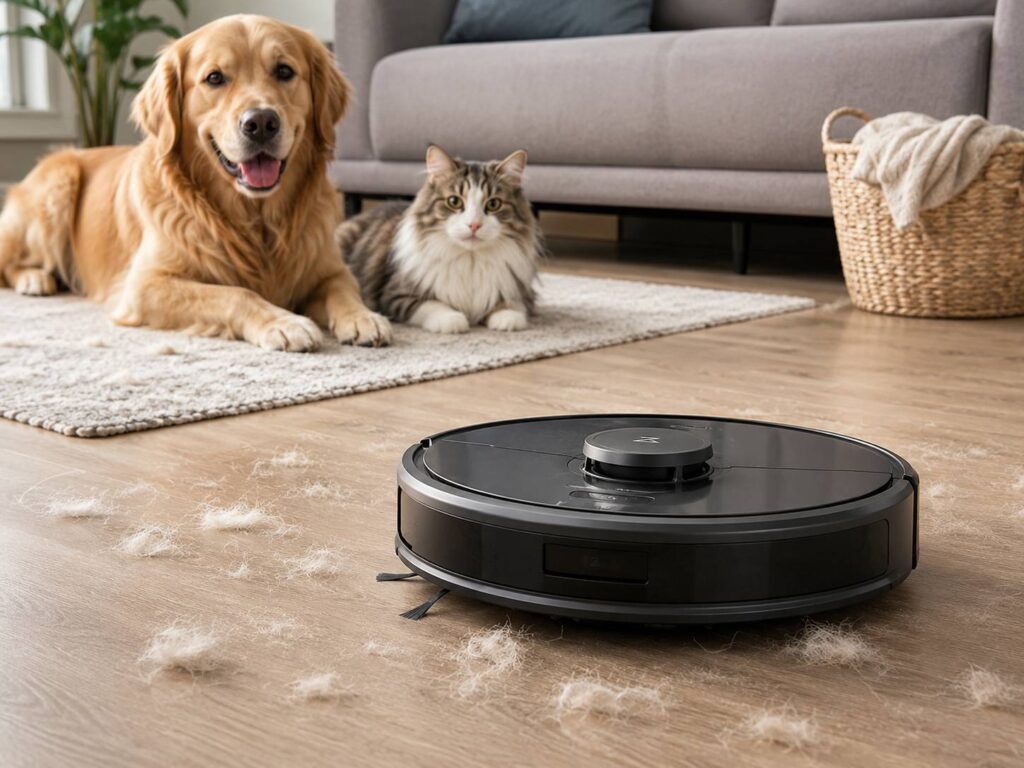
Pet hair does not behave like normal dust. It sticks to rugs, gathers under sofas, wraps around brushes, and returns a few hours after cleaning. So, a basic robot vacuum can help, but it will not always handle a busy pet home well.
The best robot vacuum for pet hair needs more than strong suction. It needs a brush that resists tangles, a good filter, smart mapping, and a dust system that does not fill after one short run. It should handle dog hair, cat hair, dander, kibble, litter, and tracked-in dirt with less help from you.
A robot vacuum will not replace a deep clean with a full-size vacuum. Still, the right model can keep daily mess under control. That matters most during shedding season, or in homes with long-haired pets.
Why Pet Hair Is Harder Than Regular Dust
Pet hair creates a different cleaning problem. Dust sits on the surface. Hair bends, clumps, wraps, and works its way into carpet fibers. Long dog hair can twist around the main roller. Fine cat hair can cling to rugs and fabric mats. Short hair from breeds like Labradors can push deep into carpet and stay there.
Then you have pet dander. You may not see it, but it still collects on floors and furniture. A weak filter can pick up dirt, then push fine particles back into the room. For pet owners, that can make the room feel dusty again right after cleaning.
Pet homes also create mixed messes. A robot vacuum often needs to handle:
- Fur on hard floors
- Hair trapped in rugs
- Kibble near bowls
- Cat litter near the tray
- Dirt near the front door
- Dust under beds
- Paw marks on tile
- Small toys in the cleaning path
So, the best robot vacuum for pet hair is not always the model with the biggest suction number. A better choice is the one that keeps working well after several days of real pet mess.
Start With the Brush System
The brush system matters a lot. A cheap robot vacuum often uses a basic bristle roller. That can work for dust and crumbs. Still, pet hair wraps around it fast.
Once hair wraps around the roller, the vacuum starts to struggle. Suction drops, noise rises, and the robot leaves more hair behind. Then you end up cutting hair from the brush every few days. That gets annoying fast.
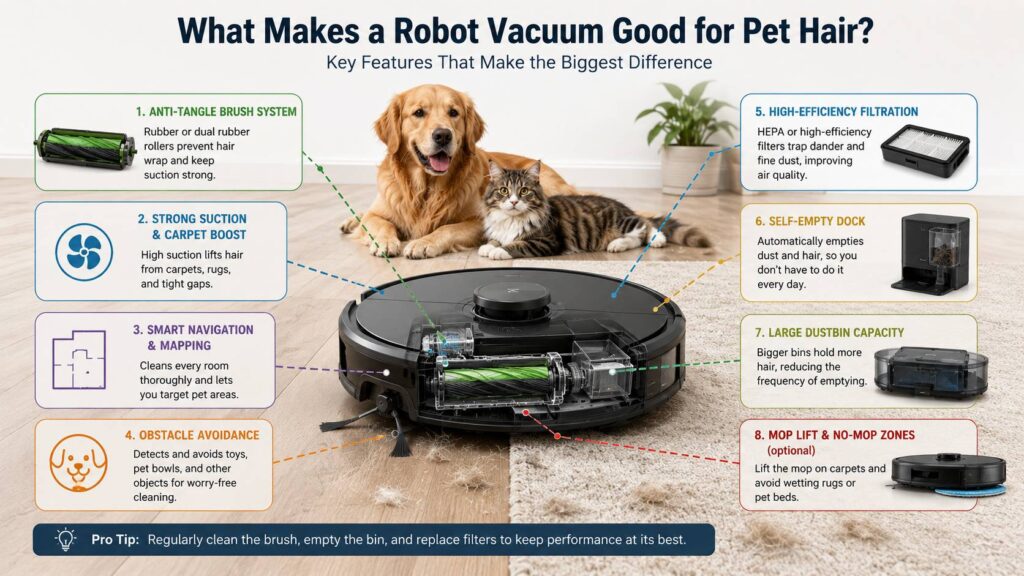
For pet hair, look for a rubber roller, dual rubber rollers, or a clear anti-tangle brush design. Rubber rollers grip hair and guide it into the dustbin. They also make cleaning easier, since hair usually slides off faster than it does from dense bristles.
A good robot vacuum for dog hair should have:
- A floating main brush that stays close to uneven floors
- Anti-tangle roller design
- Easy roller removal
- Side brushes that do not twist hair into tight knots
- Replacement brushes and filters that are easy to find
In real use, roller access makes a big difference. Some robot vacuums clean well for the first week, then become frustrating once the brush needs care. A better model lets you remove the roller in seconds, pull off the hair, and start the next clean without a fight.
Suction Helps, But It Does Not Tell the Whole Story
Suction power matters, mainly on carpets and rugs. Many brands list suction in Pa, and bigger numbers can look impressive. Even so, suction alone does not tell you how well a robot vacuum handles pet hair.
Brush design, airflow, floor contact, bin shape, and cleaning path all matter. A robot with strong suction and a poor brush can still leave fur behind. A model with smart brush design and medium suction can do better on hard floors.
Strong suction helps most in these areas:
- Low-pile carpet
- Area rugs
- Door mats
- Pet beds placed on the floor
- Edges near walls
- Gaps between floorboards
Carpet boost is a useful feature. The robot senses carpet, then raises suction for that surface. As a result, it saves battery on hard floors and adds power where hair sticks harder.
Floor type also matters a lot. A robot that works well on tile can struggle on thick rugs. For a deeper look at how floor surfaces change cleaning results, see this guide on robot vacuum for carpet vs hard floors.
One common issue in pet homes is hair packed into carpet edges. Many robot vacuums clean the open middle of the room well, but they miss the wall line. So, edge cleaning deserves attention. A good side brush should pull hair from corners without throwing it across the floor.
Smart Navigation Beats Random Cleaning
A random robot vacuum moves around until the battery runs low. That can work in a small room. Still, it feels weak in a pet home.
Pet hair collects in repeat zones. You will see it near sofas, pet beds, bowls, litter boxes, hallway corners, and under chairs. For this reason, smart mapping matters. The robot needs to know where it has cleaned and where it still needs to go.
LiDAR mapping, camera mapping, or strong room mapping gives you more control. You can send the robot to the living room after brushing your dog. You can clean near the litter tray twice a day. You can skip the bedroom when your pet is resting.
Good navigation helps with:
- Full room coverage
- Faster cleaning runs
- No-go zones
- Room-by-room cleaning
- Scheduled cleaning
- Better dock return
- Fewer missed spots under furniture
No-go zones are very helpful for pets. You can set them around water bowls, feeding mats, delicate toys, cables, or litter trays. That helps prevent spills, jams, and messy accidents.
Obstacle Avoidance Matters in Pet Homes
Obstacle avoidance sounds like a premium feature, but pet owners get real value from it. Pets leave toys, chews, socks, bowls, and small blankets on the floor. A basic robot can drag these items across the room or stop cleaning.
The bigger worry is pet waste. Nobody wants a robot vacuum to run over an accident and spread it through the house. Advanced obstacle detection can reduce that risk, mainly on models with camera-based object detection or AI object recognition.
Still, you should not trust any robot fully with pet messes. Do a quick floor check before scheduled cleaning, mainly with puppies, older dogs, or cats with litter box issues.
A pet-friendly robot vacuum should handle or avoid common items like:
- Pet bowls
- Small toys
- Charging cables
- Socks
- Shoes
- Thin mats
- Furniture legs
- Litter tray edges
This feature saves time, but it also protects the robot. Hair is not the only thing that causes trouble. A wet mess, string toy, or chewed fabric can clog the roller and damage the suction path.
For a broader buying checklist, this guide on robot vacuum features that actually matter is a useful next read.
Filtration Matters for Dander and Fine Dust
Pet hair is easy to see. Dander is not. That makes filtration easy to ignore, but it affects how clean the room feels after vacuuming.
Look for high-efficiency filtration or HEPA-style filtration from a trusted brand. A sealed dust path is better than a loose filter in a leaky bin. The filter should trap fine particles instead of pushing them back into the room.
Pet owners should check:
- Filter type
- Replacement filter price
- Filter change schedule
- Dustbin seal
- Dock bag design on self-empty models
A washable filter sounds convenient. Still, not every filter should be washed. Read the care notes for the exact model. A clogged filter lowers suction, and pet hair pickup gets worse.
My honest view: filtration is not the most exciting feature, but it is one of the first things I check. A robot that picks up fur but leaves a dusty smell behind does not feel like a real upgrade.
A Self-Empty Dock Makes Daily Cleaning Easier
A self-empty dock can make a big difference in a pet home. Pet hair fills small onboard dustbins fast. Some compact robots need emptying after every run during shedding season.
A self-empty dock pulls dirt and hair from the robot into a larger bag or bin. So, you empty it less often. The robot also stays ready for the next scheduled clean.
This feature helps most in homes with:
- Two or more pets
- Long-haired dogs or cats
- Carpeted rooms
- Daily cleaning schedules
- Allergy concerns
- Large floor areas
There is one tradeoff. Self-empty docks are loud for a few seconds. Some pets hate the sound at first. Place the dock away from pet beds, food bowls, and quiet sleeping spots. After a few days, many pets get used to it.
Dock bag cost matters too. Check the price of replacement bags before buying. A cheaper robot can look less appealing once you add bag costs over time.
Battery Life and Dustbin Size Need to Match Your Home
Battery life matters less in a small apartment. In a larger home, it matters much more. A good robot vacuum for pet hair should clean the main pet zones without stopping halfway through.
Recharge and resume helps. The robot returns to the dock, charges, then continues the job. This works well in bigger homes, and it helps when the robot uses higher suction on carpet.
Dustbin size matters too. Pet hair is bulky. A bin that looks fine for dust can fill quickly with fur. If you skip a self-empty model, choose a robot with a decent onboard bin and easy emptying.
Watch for these common issues:
- Hair stuck at the bin opening
- Dust clouds during emptying
- Small bin with no full-bin alert
- Filter clogging after one heavy run
- App alerts that arrive too late
A robot vacuum should reduce daily work. It should not become a new chore every night.
Mopping Helps, But Vacuuming Comes First
Robot vacuum and mop models can help in pet homes, mainly on tile, laminate, vinyl, and sealed hard floors. They can clean light paw marks, dust film, and small dry dirt after vacuuming.
Still, mopping does not solve pet hair by itself. The vacuum system must pick up hair first. If a robot drags a damp pad over loose fur, it can leave streaks or wet clumps.
A pet-friendly robot vacuum and mop should offer:
- Mop lifting on carpets
- No-mop zones
- Adjustable water level
- Washable mop pads
- Pad drying on advanced docks
- Vacuum-only mode
Mop lifting matters in mixed-floor homes. It helps stop damp pads from touching rugs. No-mop zones give you extra control near pet beds, feeding areas, and soft mats.
For pets, I prefer a robot that vacuums first, then mops. That order gives cleaner results and fewer wet hair clumps.
Noise Can Affect Pets More Than You Think
Pets react to robot vacuums in different ways. Some ignore them. Some chase them. Others hide under the bed.
Noise, movement, and dock emptying can all create stress. So, start slowly. Let the robot run for a short time in one room. Then let your pet watch from a safe distance.
A quieter mode helps for daily cleaning. Still, it may pick up less hair from rugs. Use quiet mode on hard floors and stronger modes on carpeted pet zones.
These habits help:
- Start with short cleaning runs
- Keep the pet in another room at first
- Avoid cleaning near food time
- Place the dock away from sleeping areas
- Schedule cleaning during walks or outdoor time
A robot vacuum should fit your home routine. The best model on paper can still feel wrong if it scares your pet every day.
Maintenance Makes or Breaks Pet Hair Performance
Every robot vacuum needs care. Pet homes need more of it. Hair wraps, filters clog, sensors get dusty, and side brushes wear down.
Plan for these simple tasks:
- Empty the bin or dock bag
- Clean the main roller
- Pull hair from side brushes
- Wipe sensors
- Tap dust from the filter
- Replace filters on schedule
- Replace brushes once worn
A robot with tool-free parts saves time. Clear app reminders help too. Still, do not rely only on alerts. During shedding season, check the roller every few days.
One common issue is the side brush. It looks small, so people ignore it. Then hair wraps around the base and slows it down. Once that happens, edge cleaning drops.
For pet homes, easy maintenance is not a bonus. It is part of good cleaning performance.
Best Features to Look For in a Robot Vacuum for Pet Hair
Here is a practical buying checklist:
- Anti-tangle main brush
- Rubber or dual rubber rollers
- Strong suction with carpet boost
- Smart mapping
- Room-by-room cleaning
- No-go zones
- Obstacle avoidance
- High-efficiency filtration
- Self-empty dock
- Easy brush removal
- Good edge cleaning
- Mop lifting for hybrid models
- Recharge and resume
- Affordable replacement parts
For most pet owners, the best mix is simple: anti-tangle brush, smart mapping, self-empty dock, and strong filtration. Those features solve the daily pain points.
Skip models with weak navigation, tiny bins, hard-to-clean rollers, and vague filter claims. They may look fine in product photos, but pet hair exposes weak design fast.
What I Would Avoid
I would avoid a robot vacuum that relies only on random navigation. It can miss hair-heavy zones and waste time cleaning the same open space.
I would also avoid a model with a bristle-only roller in a home with long pet hair. It will likely need more cleaning by hand. That gets old quickly.
A very slim robot can reach under furniture, which sounds useful. Still, check the bin size and suction path. Some slim models trade cleaning power for height.
Be careful with cheap mop combos too. A basic water tank and pad can spread grime if the robot does not vacuum well first. For pets, mopping works best as a bonus, not the main reason to buy.
Final Buying Advice
A good robot vacuum for pet hair should clean often, resist tangles, and stay easy to maintain. It should pick up fur from hard floors, pull hair from rugs, trap fine dust, and avoid common pet clutter.
Do not buy only by suction rating. Look at the full cleaning system. Brush design, mapping, filtration, bin size, and dock design all matter.
For one short-haired cat in a small apartment, a mid-range mapping robot with an anti-tangle brush can work well. For two dogs, carpet, and daily shedding, choose a stronger model with self-emptying, carpet boost, and better obstacle avoidance.
The right robot vacuum will not make pet hair disappear forever. Still, it can keep floors under control with less effort. That is the real goal: cleaner floors, fewer fur clumps, and less time chasing hair with a broom.