A robot vacuum can make daily cleaning much easier, but not every model works well on every floor. Carpet needs strong suction, a good brush system, and enough grip to move through the fibers. Hard floors need steady dust pickup, gentle wheels, smart edge cleaning, and, in many homes, a mop that does more than lightly drag a damp pad around.
So, before you buy, it helps to compare a robot vacuum for carpet vs a robot vacuum for hard floors. The right choice can save time, reduce dust, and keep your home looking cleaner between deep cleaning sessions. The wrong choice can miss pet hair, scatter crumbs, get stuck on rugs, or leave streaks on tile.
This guide breaks down the real differences, the features that matter, common issues, and the best choice for mixed-floor homes.
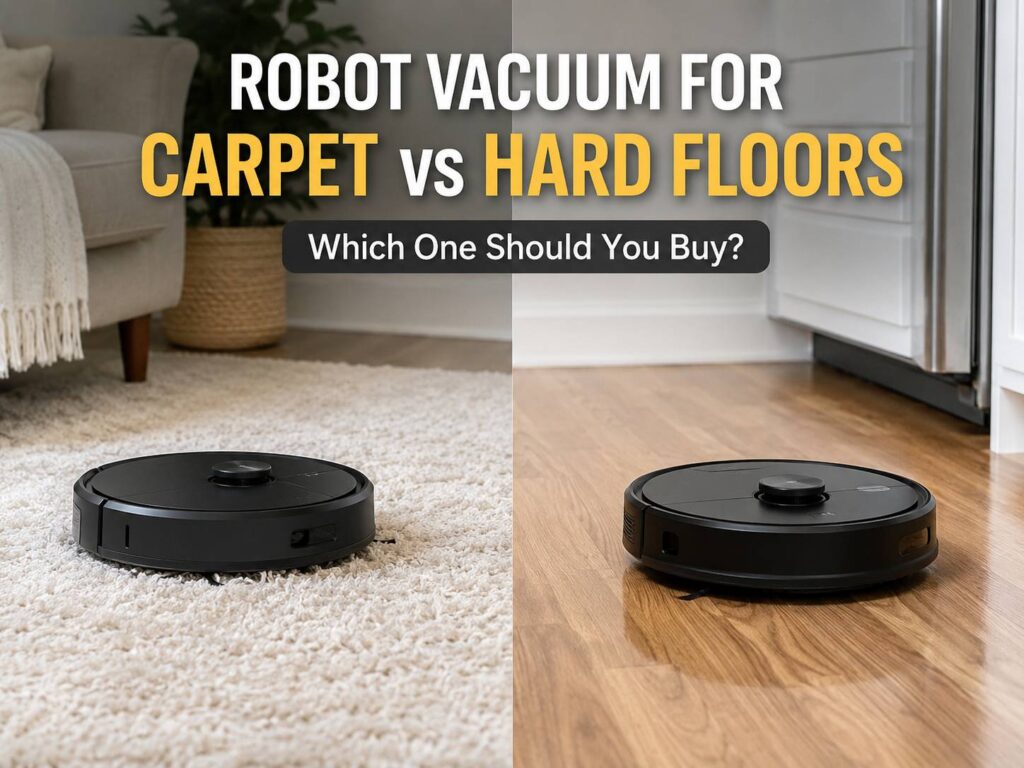
Robot Vacuum for Carpet vs Hard Floors: The Main Difference
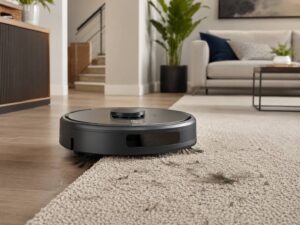
The biggest difference is how dirt behaves on each surface. On carpet, dust and hair sink into the fibers. Crumbs can sit below the top layer, and pet hair can cling tightly to the pile. For that reason, a robot vacuum for carpet needs more than simple suction. It needs a brush that can agitate the surface and pull debris upward.
On hard floors, the dirt stays on top. Dust, sand, crumbs, and pet hair are easier to see, but they can spread fast. A robot vacuum for hard floors needs controlled suction, good side brushes, and smooth movement. It should collect dirt without pushing it across the room.
That is why a basic robot can look fine on tile but struggle badly on carpet. At the same time, a powerful carpet-focused model can feel too loud or too aggressive for delicate hard floors. The best choice depends on your floor type, your pets, your rugs, and how often you clean.
What Makes a Robot Vacuum Good for Carpet?
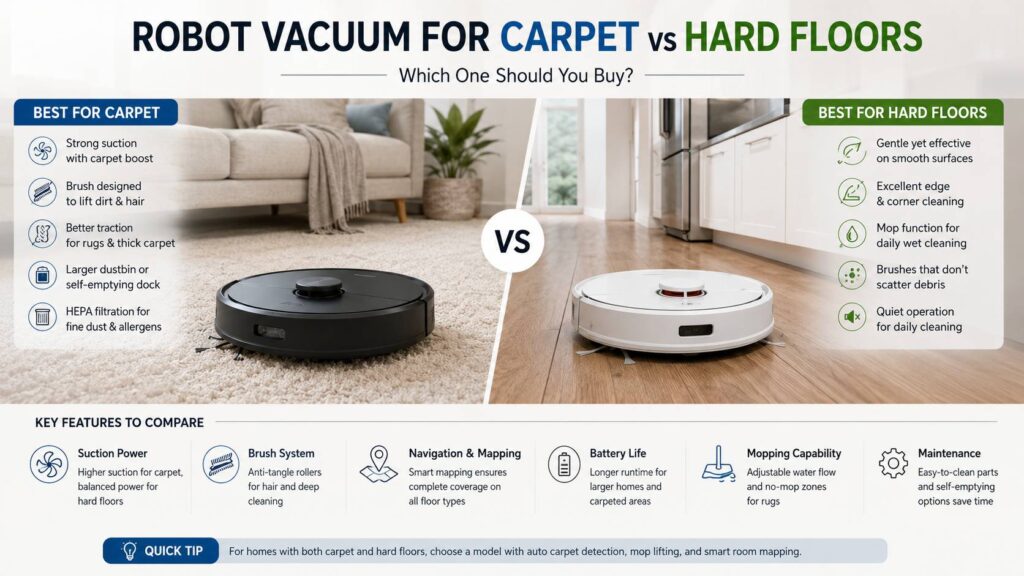
A good carpet robot vacuum needs strong pickup and a brush system that can dig into the fibers without getting clogged. Low-pile carpet is easier to clean, but medium-pile carpet and thick rugs need more power.
Look for these features:
- Strong suction with automatic carpet boost
- A main brush that makes firm contact with the floor
- Rubber rollers or anti-tangle brush design
- Good climbing ability for rugs and thresholds
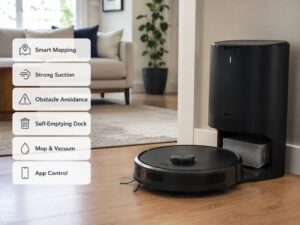
- Smart mapping with room-by-room cleaning
- Self-emptying dock for homes with pets
- High-quality filtration
- Strong battery life on high suction mode
Carpet boost is one of the most useful features. The robot detects carpet, then raises suction by itself. This helps with dust, crumbs, and pet hair. It can make the robot louder, but the extra noise is usually worth it on carpeted rooms.
For pet owners, the brush design matters even more. Long hair can wrap around the roller, and pet fur can fill the dustbin fast. In real use, rubber rollers are usually easier to clean than traditional bristle brushes. They still need maintenance, but they save time.
Another issue is rug movement. Thin rugs can bunch up, and rug fringe can get caught under the robot. For that reason, smart maps and no-go zones are useful. You can block problem areas instead of rescuing the robot every few days.
What Makes a Robot Vacuum Good for Hard Floors?
A good hard-floor robot vacuum should pick up fine dust, crumbs, hair, and grit without scratching or scattering debris. Hard floors show missed spots quickly, especially near cabinets, baseboards, and chair legs.
Look for these features:
- Soft or rubberized main brush
- Strong edge and corner cleaning
- Controlled side brush speed
- Rubber wheels that move smoothly
- Smart navigation for full-room coverage
- Mop function with adjustable water flow
- No-mop zones for rugs
- Quiet daily cleaning mode
For hardwood, laminate, vinyl, and tile, gentle cleaning matters. The robot should move smoothly and avoid dragging debris across the floor. Tiny grit can act like sandpaper, so daily cleaning helps protect delicate surfaces.
Mopping is useful on hard floors, but expectations need to stay realistic. A robot mop can wipe dust, fresh footprints, and light marks. It will not replace scrubbing dried spills, sticky kitchen mess, or dirty grout. Still, for daily upkeep, a vacuum and mop combo can make the floor feel fresher with less effort.
If you want a deeper look at real-world value before buying, this guide on are robot vacuums worth it in 2026 gives a helpful overview of where robot vacuums make sense and where they still fall short.
Carpet Cleaning: Suction Is Not the Whole Story
Suction power is the first spec to look at, but it does not tell the full story. A robot vacuum also needs a strong brush, good airflow, and steady floor contact.
A robot with high suction can still miss dirt if the brush barely touches the carpet. At the same time, a model with lower suction can perform well on low-pile carpet if the brush design is strong.
For carpet, the best cleaning comes from the full system:
- Suction pulls dirt into the bin.
- The brush loosens hair and dust.
- The wheels keep the robot stable.
- The filter keeps fine dust from escaping.
- The map helps the robot clean the full room.
In daily use, carpet also fills the dustbin faster than hard floors. This is especially true in homes with pets. A self-emptying dock helps a lot. It reduces the number of times you need to empty the robot by hand, and it keeps the vacuum ready for the next run.
That said, robot vacuums still have limits on thick carpet. They are great for daily maintenance, but they do not fully replace a full-size vacuum for deep cleaning. For homes with heavy carpet, I would use the robot daily and keep a regular vacuum for deeper weekly cleaning.
Hard Floor Cleaning: Edge Pickup Matters More Than You Think
Hard floors can make a robot vacuum look better than it really is. Open spaces are easy. Edges, corners, chair legs, and under-cabinet areas are the real test.
A good robot vacuum for hard floors should clean along baseboards without leaving a dust line. It should reach under furniture, pick up fine dust, and avoid scattering larger crumbs.
Side brushes play a big role here. If they spin too fast, they can throw cat litter, cereal, rice, or dry pet food away from the suction path. Better models manage this more carefully.
Navigation matters as well. Random-path robots can clean some dirt, but they often miss areas. A robot with LiDAR or camera-based mapping usually covers rooms in neat lines. Then it returns to missed areas with better consistency.
For hard floors, I prefer a robot that runs daily in quiet mode. It keeps dust under control and reduces the buildup of grit. This is especially useful on glossy vinyl, sealed hardwood, and dark tile, where dust shows quickly.
Robot Vacuum and Mop Combos for Hard Floors
Robot vacuum and mop combos are most useful in homes with hard floors. They can vacuum loose dirt first, then wipe the surface in the same cleaning cycle. This works well for dust, light kitchen marks, and paw prints.
A good robot mop should include:
- Adjustable water levels
- Washable mop pads
- No-mop zones
- Mop lifting for rugs
- Good vacuuming before wet cleaning
- Easy pad removal
- A dock that keeps things simple
Rotating mop pads usually clean better than flat drag pads. They apply more movement to the floor, so they can handle light marks more effectively. Even so, sticky spills still need manual cleaning.
There is one important downside. Mop systems need care. Pads need washing, water tanks need refilling, and dirty water tanks need emptying on advanced docks. If you skip this, the mop can smell bad or leave streaks.
For carpet-heavy homes, mopping matters less. For tile, vinyl, laminate, and sealed hardwood, it can be a strong reason to choose a combo model.
Mixed Floors Need Smarter Features
Most homes have more than one floor type. You may have carpet in bedrooms, tile in the kitchen, rugs in the living room, and hard floors in the hallway. In that case, you need a balanced robot vacuum.
For mixed floors, look for:
- Automatic carpet detection
- Carpet boost
- Mop lifting
- No-mop zones
- Smart room maps
- Anti-tangle rollers
- Good climbing ability
- Self-emptying dock
- Obstacle avoidance
The robot should change behavior by surface. On carpet, it should increase suction. On hard floors, it should clean quietly and avoid scattering debris. Near rugs, it should lift the mop or avoid the area completely.
This is where cheaper robots can cause frustration. They may clean open hard floors well, then get stuck on rug edges or drag a wet mop across carpet. Spending more for better mapping and floor detection often makes sense in mixed homes.
For a clearer buying checklist, this guide on robot vacuum features that actually matter is useful, especially if you want to avoid paying extra for features you will rarely use.
Pet Hair on Carpet vs Hard Floors
Pet hair changes the whole buying decision. On hard floors, hair rolls into corners and gathers under furniture. On carpet, it sticks to fibers and can be hard to lift.
For pets and carpet, choose a robot with:
- Rubber rollers
- Strong carpet boost
- Self-emptying dock
- Anti-tangle brush design
- High-quality filtration
- Strong room scheduling
For pets and hard floors, choose a robot with:
- Strong edge cleaning
- Daily schedule mode
- Good side brush control
- Mop support for paw marks
- Easy-to-clean rollers
- Washable parts where possible
Plan for maintenance as well. Pet hair can block rollers, wheels, sensors, and filters. If the robot is hard to clean, you will stop using it as often. A simple brush release system can make a big difference.
A self-emptying dock is especially useful for pet owners. Small robot dustbins fill quickly with fur, and a full bin reduces cleaning performance.
Common Problems on Carpet
Robot vacuums can work well on carpet, but a few problems show up often.
Thick rugs can stop the robot. Some models do not have enough clearance or wheel power. They climb halfway, slow down, then send an error.
Rug fringe can tangle. Long fringe is one of the most common robot vacuum problems. The easiest fix is to tuck the fringe under the rug or create a no-go zone.
Black carpet can confuse some sensors. Certain cliff sensors read very dark surfaces as drops. Not every robot has this problem, but it still appears on some models.
Hair wrap can reduce pickup. Long hair around the roller blocks the brush from turning freely. Regular cleaning solves this, but anti-tangle rollers reduce the work.
Noise can increase on carpet. Carpet boost uses more power, so the robot sounds louder. This is normal, but it may bother you in a small apartment.
Common Problems on Hard Floors
Hard floors have different issues.
Crumbs can scatter. Fast side brushes can flick larger debris away from the robot. This happens often with cereal, rice, dry pet food, and litter.
Mops can leave streaks. Too much water leaves marks on glossy floors. Too little water barely cleans. Adjustable water flow helps.
Corners can stay dusty. Round robots struggle more with tight corners. Strong edge routines help, but no robot cleans corners perfectly.
Grit can scratch delicate floors. A robot that runs daily helps reduce this risk, since dirt does not sit long enough to build up.
Mop pads can smell. A damp pad left on the robot for too long can develop an odor. Remove it, wash it, and let it dry after use.
Which Robot Vacuum Should You Buy?
Choose a robot vacuum for carpet if your home has carpeted bedrooms, thick rugs, pets, or lots of hair. Focus on suction, brush design, carpet boost, and self-emptying.
Choose a robot vacuum for hard floors if your home has hardwood, tile, laminate, vinyl, or stone. Focus on navigation, edge pickup, gentle rollers, and mopping.
Choose a mixed-floor robot if your home has both. This is the best choice for many families. It should detect carpets, raise suction, lift the mop, and let you set no-go zones.
Here is the simplest way to decide:
- Mostly carpet: buy a vacuum-first robot with strong suction.
- Mostly hard floors: buy a robot vacuum and mop combo.
- Pets plus carpet: buy a self-emptying model with rubber rollers.
- Pets plus hard floors: buy a model with strong edge cleaning.
- Rugs plus hard floors: buy a robot with mop lifting.
- Thick carpet: keep a regular vacuum for deeper cleaning.
Buying Checklist Before You Choose
Before you buy, check your home first. The best robot vacuum is not always the most expensive one. It is the one that fits your floors and your cleaning habits.
Check these details:
- Floor type: carpet, hard floors, or mixed
- Carpet pile: low, medium, or thick
- Rugs: flat, thick, or fringed
- Pets: none, short hair, or long hair
- Hair length in the home: short or long
- Dock space: compact dock or self-emptying dock
- Noise level: quiet cleaning or max power
- Mop needs: light wiping or regular wet cleaning
- App control: simple schedule or room-by-room control
- Maintenance: easy brush and filter cleaning
Do not buy only by suction numbers. Look at the brush system, navigation, floor detection, mop control, and maintenance. These details matter more after the first week.
Final Verdict: Carpet vs Hard Floors
A robot vacuum for carpet should focus on suction, brush contact, traction, and hair pickup. A robot vacuum for hard floors should focus on fine dust, edge cleaning, gentle movement, and mopping.
For most homes, the best choice is a mixed-floor robot vacuum with carpet detection, carpet boost, no-mop zones, and anti-tangle rollers. It will not replace deep cleaning, but it can keep floors cleaner every day with much less effort.
If your home is mostly carpet, buy a strong vacuum-first robot. If your home is mostly hard floors, a robot vacuum and mop combo makes more sense. If your home has both, choose the smarter model with better mapping and floor control. The right robot is not the one with the biggest number on the box. It is the one that cleans your actual floors well.