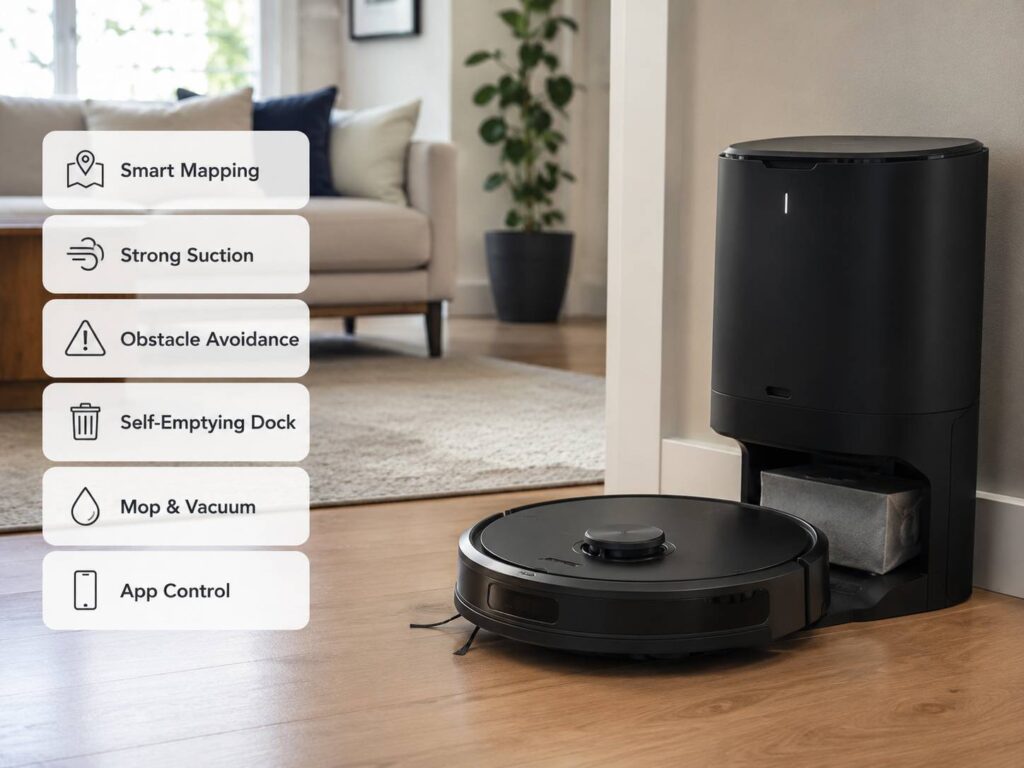
A robot vacuum can save real time, but only if it has the right features for your home. The tricky part is that most product pages make every upgrade sound equally useful. Huge suction numbers, AI cameras, self-washing mops, laser mapping, voice control, and auto-empty docks all look tempting.
Yet not every feature deserves your money.
The best robot vacuum is not the model with the longest spec sheet. It is the one that cleans your floors with the least babysitting. It should map your rooms properly, avoid common clutter, pick up dust and hair, return to the dock without drama, and stay easy to maintain.
That is the real test. If a robot needs constant rescuing, emptying, untangling, or remapping, it will feel like another chore. So, before you buy, look past the shiny extras and focus on the robot vacuum features that make daily cleaning easier.
Smart Navigation Should Be Your First Priority
Good navigation matters more than almost any other feature. A robot vacuum that moves well can clean faster, miss fewer spots, and waste less battery. Poor navigation creates the opposite problem. The robot bumps around, repeats the same areas, skips corners, and gets lost under furniture.
LiDAR navigation is one of the safest choices for most homes. It scans the room and builds a clear map, even in low light. Camera-based navigation can work well too, mainly on models with strong object recognition. Some premium robots use a mix of sensors, cameras, structured light, or radar to improve movement.
Cheap bump-and-go robots can still work in small spaces. They are simple, and they cost less. Still, they do not clean in a neat pattern, and they can feel random in larger homes.
A good robot should let you view the map in the app. You should be able to split rooms, name rooms, set no-go zones, and send the robot to one area. If the map is weak, the whole experience gets weaker.
Room Mapping and No-Go Zones Are Not Optional Anymore
Room mapping sounds basic now, but it changes how useful a robot vacuum feels. Instead of cleaning the whole house every time, you can send it to the kitchen after dinner, the hallway after muddy shoes, or the living room before guests arrive.
No-go zones matter just as much. Every home has trouble spots. The robot may get stuck under a chair. A cable near the desk can tangle the brush. Thick rugs can stop the wheels or confuse the sensors. A no-go zone fixes many of these problems without physical barriers.
No-mop zones are key for vacuum and mop models. They stop the robot from dragging a wet mop across rugs or carpeted rooms. For mixed floors, this feature can prevent a lot of frustration.
My honest view: I would choose accurate mapping over a bigger suction claim. A robot that knows where it is will clean better than a stronger robot that keeps getting confused.
Obstacle Avoidance Saves You From Failed Cleaning Runs
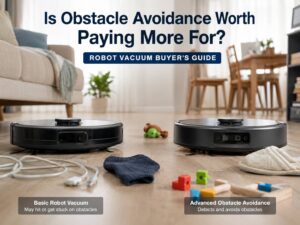
Obstacle avoidance is one of those features that sounds fancy at first, then becomes very practical. Real homes have socks, cords, toys, pet bowls, slippers, chair legs, and random clutter. A robot that cannot deal with those items will stop more often.
Better obstacle avoidance can spot common objects and move around them. This makes cleaning more reliable, especially if you run the robot when you are not home. Pet owners should pay extra attention here. A robot that can avoid pet messes can prevent a terrible cleanup.
Still, no system is perfect. Thin cables, dark objects, small toys, mirrored surfaces, and messy corners can still confuse many robots. You should still do a quick floor check before a full clean.
The goal is not perfection. Fewer rescues, fewer tangled brushes, and fewer half-finished cleaning sessions matter more.
Suction Power Matters, but It Is Not the Whole Story
Suction power gets a lot of attention. Brands often list suction in Pa, and the numbers keep getting higher. Strong suction can help with carpet, crumbs, sand, and heavier debris.
Still, suction alone does not prove that a robot cleans well. Brush design, airflow, floor contact, dustbin shape, and cleaning pattern matter too. A robot with a smart brush system and steady floor contact can beat another model with a bigger suction number.
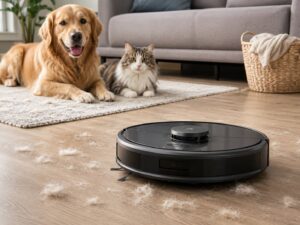
For pet hair, brush design is especially important. Rubber rollers or anti-tangle systems are easier to maintain than old-style bristle brushes. Long hair can wrap around a roller fast. Once that happens, cleaning performance drops, and you have to cut the hair out by hand.
Side brushes need balance too. If they spin too fast, they can scatter crumbs across hard floors. A better robot pulls debris inward instead of throwing it away from the cleaning path.
Look for real pickup performance, not just the biggest number on the box.
Self-Emptying Docks Are Worth It for Most Busy Homes
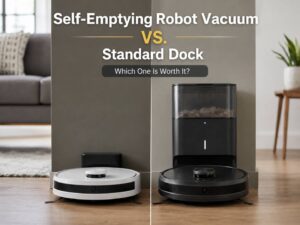
A self-emptying dock is one of the robot vacuum features that can truly change daily use. The robot returns to the base, and the dock pulls dirt from the small onboard bin into a larger bag or container.
This matters in homes with pets, kids, carpets, or daily cleaning schedules. Robot dustbins are small. Once they fill up, the robot picks up less debris. A self-emptying dock keeps the robot ready for the next run.
There are trade-offs. The dock can be loud for a few seconds. Bagged systems add replacement costs. Bagless systems save money but can release more dust when emptied. The dock takes more floor space than a basic charger.
Even with those issues, I think self-emptying is worth it for most people who want a low-maintenance robot. It turns the vacuum from a gadget you manage into a cleaner you can schedule and mostly ignore.
If you are still deciding whether the upgrade makes sense, this deeper guide on are robot vacuums worth it in 2026 can help you compare the real value against the cost.
Mopping Features Need a Careful Look
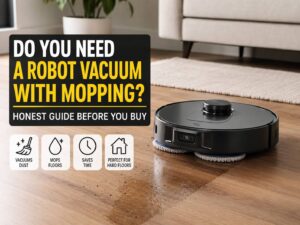
Robot mopping has improved a lot, but not every vacuum-mop combo cleans the same way. Some models only drag a damp pad across the floor. That helps with fine dust, but it will not scrub sticky spills or dried marks very well.
Better models use vibrating pads, spinning mop pads, downward pressure, or rolling mop systems. These designs can clean light stains better and keep hard floors fresher between manual mops.
Mop lifting is a major feature for homes with rugs. The robot raises the mop pad when it detects carpet. This helps protect rugs and lets the robot vacuum and mop in one run.
Auto water control matters too. Too much water can leave streaks, especially on wood-style floors. Too little water does almost nothing. A good app should let you adjust water flow by room.
A robot mop will not replace a proper deep clean. It is best for maintenance. Used daily or several times per week, it can keep floors looking cleaner with less effort.
For a more detailed comparison, see this guide on robot vacuum and mop vs vacuum-only robot.
Mop Washing and Drying Can Be More Useful Than Extra Suction
If you want a robot vacuum and mop, pay close attention to the dock. A basic charging dock will not reduce much work. A better dock can wash mop pads, refill the water tank, empty dust, collect dirty water, and dry the mop pads after cleaning.
Mop drying is more useful than it sounds. A wet pad left sitting in the dock can start to smell. It can spread stale water during the next cleaning session. Warm-air drying helps reduce that problem.
Mop washing is helpful too, but it does not remove all maintenance. Dirty water tanks need emptying. Clean water tanks need refilling. Wash trays collect grime. Filters and pads still need replacement.
My real opinion: a full-service dock is worth it if you mop often. If you only mop from time to time, a simpler vacuum-only robot may be better value.
Carpet Detection Is a Must for Mixed Floors
Many homes have hard floors, rugs, and carpeted rooms. That mix makes carpet detection very important.
A good robot should detect carpet and increase suction. It should lift the mop or avoid carpet during mopping. Without these features, you may get damp rugs, weak carpet pickup, or too much manual setup.
Carpet boost helps with dust and hair trapped in fibers. It works best on low-pile and medium-pile carpets. Thick rugs can still cause problems. Some robots climb them poorly, and others get stuck near tassels or raised edges.
Threshold height matters too. A robot that cannot cross room dividers or rug edges will need help. Check this detail before buying if your home has raised transitions.
For carpet-heavy homes, vacuum performance should come before mopping features.
App Quality Makes a Big Difference
The app controls the whole robot vacuum experience. A great app makes cleaning simple. A poor app turns basic tasks into a headache.
Look for room-by-room cleaning, zone cleaning, no-go zones, no-mop zones, suction control, water control, schedules, map editing, multi-floor maps, and cleaning history. These tools help you adapt the robot to your home.
Map stability is very important. Some robots lose maps after furniture changes or software glitches. Others split rooms badly or shift virtual walls. That gets old fast.
Scheduling should be easy. You should be able to run the kitchen daily, the bedrooms twice per week, and the whole home on weekends. The more control you have, the more useful the robot becomes.
Voice control is fine, but the app matters more. You will likely use schedules and room cleaning far more often than voice commands.
Pet Hair Features Matter More Than Fancy Extras
Pet owners should focus on pickup, brush design, filtration, obstacle avoidance, and self-emptying. These features matter much more than lights, sounds, or live video.
Pet hair fills small robot bins fast. That makes self-emptying very useful. Anti-tangle brushes help too, mainly in homes with long-haired pets or family members with long hair.
Good edge cleaning matters in pet homes. Fur often collects near baseboards, under cabinets, and around furniture legs. A strong cleaning pattern and well-designed side brush can help.
Filtration is another point to check. A good filter traps fine dust inside the robot or dock. Bagged self-emptying docks can reduce dust exposure during emptying.
No robot vacuum removes every hair from every carpet. Still, the right model can reduce daily buildup and make full cleaning less tiring.
Battery Life Matters, but Recharge-and-Resume Matters More
Battery life can be confusing. Brands often list the longest runtime in the lowest power mode. Real cleaning uses more power, mainly on carpet or with mopping active.
Small apartments do not need huge battery life. Larger homes need enough runtime or a reliable recharge-and-resume feature. Recharge-and-resume lets the robot return to the dock, charge, then continue cleaning where it stopped.
This feature matters more than a giant runtime claim. A robot with smart mapping and recharge-and-resume can clean a large floor plan without much help.
Still, battery life should match your home. If the robot needs three charging breaks to finish one floor, cleaning will take too long.
Size, Height, and Shape Affect Real Cleaning
Robot height affects where the vacuum can clean. A taller robot may not fit under beds, sofas, cabinets, or TV stands. LiDAR models often have a raised sensor tower, so check the full height before buying.
A slim robot can reach under more furniture, but it may use a different navigation system. That trade-off matters.
Shape can affect corner cleaning. Round robots move well and rarely jam in tight spots. D-shaped or square-front robots can reach edges and corners better in some rooms. Extendable side brushes or mop pads can help near walls.
Before you buy, measure your lowest furniture clearance. A small difference can decide whether the robot cleans under your sofa or bumps into it every day.
Noise Levels Matter More Than You Think
Robot vacuums are quieter than many upright vacuums, but they are not silent. Max suction can be loud. Self-emptying docks are much louder for a short burst.
This matters if you work from home, have a baby, live in an apartment, or own nervous pets. A robot that sounds fine in a store video can feel annoying during a phone call.
Quiet mode can help on hard floors. Scheduling helps even more. Run the robot during time away from home, then use lower power for quick cleanups.
Dock noise is short, but it can still surprise people. If noise bothers you, check owner feedback before buying.
Privacy Matters If the Robot Has a Camera
Some robot vacuums use cameras for navigation, obstacle avoidance, or remote viewing. These features can help the robot identify objects, but they bring privacy concerns.
A camera-equipped robot moves through bedrooms, living rooms, and private areas. Treat it like any smart camera device. Check app settings, video features, remote viewing controls, and privacy options.
If you want fewer privacy worries, choose a LiDAR robot without a camera. You can still get strong mapping without video.
Camera-based obstacle avoidance is useful, but a camera-free model may feel better. Pick the option that fits your comfort level.
Features You Can Skip in Many Homes
Some robot vacuum features sound useful but do not change much in daily cleaning.
Voice control is nice, yet schedules do most of the work. Live video can be fun, but it does not clean anything. Decorative lights, extra sound effects, and too many cleaning modes add little value.
Very high suction claims need context. Strong suction helps, but brush design and navigation still matter. A robot with poor mapping and huge suction can still miss dirt.
Premium docks can be great, but only if you use the features often. If you rarely mop, do not pay extra for mop washing, hot water washing, or automatic water refill.
The best value comes from features you use every week.
Best Feature Mix by Home Type
A small apartment needs smart mapping, reliable pickup, a compact dock, and simple app controls. A self-emptying dock is helpful, but it is not always needed.
A pet home needs anti-tangle brushes, strong suction, self-emptying, good filtration, and strong obstacle avoidance. Pet owners should spend less on gimmicks and more on maintenance-saving features.
A hard-floor home benefits from controlled water flow, mop lifting, mop washing, mop drying, and good edge cleaning. Spinning or vibrating mop pads usually clean better than a basic wet pad.
A carpet-heavy home needs strong pickup, carpet boost, good rollers, and reliable navigation. Mopping matters less in this case.
A family home needs obstacle avoidance, room cleaning, self-emptying, schedules, and no-go zones. Toys, cords, and crumbs make reliability more important than fancy extras.
Common Problems People Notice After Buying
The first few days with a robot vacuum can feel impressive. Then the small problems show up.
Some robots get stuck under low furniture. Some dislike black rugs or shiny floors. Long hair can wrap around the roller. Small toys can block the intake. Wet mop pads can smell if they do not dry well.
Maps can drift after you move furniture. No-go zones may need small edits. Dirty water tanks can smell. Dock trays can collect grime. Replacement bags and pads can cost more than expected.
These issues are normal, but they matter. A robot vacuum is still a machine that needs setup and care. Smart features reduce that work. Poor feature choices just add cost.
Quick Buying Checklist
Check these points before choosing a model:
- Smart mapping with room editing
- Room-by-room cleaning
- No-go zones and no-mop zones
- Good obstacle avoidance
- Strong real-world pickup
- Anti-tangle brush design
- Self-emptying dock
- Mop lifting for rugs
- Mop washing and drying if you mop often
- Carpet detection and carpet boost
- Recharge-and-resume
- Reliable app controls
- Low enough height for your furniture
- Easy-to-find replacement bags, brushes, filters, and mop pads
- Reasonable noise level for your home
This list will help you avoid paying for features that sound good but do little for your daily routine.
Final Verdict: What Robot Vacuum Features Really Matter?
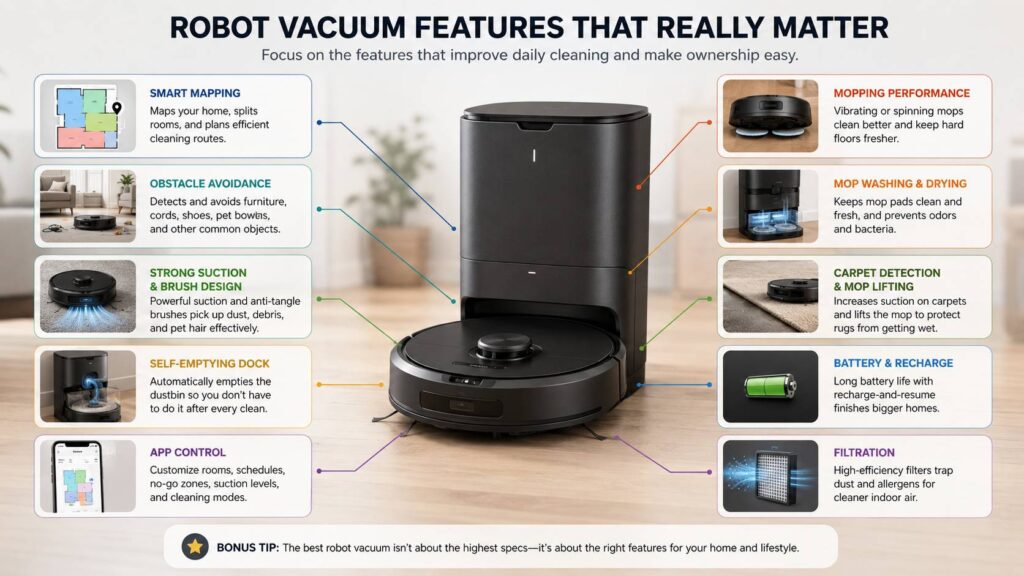
The robot vacuum features that matter most are smart navigation, accurate mapping, obstacle avoidance, strong pickup, self-emptying, good app controls, and the right mopping setup for your floors.
A great robot vacuum should reduce your workload. It should not create a new list of chores. Smart mapping and self-emptying make the biggest difference. Pet owners should care more about anti-tangle brushes and obstacle avoidance. Hard-floor homes deserve better mop quality and stronger dock cleaning features.
Do not chase the longest feature list. Choose the robot that fits your home, your floors, your pets, and your cleaning habits. That is where the real value shows up.