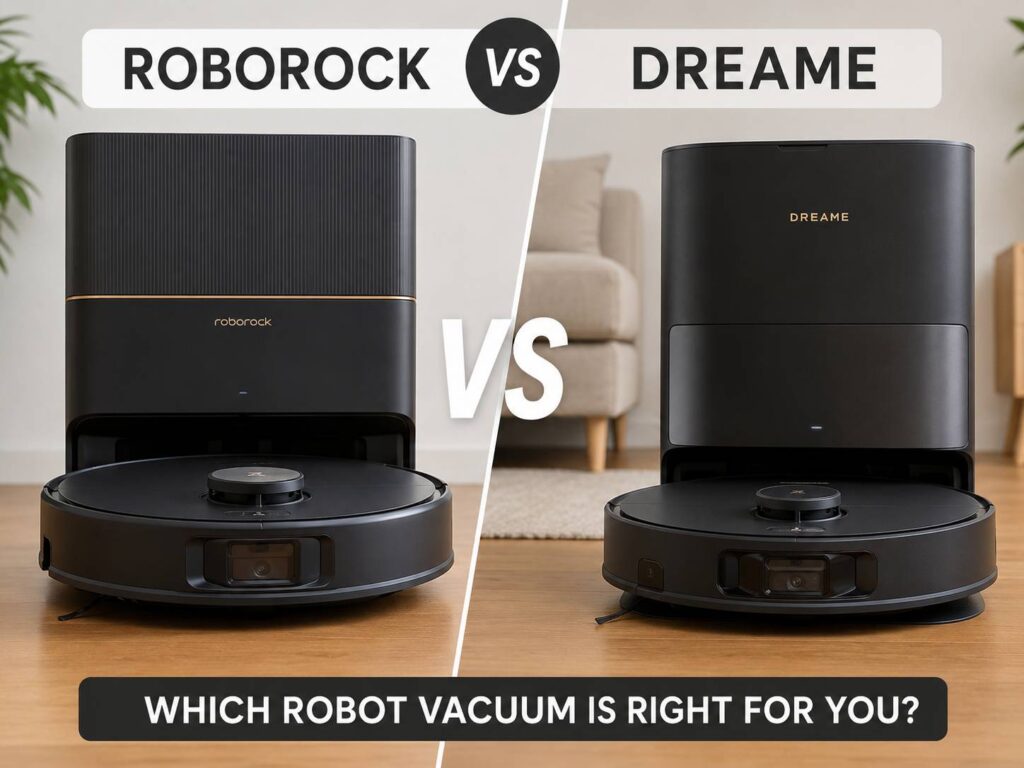
Roborock vs Dreame robot vacuums is one of the biggest comparisons for anyone buying a premium robot vacuum in 2026. Both brands sell powerful robot vacuum and mop combos. Both offer smart mapping, self-emptying docks, mop washing, obstacle avoidance, carpet detection, and app control. At first glance, the two brands look very close.
The difference appears during daily use.
Roborock often feels more polished. Its app is easy to understand, its maps are simple to edit, and its cleaning behavior feels predictable. Dreame feels more aggressive with hardware. It often gives you stronger feature lists, higher suction claims, advanced mop systems, and bold extras at competitive prices.
So, which one should you buy? The best answer depends on your floors, pets, carpets, thresholds, and patience for maintenance. For many homes, Roborock is the safer choice. For hard floors, strong mopping, and better hardware value, Dreame can be the more tempting pick.
Roborock vs Dreame Robot Vacuums: Quick Verdict
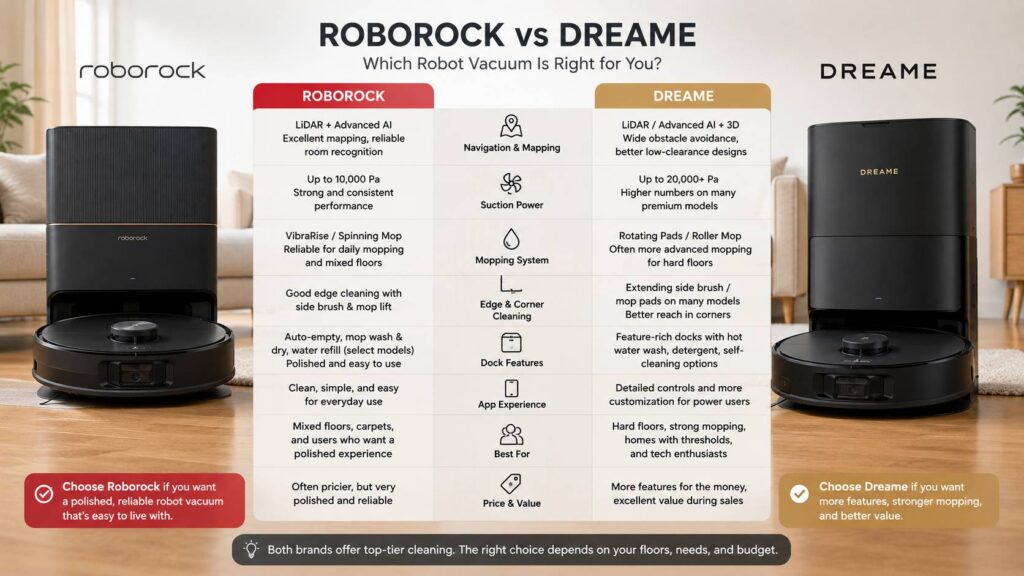
Choose Roborock if you want a robot vacuum that feels easy to live with. It is a strong pick for mixed floors, clean app control, reliable mapping, and daily cleaning routines that do not need much babysitting.
Pick Dreame if you want more advanced hardware for the money. It often gives you strong suction specs, smart mop systems, edge-cleaning tools, and feature-rich docks at prices that can look very attractive during sales.
My honest opinion is simple. Roborock is the brand I would recommend to most people who want fewer headaches. Dreame is the brand I would recommend to people who want more features and do not mind spending extra time adjusting settings.
What Roborock Does Better
Roborock’s biggest strength is polish. The robots usually feel mature, and the app is one of the easiest to use in the robot vacuum space. Room maps are clear. No-go zones are easy to set. Cleaning schedules, carpet settings, mop levels, and suction controls are simple enough for daily users.
That matters a lot. A robot vacuum can have a huge suction number, but poor software can make it annoying. Roborock usually avoids that problem. You set the map, choose your rooms, adjust a few settings, and let the robot work.
The brand is also strong for homes with both hard floors and carpets. Many newer Roborock models can lift mop pads, boost suction on carpet, and clean in neat rows. Higher-end docks can empty the dustbin, wash mop pads, dry mop pads, refill water, and reduce the amount of daily work.
Still, Roborock is not perfect. Premium models can be expensive, and the docks take up real floor space. Some advanced features sound better in ads than they feel in normal use. For example, smart arms, extra sensors, and special cleaning modes are helpful, but they do not remove the need to keep cords, socks, and small toys off the floor.
What Dreame Does Better
Dreame often feels more ambitious. The brand pushes hard on suction power, mopping systems, threshold climbing, edge cleaning, and dock features. That makes Dreame exciting for buyers who want the newest hardware ideas.
Many Dreame robots work very well on hard floors. Some models use extending mop pads or side brushes, so they can clean closer to walls and furniture legs. Others focus on hot-water mop washing, detergent use, or roller-style mopping systems. If mopping matters more than basic vacuuming, Dreame deserves serious attention.
For a deeper look at mop system differences, this guide on spinning mop pads vs roller mop robot vacuum is a useful next read. It helps explain why some robots scrub with round pads, and why newer roller mops can make more sense for certain hard floors.
Dreame is also interesting for homes with raised thresholds. Some newer models are designed to handle taller room transitions than older robot vacuums. That can help in older homes, apartments with thick door strips, or spaces with uneven flooring.
The tradeoff is complexity. Dreame’s app can feel busier. There are many settings to adjust, and some features need testing before they work the way you expect. Battery life can also drop faster in high-power modes. Plus, advanced docks and mop systems may need more cleaning than simpler designs.
Cleaning Performance on Hard Floors
Both brands clean hard floors well, especially in the mid-range and premium categories. Dust, crumbs, pet hair, cereal, lint, and daily debris are not a problem for most current models from either brand.
Roborock feels steady. It maps rooms well, follows logical cleaning paths, and usually gives predictable coverage. Tile, laminate, vinyl, and sealed hardwood floors are good matches for Roborock. Premium models with stronger mop systems can also handle light dried marks and normal dust buildup.
Dreame can feel more aggressive on hard floors. Its extending mop and brush systems help with corners and edges on some models. That is useful near baseboards, kitchen cabinets, pet bowls, and table legs. In real homes, those areas often collect the most visible dirt.
Still, neither brand replaces hand mopping for sticky spills, dried sauce, thick mud, or dirty grout. A good robot vacuum keeps floors cleaner between manual deep cleans. It does not turn a neglected floor into a spotless one every time.
Best hard-floor pick: Dreame has the edge for mopping power and edge reach. Roborock is better for buyers who want stable daily cleaning with less setup.
Carpet and Rug Performance
Carpet cleaning is harder to judge from spec sheets. Suction power matters, but brush design, airflow, weight, carpet contact, and navigation matter too.
Roborock performs well in mixed homes. Many newer models lift mop pads, boost suction on carpet, and use anti-tangle brush designs. That helps with pet hair, crumbs, dust, and light debris on rugs.
Dreame often advertises very high suction on premium models. Some robots pair that with strong brush systems, which can help pull debris from low-pile and medium-pile carpets. For rugs and daily surface cleaning, Dreame can be very competitive.
That said, thick carpets remain a challenge for all robot vacuums. A robot can maintain carpet, but it will not fully replace a strong upright vacuum in a home with deep carpet, heavy pet shedding, or embedded dirt.
Best carpet pick: Roborock is the safer all-round choice for mixed floors. Dreame is a strong pick if you want high suction and newer brush designs.
Pet Hair, Long Hair, and Tangle Control
Pet owners should pay close attention to brush design. Hair tangles can make a robot vacuum feel much less useful after a few weeks.
Roborock has improved its anti-tangle systems on newer models. Some premium robots use split brush designs and anti-tangle side brushes. These features help reduce wrapped hair from dogs, cats, and long human hair.
Dreame also takes hair seriously. Some newer models use brush systems designed to guide hair into the dustbin instead of letting it wrap around the roller. On paper, Dreame can look very strong here.
In daily use, both brands still need checks. Hair can wrap around side brushes, caster wheels, and roller ends. No anti-tangle system is perfect. If you have pets and long hair in the home, check the brush area once or twice per week.
Best pet hair pick: Roborock is the safer choice for low-maintenance users. Dreame is excellent for buyers who want strong hardware and accept more routine checks.
Mopping: Which Brand Does It Better?
On mopping, Dreame has the edge. The brand has pushed hard into rotating mop pads, extending mop arms, hot-water washing, and roller-style systems. These features can make a real difference on tile, vinyl, and sealed hard floors.
Roborock still does very well. Its mop systems are easy to manage, and the docks are usually polished. Higher-end models can wash and dry mop pads, lift mops over carpets, and adjust water levels by room. That makes Roborock a strong choice for mixed-floor homes.
The best choice depends on how much you care about mopping. If you only need light dust removal, both brands work well. If you want stronger hard-floor care, Dreame often feels more exciting. If you have rugs in many rooms, Roborock can feel safer and easier to trust.
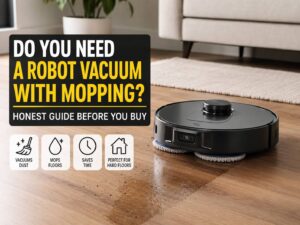
Before buying, ask one simple question: do you really need a robot vacuum with a mop? This guide on do you need a robot vacuum with mopping explains the pros, limits, and maintenance tradeoffs in more detail.
My opinion: Dreame has the stronger mopping story. Roborock has the better balance between mopping, vacuuming, carpets, and app control.
Navigation and Obstacle Avoidance
Roborock usually has the edge in map management. Its robots build clean maps, divide rooms well, and follow logical paths. That makes them easy to trust for whole-home cleaning.
Dreame is strong too. Some models use advanced sensors, cameras, structured light, and low-profile designs to move under furniture and avoid objects. The hardware can be very impressive, especially on premium models.
Even so, obstacle avoidance is not magic. Small cords, socks, shoelaces, pet toys, and dark objects can still cause problems. Lighting, floor color, object size, and app settings can change the result.
Best navigation pick: Roborock is better for simple, predictable control. Dreame is better for buyers who want advanced hardware and extra object-detection features.
Dock Maintenance and Hands-Free Cleaning
Modern docks are a major reason robot vacuums feel more useful now. Both Roborock and Dreame offer docks that can empty dust, wash mop pads, dry mop pads, refill water, and reduce daily work.
Roborock docks often feel refined. They are easy to use and fit well with the app experience. Some versions support automatic water refill and drainage, which can reduce maintenance even more.
Dreame docks can be feature-packed. Hot-water mop washing, detergent systems, self-cleaning trays, and large dust bags are common on higher-end models. That makes Dreame appealing for buyers who want a more hands-off setup.
Still, every dock needs care. Dirty water tanks can smell if left too long. Mop wash areas can collect grime. Dust bags need replacing. Filters need cleaning. Pet hair can build up around brush parts.
This is one area where buyer expectations matter. A self-cleaning dock reduces work, but it does not remove maintenance completely.
App Experience and Smart Controls
Roborock wins for app simplicity. The layout is easier to understand, and common settings are simple to find. Room naming, schedules, suction levels, mop settings, no-go zones, and carpet controls feel clear.
Dreame gives you more controls. That is great for power users. You can fine-tune cleaning behavior, edge cleaning, pet zones, mop washing, carpet behavior, and dock settings. The downside is that the app can feel crowded if you just want basic cleaning.
Roborock’s app is the better one. If you like detailed control, Dreame may feel more flexible.
Price and Value
Roborock often costs more at the premium end. You pay for polish, app quality, mature navigation, and a strong reputation. If you want the safest premium buy, that extra cost can make sense.
Dreame often gives you more hardware for the money. During sales, Dreame models can look very attractive next to similar Roborock models. You may get strong suction, advanced mopping, and a feature-rich dock at a lower price.
Do not compare only brand names. Compare exact models. A Roborock Qrevo model is not the same type of product as a Roborock Saros model. A Dreame L-series robot is not the same as a top X-series or Aqua model.
Sale price matters too. A discounted Roborock can beat a full-price Dreame. A discounted Dreame can become the best value in its category.
Common Problems Buyers Should Know
Roborock common issues:
- Premium models can be expensive
- Large docks need floor space
- Some advanced features feel less useful after setup
- Mop streaks can appear on glossy floors
- Accessories and replacement parts can add cost
- Rugs still need careful app settings
Dreame common issues:
- The app can feel busy
- Advanced features need more setup
- Battery life drops in high-power modes
- Complex docks need regular rinsing
- Roller mop systems can need extra cleaning
- Small cords and tiny objects can still cause trouble
These issues do not make either brand bad. They show why the right choice depends on your home.
Which One Should You Buy?
Choose Roborock if:
- You want a cleaner app
- You care about reliable mapping
- You have both carpets and hard floors
- You want fewer settings to manage
- You prefer a polished user experience
- You want a premium robot that feels easy to trust
Choose Dreame if:
- You want more features for the money
- You have mostly hard floors
- You care about stronger mopping
- You have pets and edge dirt
- You have tall thresholds
- You like detailed app controls
For apartments, Roborock often makes more sense. The setup is easier, and most apartments do not need extreme threshold climbing. For larger homes with hard floors, pets, and tricky room transitions, Dreame becomes very tempting.
Final Verdict: Roborock vs Dreame Robot Vacuums
Roborock is the better choice if you want a smooth ownership experience. It offers strong mapping, polished app control, good carpet handling, and reliable daily cleaning. It may cost more, but it usually feels easier to live with.
Dreame is the better choice for buyers who want advanced mopping, strong hardware value, high suction specs, and more features for the price. It can be excellent on hard floors, especially in homes with pets, edges, and room transitions.
My practical recommendation is this: pick Roborock if you want the safer and simpler premium choice. Pick Dreame if you want stronger mopping features and better hardware value. Both brands are good. The right one is the one that fits your floors, habits, and patience for maintenance.