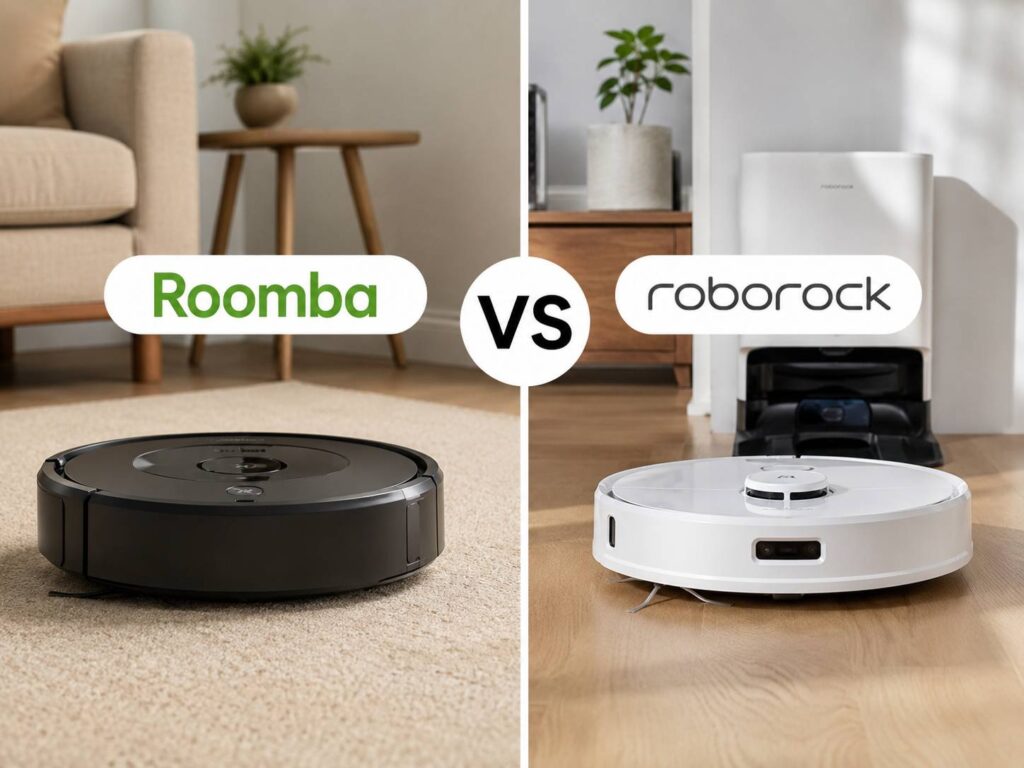
Roomba vs Roborock is one of the first comparisons people make before buying a robot vacuum. Both brands sell models that can vacuum, mop, map rooms, clean on a schedule, return to the dock, and reduce daily floor maintenance. Still, they do not feel the same in real homes.
Roomba is the better-known name, often used as a general word for any robot vacuum. Roborock feels more technical. It often pushes harder on suction power, app controls, mopping systems, LiDAR mapping, and full-service docks.
That difference matters once the robot starts cleaning under tables, around pet bowls, over rug edges, near cables, and across rooms with different floor types. A robot vacuum can look great on paper, then struggle with a thin bath mat or a chair layout. So, this guide looks at Roomba vs Roborock from a real buying angle, not just a spec sheet.
My honest view is simple. Roborock is usually the stronger pick for people who want advanced features, better mopping, and more control. Roomba still makes sense for buyers who want a familiar brand, simple use, and solid vacuuming with less setup.
Roomba vs Roborock: The Short Answer
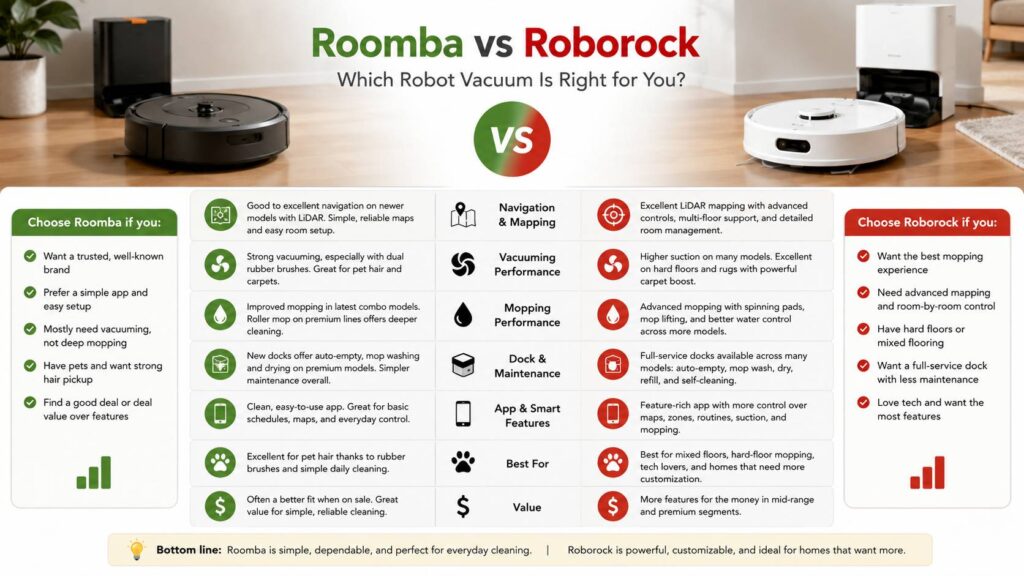
Choose Roomba if you want a simple robot vacuum from a long-known brand. It suits people who care more about daily vacuuming than tuning every room setting. Roomba models are often easy to use, easy to understand, and good enough for regular dust, crumbs, and pet hair.
Choose Roborock if you want more control, stronger mopping options, detailed maps, and a dock that does more of the messy work. Roborock is usually the better choice for homes with hard floors, pets, larger layouts, or mixed rooms that need different cleaning settings.
The gap is not as wide as it used to be. Newer Roomba models now offer better docks, stronger mopping systems, LiDAR mapping on some models, and smarter cleaning routines. Roborock still feels ahead in app depth and technical features, especially in the mid-range and premium categories.
Design Philosophy: Simple Cleaning vs Feature Control
Roomba aims for a more guided experience. The app focuses on schedules, room cleaning, maps, and cleaning preferences. You can set it up, create a routine, and let it run without touching too many advanced options.
Roborock gives you more control. You can adjust suction, mop intensity, water flow, room order, map zones, floor levels, no-go areas, carpet behavior, and dock settings on many models. That extra control can feel a little much at first, but it helps once you learn the app.
This is where the choice becomes personal. A buyer who wants a robot to clean the kitchen every night after dinner may like Roomba’s simpler style. A buyer who wants the robot to vacuum the living room, skip the play mat, mop the hallway, avoid pet bowls, then deep clean the kitchen will likely prefer Roborock.
My opinion: Roborock feels better for people who enjoy control. Roomba feels better for people who want fewer decisions.
Navigation and Mapping
Good navigation matters as much as suction. Strong suction will not help much if the robot misses corners, repeats the same area, or gets lost between rooms.
Roborock has a strong reputation for LiDAR mapping. Its robots often build maps quickly, split rooms cleanly, and let you edit zones with good detail. The app normally gives you more room-by-room control than Roomba, especially if you own a larger home or more than one floor.
Roomba has improved a lot. Some newer models use LiDAR for quicker mapping and more organized cleaning paths. Older Roomba models had a reputation for less predictable navigation, mainly in cheaper lines. The newer range feels more modern, but Roborock still has the edge in detailed map control.
Real homes still create problems for both brands. Chair legs, low furniture, mirror reflections, dark rugs, tangled cables, and raised thresholds can cause trouble. No robot vacuum maps perfectly in every home.
My opinion: Roborock wins mapping for most buyers. Roomba is easier to learn, but Roborock gives you more control after setup.
Vacuuming Performance
Roomba and Roborock can both handle daily dust, crumbs, pet hair, and light debris. The result depends on the exact model, floor type, brush design, and cleaning mode.
Roomba has long been strong with pet hair, partly thanks to its rubber brush systems on many models. Rubber rollers can deal with hair better than basic bristle brushes. This does not mean every Roomba beats every Roborock, but it explains why Roomba is still worth a look for pet owners.
Roborock often wins on raw suction numbers. Many models advertise high suction ratings, and premium Roborock robots can pull dirt well from hard floors and low-pile rugs. Suction does not tell the full story, though. Brush pressure, airflow path, bin design, edge cleaning, and cleaning route matter too.
On hard floors, both brands do well. On carpets, Roomba can feel more consistent in some pet-hair situations. Roborock can still perform very well, especially on newer premium models with stronger suction and carpet boost.
My opinion: Roomba is still a safe choice for pet hair and carpet-focused homes. Roborock is stronger for buyers who want more power, more settings, and better mixed-floor cleaning.
Mopping Performance
Mopping is one of the clearest differences in the Roomba vs Roborock comparison. Roborock usually feels ahead here.
Many Roborock models use spinning mop pads, sonic mopping, mop lifting, dock washing, drying, and water control. These features matter on tile, laminate, vinyl, and sealed hardwood. A basic drag pad can wipe dust, but it will not handle dried kitchen marks very well. Spinning pads or powered mop systems do a better job on sticky spots.
Roomba has improved its mopping range. Newer Combo models bring better docks, mop washing, mop drying, and more serious hard-floor cleaning. Some higher-end Roomba models use a roller-style mop system, which makes them more interesting than older vacuum-first Roombas.
Still, Roborock has more depth across its lineup. You can find advanced mopping in more price ranges, and the app often gives better control over water levels and room behavior.
My opinion: choose Roborock if mopping is a main reason for buying a robot vacuum. Choose Roomba if you mainly vacuum and only need light mopping.
Docks and Hands-Free Maintenance
A good dock changes the robot vacuum experience. A basic charging dock still leaves you with a lot of work. You empty the bin, wash the mop pad, refill water, clean the robot, and remove dirty parts by hand.
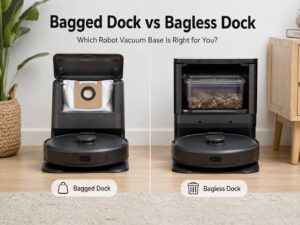
A better dock can empty the dustbin, wash mop pads, dry them, refill the water tank, and collect dirty water. This makes the robot far easier to live with.
Roborock has been strong in dock design for several years. Many of its better models come with docks that handle dust, water, mop cleaning, and drying. Higher-end models add hotter washing, stronger drying, and better self-cleaning features.
Roomba now competes more seriously in this area. Its newer AutoWash and combo docks bring it closer to Roborock. That is good news for buyers who prefer iRobot but still want less manual cleaning.
The issue is size. Full-service docks are large. They need floor space, wall clearance, access to clean water tanks, and regular bag changes. In a small apartment, a compact Roomba with built-in debris storage can make more sense than a huge premium dock.
My opinion: get a full-service dock if you mop often. For vacuum-only cleaning, a self-empty dock is enough.
App Experience and Smart Features
Roborock has the better app for detailed control. It gives you more options for maps, suction, mop flow, room sequence, carpet behavior, and targeted cleaning. Power users will like it.
Roomba’s app feels cleaner and less crowded. That can be a real advantage. Not everyone wants to manage advanced map layers or tune cleaning strength room by room. A simpler app can make the robot easier for the whole family to use.
Voice assistant support, smart home compatibility, and feature access vary by model and region. Check the exact model before buying, since names and features can differ across markets.
My opinion: Roborock wins for control. Roomba wins for simplicity.
Pet Hair, Kids, and Everyday Mess
For pet hair, both brands can work well. Roomba’s rubber brush design gives it a strong case for homes with cats or dogs. Roborock counters with better room controls, pet-area cleaning options on some models, and stronger mopping near bowls or litter areas.
For homes with kids, obstacle avoidance becomes more valuable. Toys, socks, charging cables, crayons, and small objects can stop a robot quickly. Premium models from both brands try to avoid objects, but no system is perfect. You still need to pick up loose cables and risky items before cleaning.
For food crumbs and daily mess, either brand works. The bigger difference is how much the robot needs your help. A Roborock with a full dock and strong mapping can feel more independent. A simpler Roomba can feel easier, but may need more manual attention, depending on the model.
Carpet, Rugs, and Thresholds
Carpets and rugs are still tricky for robot vacuums. Roomba has a good reputation on carpets, especially with pet hair. Roborock has improved with stronger suction, mop lifting, and carpet boost modes.
Thin rugs can cause trouble for both brands. A loose rug corner can fold under the robot. Tassels can wrap around the brush. Small mats can move across the room. Dark rugs may confuse sensors on some models.
Thresholds matter too. Roborock has pushed harder on systems that help robots cross higher room transitions. That can help in older homes or apartments with uneven floors. Roomba can handle normal thresholds, but you should check clearance specs before buying.
My opinion: choose Roomba for simple carpet-heavy homes. Choose Roborock for mixed flooring with thresholds, hard floors, and mopping needs.
Common Issues Buyers Should Expect
No robot vacuum brand is trouble-free. Roomba and Roborock both need regular care.
Common Roomba issues include full bins, brush hair buildup, occasional map confusion, stuck errors, and uneven edge pickup on some models. Some users like the simpler app, but others want deeper controls.
Common Roborock issues include app complexity, dock maintenance, occasional obstacle detection misses, and brush tangles in messy homes. Premium features can sound amazing, but they do not remove the need for basic floor prep.
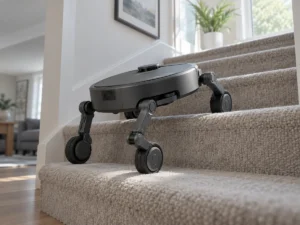
The biggest mistake is expecting a robot vacuum to replace all manual cleaning. It will not. It can reduce dust, pet hair, crumbs, and daily floor dirt, but you will still need a normal vacuum for stairs, deep carpets, sofas, corners, and heavy messes.
My real-world view: buy a robot vacuum to maintain clean floors between deeper cleaning sessions. Do not buy one expecting it to clean like a human with a full-size vacuum and mop.
Roomba vs Roborock vs Other Brands
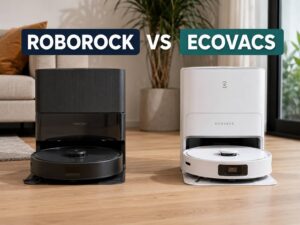
Roomba and Roborock are not the only options. Ecovacs and Dreame have become serious competitors, mainly in the premium vacuum-and-mop space. Ecovacs often competes with strong docks and advanced mopping, and Dreame pushes hard on suction, mop systems, and feature-heavy models.
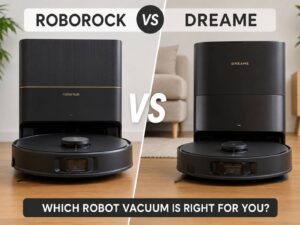
If you are still comparing brands, this detailed Roborock vs Ecovacs robot vacuums guide can help you see how Roborock stacks up against another major rival. For shoppers looking at premium robot vacuums with strong mop systems, this Roborock vs Dreame robot vacuums comparison is worth reading before choosing.
For most buyers, the safest shortlist includes Roomba, Roborock, Dreame, and Ecovacs. Roomba wins on brand trust and simplicity. Roborock wins on app control and mopping balance. Dreame often wins on bold specs. Ecovacs can offer strong premium features, but model selection matters a lot.
Which One Should You Buy?
Buy Roomba if:
- You want a familiar brand.
- You prefer a simpler app.
- You mostly need vacuuming.
- You have pets and want rubber brush designs.
- You find a strong discount.
- You want less setup and fewer controls.
Buy Roborock if:
- You want stronger mopping.
- You care about detailed maps.
- You need no-go zones and room-by-room control.
- You have hard floors.
- You want a full-service dock.
- You like tuning cleaning settings.
For small apartments, Roomba can be a smart buy. A compact model with simple controls can handle everyday dust without taking up too much space. For larger homes, Roborock often makes more sense. Better mapping, stronger room control, and advanced docks matter more as the floor plan gets bigger.
For pet homes, Roomba and Roborock both deserve a look. Roomba is strong for hair pickup. Roborock is better if pet mess means more mopping around bowls, litter zones, or entryways.
Final Verdict: Roomba vs Roborock
Roomba vs Roborock is not a one-brand answer for every home. Roomba is best for buyers who want a trusted name, simple app controls, and dependable daily vacuuming. It still has a strong place in homes with pets, carpets, and users who do not want too many settings.
Roborock is the better all-around choice for most 2026 buyers who want advanced features. It gives you stronger mapping, better mopping, more app control, and more full-service dock options across the lineup. It may take a little more time to set up, but the extra control pays off in busy homes.
My honest recommendation: choose Roborock if you want the most complete robot vacuum and mop experience. Choose Roomba if you want something simpler, familiar, and easy to live with.
For most buyers, Roborock offers the better mix of features and value. Roomba still makes sense at the right price, especially for people who care more about straightforward vacuuming than advanced mopping.