Do You Really Need a Robot Vacuum With Mopping?
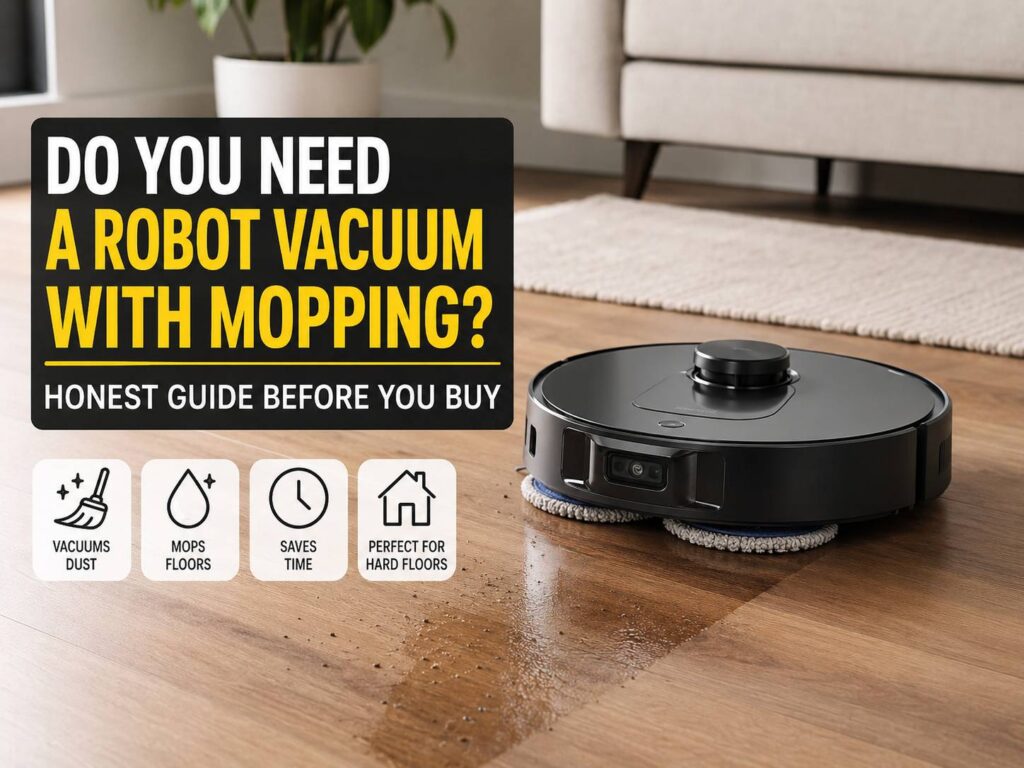
A robot vacuum with mopping sounds like the kind of home gadget that should make life easier. It vacuums dust, wipes hard floors, and runs without much effort from you. For many homes, that is a real benefit. Still, it is not the right choice for everyone.
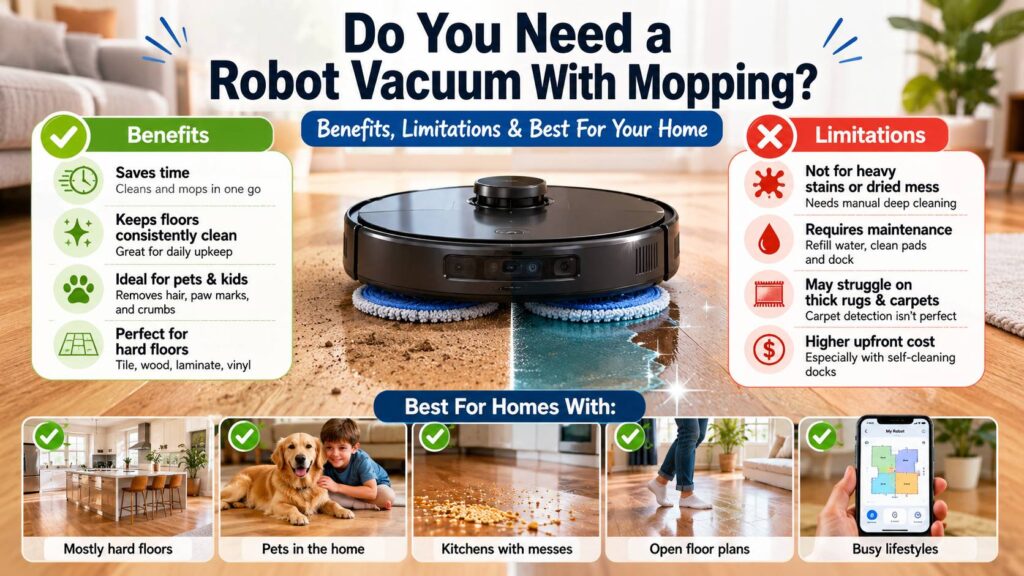
You need a robot vacuum with mopping if your home has a lot of hard flooring and you want cleaner floors between deeper cleans. It works well on tile, vinyl, laminate, sealed hardwood, and other smooth surfaces. It can pick up crumbs, pet hair, dust, and light marks in one cleaning cycle.
That said, a robot mop is not a full replacement for a proper mop. It will not scrub dried sauce, sticky spills, old stains, or dirty grout as well as a person can. It is better at daily upkeep than deep cleaning.
So, the real question is not whether robot mops work. They do. The better question is whether the mopping feature fits your home, your floors, and your cleaning habits.
What a Robot Vacuum and Mop Combo Actually Does
A robot vacuum and mop combo combines dry vacuuming with damp floor wiping. Most models vacuum first, then pass a wet pad over the floor. Some can vacuum and mop at the same time, which saves time in open rooms.
Basic models use a small water tank and a flat microfiber pad. These are good for dust and faint marks, but they do not scrub much. Mid-range models often add better water control, stronger suction, and vibrating mop pads. Premium models can lift the mop over carpets, wash the mop pads in the dock, dry them with warm air, and refill the water tank.
In real use, this matters a lot. A basic mop pad may leave streaks if the floor is glossy. A spinning mop system can clean light footprints better. A roller mop can feel more useful in kitchens or pet homes, since it refreshes the mop surface more often.
Still, every robot has limits. It moves with a small motor, a small tank, and limited downward pressure. That is why you should see it as a maintenance tool, not a miracle floor washer.
Who Should Buy a Robot Vacuum With Mopping?
A robot vacuum with mopping makes the most sense in homes with hard floors in the kitchen, hallway, living room, and bedrooms. These areas collect fine dust fast. They also show footprints, food crumbs, pet hair, and light spills.
It is a smart choice for:
- Homes with mostly hard floors
- Apartments with open layouts
- Pet owners who deal with paw marks and hair
- Parents who clean crumbs every day
- Busy people who want less manual floor cleaning
- Homes where dust builds up quickly
- Kitchens that need frequent light cleaning
The best part is consistency. A robot that runs several times per week stops dirt from building up. As a result, your floors feel cleaner for longer, even if you still mop by hand from time to time.
If you are still unsure whether a robot cleaner fits your home, this guide on are robot vacuums worth it in 2026 can help you compare the daily value against the cost.
Who Should Skip the Mopping Feature?
A robot vacuum with mopping is not always worth the extra cost. If your home has mostly carpet, a vacuum-only robot usually makes more sense. The mop system will not help much, and you may end up paying for a feature you barely use.
You may want to skip mopping if:
- Most rooms have carpet
- You use thick rugs in many areas
- Your floors should not get wet
- You dislike cleaning tanks and mop pads
- Your home has lots of clutter on the floor
- You want deep scrubbing, not light wiping
- You have a tight budget
A mop system adds more maintenance. You need to refill clean water, empty dirty water, rinse or replace pads, and clean the dock area. Self-cleaning docks reduce the work, but they do not remove it completely.
This is one of the most common issues buyers notice after a few weeks. The robot cleans the floor, but someone still has to clean the robot.
Robot Vacuum With Mopping vs Vacuum-Only Robot
A robot vacuum with mopping is better for hard floors. It removes dry dirt and freshens the surface at the same time. A vacuum-only robot is usually better for carpet-heavy homes, since it focuses on suction and brush performance.
The right choice depends on floor type. If your home is 70% hard floor and 30% rugs, a robot vacuum and mop combo makes sense. If your home is 70% carpet and 30% hard floor, a vacuum-only model may be the better buy.
There is another detail to think about: simplicity. A vacuum-only robot has fewer parts to clean. It does not need water, mop pads, or a washing dock. That means less maintenance and fewer things that can smell bad.
For a deeper comparison, read this guide on robot vacuum and mop vs vacuum-only robot. It breaks down which option fits each type of home.
Mop Pads, Spinning Mops, and Roller Mops
Not all robot mops clean the same way. The mopping system can change the whole experience.
Flat mop pads are the simplest. The robot wets the pad and drags it across the floor. This works for dust and light dirt, but it struggles with sticky marks. It can also leave streaks on shiny tile.
Vibrating mop pads do a better job. The pad moves back and forth, so it adds a small scrubbing effect. These models are a good middle option if you want better cleaning without paying for a top-tier dock.
Spinning mop pads use two round pads that rotate while the robot moves. They usually handle footprints and light stains better than flat pads. This is often the best balance between price and real cleaning power.
Roller mops are more advanced. The roller turns against the floor and can refresh itself during cleaning on some models. This design often works better in kitchens, pet areas, and large hard-floor homes. The tradeoff is price and more dock maintenance.
If you want the best mopping result, do not focus only on suction power. Look at the mop type, water control, pad pressure, and dock features.
Features That Matter Most
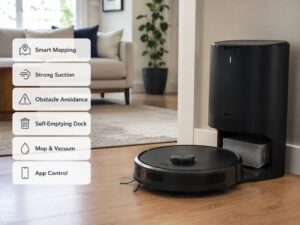
A good robot vacuum with mopping should clean well, avoid wetting carpets, and stay easy to manage. The app should feel simple too. A robot with poor software can become annoying, even if the hardware looks good.
Look for these features:
- Smart room mapping
- No-mop zones
- Carpet detection
- Mop lifting for rugs
- Adjustable water levels
- Strong suction for dust and crumbs
- Good edge cleaning
- Obstacle avoidance
- Washable mop pads
- Self-emptying dustbin
- Mop washing and drying dock
- Easy app scheduling
Mop lifting is a very useful feature if you have rugs. The robot raises the mop when it reaches carpet, so it does not drag a wet pad across fabric. Still, this works best on low-pile rugs. Thick rugs may still need no-go zones.
A self-emptying dock helps a lot in pet homes. Hair fills small robot dustbins quickly. So, if you have a dog or cat, this feature can save time.
Self-washing mop docks are helpful too. They keep the mop pads cleaner between runs. Still, they need regular cleaning. Dirty water tanks can smell if you leave them too long.
What Robot Mops Still Do Poorly
Robot mops are useful, but they are not perfect. They can miss corners, leave streaks, and struggle with dried mess. They can also smear dirt if the mop pad gets too dirty during a long cleaning run.
Common problems include:
- Streaks on glossy floors
- Dirty water tank smells
- Wet pads touching low rugs
- Hair wrapped around brushes
- Missed corners near cabinets
- Trouble with high thresholds
- Small objects blocking the robot
- Light mats getting dragged around
- Poor cleaning around chair legs
These issues do not mean the product is bad. They mean the robot needs the right home setup. Clear loose cables, lift small mats, set no-mop zones, and clean the dock often. Those simple habits make a big difference.
In my opinion, the biggest mistake is expecting a robot mop to act like a person with a bucket and scrub brush. It will not. Yet, for regular light cleaning, it can be very helpful.
Is It Safe for Hardwood Floors?
A robot vacuum with mopping can be safe for sealed hardwood, but water control is key. Use the lowest water setting first. Then check the floor after the cleaning run. The surface should dry quickly, with no wet lines between boards.
Avoid robot mopping on unsealed wood, damaged laminate, waxed floors, or floors with open gaps. Water can seep into weak spots and cause damage over time.
You should also avoid random cleaning liquids. Many robot brands recommend plain water or their own approved cleaning fluid. Thick cleaners, harsh chemicals, and foaming liquids can clog the robot or leave residue.
For hardwood, the best setup is gentle. Use low water, soft pads, and room-specific settings. If the floor looks too wet, stop using the mop mode in that area.
Is a Self-Cleaning Dock Worth It?
A self-cleaning dock is worth it if you mop often. It makes the robot feel much more automatic. The dock can empty dust, wash mop pads, dry them, and refill the water tank, depending on the model.
For small apartments, a simple dock may be enough. For larger homes, pets, or daily mopping, a full dock is much more useful.
The downside is size and upkeep. These docks take more floor space. They can sound loud during emptying or washing. They also need clean water, dirty water removal, replacement bags, filters, and tray cleaning.
Still, if your goal is less floor work, the dock matters more than you might expect. A great robot with a poor dock can feel like extra work. A good dock makes the whole system easier to live with.
How Often Should You Use the Mopping Feature?
For light maintenance, two or three mopping runs per week is enough for many homes. Pet owners or families with children may prefer daily kitchen and hallway cleaning.
A good schedule might look like this:
- Vacuum daily in high-traffic areas
- Mop the kitchen two or three times per week
- Mop entryways after rainy days
- Mop pet zones more often
- Run a full home clean once or twice per week
You do not need to mop every room every day. In fact, that can create more pad washing and water tank work than needed. Room-by-room cleaning gives better results and keeps maintenance lower.
How Much Should You Spend?
Budget models can work well for simple homes. They are best for small apartments, light dust, and basic hard-floor cleaning. The mopping is usually basic, so expect damp wiping rather than real scrubbing.
Mid-range models are the best choice for many buyers. They often include mapping, water control, room cleaning, stronger suction, and better mop movement. This price range gives a good balance between cost and daily value.
Premium models make sense for bigger homes, pets, and people who want less manual work. You pay more for smarter navigation, better mopping, mop lifting, self-cleaning docks, and stronger app controls.
Do not buy only by the highest suction number. Suction matters, but brush design, navigation, mop pressure, water control, and dock quality matter too.
Final Verdict: Do You Need One?
Yes, you need a robot vacuum with mopping if your home has mostly hard floors and you want cleaner floors with less effort. It is great for dust, crumbs, pet hair, paw marks, and light daily mess.
No, you probably do not need one if your home has mostly carpet or you only care about deep scrubbing. In that case, a vacuum-only robot or a manual mop may be a better fit.
For most hard-floor homes, the sweet spot is a robot vacuum and mop combo with smart mapping, carpet detection, adjustable water flow, and a dock that fits your routine. It will not replace every deep clean, but it can make your home feel cleaner every day.