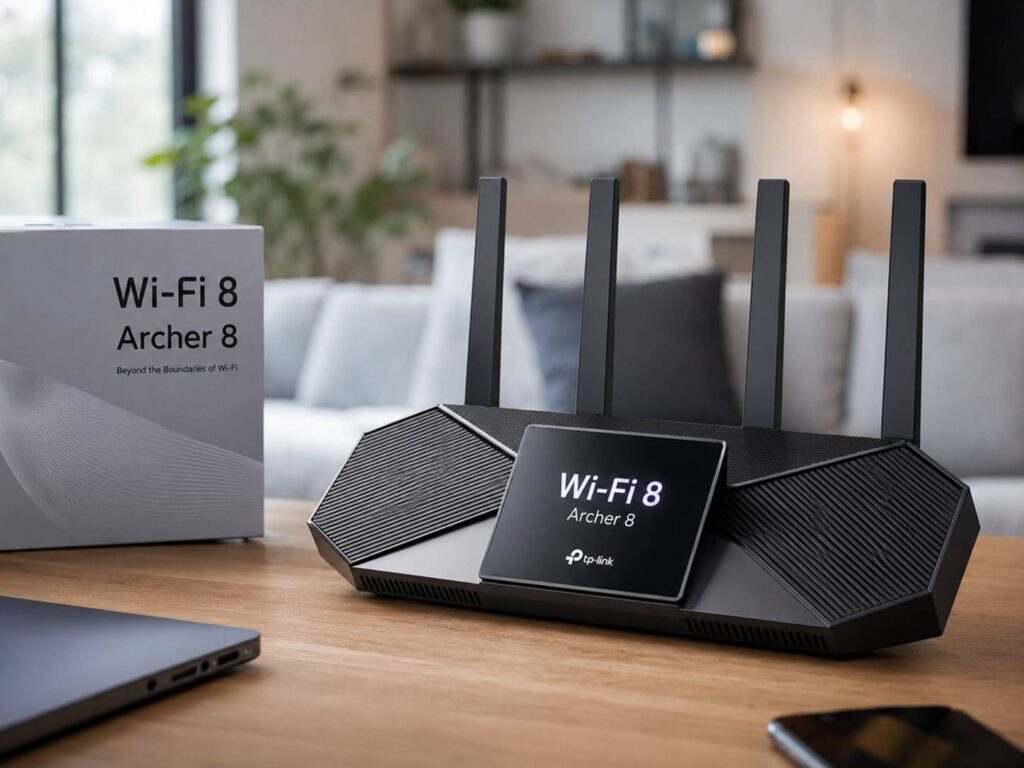
TP-Link has already announced its Archer 8 router, even though Wi-Fi 8 is not finished yet. That sounds a bit early, right? It is. But it also shows where home networking is heading next.
TP-Link already has a dedicated page for its next wireless generation, and readers who want the brand’s own details can check the official TP-Link Wi-Fi 8 page.
Most people still use Wi-Fi 5, Wi-Fi 6, or Wi-Fi 6E at home. Some have only just started looking at Wi-Fi 7 routers. So a Wi-Fi 8 router can feel like marketing got ahead of real life.
Still, the Archer 8 matters. Not because everyone needs one right away. You probably do not. It matters because Wi-Fi 8 is less about chasing huge speed numbers and more about making your connection feel stable in a real home, with walls, distance, smart devices, TVs, laptops, phones, and random signal problems.
That is the part worth paying attention to.
TP-Link Archer 8 Is More About Reliability Than Raw Speed
Wi-Fi router brands love big speed numbers. You have seen them on product boxes: huge bandwidth claims, multi-gigabit speeds, and long lists of features you may never use.
Wi-Fi 8 takes a slightly different path.
The next Wi-Fi generation focuses more on reliability. That means steadier connections, better performance in crowded homes, fewer drops, and better handling of devices spread across several rooms.
That makes sense. A fast router does not help much if your video call freezes in the bedroom. It does not feel impressive if your smart TV buffers at night. And it does not matter how fast the speed test looks next to the router if your laptop struggles upstairs.
TP-Link says Archer 8 is built around this next phase of Wi-Fi. The company links Wi-Fi 8 to Ultra High Reliability, which is the big idea behind the upcoming 802.11bn standard.
In plain words, Wi-Fi 8 wants to make wireless networks feel less fragile.
Why Wi-Fi 8 Makes Sense for Modern Homes
Home Wi-Fi has changed a lot. A few years ago, a router had to handle a couple of phones, a laptop, and maybe a smart TV. Now, a home can run 20, 30, or even 50 connected devices.
That includes:
- Phones and tablets
- Smart TVs and streaming sticks
- Game consoles
- Laptops and work PCs
- Security cameras
- Smart doorbells
- Robot vacuums
- Smart speakers
- Printers
- Smart plugs
- Thermostats
All of these devices compete for signal and airtime. Some sit close to the router. Others sit far away. Some need fast downloads. Others send small data packets all day. A few weak devices can slow the network more than people expect.
That is where Wi-Fi 8 could help.
Instead of only pushing more speed, Wi-Fi 8 aims to manage busy networks better. It should help devices stay connected at longer distances. It should improve mesh systems too, so multiple routers work together with less interference.
That matters more than another speed jump.
Wi-Fi 8 vs Wi-Fi 7: What Actually Changes?
Wi-Fi 7 is already very fast. A strong Wi-Fi 7 router can handle gaming, 4K streaming, large downloads, video calls, and smart home traffic with no major stress.
So the real question is not whether Wi-Fi 8 is faster. The better question is whether Wi-Fi 8 feels better day to day.
Wi-Fi 7 brought major speed features. It supports wider channels, multi-link operation, and very high data rates. It is a strong upgrade from older routers.
Wi-Fi 8 focuses more on keeping performance steady.
That means:
- Fewer connection drops
- Better long-range behavior
- Better upload stability
- Better mesh coordination
- Lower delay spikes
- Smoother device roaming around the home
This is a useful shift. Speed next to the router is not the problem to solve. The problem is a connection that feels weak in one room, unstable during calls, or bad at night when everyone is online.
Wi-Fi 8 tries to solve that kind of problem.
Should You Buy the TP-Link Archer 8 at Launch?
For most people, no.
That does not mean Archer 8 is a bad product. It means early Wi-Fi 8 routers will likely cost more, and you probably will not own Wi-Fi 8 phones, laptops, or tablets yet.
A new Wi-Fi standard works best once both sides support it. You need a Wi-Fi 8 router, but you also need Wi-Fi 8 client devices. Older devices will still connect, but they will not get the full benefit.
This is the same pattern we saw with Wi-Fi 6, Wi-Fi 6E, and Wi-Fi 7. The router arrives first. Then laptops and phones catch up. After that, prices drop and firmware gets better.
Early buyers pay more and deal with early software updates. Some people are fine with that. If you are not, waiting is the better move.
Who Should Care About Archer 8 Right Now?
Archer 8 is worth watching if you have a demanding home network.
You should keep an eye on it if you:
- Use multi-gig internet
- Have a large home
- Use a mesh Wi-Fi setup
- Work from home full time
- Play cloud games or competitive online games
- Run many smart home devices
- Have security cameras far from the router
- Replace your router only once every 5 to 7 years
For these users, Wi-Fi 8 could bring real value once the standard matures and more devices support it.
A casual user with a small home and a 500 Mbps internet plan does not need to rush. A good Wi-Fi 6E or Wi-Fi 7 router will already feel fast and stable in most normal setups.
Why Early Wi-Fi 8 Hardware Can Still Be Risky
TP-Link announced Archer 8 before Wi-Fi 8 reached its final form. That matters.
Router makers often launch hardware based on late draft versions of new standards. This is common in the networking market. Still, buyers should stay practical.
Early hardware can change through firmware updates. Feature support can vary by region. Certification details may arrive later. Real-world performance can look different from product claims.
So, before buying any Wi-Fi 8 router, check three things:
- Full specs, including ports, bands, and channel support
- Independent real-world reviews
- Clear software support and update plans
Do not buy only for the Wi-Fi 8 badge. Buy it if the full product makes sense for your home.
Wi-Fi 7 Is Still the Better Buy for Most People
Wi-Fi 7 is the safer choice in 2026.
It is already available. More phones, laptops, and routers support it. Prices have started to settle. Reviews are easier to find. Firmware is more mature. That makes Wi-Fi 7 the better fit if you need a router now.
A good Wi-Fi 7 router can handle fast internet, gaming, streaming, smart home gear, and remote work. It can also stay useful for several years.
If your current router is old, weak, or unreliable, waiting for Wi-Fi 8 might not make sense. A Wi-Fi 7 upgrade can improve your network today.
The same logic applies to other tech upgrades. Sometimes a new standard sounds exciting, but the best choice is the product that solves your problem now. For example, keyboard buyers face a similar choice with upgrade-friendly features. A guide like this one on hot-swappable keyboards explained shows how useful features matter more when they fit real daily use.
Routers work the same way. The best spec is not always the best buy.
My Honest Opinion on TP-Link Archer 8
TP-Link made a smart move by announcing Archer 8 early. It gets attention, and it shows that the company wants to lead the next router cycle.
But I would not tell you to wait for it.
Wi-Fi 8 sounds promising, mostly because it targets the pain points users actually feel: weak rooms, unstable connections, busy networks, mesh issues, and random lag. That is more useful than another giant speed number.
Still, the timing feels early. The standard is not final. Wi-Fi 8 client devices are not common yet. Prices will likely be high at first. Early firmware may need time.
So my advice is simple. Watch Archer 8, but do not plan your next router purchase around it unless you love early tech or need a long-term premium setup.
Final Verdict: Should You Care?
Yes, you should care about TP-Link Archer 8 as a sign of what comes next. It shows that Wi-Fi 8 is moving toward real products, not just technical documents.
But no, most people should not rush to buy a Wi-Fi 8 router yet.
If your Wi-Fi works fine, keep it. If your router struggles now, buy a good Wi-Fi 7 router or mesh system. If you want the newest platform and do not mind paying early-adopter prices, Archer 8 belongs on your watchlist.
For everyone else, Wi-Fi 8 will make more sense once the standard is final, more devices support it, and prices become easier to justify.