Narwal Flow: Specs, Price, Pros & Cons
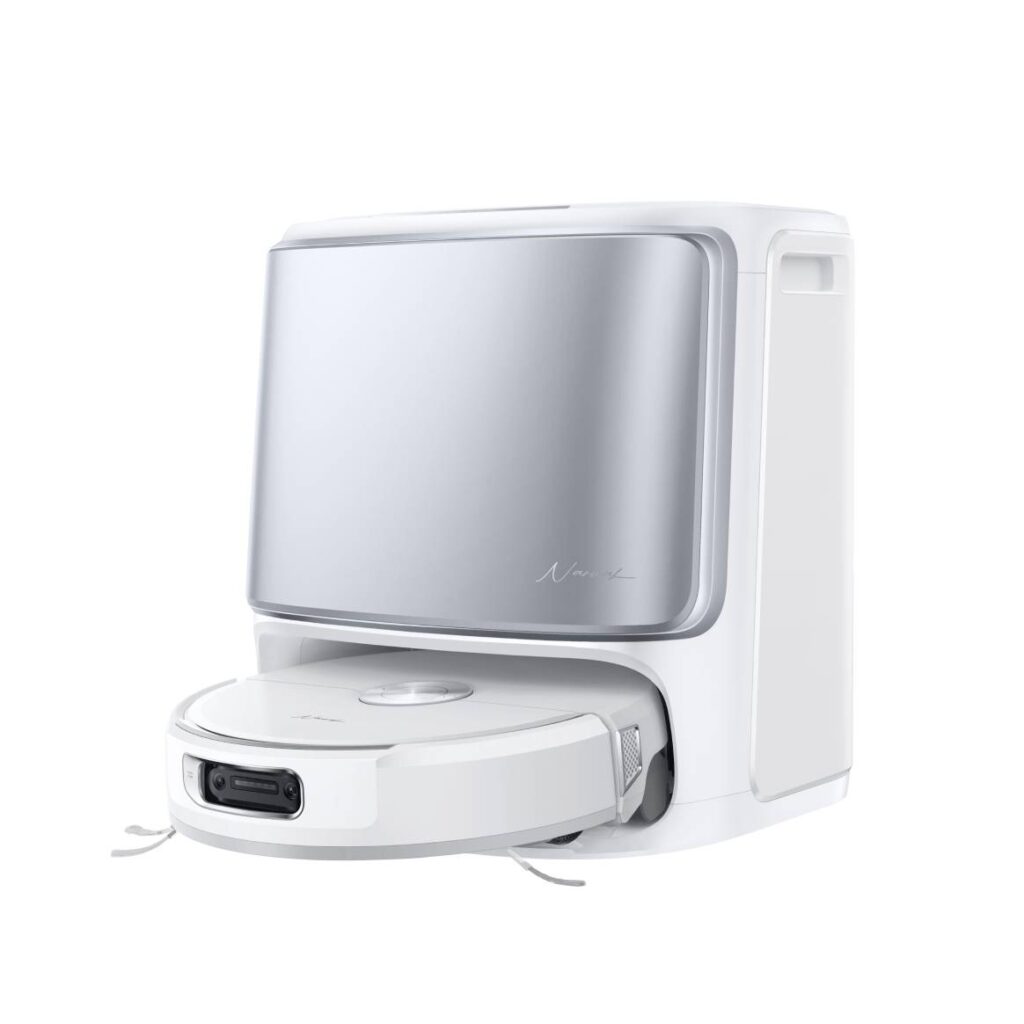
The Flow is the Narwal that introduced the FlowWash track mop, and that one mechanism is the reason to read the rest of the page. Instead of two spinning pads or a flat cloth, a cylindrical roller is fed with 45-degree-Celsius water from sixteen nozzles while a scraper wipes it 110 times a minute, so the mop is cleaned continuously as it works rather than only back at the dock. Dirty runoff goes to a separate onboard tank. It is the closest a robot gets to a mop that is never dragging yesterday's dirt across today's floor.
The rest is a 2025 flagship. Suction is 22,000 Pa through a floating anti-tangle roller brush with reversing side brushes, a CarpetFocus mode drops the brush cover on carpet while lifting the mop 12 mm, and the EdgeReach track and side brushes reach to within 5 mm of a wall. Navigation is dToF LiDAR with obstacle recognition from dual 136-degree cameras and structured light, it climbs tall thresholds in a single step, and at 95 mm tall it is among the lower flagships. The app handles multi-floor maps, no-go zones, schedules, Alexa, Google and Siri, plus Narwal's own voice assistant.
The dock does the chores: it empties into a 2.5-liter bag rated for up to 120 days, washes the roller with water adapted between 45 and 80 degrees Celsius, dries it with 40-degree air, doses detergent, and DirtSense reads the wash water and sends the robot back until the floor comes up clean. A plumbed Auto Refill and Drainage dock is sold as an option.
What Narwal does not publish is a runtime, a cleaning-area figure, a dust-box capacity or a filter grade, and the maker quotes the battery two different ways. Its successor, the Flow 2, keeps the chassis and mop and raises suction and battery. This original is the same idea at a lower price, when stock allows.
Category strengths
Where the Narwal Flow beats the median
- A much higher threshold clearance ?40 mm vs 24 mm (median)
- Stronger suction ?22,000 Pa vs 19,750 Pa (median)
- A bigger battery ?6,400 mAh vs 5,200 mAh (median)
- A bigger water tank ?130 ml vs 110 ml (median)
- A higher mop lift ?12 mm vs 10.5 mm (median)
- Slightly quieter operation ?57 dB vs 61.1 dB (median)
- A slightly higher mop wash temperature ?80 °C vs 75 °C (median)
- A slightly more compact design ?95 mm vs 96.8 mm (median)
Where the Narwal Flow trails the median
- Fewer cleaning modes ?
- A lower warm-air drying temperature ?40 °C vs 50 °C (median)
How this VS Score was computed
Score 62: each known spec is measured against the median of all robot vacuums (58 products), then weighted; 50 means level with that median. In classes of six or more, a value beyond the class’s 10th–90th percentile range counts as that limit, so one extreme product cannot set the scale. 45% of the scoreable weight could be used; unknown values, features not applicable to this class and proxies (battery capacity where a rated life exists) add or remove nothing.
| Specification | This product | Cohort median | Score weight | Points moved |
|---|---|---|---|---|
| Mopping | Yes | 79% of the class have it | 0.6 | +30.0 |
| Edge-cleaning extension | Yes | 79% of the class have it | 0.4 | +20.0 |
| Dirt detection & re-mop | Yes | 79% of the class have it | 0.4 | +20.0 |
| Automatic mop removal | No | 34% of the class have it | 0.4 | −19.2 |
| Automatic detergent dispenser | Yes | 76% of the class have it | 0.3 | +15.0 |
| Threshold clearance | 40 | 24 | 0.3 | +9.9 |
| Suction power | 22,000 | 19,750 | 1.2 | +7.2 |
| Battery capacity | 6,400 | 5,200 | 0.5 | +6.0 |
| Cleaning modes | 3 | 4 | 0.3 | −3.6 |
| Water tank | 130 | 110 | 0.3 | +2.7 |
| Mop lift | 12 | 10.5 | 0.3 | +2.1 |
| Noise level | 57 | 61.1 | 0.4 | +1.6 |
| Warm-air drying temperature | 40 — capped at the class’s lower range (45) | 50 | 0.2 | −1.0 |
| Mop wash temperature | 80 | 75 | 0.3 | +0.9 |
| Height | 95 | 96.8 | 0.5 | +0.5 |
| Navigation | LiDAR | LiDAR | 1 | +0.0 |
Not scored: Carpet detection (standard for the class (98% have it)); Max cleaning area (unknown: not scored); Mapping (standard for the class (98% have it)); Multi-floor maps (unknown: not scored); Obstacle avoidance (standard for the class (100% have it)); No-go zones (standard for the class (100% have it)); Runtime (unknown: not scored); Recharge & resume (unknown: not scored); Self-empty dock (standard for the class (91% have it)); Auto-refill mop (standard for the class (87% have it)); Mop self-cleaning (standard for the class (92% have it)); Dock clean-water tank (unknown: not scored); Dustbin capacity (unknown: not scored); App control (standard for the class (100% have it)); Voice assistant (standard for the class (100% have it)); Scheduling (standard for the class (100% have it)); Zone / room cleaning (standard for the class (100% have it)); HEPA filter (unknown: not scored); Washable filter (unknown: not scored); Anti-tangle brush (standard for the class (98% have it)); Removable mop pads (standard for the class (90% have it)).
Editor’s note
I would recommend the Flow to someone whose complaint about their current robot is the mop: streaks on tile, a pad that smells by Wednesday, a kitchen floor that looks mopped but feels tacky. The rolling track mop with continuous washing is a different answer to that, and on hard floors with real dirt it is the reason to pay flagship money for this machine over a cheaper pad-based one.
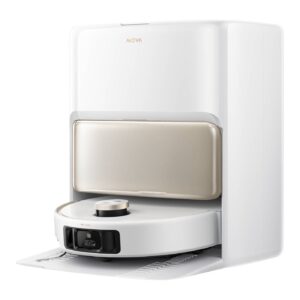
In use, plan the dock's position first. The basic dock is a tall cabinet, 46 cm high, with a mirrored front. It needs a wall, a socket and clearance in front, and it will not hide under a console table. The plumbed Auto Refill and Drainage version is a lower unit but needs a water line and a drain within reach, and installation is on you.
The 40 mm threshold figure is a single-step climb and it is real, which means the robot will also climb onto things you did not intend, such as thick rug edges or a low step to a patio. Draw the no-go zones on day one, before the first rescue.
Battery is the number to treat with care. Narwal quotes 6,400 mAh in marketing and 5,900 mAh rated in the manual, and publishes no runtime at all. In a large home, expect it to recharge mid-clean, and trust the app's estimate over any brochure number. The bag lasts months, but the detergent is Narwal's own and the roller is a spare-part item.
Against the Narwal Flow 2, this is the same chassis and the same mop with lower suction and a smaller battery, at a lower price, which is a fair trade if the mop is what you are buying. Against the Dreame X50 Ultra, it swaps spinning pads and a lower dock for the roller and a taller one. The mop is the reason to buy it. Anyone who mostly vacuums should look elsewhere.
Specifications
Quality bars show where each figure sits between the lowest and highest of the 58 robot vacuums this VS Score is measured against.
Cleaning
Navigation
Battery & dock
Design
Smart features
Maintenance & filtration
Sources and verification
Where the specifications come from
- Official product pageus.narwal.com
- Retailer listing (cross-check)amazon.com
Verification
- First published
- Specifications last checked
- Sheet completeness
- 32 of 42 specifications verified; the rest show as Unknown and are never estimated or scored
- Page type
- Product specification page — Compiled from the manufacturer’s published specifications and the cited sources; this is not a hands-on test.
- Basis
- Research-based: specifications and editorial text were compiled from the documents listed here and the manufacturer’s published data. We have not tested this unit ourselves; where independent measurements are mentioned they belong to the linked publication.
Where to buy
Prices and availability may change. Check the retailer before buying. We may earn a commission on purchases.
Price history
Robot Vacuums with similar specs to the Narwal Flow
Ratings & reviews
No reviews yet. Be the first to share your experience.
The bottom line
The Narwal Flow earns a VS Score of 62, above the median of the 58 robot vacuums it is measured against (a score of 50 is level with that median).
- Who it’s for
- Hard-floor homes where mopping quality is the complaint: a continuously washed roller mop, hot-water dock and DirtSense re-mopping, with a strong threshold climb and a low body.
- Who should look elsewhere
- Homes that mostly vacuum, anyone who needs a published runtime, or an apartment with no wall space for a tall dock cabinet.
- The trade-off that matters
- The self-washing roller mop earns the price, while the battery, quoted at two capacities with no published runtime, is the weak point.
- The main alternative
- Narwal Flow 2: the same chassis and mop with 31,000 Pa and a 7,000 mAh battery, for buyers who want the current generation and can find it in stock.
The VS Score is calculated from the weighted specifications above, each measured against the median of comparable robot vacuums — a shortlisting guide, not a substitute for your own priorities. See how we score.