iRobot Roomba Max 775: Specs, Features, Pros & Cons
Two things about this machine will outlast any argument about its specification: the size of its dock and the chemistry of its battery.
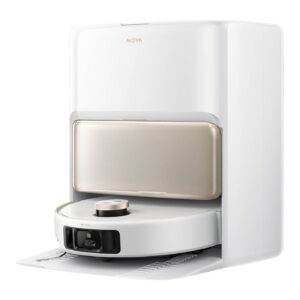
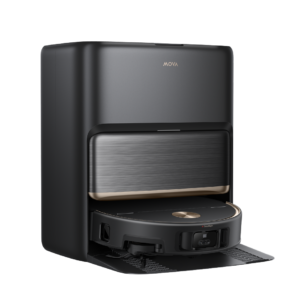
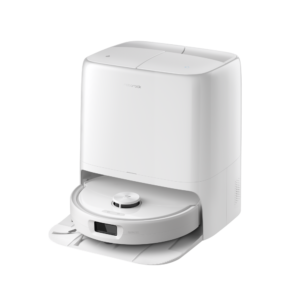
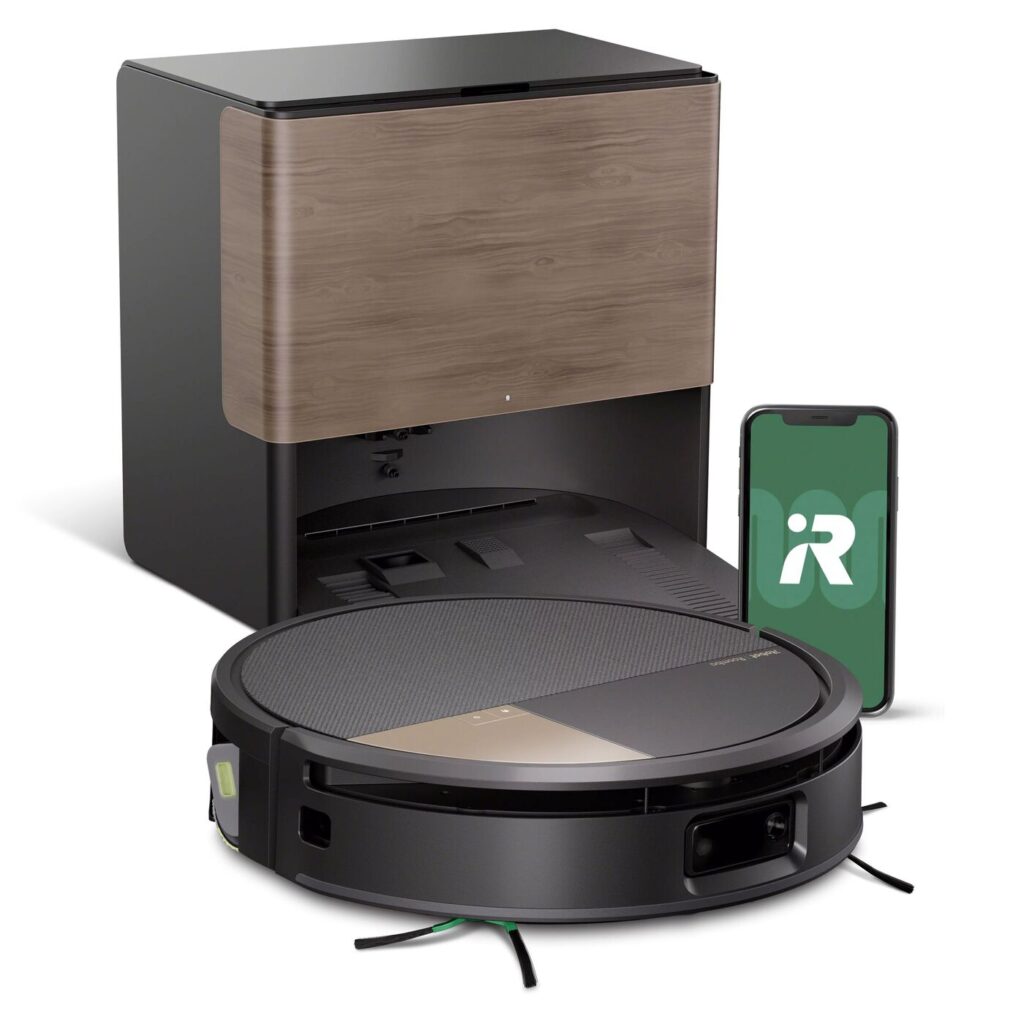
The dock is a substantial object (wide, tall, and heavy enough that moving it is a two-handed job) because it holds clean and dirty water, a debris bag, detergent, and the heater that washes the mop. That is the price of a robot which maintains itself, and it needs a permanent corner with a socket. It cannot be tidied away between cleans.
The battery is the quieter decision. iRobot has used lithium iron phosphate here, a chemistry almost nothing else in the category uses. It stores less energy for its size, which is part of why this is not the slimmest machine on the shelf, but it typically survives far more charge cycles before it fades. On a device that charges every day for years, that trade favors the owner over the spec sheet.
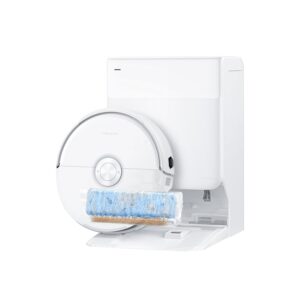
The mopping hardware is the reason to want it. A powered roller washes itself in heated water while it is working rather than only back at the dock, and over carpet it retreats behind a cover instead of lifting a damp pad a few millimeters clear.
What frustrates is the silence. iRobot publishes no suction, bin, tank or noise figures for this machine, and the numbers circulating on retail listings did not come from the manufacturer. Several fields on this page are empty for exactly that reason, and a buyer who compares by table will find this the hardest flagship in the category to argue for.
Category strengths
Where the iRobot Roomba Max 775 beats the median
- More multi-floor maps ?5 vs 4 (median)
- A bigger battery ?6,000 mAh vs 5,200 mAh (median)
Where the iRobot Roomba Max 775 trails the median
- No recharge & resume ?
- No washable filter ?
- No removable mop pads ?
- A slightly taller design ?104.1 mm vs 96.8 mm (median)
How this VS Score was computed
Score 52: each known spec is measured against the median of all robot vacuums (58 products), then weighted; 50 means level with that median. In classes of six or more, a value beyond the class’s 10th–90th percentile range counts as that limit, so one extreme product cannot set the scale. 39% of the scoreable weight could be used; unknown values, features not applicable to this class and proxies (battery capacity where a rated life exists) add or remove nothing.
| Specification | This product | Cohort median | Score weight | Points moved |
|---|---|---|---|---|
| Mopping | Yes | 79% of the class have it | 0.6 | +30.0 |
| Edge-cleaning extension | Yes | 79% of the class have it | 0.4 | +20.0 |
| Dirt detection & re-mop | Yes | 79% of the class have it | 0.4 | +20.0 |
| Recharge & resume | No | 95% of the class have it | 0.4 | −19.2 |
| Automatic mop removal | No | 37% of the class have it | 0.4 | −19.2 |
| HEPA filter | No | 29% of the class have it | 0.4 | −19.2 |
| Automatic detergent dispenser | Yes | 76% of the class have it | 0.3 | +15.0 |
| Washable filter | No | 88% of the class have it | 0.2 | −9.6 |
| Removable mop pads | No | 90% of the class have it | 0.2 | −9.6 |
| Multi-floor maps | 5 | 4 | 0.4 | +5.2 |
| Battery capacity | 6,000 | 5,200 | 0.5 | +4.0 |
| Height | 104.1 | 96.8 | 0.5 | −2.0 |
| Navigation | LiDAR | LiDAR | 1 | +0.0 |
| Mop wash temperature | 75 | 75 | 0.3 | +0.0 |
| Warm-air drying temperature | 50 | 50 | 0.2 | +0.0 |
Not scored: Suction power (unknown: not scored); Mop lift (unknown: not scored); Carpet detection (standard for the class (98% have it)); Cleaning modes (unknown: not scored); Max cleaning area (unknown: not scored); Mapping (standard for the class (98% have it)); Obstacle avoidance (standard for the class (100% have it)); No-go zones (standard for the class (100% have it)); Threshold clearance (unknown: not scored); Runtime (unknown: not scored); Self-empty dock (standard for the class (91% have it)); Auto-refill mop (standard for the class (87% have it)); Mop self-cleaning (standard for the class (92% have it)); Dustbin capacity (unknown: not scored); Water tank (unknown: not scored); Noise level (unknown: not scored); App control (standard for the class (100% have it)); Voice assistant (standard for the class (100% have it)); Scheduling (standard for the class (100% have it)); Zone / room cleaning (standard for the class (100% have it)); Anti-tangle brush (standard for the class (98% have it)).
Editor’s note
The Max 775 is iRobot's answer to a question its customers have been asking for two years: when would a Roomba get the roller-mop-and-station treatment the Chinese flagships made standard? This is that machine: a 200 RPM self-washing roller mop, a dock that scrubs it with 75 C water, PerfectEdge pad extension into corners, and LiDAR navigation, priced squarely against the Roborocks and Dreames it imitates.
Some of it is distinctive. The roller washes itself with heated water while it mops as well as back at the dock, which is a real hygiene difference on a long run. The battery is lithium-iron-phosphate, an unusual chemistry choice that typically survives far more charge cycles than the usual cells. And over carpet the roller hides behind a retracting cover where rivals lift a wet pad a few millimeters. It is a different answer to the damp-carpet problem, though iRobot publishes no measurement for it.
What iRobot will not tell you is suction. Amazon's listing shouts 30,000 Pa, while iRobot itself claims only '4X more power-lifting suction' than a Roomba 105 and publishes no pascal figure anywhere. I have left the suction cell empty, and I would treat the Amazon number as marketing until iRobot stands behind one. No dustbin, tank or noise figures are published either.
Be realistic about the dock, too: roughly 45 cm wide, 43 cm tall and 8.6 kg. It needs a dedicated corner, and a gap under a console will not do.
With six Amazon reviews so far, nobody can tell you yet how it holds up. I would buy it if I wanted this class of machine and Roomba's app and parts network specifically. If brand is open, the equivalent Roborock publishes the numbers iRobot keeps to itself.
Specifications
Quality bars show where each figure sits between the lowest and highest of the 58 robot vacuums this VS Score is measured against.
Cleaning
Navigation
Battery & dock
Design
Smart features
Maintenance & filtration
Sources and verification
Where the specifications come from
- Official product pageirobot.com
- Retailer listing (cross-check)amazon.com
Verification
- First published
- Specifications last checked
- Sheet completeness
- 29 of 39 specifications verified; the rest show as Unknown and are never estimated or scored
- Page type
- Product specification page — Compiled from the manufacturer’s published specifications and the cited sources; this is not a hands-on test.
- Basis
- Research-based: specifications and editorial text were compiled from the documents listed here and the manufacturer’s published data. We have not tested this unit ourselves; where independent measurements are mentioned they belong to the linked publication.
Robot Vacuums with similar specs to the iRobot Roomba Max 775
Ratings & reviews
No reviews yet. Be the first to share your experience.
The bottom line
The iRobot Roomba Max 775 earns a VS Score of 52 on the 39% of specifications we could compare like for like — an indication, not a ranking.
- Who it’s for
- Committed Roomba households wanting the full self-maintaining flagship (roller mop, heated wash, corner-reaching pad), backed by iRobot's app and parts support.
- Who should look elsewhere
- Spec-sheet shoppers. iRobot publishes no suction, bin, tank or noise figures, so on paper this flagship loses arguments its hardware might win.
- The trade-off that matters
- You accept iRobot's silence on the numbers, and a 19 lb dock needing a dedicated corner, in exchange for a self-cleaning roller mop and an LFP battery built to last.
- The main alternative
- Roborock's Qrevo Curv delivers the same roller-mop-and-dock formula with every specification published, and a longer track record in this class.
The VS Score is calculated from the weighted specifications above, each measured against the median of comparable robot vacuums — a shortlisting guide, not a substitute for your own priorities. See how we score.