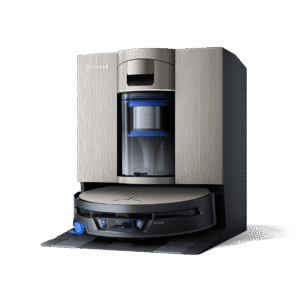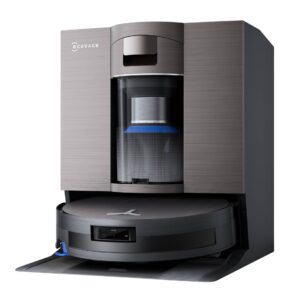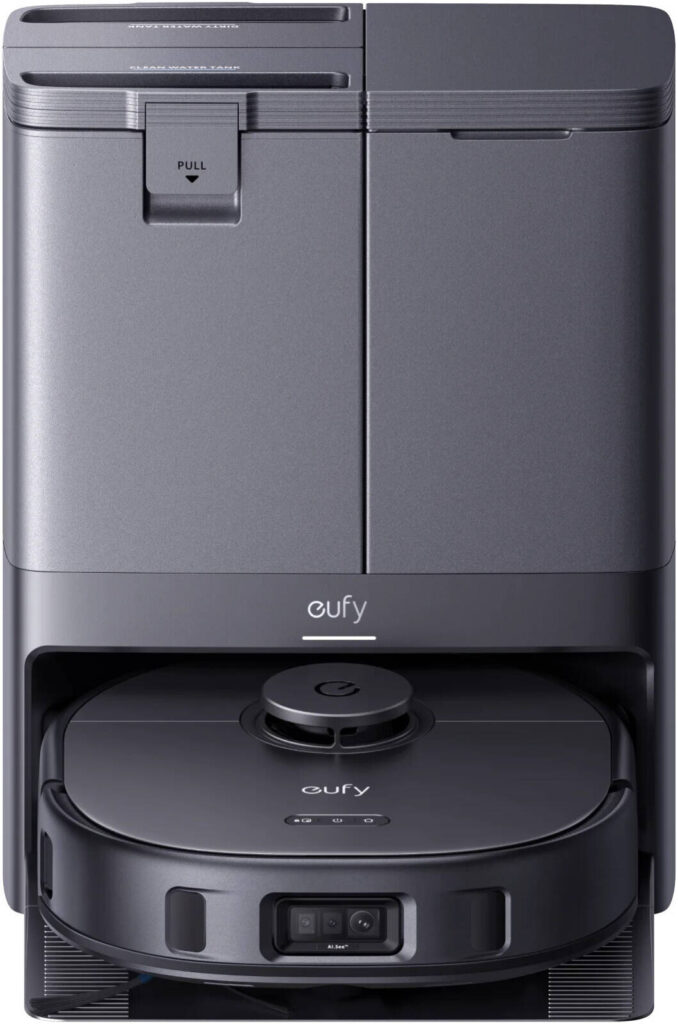
eufy X10 Pro Omni: Specs, Features, Pros & Cons
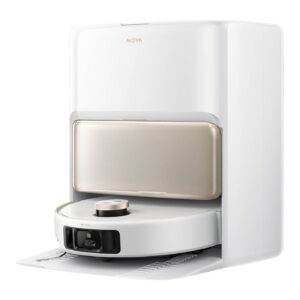
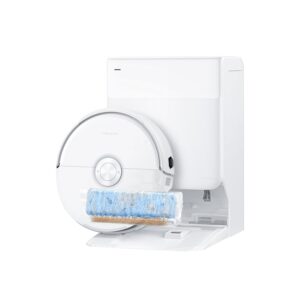
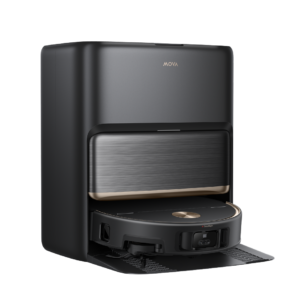
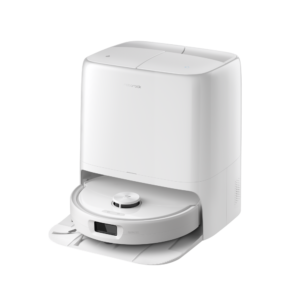
Omni has become a suffix rather than a description. Several manufacturers now attach it to any robot whose dock empties the bin, refills the tank and washes the pads, and the X10 Pro Omni is eufy's entry into that pattern. It marks the point at which a fully self-maintaining station stopped being reserved for flagship machines.
What came down a price tier is the automation. What did not is the motor. This is a robot with a flagship's dock and a mid-range cleaner attached to it, and that is a perfectly sensible way to spend money provided you know it is the arrangement you are buying. The station removes the weekly chores entirely, while cleaning performance stays mid-table. On sealed hard floors and low pile, mid-table is enough. On thick rugs it is not, and no amount of dock automation makes up the difference.
The part of ownership nobody reads about beforehand is consumables. A dock that empties into a bag, washes pads and refills a tank works its way through bags, pads, filters and water, and over two or three years the running total is a real fraction of what the machine cost. eufy's parts are neither the dearest nor the cheapest in the category, but they recur for as long as you own the machine, and they are worth pricing before you commit to a platform.
It earns its place in a home of hard floor and thin carpet where the appeal is not having to think about the machine at all. Homes dominated by deep pile, or anyone who would rather put the money into cleaning power than into a station, will do better elsewhere.
Category strengths
Where the eufy X10 Pro Omni beats the median
- A higher mop lift ?12 mm vs 10.5 mm (median)
- Slightly quieter operation ?57.3 dB vs 60.1 dB (median)
Where the eufy X10 Pro Omni trails the median
- Much weaker suction ?8,000 Pa vs 19,750 Pa (median)
- A shorter runtime per charge ?173 min vs 194 min (median)
- A taller design ?113.5 mm vs 96.8 mm (median)
- A smaller water tank ?80 ml vs 110 ml (median)
- A lower threshold clearance ?21 mm vs 24 mm (median)
How this VS Score was computed
Score 44: each known spec is measured against the median of all robot vacuums (58 products), then weighted; 50 means level with that median. In classes of six or more, a value beyond the class’s 10th–90th percentile range counts as that limit, so one extreme product cannot set the scale. 39% of the scoreable weight could be used; unknown values, features not applicable to this class and proxies (battery capacity where a rated life exists) add or remove nothing.
| Specification | This product | Cohort median | Score weight | Points moved |
|---|---|---|---|---|
| Suction power | 8,000 | 19,750 | 1.2 | −36.0 |
| Mopping | Yes | 79% of the class have it | 0.6 | +30.0 |
| HEPA filter | No | 29% of the class have it | 0.4 | −19.2 |
| Water tank | 80 | 110 | 0.3 | −4.2 |
| Runtime | 173 | 194 | 0.8 | −4.0 |
| Height | 113.5 — capped at the class’s upper range (106.7) | 96.8 | 0.5 | −2.5 |
| Mop lift | 12 | 10.5 | 0.3 | +2.1 |
| Threshold clearance | 21 | 24 | 0.3 | −1.8 |
| Noise level | 57.3 | 60.1 | 0.4 | +0.8 |
| Navigation | LiDAR | LiDAR | 1 | +0.0 |
| Battery capacity | 5,200 | 5,200 | 0.5 | +0.0 |
Not scored: Carpet detection (standard for the class (98% have it)); Edge-cleaning extension (unknown: not scored); Cleaning modes (unknown: not scored); Max cleaning area (unknown: not scored); Mapping (standard for the class (98% have it)); Multi-floor maps (unknown: not scored); Obstacle avoidance (standard for the class (100% have it)); No-go zones (standard for the class (100% have it)); Recharge & resume (unknown: not scored); Self-empty dock (standard for the class (91% have it)); Auto-refill mop (standard for the class (87% have it)); Mop self-cleaning (standard for the class (92% have it)); Automatic mop removal (unknown: not scored); Mop wash temperature (unknown: not scored); Warm-air drying temperature (unknown: not scored); Automatic detergent dispenser (unknown: not scored); Dirt detection & re-mop (unknown: not scored); Dustbin capacity (unknown: not scored); App control (standard for the class (100% have it)); Voice assistant (standard for the class (100% have it)); Scheduling (standard for the class (100% have it)); Zone / room cleaning (standard for the class (100% have it)); Washable filter (unknown: not scored); Anti-tangle brush (unknown: not scored); Removable mop pads (unknown: not scored).
Editor’s note
The X10 Pro Omni is eufy's full-service machine, and the specification that matters most is one that is easy to overlook: the mop lifts 12 mm.
Any robot that both vacuums and mops has to solve the problem of what happens when it reaches carpet with a wet pad. Lifting the mop that far clears low and medium-pile carpet entirely, so the machine can clean a mixed floor in one run without you moving anything or roping off rooms. Machines that lift less, or not at all, need the carpet cordoned off in the app.
The rest of the dock does the tedious parts: it empties the bin, refills the mop from an 80 ml onboard tank and washes the pads after each run. Mopping is by dual spinning pads, which scrub the floor as they turn.
Navigation is LiDAR with obstacle avoidance, full mapping, room-by-room cleaning and no-go zones, on a 5,200 mAh battery giving 173 minutes in standard mode. Suction is 8,000 Pa, mid-range next to the Roborock flagship's 22,000. That is enough for hard floors and low-pile carpet and short of what deep rugs need.
Two limitations. Threshold clearance is 21 mm, so a raised door saddle will stop it. And there is no HEPA filter listed, which matters if allergies are part of why you are buying.
Buy it if you have a mix of hard floor and low carpet and want the whole job done unattended. Where thick rugs or pet hair dominate, look for more suction.
Specifications
Quality bars show where each figure sits between the lowest and highest of the 58 robot vacuums this VS Score is measured against.
Cleaning
Navigation
Battery & dock
Design
Smart features
Maintenance & filtration
Sources and verification
Where the specifications come from
- Official product pageeufy.com
- Independent testingrtings.com
Verification
- First published
- Specifications last checked
- Sheet completeness
- 23 of 39 specifications verified; the rest show as Unknown and are never estimated or scored
- Page type
- Product specification page — Compiled from the manufacturer’s published specifications and the cited sources; this is not a hands-on test.
- Basis
- Research-based: specifications and editorial text were compiled from the documents listed here and the manufacturer’s published data. We have not tested this unit ourselves; where independent measurements are mentioned they belong to the linked publication.
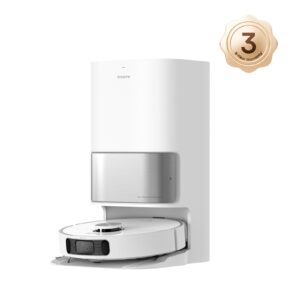
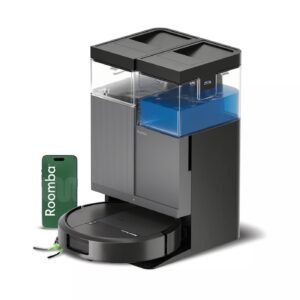
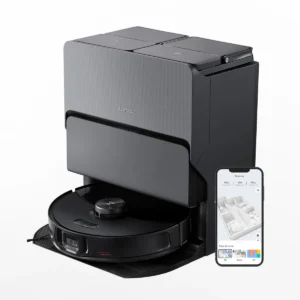
Robot Vacuums with similar specs to the eufy X10 Pro Omni
Ratings & reviews
No reviews yet. Be the first to share your experience.
The bottom line
The eufy X10 Pro Omni earns a VS Score of 44 on the 39% of specifications we could compare like for like — an indication, not a ranking.
- Who it’s for
- Hard floor mixed with low and medium carpet, in a home where the whole job should run unattended without roping rooms off in the app.
- Who should look elsewhere
- Deep rugs, heavy pet hair, low furniture and raised saddles all call for something else.
- The trade-off that matters
- The dock is flagship and the motor is not. Suction sits mid-table, which hard floors will not notice and thick rugs will.
- The main alternative
- Dreame L40 Ultra: takes its pads off entirely before carpet and adds more suction
The VS Score is calculated from the weighted specifications above, each measured against the median of comparable robot vacuums — a shortlisting guide, not a substitute for your own priorities. See how we score.