Roborock Q7 M5: Specs, Features, Pros & Cons
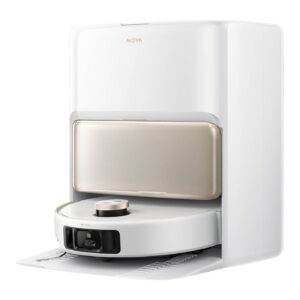
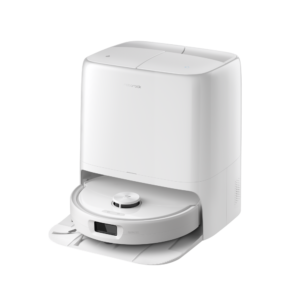
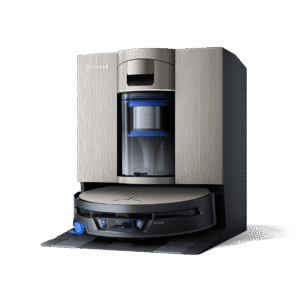
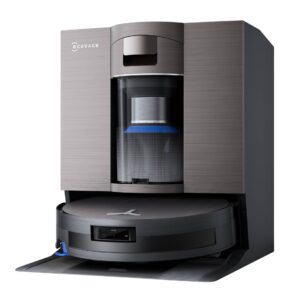
Roborock left the dock out of the Q7 M5, and nearly every other decision about it follows from where that money went instead. It sits well below the Qrevo and Ultra lines in Roborock's range, and it is the model for someone who wants a capable robot and will do the upkeep by hand.
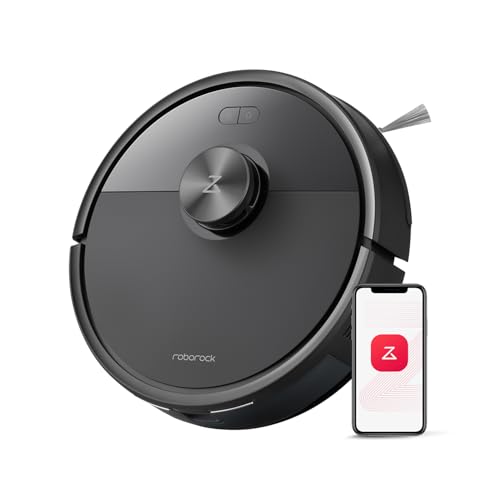
The money went into two places. Suction is strong for a robot in this price band, and navigation uses a spinning laser turret, uncommon at this price, so the robot maps rooms in the dark, remembers more than one floor and cleans in straight rows. No-go zones and room selection work through the app. The body is 99 mm tall and runs on a 3,200 mAh battery, and both the main brush and the side brush carry combs that cut hair as they turn. Long hair from people or a shedding dog is less likely to wrap the brushes tight between cleanings.
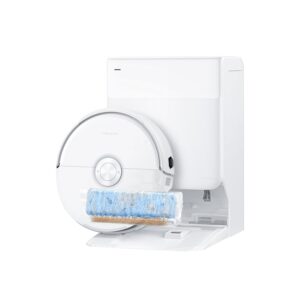
Mopping is basic. A cloth pad clips underneath and drags across the floor with an adjustable water flow, which lifts dust and light marks from hard floors and leaves anything dried on for a person with a real mop. It does not lift over carpet, so it comes off before a rug run, and there is no extending arm for edges or corners.
What it gives up is everything a base station does. You empty the bin, rinse the pad and refill the water yourself, after most runs. In a small apartment with a pet and hard floors, that trade puts the budget into the parts that pick up hair and leaves the emptying to you.
Category strengths
Where the Roborock Q7 M5 trails the median
- No self-empty dock ?
- Much weaker suction ?10,000 Pa vs 19,750 Pa (median)
- No edge-cleaning extension ?
- No auto-refill mop ?
- No mop self-cleaning ?
- No dirt detection & re-mop ?
- No automatic detergent dispenser ?
- A smaller battery ?3,200 mAh vs 5,200 mAh (median)
- A slightly taller design ?99 mm vs 96.8 mm (median)
How this VS Score was computed
Score 26: each known spec is measured against the median of all robot vacuums (58 products), then weighted; 50 means level with that median. In classes of six or more, a value beyond the class’s 10th–90th percentile range counts as that limit, so one extreme product cannot set the scale. 45% of the scoreable weight could be used; unknown values, features not applicable to this class and proxies (battery capacity where a rated life exists) add or remove nothing.
| Specification | This product | Cohort median | Score weight | Points moved |
|---|---|---|---|---|
| Self-empty dock | No | 91% of the class have it | 0.7 | −33.6 |
| Suction power | 10,000 | 19,750 | 1.2 | −30.0 |
| Mopping | Yes | 79% of the class have it | 0.6 | +30.0 |
| Edge-cleaning extension | No | 79% of the class have it | 0.4 | −19.2 |
| Auto-refill mop | No | 87% of the class have it | 0.4 | −19.2 |
| Mop self-cleaning | No | 92% of the class have it | 0.4 | −19.2 |
| Automatic mop removal | No | 37% of the class have it | 0.4 | −19.2 |
| Dirt detection & re-mop | No | 79% of the class have it | 0.4 | −19.2 |
| HEPA filter | No | 29% of the class have it | 0.4 | −19.2 |
| Automatic detergent dispenser | No | 76% of the class have it | 0.3 | −14.4 |
| Battery capacity | 3,200 — capped at the class’s lower range (4,000) | 5,200 | 0.5 | −6.0 |
| Height | 99 | 96.8 | 0.5 | −0.5 |
| Navigation | LiDAR | LiDAR | 1 | +0.0 |
Not scored: Mop lift (unknown: not scored); Carpet detection (standard for the class (98% have it)); Cleaning modes (unknown: not scored); Max cleaning area (unknown: not scored); Mapping (standard for the class (98% have it)); Multi-floor maps (unknown: not scored); Obstacle avoidance (standard for the class (100% have it)); No-go zones (standard for the class (100% have it)); Threshold clearance (unknown: not scored); Runtime (unknown: not scored); Recharge & resume (standard for the class (95% have it)); Mop wash temperature (unknown: not scored); Warm-air drying temperature (unknown: not scored); Dustbin capacity (unknown: not scored); Water tank (unknown: not scored); Noise level (unknown: not scored); App control (standard for the class (100% have it)); Voice assistant (unknown: not scored); Scheduling (standard for the class (100% have it)); Zone / room cleaning (standard for the class (100% have it)); Washable filter (standard for the class (88% have it)); Anti-tangle brush (standard for the class (98% have it)); Removable mop pads (unknown: not scored).
Editor’s note
The Q7 M5 is Roborock's attempt to put flagship suction into a budget body, and the headline number is not marketing: 10,000 Pa is more than several robots costing twice as much, and it shows on carpet and in the corners where pet hair collects.
Navigation is the other place the money went. This uses a spinning 360-degree LiDAR turret rather than the camera-based systems common at this price, which means it maps accurately in the dark, remembers multiple floors, and takes efficient parallel passes instead of wandering. No-go zones and room-by-room cleaning both work properly through the app.
It does mop, in a limited way. A cloth pad clips to the underside and drags with three levels of water flow. That handles dust and light marks on hard floors. It will not scrub dried spills the way a spinning or roller mop does, and the pad does not lift, so you take it off before running over carpet.
The dual anti-tangle system is the quiet upgrade. A comb-equipped main brush and matching side brush cut hair as they turn, which in a home with long-haired occupants or a shedding dog is the difference between monthly maintenance and weekly surgery with scissors.
What you give up is the dock. There is no self-emptying base, no mop washing and no drying, so you empty the bin and rinse the pad yourself. Buy it if suction and navigation matter more than automation, and you are content to do the maintenance. Spend more on a Qrevo or an Ultra if you want the robot to look after itself.
Specifications
Quality bars show where each figure sits between the lowest and highest of the 58 robot vacuums this VS Score is measured against.
Cleaning
Navigation
Battery & dock
Design
Smart features
Maintenance & filtration
Sources and verification
Where the specifications come from
- Official product pageus.roborock.com
- Independent testingrtings.com
Verification
- First published
- Specifications last checked
- Sheet completeness
- 25 of 39 specifications verified; the rest show as Unknown and are never estimated or scored
- Page type
- Product specification page — Compiled from the manufacturer’s published specifications and the cited sources; this is not a hands-on test.
- Basis
- Research-based: specifications and editorial text were compiled from the documents listed here and the manufacturer’s published data. We have not tested this unit ourselves; where independent measurements are mentioned they belong to the linked publication.
Where to buy
Prices and availability may change. Check the retailer before buying. We may earn a commission on purchases.
Robot Vacuums with similar specs to the Roborock Q7 M5
Ratings & reviews
No reviews yet. Be the first to share your experience.
The bottom line
The Roborock Q7 M5 earns a VS Score of 26, below the median of the 58 robot vacuums it is measured against (a score of 50 is level with that median).
- Who it’s for
- A pet owner on a budget who wants strong suction and proper laser mapping, and does not mind emptying a bin and rinsing a pad by hand.
- Who should look elsewhere
- Busy households that want the robot to look after itself. There is no self-emptying base, and the clip-on pad wipes light dust but leaves dried spills behind.
- The trade-off that matters
- All the money goes into suction and navigation, so maintenance stays yours. The bin and the mop cloth need attention after most runs.
- The main alternative
- Roborock Qrevo S: a Roborock whose dock empties the bin and refills the mop, for less hands-on upkeep at the cost of weaker suction.
The VS Score is calculated from the weighted specifications above, each measured against the median of comparable robot vacuums — a shortlisting guide, not a substitute for your own priorities. See how we score.