Roborock Qrevo Curv 2 Flow: Specs, Features, Pros & Cons
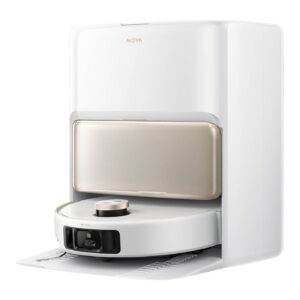
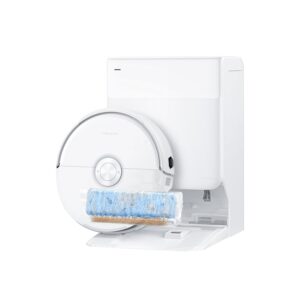
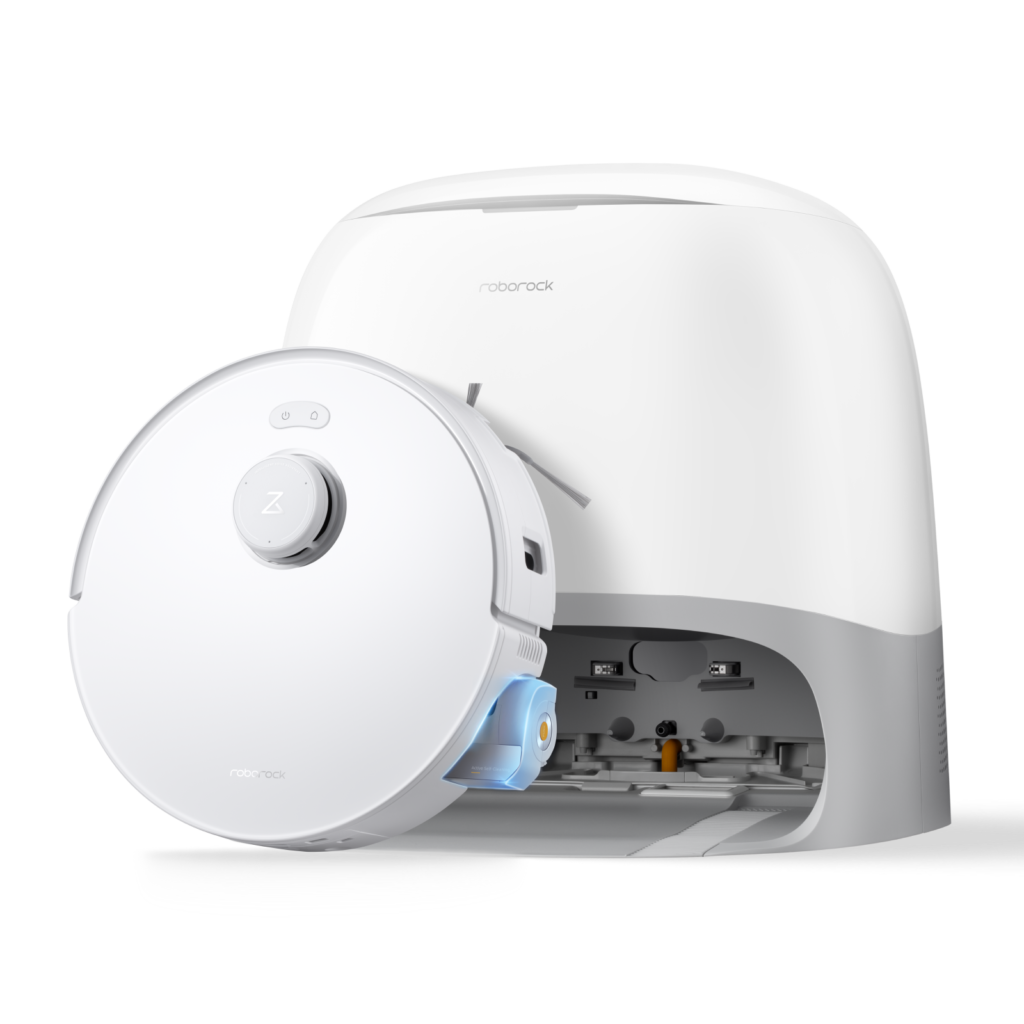
Roborock built this second Curv around a roller, a drum that runs across the width of the robot and turns against the floor, in place of the usual pair of spinning pads. Most of the Qrevo Curv 2 Flow, and most of its dock, is arranged around keeping that drum clean.
The dock washes the roller in hot water and dries it with air hotter than rivals use, then empties the bin and refills the tank so the routine carries on without anyone lifting a lid. When the robot reaches a rug, the roller lifts higher than on any other model here, high enough to pass over medium pile, which lets tiles and a rug share one run. Suction is near the top of the category, an extending arm reaches toward baseboards, and the app has a long list of cleaning modes.
Navigation is Roborock's usual LiDAR with mapping, obstacle avoidance, no-go zones and recharge-and-resume, on a battery of average size.
What the design gives up is mostly about the body. At 119 mm it is one of the taller robots in the category, so the space beneath a low sofa or bed stays out of reach, and it runs a little on the loud side. The roller is also fixed in place. It is meant to be washed in place, with no removable pads to unclip and take to the sink.
The Curv 2 Flow suits a home with medium-pile rugs among the hard floors, furniture on tall legs, and someone who mops several times a week and would like the mop to stay fresh without handling it. Measure under the lowest sofa before ordering, because every advantage of the roller stops at the edge of the furniture it cannot pass beneath.
Category strengths
Where the Roborock Qrevo Curv 2 Flow beats the median
- A higher mop lift ?15 mm vs 10.5 mm (median)
- More cleaning modes ?
- A slightly higher warm-air drying temperature ?55 °C vs 50 °C (median)
- Slightly stronger suction ?20,000 Pa vs 19,750 Pa (median)
Where the Roborock Qrevo Curv 2 Flow trails the median
- No removable mop pads ?
- A taller design ?119 mm vs 96.8 mm (median)
- Slightly louder operation ?63 dB vs 60.1 dB (median)
How this VS Score was computed
Score 55: each known spec is measured against the median of all robot vacuums (58 products), then weighted; 50 means level with that median. In classes of six or more, a value beyond the class’s 10th–90th percentile range counts as that limit, so one extreme product cannot set the scale. 39% of the scoreable weight could be used; unknown values, features not applicable to this class and proxies (battery capacity where a rated life exists) add or remove nothing.
| Specification | This product | Cohort median | Score weight | Points moved |
|---|---|---|---|---|
| Mopping | Yes | 79% of the class have it | 0.6 | +30.0 |
| Edge-cleaning extension | Yes | 79% of the class have it | 0.4 | +20.0 |
| HEPA filter | No | 29% of the class have it | 0.4 | −19.2 |
| Removable mop pads | No | 90% of the class have it | 0.2 | −9.6 |
| Mop lift | 15 | 10.5 | 0.3 | +6.3 |
| Cleaning modes | 5 | 4 | 0.3 | +3.9 |
| Height | 119 — capped at the class’s upper range (106.7) | 96.8 | 0.5 | −2.5 |
| Suction power | 20,000 | 19,750 | 1.2 | +1.2 |
| Warm-air drying temperature | 55 | 50 | 0.2 | +1.0 |
| Noise level | 63 | 60.1 | 0.4 | −0.8 |
| Navigation | LiDAR | LiDAR | 1 | +0.0 |
| Battery capacity | 5,200 | 5,200 | 0.5 | +0.0 |
| Mop wash temperature | 75 | 75 | 0.3 | +0.0 |
Not scored: Carpet detection (standard for the class (98% have it)); Max cleaning area (unknown: not scored); Mapping (standard for the class (98% have it)); Multi-floor maps (unknown: not scored); Obstacle avoidance (standard for the class (100% have it)); No-go zones (standard for the class (100% have it)); Threshold clearance (unknown: not scored); Runtime (unknown: not scored); Recharge & resume (standard for the class (95% have it)); Self-empty dock (standard for the class (91% have it)); Auto-refill mop (standard for the class (87% have it)); Mop self-cleaning (standard for the class (92% have it)); Automatic mop removal (unknown: not scored); Automatic detergent dispenser (unknown: not scored); Dirt detection & re-mop (unknown: not scored); Dustbin capacity (unknown: not scored); Water tank (unknown: not scored); App control (standard for the class (100% have it)); Voice assistant (standard for the class (100% have it)); Scheduling (standard for the class (100% have it)); Zone / room cleaning (standard for the class (100% have it)); Washable filter (standard for the class (88% have it)); Anti-tangle brush (standard for the class (98% have it)).
Editor’s note
The Qrevo Curv 2 Flow is built around cleaning the mop as thoroughly as it cleans the floor, and its numbers back that up.
The dock washes the mop at 75 degrees C and dries it with air at 55 degrees C, hotter on both counts than most rivals. That matters more than it sounds: a mop washed in cool water and left damp is where the smell in a mopping robot comes from, and hot washing plus warm drying is the only reliable answer. The dock also empties the bin and refills the water.
The mop itself is a roller rather than spinning pads, applying continuous pressure across its width, and it lifts 15 mm for carpet. That is a high lift, enough to clear medium-pile carpet so a mixed floor can be done in one run. Suction is 20,000 Pa with an anti-tangle brush and an extending edge arm for baseboards and corners.
Navigation is LiDAR with obstacle avoidance, mapping, no-go zones and recharge-and-resume, on a 5,200 mAh battery.
One practical note: the mop pads are not removable. Everything is designed to be washed in place, which is convenient until something needs cleaning by hand or replacing.
Buy it if you mop often and want the machine to look after itself for weeks. Buy a model with removable pads if you would rather be able to take them out and wash them yourself.
Specifications
Quality bars show where each figure sits between the lowest and highest of the 58 robot vacuums this VS Score is measured against.
Cleaning
Navigation
Battery & dock
Design
Smart features
Maintenance & filtration
Sources and verification
Where the specifications come from
- Official product pageus.roborock.com
- Independent testingrtings.com
Verification
- First published
- Specifications last checked
- Sheet completeness
- 28 of 39 specifications verified; the rest show as Unknown and are never estimated or scored
- Page type
- Product specification page — Compiled from the manufacturer’s published specifications and the cited sources; this is not a hands-on test.
- Basis
- Research-based: specifications and editorial text were compiled from the documents listed here and the manufacturer’s published data. We have not tested this unit ourselves; where independent measurements are mentioned they belong to the linked publication.
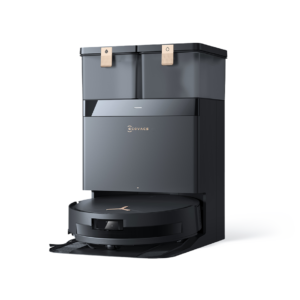
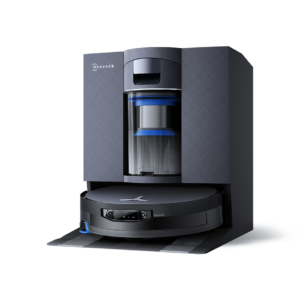
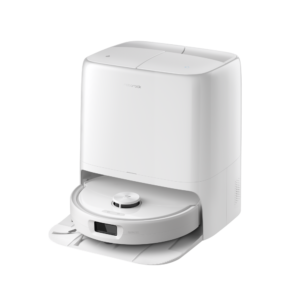
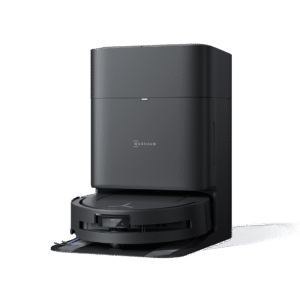
Robot Vacuums with similar specs to the Roborock Qrevo Curv 2 Flow
Ratings & reviews
No reviews yet. Be the first to share your experience.
The bottom line
The Roborock Qrevo Curv 2 Flow earns a VS Score of 55 on the 39% of specifications we could compare like for like — an indication, not a ranking.
- Who it’s for
- Households that mop often, have medium-pile rugs among the hard floors, and want the roller kept clean for weeks without anyone touching it.
- Who should look elsewhere
- Low furniture rules it out, and so does a preference for pulling the mop off and washing it by hand.
- The trade-off that matters
- Height. The tall body leaves sofas and beds that slimmer machines slide under out of reach, whatever the mop does elsewhere.
- The main alternative
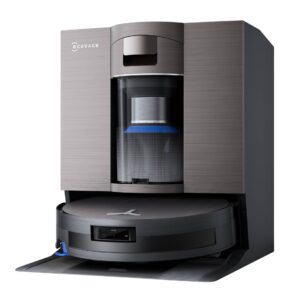
- ECOVACS DEEBOT X8 PRO OMNI: a roller mop dried with hotter air, in a noticeably lower body
The VS Score is calculated from the weighted specifications above, each measured against the median of comparable robot vacuums — a shortlisting guide, not a substitute for your own priorities. See how we score.