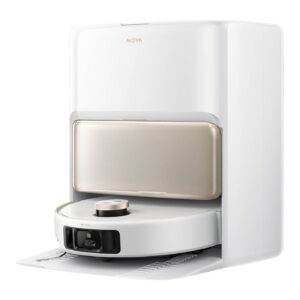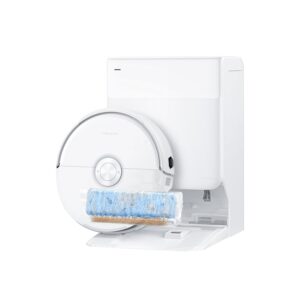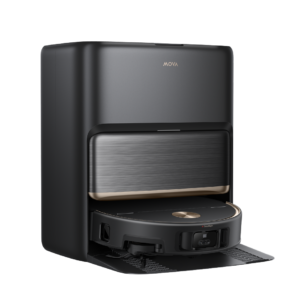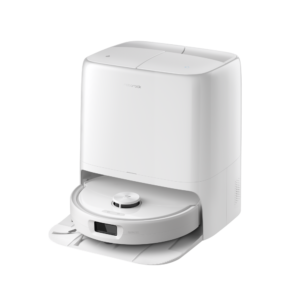
Ecovacs DEEBOT T80 OMNI: Specs, Price, Pros & Cons
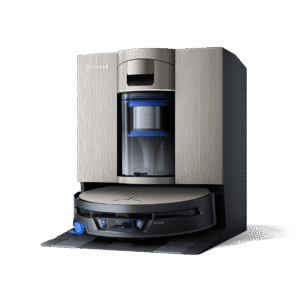
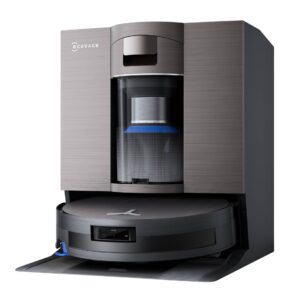
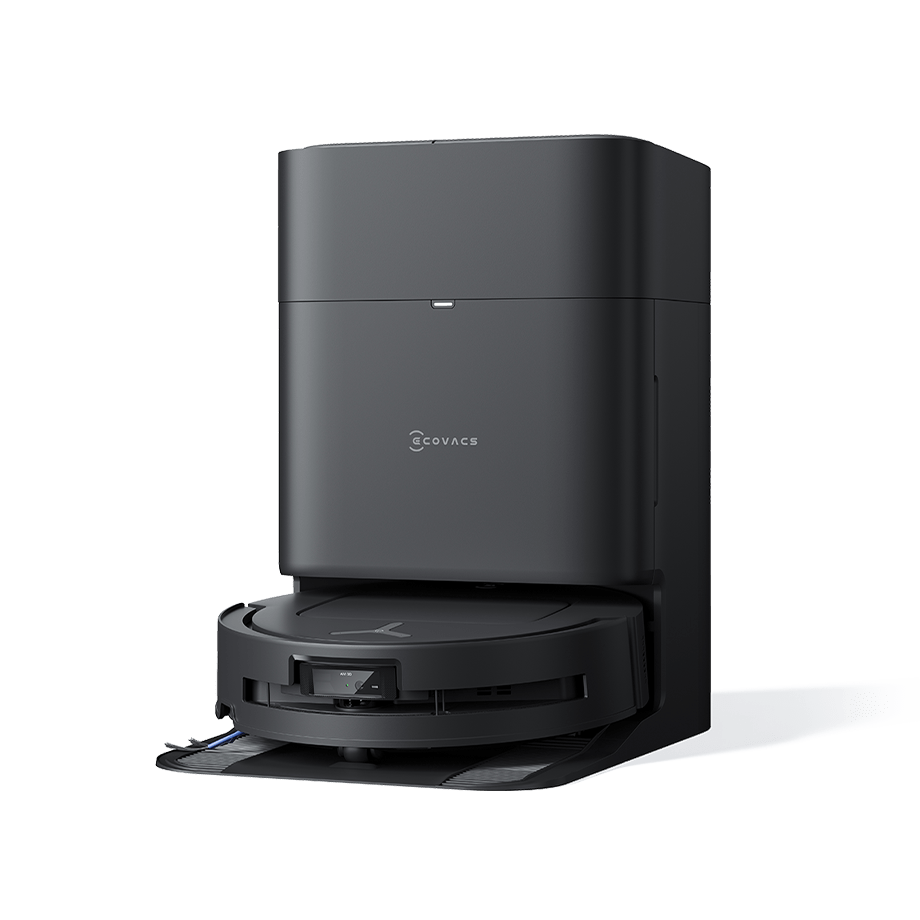
ECOVACS brought its self-rinsing roller mop down a price tier with the T80 OMNI and kept the full-service dock that usually comes with it. The roller rinses against clean water as it turns, and the station empties the bin, washes the roller hot and dries it with heated air, so the robot handles every stage of mopping between runs.
On the floor it is a laser-guided robot that recognizes obstacles, remembers maps for more than one level and respects the no-go zones drawn in the app. Recharge-and-resume lets a long job continue after a top-up. Its battery, a 6,400 mAh cell, is sized for long runs. The body stands 98 mm tall, typical for this site, and an extending arm handles the edges. The app has plenty of cleaning modes, and the robot answers to the usual voice assistants, so a run can start without anyone opening a phone.
Where ECOVACS saved money is pull and reach. Suction is modest for its class, a shortfall that tile and wood hide and thick carpet reveals. It also climbs only low thresholds, so a raised door saddle can leave a room uncleaned. None of those savings touch the mop, which is the reason to buy it.
The home it suits is mostly tile, wood or vinyl with a few flat rugs, with floors that get dirty from children, pets or a busy kitchen, where a clean roller on every pass counts for more than the strongest motor. Deep-pile carpet belongs to a pricier machine, and so does a house full of raised thresholds.
Category strengths
Where the Ecovacs DEEBOT T80 OMNI beats the median
- A longer runtime per charge ?223 min vs 194 min (median)
- A bigger battery ?6,400 mAh vs 5,200 mAh (median)
- More cleaning modes ?
Where the Ecovacs DEEBOT T80 OMNI trails the median
- Slightly weaker suction ?18,000 Pa vs 19,750 Pa (median)
- A lower threshold clearance ?20 mm vs 24 mm (median)
- Slightly louder operation ?63.4 dB vs 60.1 dB (median)
- A slightly taller design ?98 mm vs 96.8 mm (median)
How this VS Score was computed
Score 55: each known spec is measured against the median of all robot vacuums (58 products), then weighted; 50 means level with that median. In classes of six or more, a value beyond the class’s 10th–90th percentile range counts as that limit, so one extreme product cannot set the scale. 44% of the scoreable weight could be used; unknown values, features not applicable to this class and proxies (battery capacity where a rated life exists) add or remove nothing.
| Specification | This product | Cohort median | Score weight | Points moved |
|---|---|---|---|---|
| Mopping | Yes | 79% of the class have it | 0.6 | +30.0 |
| Edge-cleaning extension | Yes | 79% of the class have it | 0.4 | +20.0 |
| Automatic mop removal | No | 37% of the class have it | 0.4 | −19.2 |
| HEPA filter | No | 29% of the class have it | 0.4 | −19.2 |
| Automatic detergent dispenser | Yes | 76% of the class have it | 0.3 | +15.0 |
| Battery capacity | 6,400 | 5,200 | 0.5 | +6.0 |
| Runtime | 223 | 194 | 0.8 | +5.6 |
| Suction power | 18,000 | 19,750 | 1.2 | −4.8 |
| Cleaning modes | 5 | 4 | 0.3 | +3.9 |
| Threshold clearance | 20 | 24 | 0.3 | −2.4 |
| Noise level | 63.4 | 60.1 | 0.4 | −1.2 |
| Height | 98 | 96.8 | 0.5 | −0.5 |
| Navigation | LiDAR | LiDAR | 1 | +0.0 |
Not scored: Mop lift (unknown: not scored); Carpet detection (standard for the class (98% have it)); Max cleaning area (unknown: not scored); Mapping (standard for the class (98% have it)); Multi-floor maps (unknown: not scored); Obstacle avoidance (standard for the class (100% have it)); No-go zones (standard for the class (100% have it)); Recharge & resume (standard for the class (95% have it)); Self-empty dock (standard for the class (91% have it)); Auto-refill mop (standard for the class (87% have it)); Mop self-cleaning (standard for the class (92% have it)); Mop wash temperature (unknown: not scored); Warm-air drying temperature (unknown: not scored); Dirt detection & re-mop (unknown: not scored); Dustbin capacity (unknown: not scored); Water tank (unknown: not scored); App control (standard for the class (100% have it)); Voice assistant (standard for the class (100% have it)); Scheduling (standard for the class (100% have it)); Zone / room cleaning (standard for the class (100% have it)); Washable filter (standard for the class (88% have it)); Anti-tangle brush (standard for the class (98% have it)); Removable mop pads (standard for the class (90% have it)).
Editor’s note
The Ecovacs DEEBOT T80 OMNI is the value pick among the roller-mop robots, and roller mopping is the reason to look at it. The OZMO roller continuously rinses itself against fresh water as it spins, so the water it lays down stays clean for the whole run, where a dragged pad gets progressively dirtier and smears grime around. For hard floors that get dirty, that is a meaningful upgrade over pad-style mopping.
The OMNI station does the rest of the work: it empties the bin into a 3-liter bag, washes the roller in scalding hot water through a bank of nozzles, and blasts it dry with heated air so it does not grow mildew between runs. Runtime is generous at up to roughly 297 minutes in quiet mode, and at around 63 dB it is one of the calmer robots when vacuuming. ZeroTangle brushwork keeps hair from binding up.
At 18,000 Pa its suction trails the 30,000 Pa-plus figures of pricier rivals, so on thick carpet it is competent and no more. Reviewers have also flagged the occasional software quirk, as is common with feature-dense robots at this price.
Navigation is laser-based with AI obstacle avoidance, mapping, no-go zones and multi-floor support, and it responds to app control and the usual voice assistants.
Buy the T80 OMNI if your home is mostly hard flooring and you want clean mopping plus a fully automated dock without paying flagship money. Look elsewhere if you have a lot of deep carpet and want the strongest possible suction, or if you want the latest navigation hardware. Both of those push you up a price tier.
Specifications
Quality bars show where each figure sits between the lowest and highest of the 58 robot vacuums this VS Score is measured against.
Cleaning
Navigation
Battery & dock
Design
Smart features
Maintenance & filtration
Sources and verification
Where the specifications come from
- Official product pageecovacs.com
- Independent testingrtings.com
Verification
- First published
- Specifications last checked
- Sheet completeness
- 30 of 39 specifications verified; the rest show as Unknown and are never estimated or scored
- Page type
- Product specification page — Compiled from the manufacturer’s published specifications and the cited sources; this is not a hands-on test.
- Basis
- Research-based: specifications and editorial text were compiled from the documents listed here and the manufacturer’s published data. We have not tested this unit ourselves; where independent measurements are mentioned they belong to the linked publication.
Where to buy
Prices and availability may change. Check the retailer before buying. We may earn a commission on purchases.
Price history
Robot Vacuums with similar specs to the Ecovacs DEEBOT T80 OMNI
Ratings & reviews
No reviews yet. Be the first to share your experience.
The bottom line
The Ecovacs DEEBOT T80 OMNI earns a VS Score of 55, above the median of the 58 robot vacuums it is measured against (a score of 50 is level with that median).
- Who it’s for
- Mostly hard-floored homes that get properly dirty, where a self-rinsing roller and a fully automated dock matter more than top suction.
- Who should look elsewhere
- Look elsewhere for deep carpet, raised door saddles, or the strongest pickup available.
- The trade-off that matters
- Suction. It sits below the pricier roller machines, and on thick carpet that difference is the one you would pay to close.
- The main alternative
- Dreame Aqua10 Ultra Roller: a roller mop with far more suction and climbing, for a higher outlay
The VS Score is calculated from the weighted specifications above, each measured against the median of comparable robot vacuums — a shortlisting guide, not a substitute for your own priorities. See how we score.