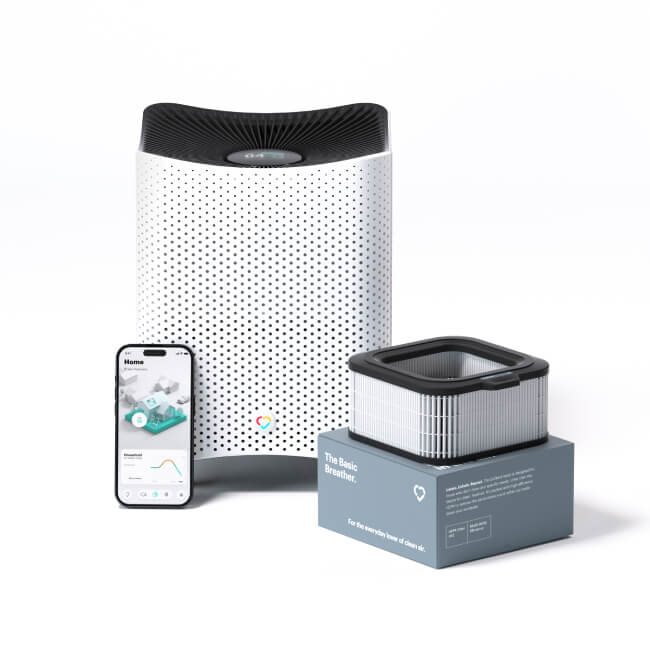
Mila Air 3: Specs, Features, Pros & Cons
Mila rates the Air 3 for 406 sq ft at five air changes an hour, a slightly stricter pace than the one this site applies to other purifiers, so its room size reads a touch more conservatively than a rival quoted the usual way. What Mila does not give is the smoke, dust and pollen split, and that sets the tone for the whole product: a purifier that publishes plenty, in a format of its own choosing.
The Air 3 is built as one body with interchangeable insides. Mila sells a shelf of cartridges for it, each aimed at a named problem such as pets, allergies, a new baby or a freshly decorated room, and they run from pure particle filtering to heavy carbon for chemical fumes. The purifier has a washable pre-filter and a True HEPA layer, and the heavier cartridges trade airflow for chemistry.
The sensors go further than most. Besides fine particles, the Air 3 reads humidity, temperature and carbon monoxide, and it notices when someone is in the room so it can adjust its fan. It links to an app, works with voice assistants including Apple's platform, and has the usual auto and sleep modes.
The drawbacks are about ownership more than performance. It weighs 8.16 kg, heavy for a purifier of this reach, so it tends to stay where it is first put. Cartridges are due often, and Mila's pricing leans on a filter subscription. That makes it a purifier for someone who knows what is wrong with the air at home, wants to read the numbers and will keep ordering the matching cartridge, and a poor match for anyone who wants the most clean air for the least money.
Category strengths
Where the Mila Air 3 beats the median
- A higher coverage area ?406 sq ft vs 354 sq ft (median)
Where the Mila Air 3 trails the median
- A much lower filter life ?6 months vs 12 months (median)
- A much heavier build ?8.16 kg vs 5.26 kg (median)
How this VS Score was computed
Score 64: each known spec is measured against the median of all air purifiers (41 products), then weighted; 50 means level with that median. In classes of six or more, a value beyond the class’s 10th–90th percentile range counts as that limit, so one extreme product cannot set the scale. 58% of the scoreable weight could be used; unknown values, features not applicable to this class and proxies (battery capacity where a rated life exists) add or remove nothing.
| Specification | This product | Cohort median | Score weight | Points moved |
|---|---|---|---|---|
| True HEPA filter | Yes | 61% of the class have it | 1.5 | +75.0 |
| Washable pre-filter | Yes | 54% of the class have it | 0.5 | +25.0 |
| Filter life | 6 | 12 | 1 | −25.0 |
| App control | Yes | 70% of the class have it | 0.5 | +25.0 |
| Voice assistant | Yes | 64% of the class have it | 0.3 | +15.0 |
| Coverage area | 406 | 354 | 2 | +14.0 |
| Weight | 8.16 — capped at the class’s upper range (7.8) | 5.26 | 0.3 | −4.8 |
| Air changes per hour | 5 — capped at the class’s upper range (4.8) | 4.8 | 1 | +0.0 |
| Filtration stages | 3 | 3 | 0.5 | +0.0 |
| Min noise level | 23 | 23 | 1.5 | +0.0 |
Not scored: CADR (smoke) (unknown: not scored); Activated carbon filter (standard for the class (100% have it)); Max noise level (unknown: not scored); Power consumption (unknown: not scored); Sleep mode (standard for the class (95% have it)); Air quality sensor (standard for the class (93% have it)); Auto mode (standard for the class (90% have it)); Filter replacement indicator (unknown: not scored); Timer (unknown: not scored).
Editor’s note
Mila sells one chassis and lets you pick what goes inside it, and that is unusual. Seven cartridges are published individually, from the carbon-free Basic Breather up to the Overreactor with 1.25 lb of formaldehyde-targeted carbon, by way of pet, allergy and new-parent options. Choosing one is not cosmetic: airflow falls by roughly 43% from the base filter to the heaviest carbon ones, while formaldehyde removal goes from nothing at all to about 96%. Coverage and chemistry trade directly against each other, and Mila is one of very few brands that publishes enough data to see it.
The sensor package is the other real differentiator: PM1, PM2.5, PM10, humidity, temperature and, unusually, carbon monoxide, plus proximity detection that caps the fan when it senses you in the room and runs hard when you leave. HomeKit support alongside Alexa and Google is rare at this price.
Two things temper it. The headline price only exists on the Filter Auto-Refill plan, and buying the machine outright costs more. Replacement cartridges are due every six months, so over about three years the filter bill matches the cost of the machine. The warranty is leveraged the same way: two years one-time, three if you stay subscribed.
The other is comparability. Mila is not AHAM Verifide and publishes a single undifferentiated CADR rather than the usual smoke, dust and pollen triplet, so you cannot line it up cleanly against a Coway or Levoit. Its own noise figures disagree too: the product page says 47 dB maximum, the help center says 58 dB.
Buy it for a specific, named problem (pets, a renovation, allergies) and for the sensors. For raw airflow per dollar, it is roughly twice the price of the obvious alternatives.
Specifications
Quality bars show where each figure sits between the lowest and highest of the 41 air purifiers this VS Score is measured against.
Performance
Filtration
Noise & power
Design
Smart features
Sources and verification
Where the specifications come from
- Official product pagemilacares.com
- Independent testingrtings.com
Verification
- First published
- Specifications last checked
- Sheet completeness
- 17 of 22 specifications verified; the rest show as Unknown and are never estimated or scored
- Page type
- Product specification page — Compiled from the manufacturer’s published specifications and the cited sources; this is not a hands-on test.
- Basis
- Research-based: specifications and editorial text were compiled from the documents listed here and the manufacturer’s published data. We have not tested this unit ourselves; where independent measurements are mentioned they belong to the linked publication.
Air Purifiers with similar specs to the Mila Air 3
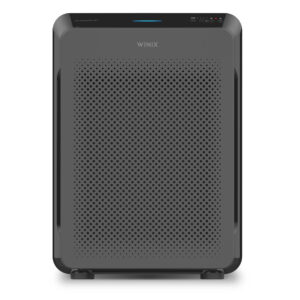
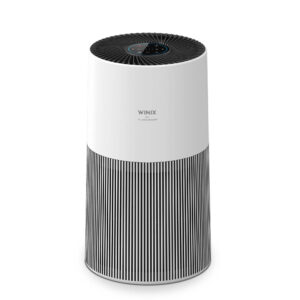
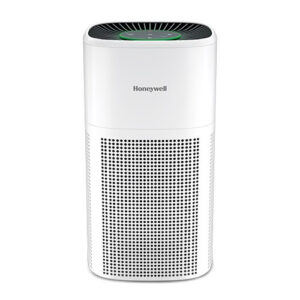
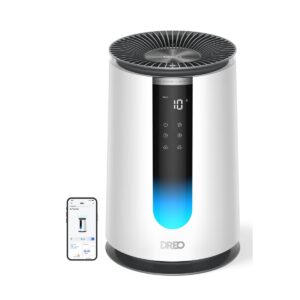
Ratings & reviews
No reviews yet. Be the first to share your experience.
The bottom line
The Mila Air 3 earns a VS Score of 64, above the median of the 41 air purifiers it is measured against (a score of 50 is level with that median).
- Who it’s for
- People with a specific air problem (pet ammonia, formaldehyde from a recent renovation, seasonal allergies) and smart-home households, especially on HomeKit, who will read the sensor data.
- Who should look elsewhere
- Anyone chasing maximum airflow per dollar, or who needs an AHAM-Verifide smoke CADR to compare against other units. Also wrong if you resent subscriptions, since the price, the first filter and the warranty extension all assume Auto-Refill.
- The trade-off that matters
- Intelligence instead of airflow, and a filter bill instead of a low price. You are paying roughly double a Coway or Levoit of similar capacity for the sensors, the app and the ability to choose the chemistry.
- The main alternative
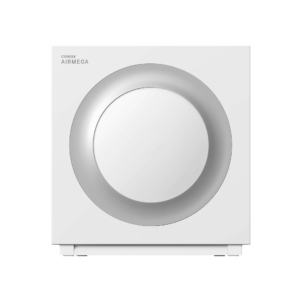
- Coway Airmega AP-1512HH Mighty: AHAM-Verifide, roughly a third of the price with far cheaper filters, if you only need particles removed from one room.
The VS Score is calculated from the weighted specifications above, each measured against the median of comparable air purifiers — a shortlisting guide, not a substitute for your own priorities. See how we score.