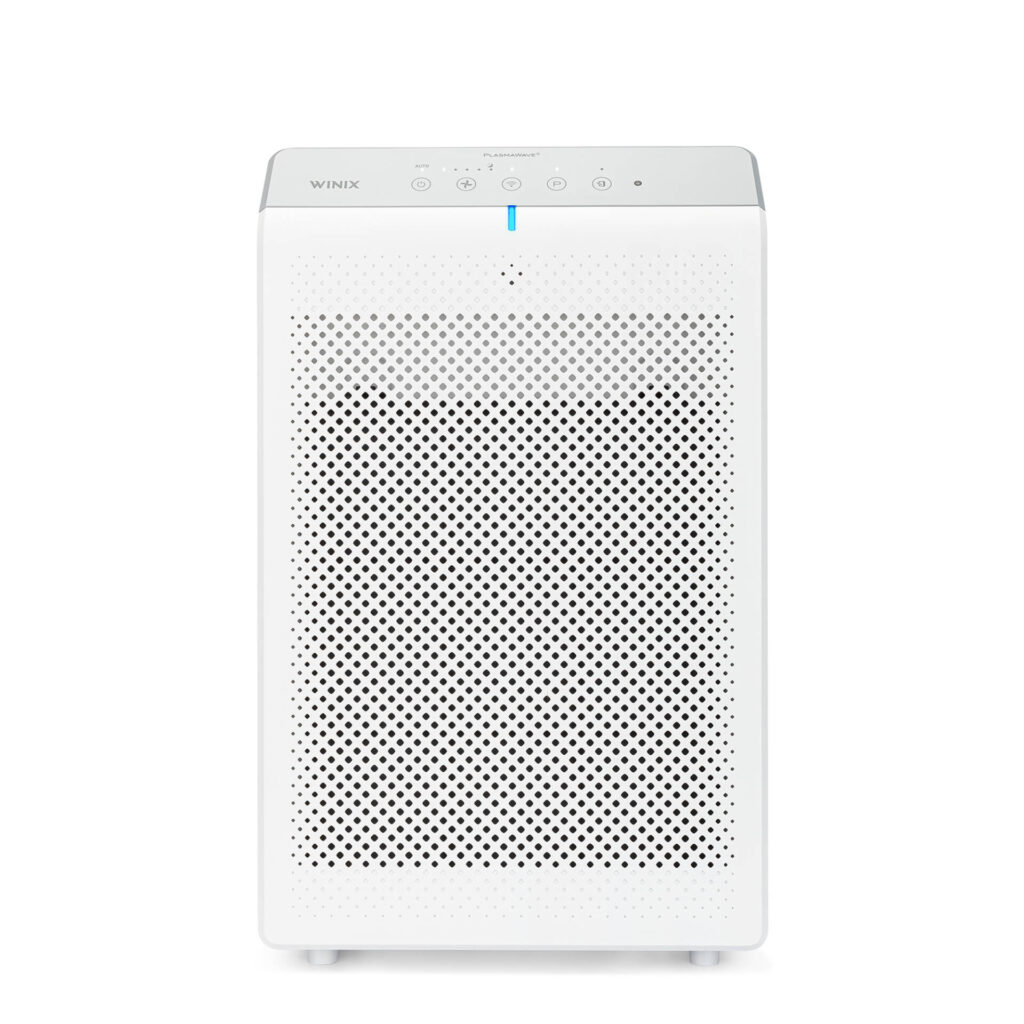
Winix 5530: Specs, Features, Pros & Cons
Winix built the 5530 to replace the long-running 5500-2, and the family resemblance is plain: a four-stage filter stack, a sensor-driven auto mode and a size aimed at the main room of the house. The model number itself is a retail label. The same hardware also sells as the 5510 and the 5520, so the badge on the box says more about the shop than the purifier.
The filters set it apart from most purifiers at this level. The carbon element is the pellet kind, Winix's AOC, which gives it a proper bed of material for cooking smells, pets and smoke instead of a thin coating. Behind it comes a True HEPA layer, and PlasmaWave ionization runs alongside, with a switch for owners who would rather leave it off. At the bottom of its range it measures 23.5 dB, quiet enough for a bedroom at night.
Two changes from the older model shape who it suits. The filter is now a single replaceable part with nothing washable in it, where the 5500-2 let owners rinse more of theirs. And the sensor reads gases, with no PM2.5 figure on the display, so auto mode responds to smells more readily than to fine dust. The Winix app is new too, for control from a phone.
It moves a lot of air for a purifier of its size, and its power draw is on the high side too. That makes it a purifier for a lounge, a kitchen-diner or a room shared with a litter tray, where odor is the daily complaint and the owner is happy to buy a new filter each year. Wildfire smoke and pollen call for a purifier whose sensor counts particles.
Category strengths
Where the Winix 5530 beats the median
- A much higher CADR (smoke) ?253 CFM vs 161 CFM (median)
- A higher coverage area ?392 sq ft vs 354 sq ft (median)
- More filtration stages ?4 vs 3 (median)
Where the Winix 5530 trails the median
- A higher power consumption ?65 W vs 45 W (median)
- A slightly higher min noise level ?23.5 dB vs 23 dB (median)
- A slightly heavier build ?5.7 kg vs 5.26 kg (median)
How this VS Score was computed
Score 68: each known spec is measured against the median of all air purifiers (41 products), then weighted; 50 means level with that median. In classes of six or more, a value beyond the class’s 10th–90th percentile range counts as that limit, so one extreme product cannot set the scale. 74% of the scoreable weight could be used; unknown values, features not applicable to this class and proxies (battery capacity where a rated life exists) add or remove nothing.
| Specification | This product | Cohort median | Score weight | Points moved |
|---|---|---|---|---|
| True HEPA filter | Yes | 61% of the class have it | 1.5 | +75.0 |
| CADR (smoke) | 253 | 161 | 2 | +58.0 |
| Washable pre-filter | Yes | 54% of the class have it | 0.5 | +25.0 |
| App control | Yes | 70% of the class have it | 0.5 | +25.0 |
| Voice assistant | Yes | 64% of the class have it | 0.3 | +15.0 |
| Coverage area | 392 | 354 | 2 | +10.0 |
| Filtration stages | 4 | 3 | 0.5 | +8.5 |
| Power consumption | 65 | 45 | 0.5 | −7.5 |
| Min noise level | 23.5 | 23 | 1.5 | −1.5 |
| Weight | 5.7 | 5.26 | 0.3 | −1.2 |
| Air changes per hour | 4.8 | 4.8 | 1 | +0.0 |
| Filter life | 12 | 12 | 1 | +0.0 |
Not scored: Activated carbon filter (standard for the class (100% have it)); Max noise level (unknown: not scored); Sleep mode (standard for the class (95% have it)); Air quality sensor (standard for the class (93% have it)); Auto mode (standard for the class (90% have it)); Filter replacement indicator (standard for the class (97% have it)); Timer (standard for the class (88% have it)).
Editor’s note
Start with the number that matters, because the one on the box is not it. Winix advertises 1,882 sq ft, which is a single air change per hour, a figure that tells you almost nothing about whether a room gets clean. The AHAM-verified rating is 392 sq ft at 4.8 air changes an hour, and that is the honest, comparable number. Judge it against rivals on that basis and it looks good: 253 CFM of smoke CADR from a 65 W machine is strong for the price.
The four-stage stack is a real strength too. The AOC carbon element is the pellet kind that helps with cooking smells, pets and smoke, and PlasmaWave is there if you want it, switchable off if you do not.
Two things hold it back. The first is filter cost, and it is a regression as well as an expense. Filter Q lasts about twelve months, and unlike the 5500-2 this replaces, nothing in it is washable. On a machine in this price class, re-buying a quarter of its value every year is a heavier running cost than the sticker implies.
The second is what the sensor sees. There is a gas sensor, not a particulate one, and no PM2.5 readout at all. If you are buying an air purifier for wildfire smoke, dust or allergens and intend to leave it on Auto, the machine is essentially blind to the thing you care about.
Worth knowing too that the 5530 is a channel-exclusive twin of the 5510 and 5520. Same hardware, different model number. Buy whichever is cheapest and ignore the badge.
Specifications
Quality bars show where each figure sits between the lowest and highest of the 41 air purifiers this VS Score is measured against.
Performance
Filtration
Noise & power
Design
Smart features
Sources and verification
Where the specifications come from
- Official product pagewinixamerica.com
- Independent testingrtings.com
Verification
- First published
- Specifications last checked
- Sheet completeness
- 20 of 22 specifications verified; the rest show as Unknown and are never estimated or scored
- Page type
- Product specification page — Compiled from the manufacturer’s published specifications and the cited sources; this is not a hands-on test.
- Basis
- Research-based: specifications and editorial text were compiled from the documents listed here and the manufacturer’s published data. We have not tested this unit ourselves; where independent measurements are mentioned they belong to the linked publication.
Air Purifiers with similar specs to the Winix 5530
Ratings & reviews
No reviews yet. Be the first to share your experience.
The bottom line
The Winix 5530 earns a VS Score of 68, above the median of the 41 air purifiers it is measured against (a score of 50 is level with that median).
- Who it’s for
- A large main room up to roughly 390 sq ft where the main complaint is odor (cooking, pets, a litter box, smoke) more than particulates. The pellet carbon is a real ingredient advantage at this price.
- Who should look elsewhere
- Anyone buying for wildfire smoke, dust or allergies who plans to leave it on Auto: the sensor detects gases only, and there is no PM2.5 readout to check.
- The trade-off that matters
- Airflow and carbon against running cost and blindness. You get a lot of CADR per dollar, then pay a yearly bill for filters that, unlike the model this replaces, cannot be washed.
- The main alternative
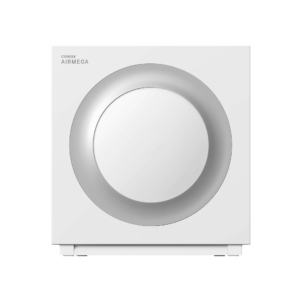
- Coway Airmega AP-1512HH Mighty: similar coverage in the same price class with a washable pre-filter, the better pick if long-term filter cost matters to you.
The VS Score is calculated from the weighted specifications above, each measured against the median of comparable air purifiers — a shortlisting guide, not a substitute for your own priorities. See how we score.