Winix AT40: Specs, Features, Pros & Cons
The number on the box is 1,968 square feet. The number that matters is 410. Both are Winix's own figures, and the gap between them is the most useful thing to understand about this purifier before anything else on the page.
The larger figure describes one air change per hour: the unit passing the room's volume through its filter a single time, which is not enough to keep pace with cooking, pets or wildfire season. The 410 is the AHAM Verifide rating at 4.8 air changes per hour, the standard the industry settled on, and it comes from a smoke CADR of 265 cubic feet per minute. Every maker publishes the flattering number. Winix at least prints both.
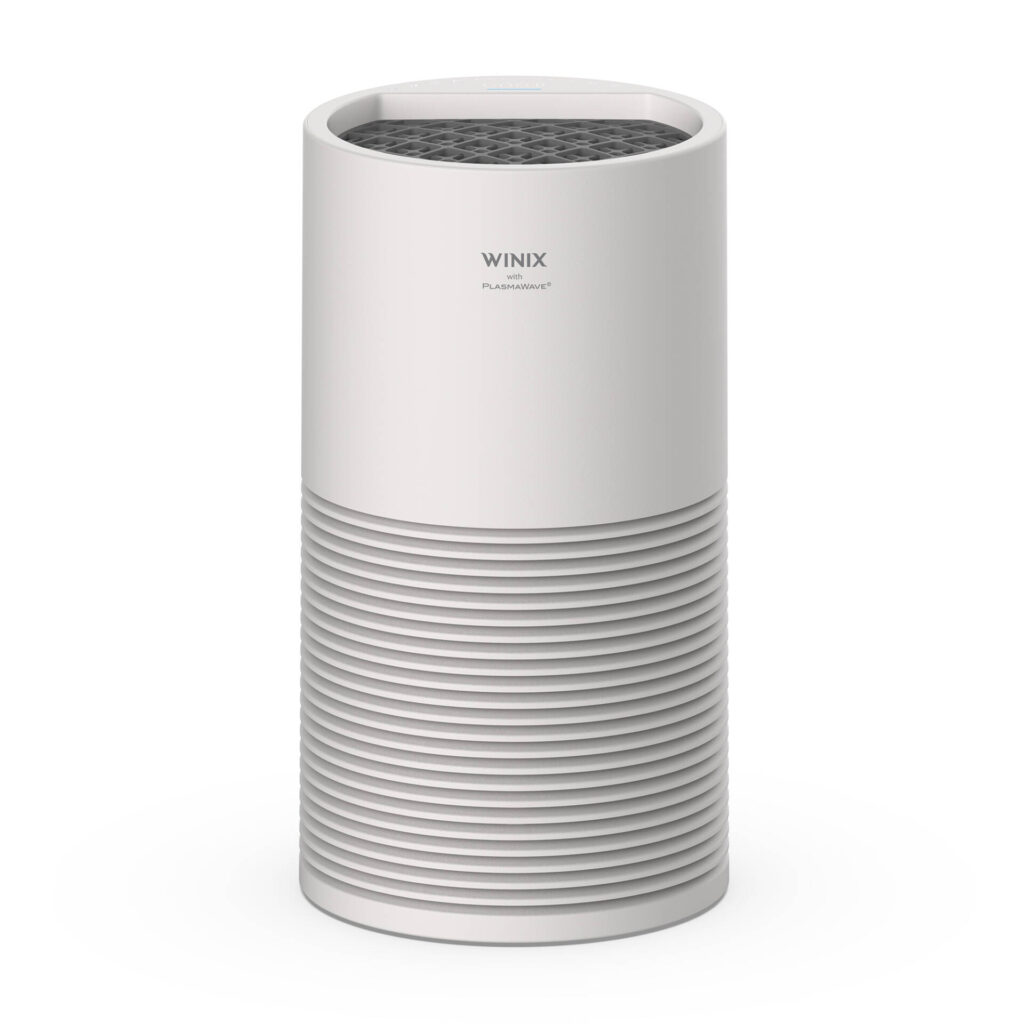
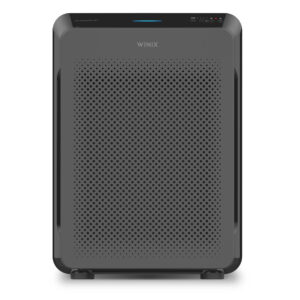
Judged on the honest one, this is a capable mid-size unit rather than the whole-floor machine the packaging implies. It is a cylinder about nineteen inches tall that draws air in through the ribbed lower half from every direction and exhausts upward, so it does not need a wall behind it and does not care which way it faces.
Filtration is a single 360-degree cartridge combining a fine mesh pre-filter, True HEPA and activated carbon, rated for twelve months, plus Winix's PlasmaWave ionizer, the one component here that a portion of buyers would rather not have running at all. Two complete filter sets are included, so the first replacement is already paid for.
It is a connected purifier, with Wi-Fi, an app, Alexa and Google Home, and a quiet one, with a floor around 22 decibels on the lowest of five speeds. The sleep mode triggers on darkness instead of a clock, which is either thoughtful or irritating depending on how you light a bedroom.
Category strengths
Where the Winix AT40 beats the median
- A much higher CADR (smoke) ?265 CFM vs 161 CFM (median)
- A higher coverage area ?410 sq ft vs 354 sq ft (median)
- More filtration stages ?4 vs 3 (median)
- A slightly lower min noise level ?22 dB vs 23 dB (median)
- A lighter build ?4.6 kg vs 5.26 kg (median)
- A slightly lower power consumption ?42 W vs 45 W (median)
How this VS Score was computed
Score 69: each known spec is measured against the median of all air purifiers (41 products), then weighted; 50 means level with that median. In classes of six or more, a value beyond the class’s 10th–90th percentile range counts as that limit, so one extreme product cannot set the scale. 71% of the scoreable weight could be used; unknown values, features not applicable to this class and proxies (battery capacity where a rated life exists) add or remove nothing.
| Specification | This product | Cohort median | Score weight | Points moved |
|---|---|---|---|---|
| True HEPA filter | Yes | 61% of the class have it | 1.5 | +75.0 |
| CADR (smoke) | 265 | 161 | 2 | +64.0 |
| App control | Yes | 70% of the class have it | 0.5 | +25.0 |
| Coverage area | 410 | 354 | 2 | +16.0 |
| Voice assistant | Yes | 64% of the class have it | 0.3 | +15.0 |
| Filtration stages | 4 | 3 | 0.5 | +8.5 |
| Min noise level | 22 | 23 | 1.5 | +3.0 |
| Weight | 4.6 | 5.26 | 0.3 | +2.1 |
| Power consumption | 42 | 45 | 0.5 | +2.0 |
| Air changes per hour | 4.8 | 4.8 | 1 | +0.0 |
| Filter life | 12 | 12 | 1 | +0.0 |
Not scored: Activated carbon filter (standard for the class (100% have it)); Washable pre-filter (unknown: not scored); Max noise level (unknown: not scored); Sleep mode (standard for the class (95% have it)); Air quality sensor (standard for the class (93% have it)); Auto mode (standard for the class (90% have it)); Filter replacement indicator (standard for the class (97% have it)); Timer (standard for the class (88% have it)).
Editor’s note
Air purifier shopping is mostly an exercise in ignoring the box, and this one rewards the discipline. Rated properly, 410 square feet at nearly five air changes an hour covers a large living room or a combined kitchen and living space. It does not cover a floor of a house, and putting it in a room twice that size produces air that only slowly gets cleaner.
What I like here is that a quiet low speed is paired with sensors that will use it. Twenty-two decibels is very quiet, and dual sensors feeding an auto mode mean the unit spends most of its life down there and only spins up when something happens in the room. A purifier you leave running is worth more than a better one you switch off because of the noise.
The 360-degree cartridge is a mixed blessing. It is admirably simple (one part, once a year, no argument about which filter goes where), but it also means a clogged pre-filter retires the HEPA and carbon media at the same time. Designs with a separate washable pre-filter stretch the expensive layer considerably further. Winix offsets this by putting two complete sets in the box, which covers the first two years and is worth more than it sounds.
PlasmaWave is the part to consider carefully. It is an ionizer, and while Winix publishes an eight-hour ozone figure low enough to hold CARB certification, you may still not want one operating in a bedroom, and that preference needs no technical argument.
Against the Winix C909, which is the larger sibling, this gives up meaningful coverage in exchange for a smaller footprint and a lower noise floor. If the room is big, buy the bigger one and do not talk yourself out of it.
Specifications
Quality bars show where each figure sits between the lowest and highest of the 41 air purifiers this VS Score is measured against.
Performance
Filtration
Noise & power
Design
Smart features
Sources and verification
Where the specifications come from
- Official product pagewinixamerica.com
- Retailer listing (cross-check)amazon.com
Verification
- First published
- Specifications last checked
- Sheet completeness
- 18 of 22 specifications verified; the rest show as Unknown and are never estimated or scored
- Page type
- Product specification page — Compiled from the manufacturer’s published specifications and the cited sources; this is not a hands-on test.
- Basis
- Research-based: specifications and editorial text were compiled from the documents listed here and the manufacturer’s published data. We have not tested this unit ourselves; where independent measurements are mentioned they belong to the linked publication.
Air Purifiers with similar specs to the Winix AT40
Ratings & reviews
No reviews yet. Be the first to share your experience.
The bottom line
The Winix AT40 earns a VS Score of 69, above the median of the 41 air purifiers it is measured against (a score of 50 is level with that median).
- Who it’s for
- Someone treating a large living room or open-plan kitchen and living space, who wants a purifier quiet enough to leave running all day and connected enough to stop thinking about.
- Who should look elsewhere
- Anyone planning to cover a whole floor on the strength of the 1,968 square foot claim, and anyone who would rather not run an ionizer indoors, as PlasmaWave is built into the design as standard.
- The trade-off that matters
- The all-in-one cartridge reduces maintenance to a single annual task, but it also means a dirty pre-filter retires perfectly serviceable HEPA and carbon media alongside it.
- The main alternative
- Winix C909 takes the same approach to filtration across a noticeably larger room, and is the better buy the moment the space is bigger than one living room.
The VS Score is calculated from the weighted specifications above, each measured against the median of comparable air purifiers — a shortlisting guide, not a substitute for your own priorities. See how we score.