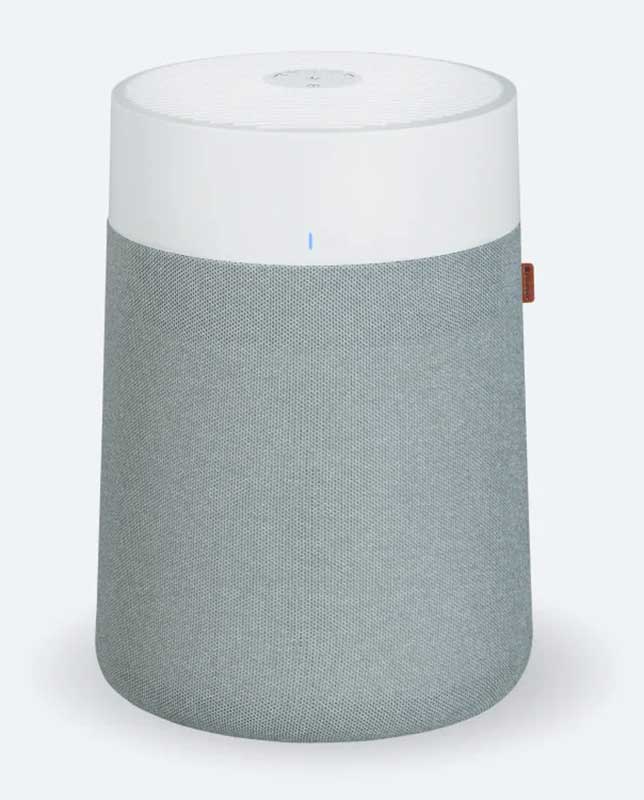
Blueair Blue Pure 511i Max: Specs, Price, Pros & Cons
This is the smallest machine in Blueair's connected Blue Pure line, and it is shaped by a decision most purifier makers avoid: it is meant to be seen. A compact fabric-wrapped cube rather than a plastic tower, sold in interchangeable colors, designed to sit out in the open where its intake is not blocked, which happens to be exactly where a purifier this size has to sit if it is going to work properly.
The Max in the name marks a generational step over the plain 511i, and the i marks the connected version. Both distinctions matter while shopping, because Blueair's naming leaves several older, cheaper and simpler units on shelves that look almost identical to this one in a photograph.
What it is good at is being ignorable. This is a bedroom machine in the proper sense, quiet enough and frugal enough to leave running permanently, which is how purifiers earn their keep: working before a problem is strong enough to smell. The washable fabric pre-filter absorbs the dust and hair that would otherwise shorten the cartridge's life, and the auto mode is competent enough to be trusted with the fan speed.
Two things to settle before the table. Blueair's filtration is not the conventional mechanical HEPA arrangement, whatever the capture claim on the carton says. And this model's sensor is the simpler one in the range, reading a single class of particle where its larger sibling reports a spread.
It suits one closed room, a bedroom, nursery or small office, and particularly a buyer who would rather have the machine visible than hidden.
Category strengths
Where the Blueair Blue Pure 511i Max beats the median
- A much lower power consumption ?17 W vs 45 W (median)
- A lower min noise level ?19 dB vs 23 dB (median)
- A much lighter build ?1.9 kg vs 5.26 kg (median)
- More filtration stages ?4 vs 3 (median)
- A slightly lower max noise level ?48 dB vs 52 dB (median)
Where the Blueair Blue Pure 511i Max trails the median
- No true HEPA filter ?
- A lower coverage area ?237 sq ft vs 354 sq ft (median)
- A lower filter life ?9 months vs 12 months (median)
- A slightly lower CADR (smoke) ?153 CFM vs 161 CFM (median)
How this VS Score was computed
Score 50: each known spec is measured against the median of all air purifiers (41 products), then weighted; 50 means level with that median. In classes of six or more, a value beyond the class’s 10th–90th percentile range counts as that limit, so one extreme product cannot set the scale. 75% of the scoreable weight could be used; unknown values, features not applicable to this class and proxies (battery capacity where a rated life exists) add or remove nothing.
| Specification | This product | Cohort median | Score weight | Points moved |
|---|---|---|---|---|
| True HEPA filter | No | 61% of the class have it | 1.5 | −72.0 |
| Coverage area | 237 | 354 | 2 | −34.0 |
| Washable pre-filter | Yes | 54% of the class have it | 0.5 | +25.0 |
| Power consumption | 17 | 45 | 0.5 | +25.0 |
| App control | Yes | 70% of the class have it | 0.5 | +25.0 |
| Min noise level | 19 | 23 | 1.5 | +16.5 |
| Weight | 1.9 — capped at the class’s lower range (2.53) | 5.26 | 0.3 | +15.0 |
| Filter life | 9 | 12 | 1 | −12.0 |
| Filtration stages | 4 | 3 | 0.5 | +8.5 |
| CADR (smoke) | 153 | 161 | 2 | −4.0 |
| Max noise level | 48 | 52 | 0.5 | +2.0 |
| Air changes per hour | 4.8 | 4.8 | 1 | +0.0 |
Not scored: Activated carbon filter (standard for the class (100% have it)); Sleep mode (standard for the class (95% have it)); Air quality sensor (standard for the class (93% have it)); Auto mode (standard for the class (90% have it)); Voice assistant (unknown: not scored); Filter replacement indicator (standard for the class (97% have it)); Timer (unknown: not scored).
Editor’s note
The 511i Max is Blueair's smallest smart purifier, and the first thing to settle is the room-size question, because the marketing spread is enormous. Blueair's own page advertises 'up to 1,138 sq ft in one hour'. Its AHAM-basis figure (the one that means the air turns over nearly five times an hour) is 237 square feet. That second number is the honest one, it matches the smoke CADR arithmetic exactly, and it tells you what this is: a bedroom purifier.
As a bedroom purifier it has two distinguishing virtues. The first is noise: 19 dB on low is about as quiet as consumer purifiers get, quiet enough to be inaudible from a pillow. The second is running cost: 17 watts flat out and an inexpensive standard replacement filter that Blueair's tracking algorithm rates for up to nine months. Very few smart purifiers are this cheap to leave on.
Two things to understand before buying. Blueair's HEPASilent system is electrostatic-plus-mechanical filtration, not a certified True HEPA filter. The company itself contrasts it with 'H13 HEPA mechanical filtration'. The particle-capture claim is the same 99.97%, but if a certified HEPA class specifically matters to you, this is not that. And the sensor reads PM2.5 only, where the bigger 211i Max adds PM1 and PM10. There is also no voice-assistant support advertised on this model, and Blueair's own page manages to quote two different maximum-noise figures, so we recorded the spec table's 48 dB.
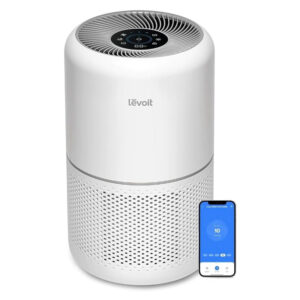
At list price it sits against Levoit's Core 300S, which costs less and carries a HEPA label. The Blueair answer is quieter low-speed operation and nicer industrial design. For a nursery or small bedroom, I would pay the difference.
Specifications
Quality bars show where each figure sits between the lowest and highest of the 41 air purifiers this VS Score is measured against.
Performance
Filtration
Noise & power
Design
Smart features
Sources and verification
Where the specifications come from
- Official product pageblueair.com
- Independent testingrtings.com
Verification
- First published
- Specifications last checked
- Sheet completeness
- 19 of 22 specifications verified; the rest show as Unknown and are never estimated or scored
- Page type
- Product specification page — Compiled from the manufacturer’s published specifications and the cited sources; this is not a hands-on test.
- Basis
- Research-based: specifications and editorial text were compiled from the documents listed here and the manufacturer’s published data. We have not tested this unit ourselves; where independent measurements are mentioned they belong to the linked publication.
Where to buy
Prices and availability may change. Check the retailer before buying. We may earn a commission on purchases.
Price history
Air Purifiers with similar specs to the Blueair Blue Pure 511i Max
Ratings & reviews
No reviews yet. Be the first to share your experience.
The bottom line
The Blueair Blue Pure 511i Max earns a VS Score of 50, level with the median of the 41 air purifiers it is measured against.
- Who it’s for
- Bedrooms and nurseries: quiet enough to sleep beside and frugal enough to leave running permanently, which is how a purifier this size earns its keep.
- Who should look elsewhere
- Anyone sizing the room from the marketing headline instead of the AHAM figure below, and buyers who specifically want a certified True HEPA class.
- The trade-off that matters
- Class-leading quiet and running costs in a small-room machine whose marketing implies several times the coverage it delivers.
- The main alternative
- Levoit Core 300S covers similar ground for less with a HEPA label. The Blueair buys quieter low-speed running and better design.
The VS Score is calculated from the weighted specifications above, each measured against the median of comparable air purifiers — a shortlisting guide, not a substitute for your own priorities. See how we score.