Dreo Air Purifier 539S: Specs, Price, Pros & Cons
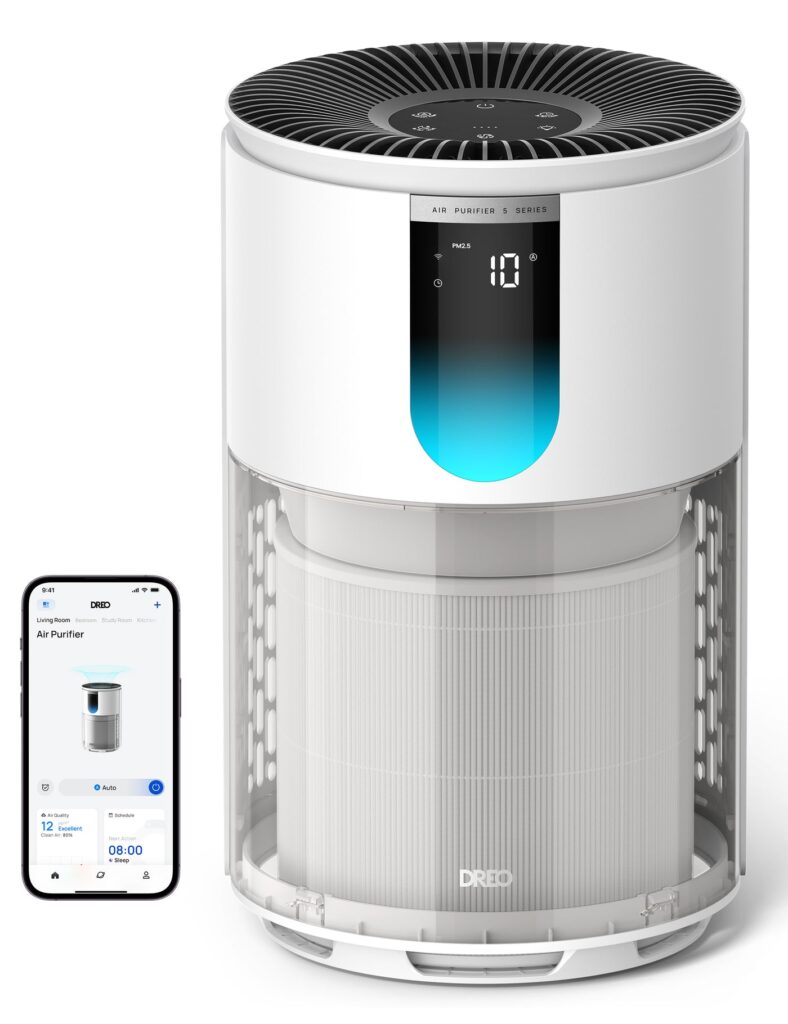
There is a size of air purifier almost nobody shops for deliberately, and this is it: too big for a nightstand, too small for an open-plan floor, aimed squarely at the ordinary closed bedroom or home office that most houses have. The 539S occupies that middle rung of Dreo's range, above the small cylinders and below the tower models.
At a little over three kilograms it is still a machine you can lift with one hand and carry between rooms, which is a more practical attribute than it sounds. One good purifier that migrates with the household is often better value than two mediocre ones that stay put.
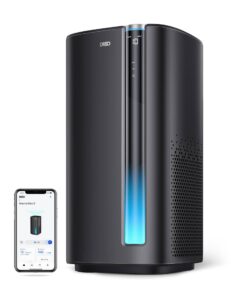
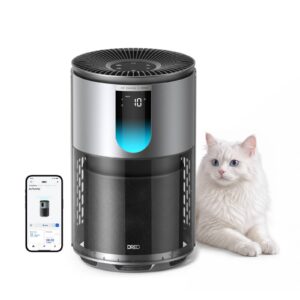
The features that earn their keep are the ones letting it run unattended. It reads the room, acts on what it reads, reports back to a phone and joins a smart-home routine, so it can be scheduled around sleeping hours or triggered alongside cooking. The display dims to nothing overnight. The filter is a single sealed cartridge, which makes maintenance a quick swap.
Two limits belong up front. That cartridge includes the pre-filter rather than leaving it as a separate washable layer, so every maintenance cycle costs money, where rivals give you one free step. And Dreo's specification publishing is patchy in ways that matter to anyone trying to work out what continuous running costs, which is the normal way a machine like this is used.
It suits a bedroom, nursery or home office where the purifier is expected to disappear into the background and be managed from a phone. Buyers with a large open living space should be looking a full size up.
Category strengths
Where the Dreo Air Purifier 539S beats the median
- A lower min noise level ?18 dB vs 23 dB (median)
- A lighter build ?3.1 kg vs 5.26 kg (median)
Where the Dreo Air Purifier 539S trails the median
- A lower coverage area ?245 sq ft vs 354 sq ft (median)
- No washable pre-filter ?
- A lower filter life ?7 months vs 12 months (median)
- A slightly lower CADR (smoke) ?158 CFM vs 161 CFM (median)
How this VS Score was computed
Score 56: each known spec is measured against the median of all air purifiers (41 products), then weighted; 50 means level with that median. In classes of six or more, a value beyond the class’s 10th–90th percentile range counts as that limit, so one extreme product cannot set the scale. 71% of the scoreable weight could be used; unknown values, features not applicable to this class and proxies (battery capacity where a rated life exists) add or remove nothing.
| Specification | This product | Cohort median | Score weight | Points moved |
|---|---|---|---|---|
| True HEPA filter | Yes | 61% of the class have it | 1.5 | +75.0 |
| Coverage area | 245 | 354 | 2 | −30.0 |
| App control | Yes | 70% of the class have it | 0.5 | +25.0 |
| Washable pre-filter | No | 54% of the class have it | 0.5 | −24.0 |
| Filter life | 7 | 12 | 1 | −21.0 |
| Min noise level | 18 | 23 | 1.5 | +21.0 |
| Voice assistant | Yes | 64% of the class have it | 0.3 | +15.0 |
| Weight | 3.1 | 5.26 | 0.3 | +10.5 |
| CADR (smoke) | 158 | 161 | 2 | −2.0 |
| Air changes per hour | 4.8 | 4.8 | 1 | +0.0 |
| Filtration stages | 3 | 3 | 0.5 | +0.0 |
Not scored: Activated carbon filter (standard for the class (100% have it)); Max noise level (unknown: not scored); Power consumption (unknown: not scored); Sleep mode (standard for the class (95% have it)); Air quality sensor (standard for the class (93% have it)); Auto mode (standard for the class (90% have it)); Filter replacement indicator (standard for the class (97% have it)); Timer (standard for the class (88% have it)).
Editor’s note
The 539S is the answer to the one criticism we leveled at Dreo's 539 when we reviewed it: a purifier this good at sensing the room deserved a way to talk to your phone. This is the same machine (same 158 CFM smoke CADR, same genuine 245-square-foot coverage at nearly five air changes an hour, same remarkable 18-decibel sleep floor) with Wi-Fi, the Dreo app, and Alexa and Google voice control added on top.
That sounds like a small addition, but it completes the feature that matters most. The PM2.5 sensor and auto mode now log air-quality history you can see, scheduling replaces the simple onboard timer, and the whole machine can disappear into a smart-home routine. The plain 539 senses and reacts, while the 539S senses, reacts, and reports.
Everything we liked about the hardware carries over. The 3-in-1 filter (pre-filter, HEPA-grade layer and activated carbon in one cartridge) is rated around seven months and swaps in seconds. On sleep mode it is one of the quietest purifiers we have measured a claim for at any price, and the AQI display dims to nothing at night. Build quality for the weight class is solid.
The honest caveats also carry over. Dreo still publishes no wattage and no maximum noise figure, so the running-cost picture is incomplete. It is a documentation gap, not a hardware one. The pre-filter is part of the sealed cartridge and cannot be washed separately, and the 1,176-square-foot number on the box is the usual one-air-change stretch. The AHAM figure above is the real room size.
Between the two, the decision is simple: if the price gap on the day is small, take the S. If the plain 539 is meaningfully cheaper, nothing about the air cleaning itself is different.
Specifications
Quality bars show where each figure sits between the lowest and highest of the 41 air purifiers this VS Score is measured against.
Performance
Filtration
Noise & power
Design
Smart features
Sources and verification
Where the specifications come from
- Official product pagedreo.com
- Retailer listing (cross-check)amazon.com
Verification
- First published
- Specifications last checked
- Sheet completeness
- 19 of 22 specifications verified; the rest show as Unknown and are never estimated or scored
- Page type
- Product specification page — Compiled from the manufacturer’s published specifications and the cited sources; this is not a hands-on test.
- Basis
- Research-based: specifications and editorial text were compiled from the documents listed here and the manufacturer’s published data. We have not tested this unit ourselves; where independent measurements are mentioned they belong to the linked publication.
Where to buy
Prices and availability may change. Check the retailer before buying. We may earn a commission on purchases.
Price history
Air Purifiers with similar specs to the Dreo Air Purifier 539S
Ratings & reviews
No reviews yet. Be the first to share your experience.
The bottom line
The Dreo Air Purifier 539S earns a VS Score of 56, above the median of the 41 air purifiers it is measured against (a score of 50 is level with that median).
- Who it’s for
- Buyers who wanted the 539's class-leading quiet and honest AHAM coverage, plus the app, history and voice control that machine lacked.
- Who should look elsewhere
- Anyone who finds the plain 539 meaningfully cheaper on the day, because the air cleaning is identical, and the S only adds connectivity.
- The trade-off that matters
- The same well-documented hardware from a maker that still publishes no wattage or maximum noise figure, so you buy on the specs you can see.
- The main alternative
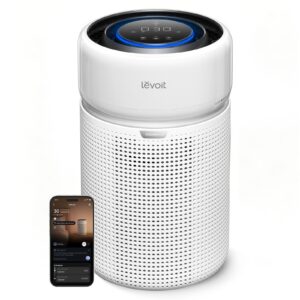
- Dreo's own Air Purifier 539 is the offline twin. Levoit Core 300S-P is the established smart rival with published power draw.
The VS Score is calculated from the weighted specifications above, each measured against the median of comparable air purifiers — a shortlisting guide, not a substitute for your own priorities. See how we score.