HP Smart Tank 5003: Specs, Price, Pros & Cons
HP's tank printers are sold under four-digit numbers that look almost interchangeable, and the 5003 is the bottom of that ladder: the cheapest route into refillable ink the company makes, with nothing above the essentials. The neighboring numbers add a duplex mechanism, a document feeder or a touchscreen, and most of the confusion in this part of the range comes from working out which of those a given model includes.
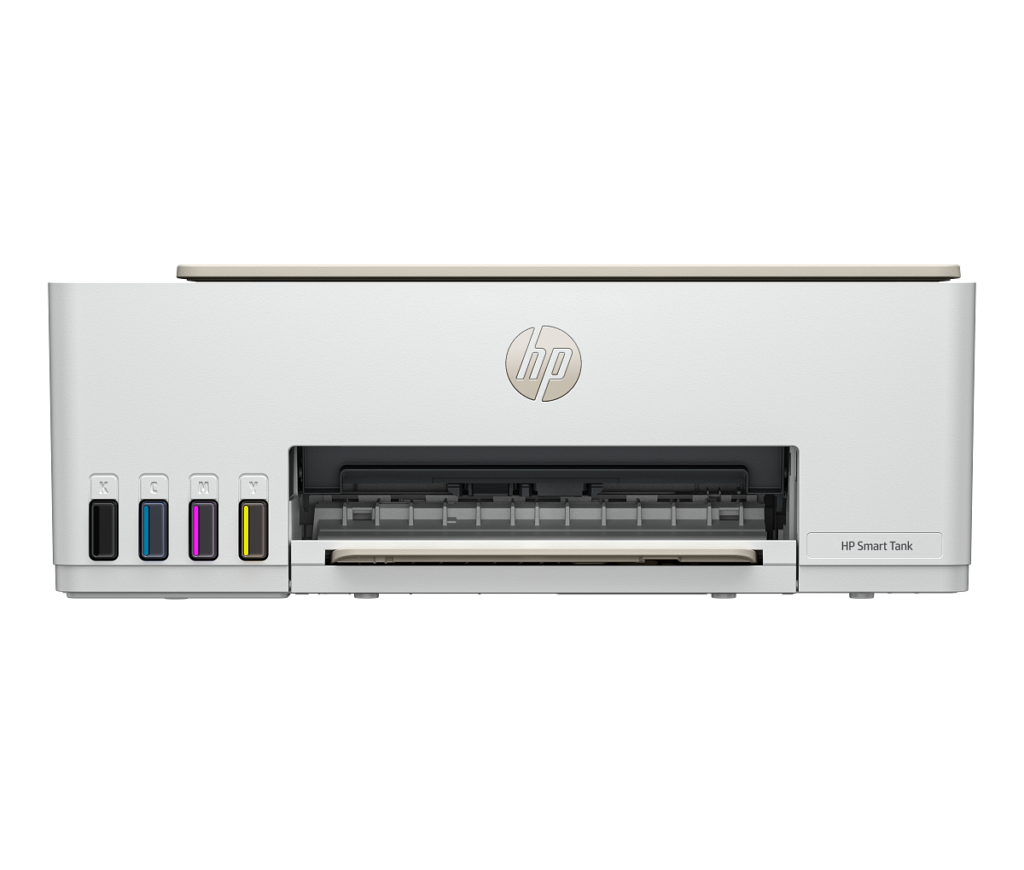
This one includes the tank system and very little else. Four reservoirs sit behind a window on the front, filled from bottles, and the printer prints, scans and copies over Wi-Fi from a phone or a laptop. The window matters more than it sounds. You check the ink level with a glance while walking past, and no driver pops up at an inconvenient moment to announce it.
Day to day, the useful change is that printing stops being a decision. Color costs about what black costs, so children's projects and photographs are no longer an extravagance, and the bottles that come in the box last long enough that you may lose track of where you put them.
What it gives up is worth seeing before the specification table. Two-sided printing is manual, which is an irritation on a machine bought precisely to print volume. The scanner is a plain flatbed, so multi-page copying is a lid-lifting exercise. There is no wired network port, ruling it out for anyone who wants a printer parked on a cable in a cupboard, and the engine is slow enough that you would not want to wait beside it. For a household that prints a lot of ordinary pages and nothing more demanding than that, the omissions are mostly invisible.
Category strengths
Where the HP Smart Tank 5003 beats the median
- Has supertank / refillable ink ?
- A lighter build ?5 kg vs 7.98 kg (median)
Where the HP Smart Tank 5003 trails the median
- No automatic duplex printing ?
- No automatic document feeder ?
- A lower print speed (black) ?10 ppm vs 16 ppm (median)
- No ethernet ?
- A lower print speed (color) ?5 ppm vs 9 ppm (median)
- A lower input tray capacity ?100 sheets vs 150 sheets (median)
- A much lower monthly duty cycle ?3,000 pages vs 10,000 pages (median)
- A much lower output tray capacity ?30 sheets vs 67.5 sheets (median)
How this VS Score was computed
Score 25: each known spec is measured against the median of all printers (65 products), then weighted; 50 means level with that median. In classes of six or more, a value beyond the class’s 10th–90th percentile range counts as that limit, so one extreme product cannot set the scale. 63% of the scoreable weight could be used; unknown values, features not applicable to this class and proxies (battery capacity where a rated life exists) add or remove nothing.
| Specification | This product | Cohort median | Score weight | Points moved |
|---|---|---|---|---|
| Automatic duplex printing | No | 73% of the class have it | 1 | −48.0 |
| Automatic document feeder | No | 55% of the class have it | 1 | −48.0 |
| Print speed (black) | 10 | 16 | 2 | −38.0 |
| Supertank / refillable ink | Yes | 30% of the class have it | 0.5 | +25.0 |
| Duplex scanning | No | 23% of the class have it | 0.5 | −24.0 |
| Ethernet | No | 54% of the class have it | 0.5 | −24.0 |
| Touchscreen display | No | 45% of the class have it | 0.5 | −24.0 |
| Print speed (color) | 5 | 9 | 1 | −22.0 |
| Input tray capacity | 100 | 150 | 1 | −17.0 |
| Monthly duty cycle | 3,000 | 10,000 | 0.3 | −10.5 |
| Fax | No | 35% of the class have it | 0.2 | −9.6 |
| Weight | 5 | 7.98 | 0.3 | +9.0 |
| Output tray capacity | 30 | 67.5 | 0.3 | −8.4 |
| Print resolution | 4,800 | 4,800 | 0.5 | +0.0 |
Not scored: Color printing (standard for the class (88% have it)); All-in-one (standard for the class (85% have it)); ADF capacity (unknown: not scored); Wi-Fi (standard for the class (97% have it)); Wi-Fi Direct (standard for the class (90% have it)); USB (standard for the class (100% have it)); Apple AirPrint (standard for the class (97% have it)); Mobile app printing (standard for the class (100% have it)).
Editor’s note
The Smart Tank 5003 is HP's entry ticket out of the cartridge economy. Arithmetic is the whole story. The refillable tanks are fed by bottles: a 135 ml black rated around 6,000 pages, colors around 8,000 each. That lands comfortably under one cent per black page, roughly a fifteenth of what the HP 68 cartridges in the DeskJet line cost per page. A full set of bottles ships in the box, which HP markets as up to three years of ink.
Against that one enormous advantage stands a list of things HP left out to hit the price. There is no automatic duplex (notable on a printer that exists to print volume), no document feeder, no fax, no Ethernet, and the display is a 1.2-inch segment LCD, not a screen. Color speed is a leisurely 5 ppm ISO, so photo-heavy jobs crawl. The output tray holds 30 sheets against a 100-sheet input.
Two fine-print items are worth knowing. The warranty runs one year or 30,000 pages, whichever comes first, a page-count cap you will not find on the cartridge machines. And first-time setup involves filling four tanks from bottles and priming printheads yourself. The process is well designed, but it is not a thirty-second unboxing.
It earns a 4.0-star owner score from 100 reviews, the best of HP's current group, and I think deservedly: the buyers it disappoints are mostly those who expected office features. For a household printing a few hundred mostly-black pages a month with no duplex needs, this is the sensible HP. If two-sided printing or an ADF matters, the step to the Smart Tank 7603 (or Epson's ET-2980) is the real decision.
Specifications
Quality bars show where each figure sits between the lowest and highest of the 65 printers this VS Score is measured against.
Printing
Scanning & copying
Paper handling
Connectivity
Design
Sources and verification
Where the specifications come from
- Official product pagesupport.hp.com
- Retailer listing (cross-check)amazon.com
Verification
- First published
- Specifications last checked
- Sheet completeness
- 23 of 24 specifications verified; the rest show as Unknown and are never estimated or scored
- Page type
- Product specification page — Compiled from the manufacturer’s published specifications and the cited sources; this is not a hands-on test.
- Basis
- Research-based: specifications and editorial text were compiled from the documents listed here and the manufacturer’s published data. We have not tested this unit ourselves; where independent measurements are mentioned they belong to the linked publication.
Where to buy
Prices and availability may change. Check the retailer before buying. We may earn a commission on purchases.
Price history
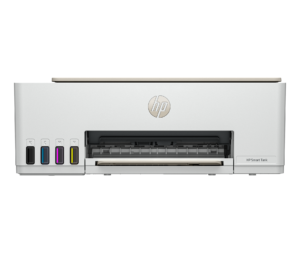
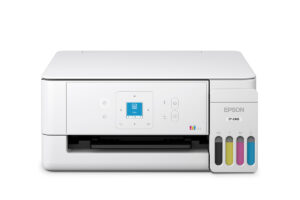
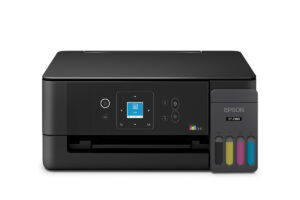
Printers with similar specs to the HP Smart Tank 5003
Ratings & reviews
No reviews yet. Be the first to share your experience.
The bottom line
The HP Smart Tank 5003 earns a VS Score of 25, below the median of the 65 printers it is measured against (a score of 50 is level with that median).
- Who it’s for
- A household printing a few hundred mostly-black, single-sided pages a month that wants ink costs to stop being a topic.
- Who should look elsewhere
- Small offices: no duplex, no ADF, no Ethernet and 5 ppm color rule out real document workflows, and the warranty carries a page-count cap.
- The trade-off that matters
- Sub-cent pages in exchange for a feature list thinner than the price suggests. HP kept the tank and cut everything around it.
- The main alternative
- Epson EcoTank ET-2980 costs more but adds auto-duplex printing, the one feature this machine's target buyer most often ends up missing.
The VS Score is calculated from the weighted specifications above, each measured against the median of comparable printers — a shortlisting guide, not a substitute for your own priorities. See how we score.