Razer Basilisk X Hyperspeed: Specs, Features, Pros & Cons
Razer still sells this mouse and has largely stopped documenting it. There is no full specification table on Razer's site any more, which is why several fields on this page are empty: polling rate, switch lifespan and a with-battery weight are not published, and filling them from elsewhere would mean passing off somebody else's measurements as the manufacturer's.
What survives is an unfashionable idea done well. The Basilisk X HyperSpeed runs on a single AA cell rather than a built-in battery, so there is no charging routine and no cable to hunt for. You swap the cell occasionally and otherwise forget about it. It connects either through Razer's own wireless dongle or over Bluetooth, which makes it as happy on a gaming PC as on a work laptop.
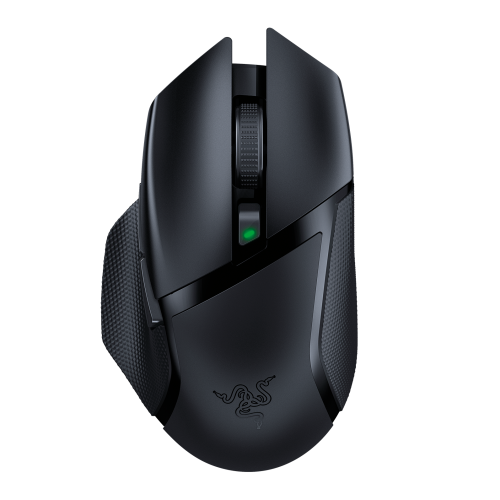
The shape is the other reason it has lasted. It is a right-handed ergonomic design with a handful of programmable buttons and a tactile wheel, and its sensor, though a generation or two behind Razer's current models, is well beyond what anyone can perceive in play.
The savings are equally plain. There is no lighting, no meaningful wired mode and none of the lightweight construction that competitive mice now chase, and the cell adds weight that the published figure leaves out. Anyone comparing it with a modern rechargeable mouse should keep that in mind.
Its closest rivals today are budget wireless mice with built-in batteries, which charge over USB-C and usually weigh less. The Basilisk X's case against them rests almost entirely on never having to plug it in, and for a desk that is rarely tidied, that case is stronger than it sounds.
Category strengths
Where the Razer Basilisk X Hyperspeed beats the median
- A slightly lighter build ?83 g vs 89 g (median)
Where the Razer Basilisk X Hyperspeed trails the median
- A lower max sensitivity ?16,000 DPI vs 25,600 DPI (median)
- A lower max tracking speed ?450 IPS vs 650 IPS (median)
- A lower max acceleration ?40 G vs 50 G (median)
How this VS Score was computed
Score 43: each known spec is measured against the median of all mice (81 products), then weighted; 50 means level with that median. In classes of six or more, a value beyond the class’s 10th–90th percentile range counts as that limit, so one extreme product cannot set the scale. 42% of the scoreable weight could be used; unknown values, features not applicable to this class and proxies (battery capacity where a rated life exists) add or remove nothing.
| Specification | This product | Cohort median | Score weight | Points moved |
|---|---|---|---|---|
| Max sensitivity | 16,000 | 25,600 | 1 | −19.0 |
| Max tracking speed | 450 | 650 | 0.8 | −12.0 |
| Max acceleration | 40 | 50 | 0.4 | −4.0 |
| Weight | 83 | 89 | 1 | +4.0 |
| Buttons | 6 | 6 | 0.6 | +0.0 |
| Connection | 2 | 2 | 0.8 | +0.0 |
Not scored: Polling rate (unknown: not scored); Adjustable lift-off distance (unknown: not scored); Grip styles (unknown: not scored); Horizontal scrolling (unknown: not scored); Free-spin scroll wheel (unknown: not scored); Click latency (unknown: not scored); Switch lifespan (unknown: not scored); Debounce adjustment (unknown: not scored); Wireless polling rate (unknown: not scored); USB-C charging (unknown: not scored); Battery life (unknown: not scored); Battery capacity (unknown: not scored); Quick charge (unknown: not scored); Wireless charging (unknown: not scored); Onboard memory (standard for the class (86% have it)); Software customization (standard for the class (97% have it)); Adjustable weights (unknown: not scored); RGB lighting (unknown: not scored).
Editor’s note
The Basilisk X HyperSpeed is an older, cheaper wireless mouse that has stayed on sale because it does the important things and nothing else. It runs on a single AA cell, and the battery figures are the headline: 285 hours on HyperSpeed wireless and up to 450 on Bluetooth.
The sensor is the Razer 5G Advanced optical at 16,000 DPI, tracking to 450 IPS and 40G. That is a generation or two behind the Focus Pro in current models, but it is well past the point where anyone can feel a difference. Its top resolution is already far beyond what is usable.
The body is a right-handed ergonomic shape at 130 mm long, 60 mm wide and 42 mm high, with six programmable buttons and Razer's tactile scroll wheel. Razer quotes 83 g excluding the battery, and does not publish a with-battery weight, so expect meaningfully more than that in the hand.
The savings show in what is absent. There is no RGB lighting, no wired mode worth speaking of, no charging (it is batteries or nothing), and no dedicated software features beyond Synapse's basics. Razer no longer publishes a full specification table for it, so polling rate and switch ratings are not stated first-party.
Buy it if you want dependable wireless with an ergonomic shape and effectively no charging routine, for as little as possible. Skip it if you want a rechargeable modern mouse, lighting, or the lower weight of Razer's current lineup.
Specifications
Quality bars show where each figure sits between the lowest and highest of the 81 mice this VS Score is measured against.
Sensor & tracking
Design & handling
Switches & latency
Connectivity
Battery
Features
Sources and verification
Where the specifications come from
- Datasheet or manualdl.razerzone.com
- Independent testingrtings.com
Verification
- First published
- Specifications last checked
- Sheet completeness
- 16 of 34 specifications verified; the rest show as Unknown and are never estimated or scored
- Page type
- Product specification page — Compiled from the manufacturer’s published specifications and the cited sources; this is not a hands-on test.
- Basis
- Research-based: specifications and editorial text were compiled from the documents listed here and the manufacturer’s published data. We have not tested this unit ourselves; where independent measurements are mentioned they belong to the linked publication.
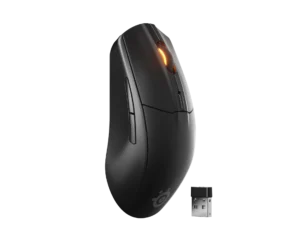
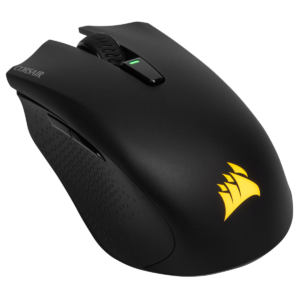
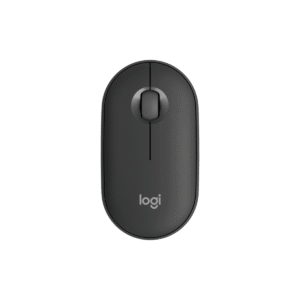
Mice with similar specs to the Razer Basilisk X Hyperspeed


Ratings & reviews
No reviews yet. Be the first to share your experience.
The bottom line
The Razer Basilisk X Hyperspeed earns a VS Score of 43, below the median of the 81 mice it is measured against (a score of 50 is level with that median).
- Who it’s for
- Someone who wants dependable wireless with a comfortable right-handed shape and no charging routine, on a small budget, across both a gaming PC and a laptop.
- Who should look elsewhere
- Left-handers, weight-conscious competitive players and anyone who wants RGB lighting or a modern rechargeable battery.
- The trade-off that matters
- No charging chores thanks to the AA cell, at the cost of extra weight Razer's own figure leaves out and a design that has stopped evolving.
- The main alternative
- Razer Basilisk V3 X HyperSpeed: the newer take on the same AA-powered idea, with more buttons and lighting if you want them.
The VS Score is calculated from the weighted specifications above, each measured against the median of comparable mice — a shortlisting guide, not a substitute for your own priorities. See how we score.