SteelSeries Rival 3 Gen 2: Specs, Features, Pros & Cons
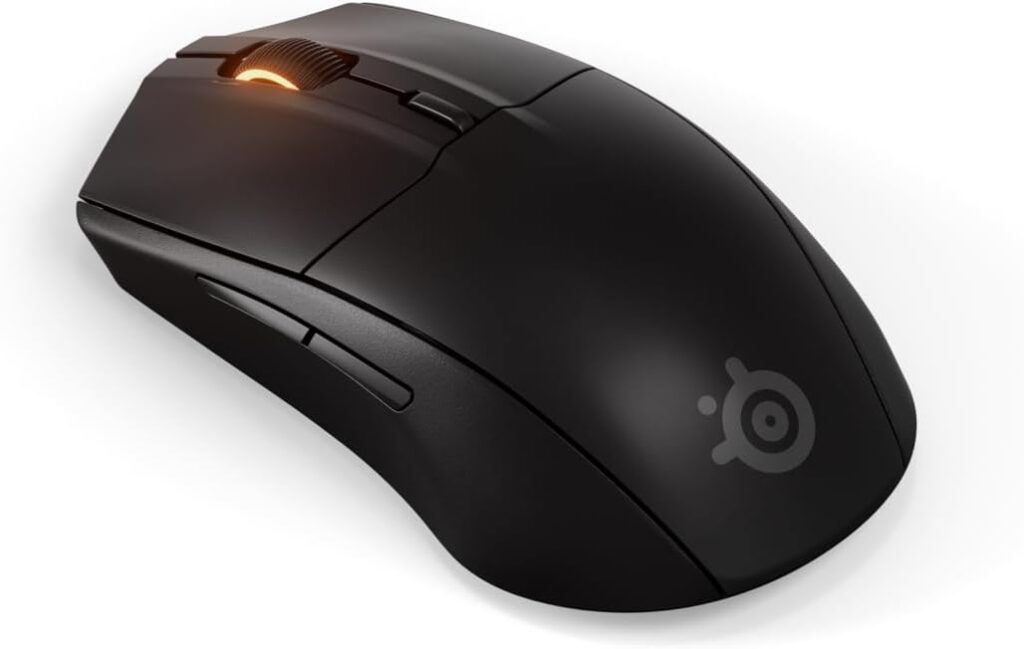
SteelSeries shaped its entry wired gaming mouse for either hand. The Rival 3 Gen 2 is symmetrical, so left and right hands hold it the same way, and it sits at the budget end of the brand's gaming range.
The second-generation label marks a revised Rival 3, and its sensor carries SteelSeries' own TrueMove Core branding. It connects by cable and nothing else. There is no receiver, no battery and no Bluetooth, which keeps the mouse light without resorting to a perforated shell. Lighting is included, a small extra at this level, and onboard memory stores its settings.
The budget shows in the ceilings. Maximum sensitivity is modest next to the figures rival brands print on their boxes, and the switches carry a shorter rated life than many gaming mice. Polling runs at an ordinary rate. Those limits place it plainly among the starter models, and they are why the specification looks thin next to a flagship, though neither changes how the mouse behaves at the settings most people play on.
There are six buttons, and SteelSeries' software can remap each of them. The feet are pure PTFE, the same material found on much more expensive mice, and the switches are mechanical.
The buyer this suits is moving up from an office mouse to a first gaming mouse, or wants a cheap spare that behaves predictably. Left-handed players get a rare option at the low end, with a body that favors neither side. The cable stays, since no version of this model runs without it, and a plain rubber lead is where the saving on this mouse shows every day.
Category strengths
Where the SteelSeries Rival 3 Gen 2 beats the median
- Has RGB lighting ?
- A lighter build ?77.6 g vs 89 g (median)
Where the SteelSeries Rival 3 Gen 2 trails the median
- A much lower max sensitivity ?8,500 DPI vs 25,600 DPI (median)
- Fewer connection options ?
- A lower switch lifespan ?60 million clicks vs 80 million clicks (median)
How this VS Score was computed
Score 42: each known spec is measured against the median of all mice (81 products), then weighted; 50 means level with that median. In classes of six or more, a value beyond the class’s 10th–90th percentile range counts as that limit, so one extreme product cannot set the scale. 42% of the scoreable weight could be used; unknown values, features not applicable to this class and proxies (battery capacity where a rated life exists) add or remove nothing.
| Specification | This product | Cohort median | Score weight | Points moved |
|---|---|---|---|---|
| Max sensitivity | 8,500 | 25,600 | 1 | −33.0 |
| Connection | 1 | 2 | 0.8 | −20.0 |
| RGB lighting | Yes | 46% of the class have it | 0.2 | +10.0 |
| Weight | 77.6 | 89 | 1 | +7.0 |
| Switch lifespan | 60 | 80 | 0.2 | −2.4 |
| Polling rate | 1,000 | 1,000 | 0.8 | +0.0 |
| Buttons | 6 | 6 | 0.6 | +0.0 |
Not scored: Max tracking speed (unknown: not scored); Max acceleration (unknown: not scored); Adjustable lift-off distance (unknown: not scored); Grip styles (unknown: not scored); Horizontal scrolling (unknown: not scored); Free-spin scroll wheel (unknown: not scored); Click latency (unknown: not scored); Debounce adjustment (unknown: not scored); Wireless polling rate (unknown: not scored); USB-C charging (unknown: not scored); Battery life (unknown: not scored); Battery capacity (unknown: not scored); Quick charge (unknown: not scored); Wireless charging (unknown: not scored); Onboard memory (standard for the class (86% have it)); Software customization (standard for the class (97% have it)); Adjustable weights (unknown: not scored).
Editor’s note
The Rival 3 Gen 2 is the sensible budget gaming mouse, and the honest way to judge it is by what a cheap mouse usually gets wrong.
Cheap mice usually cut the feet, the cable and the sensor. Here the feet are 100% PTFE, the material expensive mice use and the thing that most decides whether a mouse glides or drags. The sensor is SteelSeries' own TrueMove Core. 8,500 DPI sounds modest next to the 26,000 quoted elsewhere, but almost nobody plays above 3,200, and a sensor that tracks accurately across its real range is worth more than a large headline number.
At 77.6 g it is light without being exotic, the shape is ambidextrous with six buttons, and there is onboard memory so settings travel to another machine without installing software. The switches are mechanical and rated to 60 million clicks.
The compromises are visible rather than functional. The cable is plain rubber, so it drags more than a flexible braided one and keeps some of its bends. Polling is 1,000 Hz, and it is wired only.
Buy it as a first proper gaming mouse, or as a spare, where the money saved matters more than the last few percent of performance. Buy a braided-cable mouse if cable drag bothers you, or a wireless one if you have already decided you want that.
Specifications
Quality bars show where each figure sits between the lowest and highest of the 81 mice this VS Score is measured against.
Sensor & tracking
Design & handling
Switches & latency
Connectivity
Battery
Features
Sources and verification
Where the specifications come from
- Official product pagesteelseries.com
- Independent testingrtings.com
Verification
- First published
- Specifications last checked
- Sheet completeness
- 15 of 34 specifications verified; the rest show as Unknown and are never estimated or scored
- Page type
- Product specification page — Compiled from the manufacturer’s published specifications and the cited sources; this is not a hands-on test.
- Basis
- Research-based: specifications and editorial text were compiled from the documents listed here and the manufacturer’s published data. We have not tested this unit ourselves; where independent measurements are mentioned they belong to the linked publication.
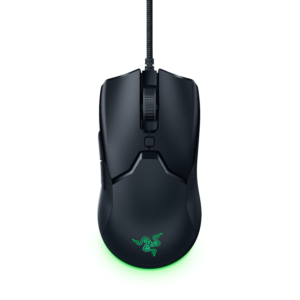
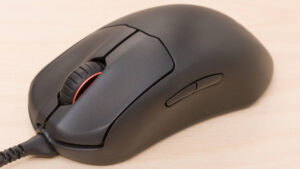
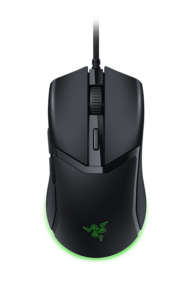
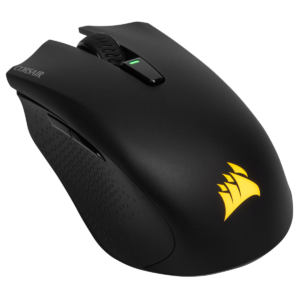
Mice with similar specs to the SteelSeries Rival 3 Gen 2

Ratings & reviews
No reviews yet. Be the first to share your experience.
The bottom line
The SteelSeries Rival 3 Gen 2 earns a VS Score of 42, below the median of the 81 mice it is measured against (a score of 50 is level with that median).
- Who it’s for
- A first proper gaming mouse for someone who wants good feet and a clean sensor in a shape either hand can use.
- Who should look elsewhere
- Buyers who notice cable drag, or who have already settled on wireless.
- The trade-off that matters
- Its rubber cable drags and holds kinks, the one daily irritation on a mouse that otherwise gets the basics right.
- The main alternative
- Razer Cobra: a light wired budget mouse with optical switches and a flexible braided cable
The VS Score is calculated from the weighted specifications above, each measured against the median of comparable mice — a shortlisting guide, not a substitute for your own priorities. See how we score.