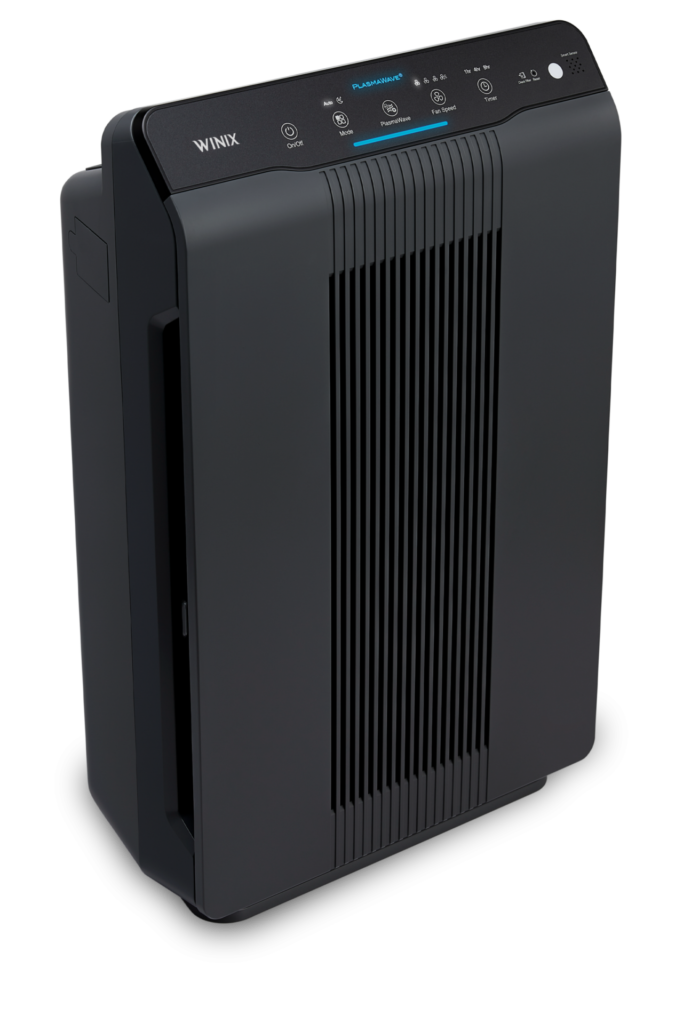
Winix 5500-2: Specs, Features, Pros & Cons
Two of the Winix 5500-2's filters can be washed, the pre-filter and the carbon layer, so the only part that goes in the bin is the True HEPA element. That arrangement is the reason owners kept recommending it for years, and it still sets the running cost apart from purifiers whose carbon is thrown away with every change.
It is also a machine near the end of its run. Winix has stopped making it, its product page has gone, and Winix now points buyers to the 5510 and 5530 as successors. The specifications here come from an archived copy of Winix's own page, and stock still turns up at retailers. The filters are still sold as well, so a working unit can be kept running for now.
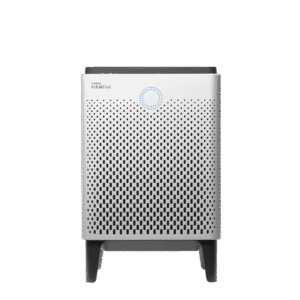
Inside there are four filtration stages, and the output suits a room of middling size, a bedroom, a study or an ordinary living room. A sensor drives the auto mode and shows the state of the air as a colored light, and there is a sleep mode for the night. Its quietest speed measures 27 dB, audible in a silent room, which light sleepers in a silent bedroom may notice.
Nothing about it is connected. There is no Wi-Fi, no app and no voice control, and Winix never published a power figure or a noise level at full speed. Owners who want to see a number for their air will not find one on the display. It is heavy and tall for its coverage as well, so it tends to stay where it was first put. The buyer who fits is someone who finds a leftover unit cheaply and wants a proven offline purifier with low filter costs, knowing that spares and support will not last forever.
Category strengths
Where the Winix 5500-2 beats the median
- A higher CADR (smoke) ?232 CFM vs 161 CFM (median)
- More filtration stages ?4 vs 3 (median)
- A slightly higher coverage area ?360 sq ft vs 354 sq ft (median)
Where the Winix 5500-2 trails the median
- No app control ?
- No voice assistant ?
- A higher min noise level ?27 dB vs 23 dB (median)
- A heavier build ?6.7 kg vs 5.26 kg (median)
How this VS Score was computed
Score 59: each known spec is measured against the median of all air purifiers (41 products), then weighted; 50 means level with that median. In classes of six or more, a value beyond the class’s 10th–90th percentile range counts as that limit, so one extreme product cannot set the scale. 71% of the scoreable weight could be used; unknown values, features not applicable to this class and proxies (battery capacity where a rated life exists) add or remove nothing.
| Specification | This product | Cohort median | Score weight | Points moved |
|---|---|---|---|---|
| True HEPA filter | Yes | 61% of the class have it | 1.5 | +75.0 |
| CADR (smoke) | 232 | 161 | 2 | +44.0 |
| Washable pre-filter | Yes | 54% of the class have it | 0.5 | +25.0 |
| App control | No | 70% of the class have it | 0.5 | −24.0 |
| Voice assistant | No | 64% of the class have it | 0.3 | −14.4 |
| Min noise level | 27 — capped at the class’s upper range (26) | 23 | 1.5 | −9.0 |
| Filtration stages | 4 | 3 | 0.5 | +8.5 |
| Weight | 6.7 | 5.26 | 0.3 | −3.3 |
| Coverage area | 360 | 354 | 2 | +2.0 |
| Air changes per hour | 4.8 | 4.8 | 1 | +0.0 |
| Filter life | 12 | 12 | 1 | +0.0 |
Not scored: Activated carbon filter (standard for the class (100% have it)); Max noise level (unknown: not scored); Power consumption (unknown: not scored); Sleep mode (standard for the class (95% have it)); Air quality sensor (standard for the class (93% have it)); Auto mode (standard for the class (90% have it)); Filter replacement indicator (standard for the class (97% have it)); Timer (standard for the class (88% have it)).
Editor’s note
Start with the status, because it changes the decision. Winix has discontinued the 5500-2. The product page is gone from Winix America, the model has dropped out of the live sitemap, and an Amazon search now steers you to the 5510 and 5530 successors. The specifications recorded here come from an archived capture of Winix's own page. Stock still circulates and the filters are still sold, but you would be buying a machine at the end of its life.
That matters less than it might, because the 5500-2 earned its long reputation honestly. It delivers 232 CFM of clean air across 360 square feet on the AHAM basis, through four filtration stages, with a True HEPA claim of 99.99% down to 0.003 micron, a washable carbon filter and a washable pre-filter. Because the carbon layer is washable rather than disposable, most of the annual Filter H cost is the HEPA element alone.
It is resolutely analog. No Wi-Fi, no app, no voice control. Winix's own sheet lists smart features as none. There is a sensor and an Auto mode, but the air-quality readout is a three-color LED rather than a number. At 6.7 kilograms and 60 centimeters tall it is also the bulkiest thing here.
Winix never published a maximum noise level or a wattage for it, a gap that followed the model throughout its life.
I would buy this only at a genuine discount, and only if you are comfortable that support and spares will thin out over the next few years. At full price the C610 or the current 5510 make more sense, and both are still in production.
Specifications
Quality bars show where each figure sits between the lowest and highest of the 41 air purifiers this VS Score is measured against.
Performance
Filtration
Noise & power
Design
Smart features
Sources and verification
Where the specifications come from
- Datasheet or manualwinixamerica.com
- Independent testingrtings.com
Verification
- First published
- Specifications last checked
- Sheet completeness
- 20 of 22 specifications verified; the rest show as Unknown and are never estimated or scored
- Page type
- Product specification page — Compiled from the manufacturer’s published specifications and the cited sources; this is not a hands-on test.
- Basis
- Research-based: specifications and editorial text were compiled from the documents listed here and the manufacturer’s published data. We have not tested this unit ourselves; where independent measurements are mentioned they belong to the linked publication.
Air Purifiers with similar specs to the Winix 5500-2
Ratings & reviews
No reviews yet. Be the first to share your experience.
The bottom line
The Winix 5500-2 earns a VS Score of 59, above the median of the 41 air purifiers it is measured against (a score of 50 is level with that median).
- Who it’s for
- Bargain hunters who find remaining stock at a real discount and want a proven, entirely offline purifier with washable pre- and carbon filters.
- Who should look elsewhere
- Anyone buying at full price, or who wants app control, a numeric air-quality readout, or confidence that spares and support will still exist in a few years.
- The trade-off that matters
- A well-proven design with cheap washable filters, set against a discontinued product line. It is fine at a discount but poor value at list price.
- The main alternative
- Winix C610 is the current equivalent, still in production, with app control and a single yearly filter, two of which come in the box.
The VS Score is calculated from the weighted specifications above, each measured against the median of comparable air purifiers — a shortlisting guide, not a substitute for your own priorities. See how we score.