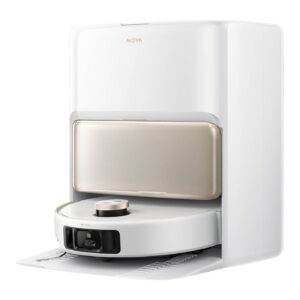
Roborock Saros Z70: Specs, Price, Pros & Cons
Every category keeps one product whose job is to show what the engineering department can do, and at Roborock that is the Saros Z70. It is the most capable robot in the range and the most expensive, and since its quality is not in doubt, the interesting question is whether the top of a range is ever the rational thing to buy.
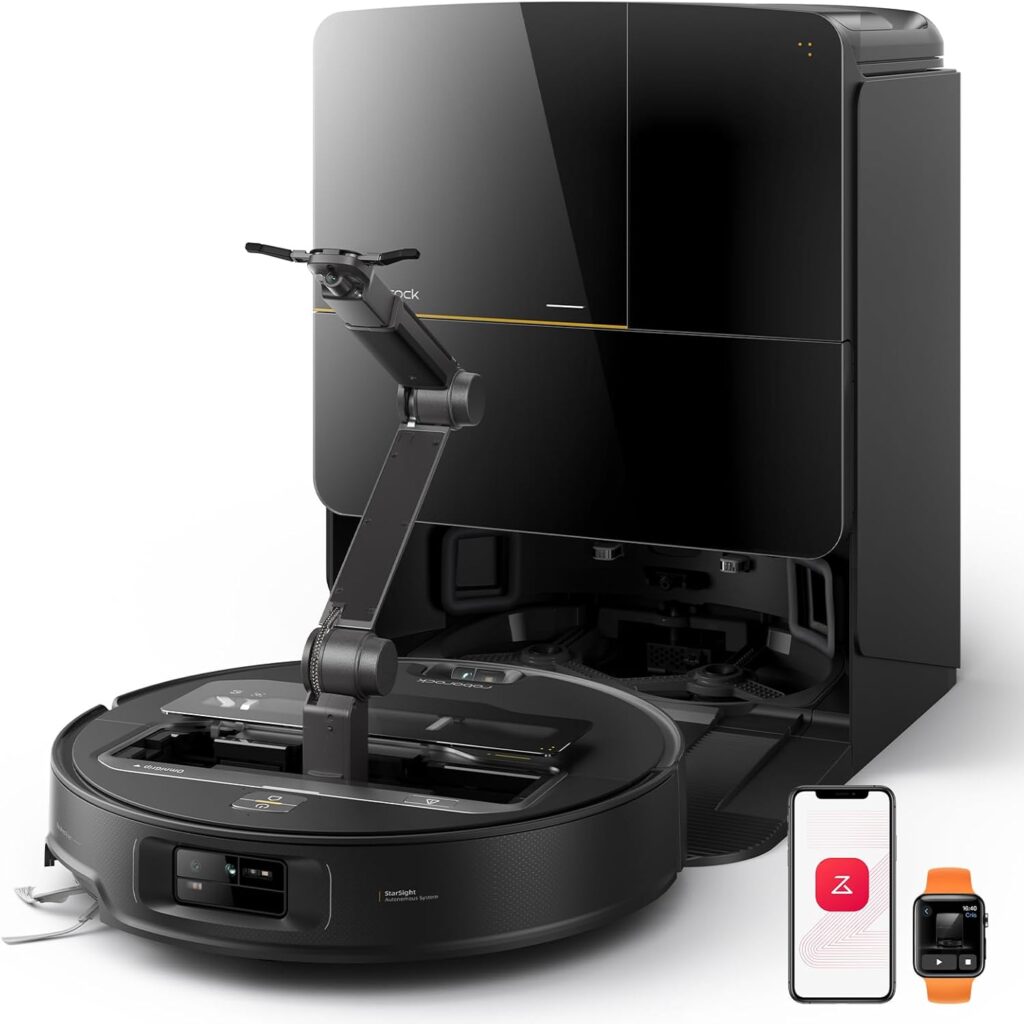
Three characteristics define it, and none of them are software. It is unusually slim for a machine carrying a laser turret, so it travels under furniture that halts its rivals at the skirt. It climbs higher than nearly any rival, which is not a refinement but a threshold question: a home with raised door saddles or thick rug edges is either cleanable or it is not. And its suction sits at the very top of the market rather than merely above average.
The case against is the case against flagships generally. Most of what mattered five years ago has since arrived in the middle of the market, so the remaining gap is made of edge cases, and whether those edge cases exist in your home is a matter of architecture rather than taste. Complexity has a cost too: more mechanism means more to clean, more to understand and more that can eventually need attention.
The homes that justify it are awkward ones: split levels, raised transitions between rooms, a mix of hard floor and rugs that a simpler machine keeps refusing to cross. A single floor of uniform tile or laminate does not need this, and a mid-range robot will leave it as clean for a great deal less.
Category strengths
Where the Roborock Saros Z70 beats the median
- Stronger suction ?22,000 Pa vs 19,750 Pa (median)
- A bigger battery ?6,400 mAh vs 5,200 mAh (median)
- A more compact design ?79.8 mm vs 96.8 mm (median)
Where the Roborock Saros Z70 trails the median
- A smaller dustbin ?180 ml vs 300 ml (median)
How this VS Score was computed
Score 55: each known spec is measured against the median of all robot vacuums (58 products), then weighted; 50 means level with that median. In classes of six or more, a value beyond the class’s 10th–90th percentile range counts as that limit, so one extreme product cannot set the scale. 29% of the scoreable weight could be used; unknown values, features not applicable to this class and proxies (battery capacity where a rated life exists) add or remove nothing.
| Specification | This product | Cohort median | Score weight | Points moved |
|---|---|---|---|---|
| Mopping | Yes | 79% of the class have it | 0.6 | +30.0 |
| HEPA filter | No | 29% of the class have it | 0.4 | −19.2 |
| Suction power | 22,000 | 19,750 | 1.2 | +7.2 |
| Battery capacity | 6,400 | 5,200 | 0.5 | +6.0 |
| Height | 79.8 — capped at the class’s lower range (80) | 96.8 | 0.5 | +5.5 |
| Dustbin capacity | 180 — capped at the class’s lower range (220) | 300 | 0.4 | −5.2 |
| Navigation | LiDAR | LiDAR | 1 | +0.0 |
Not scored: Mop lift (unknown: not scored); Carpet detection (standard for the class (98% have it)); Edge-cleaning extension (unknown: not scored); Cleaning modes (unknown: not scored); Max cleaning area (unknown: not scored); Mapping (standard for the class (98% have it)); Multi-floor maps (unknown: not scored); Obstacle avoidance (standard for the class (100% have it)); No-go zones (standard for the class (100% have it)); Threshold clearance (unknown: not scored); Runtime (unknown: not scored); Recharge & resume (unknown: not scored); Self-empty dock (standard for the class (91% have it)); Auto-refill mop (standard for the class (87% have it)); Mop self-cleaning (standard for the class (92% have it)); Automatic mop removal (unknown: not scored); Mop wash temperature (unknown: not scored); Warm-air drying temperature (unknown: not scored); Automatic detergent dispenser (unknown: not scored); Dirt detection & re-mop (unknown: not scored); Water tank (unknown: not scored); Noise level (unknown: not scored); App control (standard for the class (100% have it)); Voice assistant (standard for the class (100% have it)); Scheduling (standard for the class (100% have it)).
Editor’s note
The Saros Z70 is Roborock's most capable robot vacuum, and two numbers explain why it costs what it does.
The first is climbing: it crosses double-layer thresholds up to 4 cm, where most robots stop at around 2 cm. That is the height of obstacle it can climb, and it is the difference between a robot that cleans your whole floor and one that gives up at a door saddle or a rug edge. If your home has thresholds between rooms, this single specification decides whether the machine works at all.
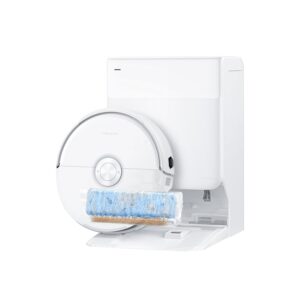
The second is suction: 22,000 Pa, more than double most rivals. It is paired with dual spinning mop pads that lift for carpet, refill themselves from the dock and wash themselves after each run. The dock also empties the bin. Practically, that means the machine looks after itself for weeks at a time.
Navigation is LiDAR with obstacle avoidance and full mapping, so it runs in neat rows, saves floor plans and takes room-by-room instructions. The 6,400 mAh battery carries no unconditional runtime figure from Roborock, and at 79.8 mm tall it fits under most furniture.
The caveats are cost and complexity. A dock this capable is large and needs plumbing-free but permanent floor space, and there is no HEPA filter listed despite the price.
Buy it if you want the whole floor handled and your home has thresholds, rugs or a mix of surfaces. One level of hard floor with no obstacles worth climbing needs something simpler.
Specifications
Quality bars show where each figure sits between the lowest and highest of the 58 robot vacuums this VS Score is measured against.
Cleaning
Navigation
Battery & dock
Design
Smart features
Maintenance & filtration
Sources and verification
Where the specifications come from
- Official product pageus.roborock.com
- Independent testingrtings.com
Verification
- First published
- Specifications last checked
- Sheet completeness
- 20 of 39 specifications verified; the rest show as Unknown and are never estimated or scored
- Page type
- Product specification page — Compiled from the manufacturer’s published specifications and the cited sources; this is not a hands-on test.
- Basis
- Research-based: specifications and editorial text were compiled from the documents listed here and the manufacturer’s published data. We have not tested this unit ourselves; where independent measurements are mentioned they belong to the linked publication.
Where to buy
Prices and availability may change. Check the retailer before buying. We may earn a commission on purchases.
Price history
Robot Vacuums with similar specs to the Roborock Saros Z70
Ratings & reviews
No reviews yet. Be the first to share your experience.
The bottom line
The Roborock Saros Z70 earns a VS Score of 55 on the 29% of specifications we could compare like for like — an indication, not a ranking.
- Who it’s for
- Awkward homes of raised thresholds, split levels and rugs over hard floor, where cheaper robots keep refusing to cross from one room to the next.
- Who should look elsewhere
- A single level of uniform hard floor gets little from it, and filtration-minded buyers find no HEPA filter listed.
- The trade-off that matters
- Complexity. The climbing chassis and self-servicing dock add parts to maintain, and they only earn that upkeep in a home that has thresholds to climb.
- The main alternative
- Roborock Saros 20: the same slim body with much stronger suction and slightly higher climbing
The VS Score is calculated from the weighted specifications above, each measured against the median of comparable robot vacuums — a shortlisting guide, not a substitute for your own priorities. See how we score.