Pulsar PRO Series STA-X: Specs, Price, Pros & Cons
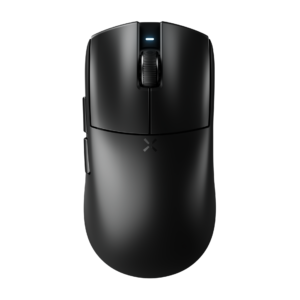
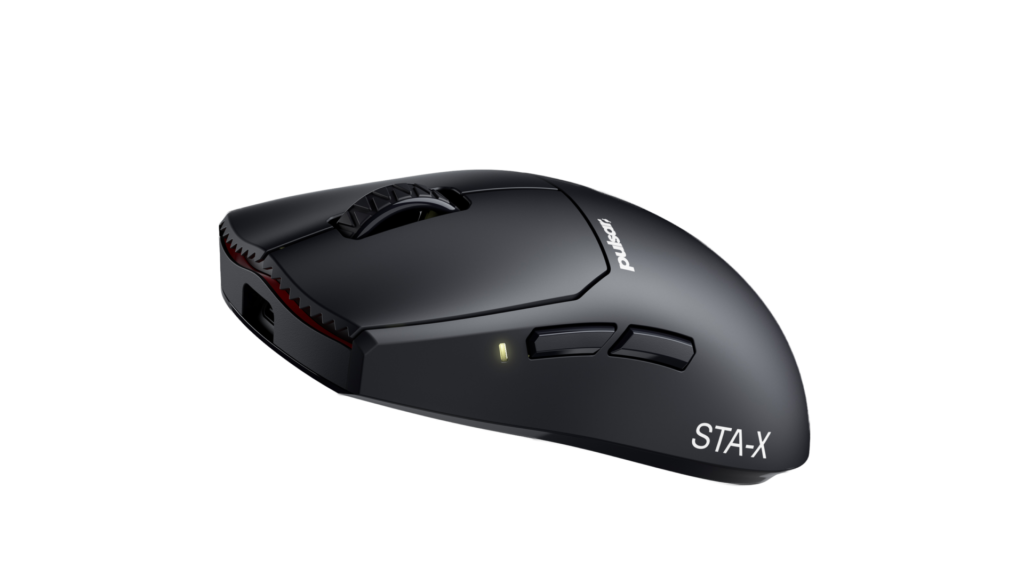
The STA-X is Pulsar's signature mouse for T1's VALORANT player stax, and the specification that matters is the one Pulsar chose not to chase: weight. At 60 g it is noticeably heavier than today's sub-50 g flagships, and Pulsar says so deliberately, because a player who lifts and replaces the mouse hundreds of times a round wants mass that settles rather than a shell that skates. If you have tried a 45 g mouse and found it twitchy, that is the argument here.
The sensor is PixArt's XS-1, the flagship optical sensor of this generation, rated to 32,000 DPI, 750 IPS and 50 G, with a Turbo Mode that pins the frame rate at 20,000 FPS and Motion Sync for consistent report timing. Lift-off distance is adjustable in three steps, debounce is adjustable from 0 to 18 ms, and the whole thing polls at up to 8,000 Hz through the bundled Link 8K receiver, which carries its own DPI and function buttons so profiles, polling rate and lift-off can be changed without any software at all. Four profiles live on board.
The main clicks are Pulsar's optical switches, rated for 100 million actuations and immune by design to the double-click fault that ends mechanical mice, and the wheel uses Pulsar's Blue encoder. The shape is symmetrical, 124.6 mm long, 62.3 mm wide and 39.7 mm tall, tuned for claw and palm grips. Side buttons sit on the left flank only. Feet are 100% virgin PTFE, charging is by the front USB-C port with the included cable, and it is sold in a single Medium size.
What Pulsar does not publish is battery life or capacity, a button count, or any wired play mode. It is a mouse for competitive claw and palm players who want a current sensor and a settled weight, and who are happy to configure it from the receiver.
Category strengths
Where the Pulsar PRO Series STA-X beats the median
- A much higher polling rate ?8,000 Hz vs 1,000 Hz (median)
- A much higher wireless polling rate ?8,000 Hz vs 1,000 Hz (median)
- A lighter build ?60 g vs 89 g (median)
- A higher max sensitivity ?32,000 DPI vs 25,600 DPI (median)
- Has debounce adjustment ?
- A higher max tracking speed ?750 IPS vs 650 IPS (median)
- A higher switch lifespan ?100 million clicks vs 80 million clicks (median)
Where the Pulsar PRO Series STA-X trails the median
- Fewer connection options ?
How this VS Score was computed
Score 68: each known spec is measured against the median of all mice (83 products), then weighted; 50 means level with that median. In classes of six or more, a value beyond the class’s 10th–90th percentile range counts as that limit, so one extreme product cannot set the scale. 66% of the scoreable weight could be used; unknown values, features not applicable to this class and proxies (battery capacity where a rated life exists) add or remove nothing.
| Specification | This product | Cohort median | Score weight | Points moved |
|---|---|---|---|---|
| Polling rate | 8,000 | 1,000 | 0.8 | +40.0 |
| Wireless polling rate | 8,000 | 1,000 | 0.5 | +25.0 |
| Weight | 60 | 89 | 1 | +24.0 |
| Connection | 1 | 2 | 0.8 | −20.0 |
| Adjustable lift-off distance | Yes | 65% of the class have it | 0.3 | +15.0 |
| USB-C charging | Yes | 68% of the class have it | 0.3 | +15.0 |
| Max sensitivity | 32,000 | 25,600 | 1 | +13.0 |
| Debounce adjustment | Yes | 18% of the class have it | 0.2 | +10.0 |
| Max tracking speed | 750 | 650 | 0.8 | +6.4 |
| Switch lifespan | 100 | 80 | 0.2 | +2.6 |
| Max acceleration | 50 | 50 | 0.4 | +0.0 |
| Buttons | 6 | 6 | 0.6 | +0.0 |
| Grip styles | 2 | 2 | 0.4 | +0.0 |
Not scored: Horizontal scrolling (unknown: not scored); Free-spin scroll wheel (unknown: not scored); Click latency (unknown: not scored); Battery life (unknown: not scored); Battery capacity (unknown: not scored); Quick charge (unknown: not scored); Wireless charging (unknown: not scored); Onboard memory (standard for the class (88% have it)); Software customization (standard for the class (98% have it)); Adjustable weights (unknown: not scored); RGB lighting (unknown: not scored).
Editor’s note
I would point the STA-X at one specific buyer: the claw-grip player who has already been through a featherweight mouse and gone back to something heavier. Pulsar built it around a pro who lifts constantly and wants the mouse to land where he put it, and that settled weight with a current sensor is that brief exactly. For anyone chasing the lowest number on the scale, this is the wrong Pulsar. The X2 CrazyLight in the same catalog is the one.
In use, the receiver is the feature that changes the routine. Polling rate, lift-off distance, debounce, Turbo Mode and four profiles are all set from two buttons on the Link 8K dongle with LED feedback, so a player at a tournament PC never installs anything. The web driver exists for fine-tuning at home, but you can go a year without opening it.
Two things to plan for. Full-rate polling needs a modern CPU and a USB 3.0 port, and Pulsar says so. On an older machine, drop to 2,000 or 4,000 Hz and nothing is lost that you can see. And Pulsar publishes no battery figure at all, which at 8 kHz means assuming frequent charging. The front USB-C port and the included cable are there for a reason, but wired play is not something Pulsar describes, so treat it as charge-and-go.
The shape is symmetrical but the side buttons are left-flank only, so a left-hander gets the shape without the thumb buttons. Claw and palm are the grips Pulsar names, and fingertip players will find it long.
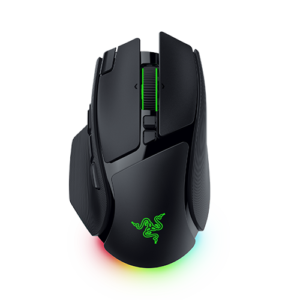
Against the Razer Viper V4 Pro, this is the heavier, cheaper, pro-tuned alternative with a sensor in the same class and a receiver that does the software's job. Against the Logitech G PRO X SUPERLIGHT 2, it trades the safest shape in esports for a signature one. Buy it if that signature is the point.
Specifications
Quality bars show where each figure sits between the lowest and highest of the 83 mice this VS Score is measured against.
Sensor & tracking
Design & handling
Switches & latency
Connectivity
Battery
Features
Sources and verification
Where the specifications come from
- Official product pagepulsar.gg
- Retailer listing (cross-check)amazon.com
Verification
- First published
- Specifications last checked
- Sheet completeness
- 25 of 34 specifications verified; the rest show as Unknown and are never estimated or scored
- Page type
- Product specification page — Compiled from the manufacturer’s published specifications and the cited sources; this is not a hands-on test.
- Basis
- Research-based: specifications and editorial text were compiled from the documents listed here and the manufacturer’s published data. We have not tested this unit ourselves; where independent measurements are mentioned they belong to the linked publication.
Where to buy
Prices and availability may change. Check the retailer before buying. We may earn a commission on purchases.
Price history
Mice with similar specs to the Pulsar PRO Series STA-X
Ratings & reviews
No reviews yet. Be the first to share your experience.
The bottom line
The Pulsar PRO Series STA-X earns a VS Score of 68, above the median of the 83 mice it is measured against (a score of 50 is level with that median).
- Who it’s for
- Claw- and palm-grip competitive players who want settled mass over a featherweight, a current PixArt XS-1 sensor and full-rate polling configured from the receiver without software.
- Who should look elsewhere
- Anyone chasing the lightest possible mouse, fingertip grippers, left-handers who need side buttons, or buyers who want a published battery figure before spending.
- The trade-off that matters
- Pro-tuned mass and a software-free receiver against 15 grams more than the flagships and a spec sheet with no battery, button-count or wired-mode figures at all.
- The main alternative
- Razer Viper V4 Pro: if the lowest weight and the fastest tracking are the point, with a published 180-hour battery, at a higher price.
The VS Score is calculated from the weighted specifications above, each measured against the median of comparable mice — a shortlisting guide, not a substitute for your own priorities. See how we score.