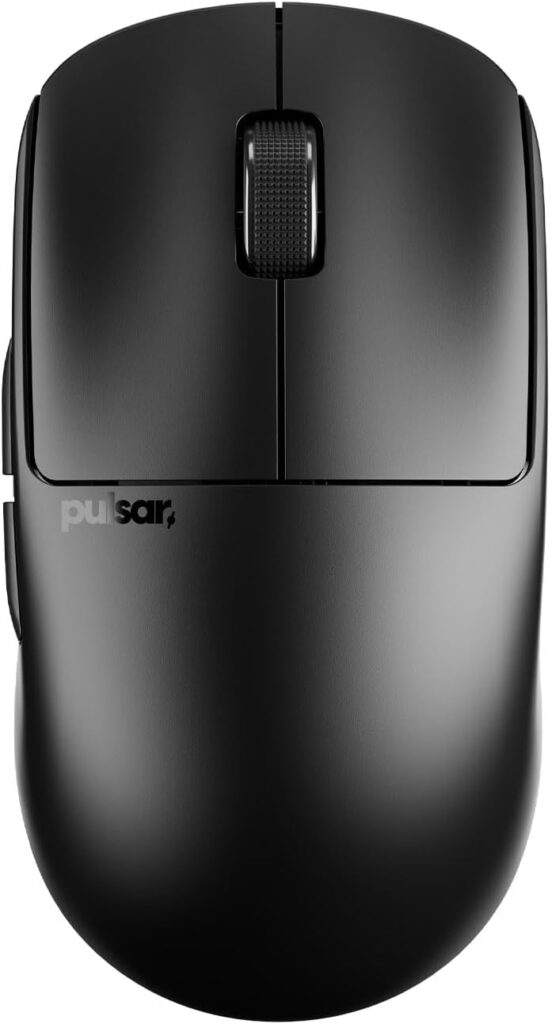
Pulsar X2 CrazyLight: Specs, Price, Pros & Cons
Pulsar's X2 CrazyLight connects one way, through a wireless dongle, and that is the only gap in an otherwise complete competitive specification. There is no Bluetooth and no wired mode, and everything else on the sheet points at competitive aiming.
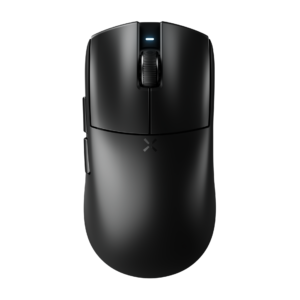
The X2 is Pulsar's symmetrical shooter shell, and the CrazyLight edition hollows it out as far as the design allows. Six buttons stay, lighting goes, and the battery is small. The body suits a claw or fingertip grip, where the fingers steer and the palm barely touches, and it charges over USB-C. Inside is Pulsar's XS-1 sensor, rated for 50 G of acceleration, with a resolution ceiling well past any practical setting. The fast report rate works over the radio, a harder thing to hold steady than over a cable, lift-off distance can be adjusted for players who reposition during long swipes, and the optical switches carry a long rated life.
At this weight the mouse behaves differently from a heavier one. Almost nothing resists a change of direction, so small corrections from the fingers turn straight into cursor movement, and the mouse stops the instant the hand does. Some players find that calm and precise, and some find it twitchy. Anyone moving from a heavier mouse should allow time for the hand to adjust. Pulsar has not published a battery rating for this model, so the time between charges is something owners find out for themselves.
The X2 CrazyLight suits a low-sensitivity shooter player who uses a claw or fingertip grip and has decided that mouse weight is holding them back. A palm grip, or a need for Bluetooth on a laptop, points to a heavier shell.
Category strengths
Where the Pulsar X2 CrazyLight beats the median
- A much higher polling rate ?8,000 Hz vs 1,000 Hz (median)
- A much higher wireless polling rate ?8,000 Hz vs 1,000 Hz (median)
- A much lighter build ?38.3 g vs 89 g (median)
- A higher max sensitivity ?32,000 DPI vs 25,600 DPI (median)
- A higher max tracking speed ?750 IPS vs 650 IPS (median)
- A higher switch lifespan ?100 million clicks vs 80 million clicks (median)
Where the Pulsar X2 CrazyLight trails the median
- Fewer connection options ?
How this VS Score was computed
Score 68: each known spec is measured against the median of all mice (81 products), then weighted; 50 means level with that median. In classes of six or more, a value beyond the class’s 10th–90th percentile range counts as that limit, so one extreme product cannot set the scale. 63% of the scoreable weight could be used; unknown values, features not applicable to this class and proxies (battery capacity where a rated life exists) add or remove nothing.
| Specification | This product | Cohort median | Score weight | Points moved |
|---|---|---|---|---|
| Polling rate | 8,000 | 1,000 | 0.8 | +40.0 |
| Weight | 38.3 — capped at the class’s lower range (52.5) | 89 | 1 | +35.0 |
| Wireless polling rate | 8,000 | 1,000 | 0.5 | +25.0 |
| Connection | 1 | 2 | 0.8 | −20.0 |
| Adjustable lift-off distance | Yes | 61% of the class have it | 0.3 | +15.0 |
| USB-C charging | Yes | 67% of the class have it | 0.3 | +15.0 |
| Max sensitivity | 32,000 | 25,600 | 1 | +13.0 |
| RGB lighting | No | 46% of the class have it | 0.2 | −9.6 |
| Max tracking speed | 750 | 650 | 0.8 | +6.4 |
| Switch lifespan | 100 | 80 | 0.2 | +2.6 |
| Max acceleration | 50 | 50 | 0.4 | +0.0 |
| Buttons | 6 | 6 | 0.6 | +0.0 |
Not scored: Grip styles (unknown: not scored); Horizontal scrolling (unknown: not scored); Free-spin scroll wheel (unknown: not scored); Click latency (unknown: not scored); Debounce adjustment (unknown: not scored); Battery life (unknown: not scored); Battery capacity (unknown: not scored); Quick charge (unknown: not scored); Wireless charging (not applicable: only 14% of this class have it); Onboard memory (unknown: not scored); Software customization (standard for the class (97% have it)); Adjustable weights (not applicable: only 2% of this class have it).
Editor’s note
The X2 CrazyLight weighs 38.3 g, which makes it one of the lightest mice you can buy and puts it near the physical limit for a wireless one.
Below about 45 g a mouse stops feeling like an object you push and starts feeling like an extension of your hand: there is almost no inertia to overcome when you change direction, which is what players at low sensitivity, aiming from the shoulder, are chasing. Getting there without a cable means an aggressively hollowed shell and a small battery, and there is no RGB lighting to spend power on.
Nothing has been given up on the sensing side. The XS-1 is a PixArt PAW3950 running to 32,000 DPI with 750 IPS of tracking, polling at 8,000 Hz over the wireless link. Doing that wirelessly is a harder engineering problem than doing it over a cable, since the radio has to keep up. Lift-off distance is adjustable, the optical switches are rated to 100 million clicks, and the feet are UHMW-PE, which glides differently from PTFE and lasts longer.
The trade-offs are honest ones. A shell this light feels less substantial, some people dislike that, and battery life is not published for this model.
Buy it if you play competitively and have decided that weight is what limits you. Buy something heavier if you rest your palm: very light mice reward a claw or fingertip grip and can feel skittish otherwise.
Specifications
Quality bars show where each figure sits between the lowest and highest of the 81 mice this VS Score is measured against.
Sensor & tracking
Design & handling
Switches & latency
Connectivity
Battery
Features
Sources and verification
Where the specifications come from
- Official product pagepulsar.gg
- Independent testingrtings.com
Verification
- First published
- Specifications last checked
- Sheet completeness
- 22 of 34 specifications verified; the rest show as Unknown and are never estimated or scored
- Page type
- Product specification page — Compiled from the manufacturer’s published specifications and the cited sources; this is not a hands-on test.
- Basis
- Research-based: specifications and editorial text were compiled from the documents listed here and the manufacturer’s published data. We have not tested this unit ourselves; where independent measurements are mentioned they belong to the linked publication.
Where to buy
Prices and availability may change. Check the retailer before buying. We may earn a commission on purchases.
Price history
Mice with similar specs to the Pulsar X2 CrazyLight
Ratings & reviews
No reviews yet. Be the first to share your experience.
The bottom line
The Pulsar X2 CrazyLight earns a VS Score of 68, above the median of the 81 mice it is measured against (a score of 50 is level with that median).
- Who it’s for
- Low-sensitivity shooter players who aim from the arm with a claw or fingertip grip and have decided that mouse weight is what holds them back.
- Who should look elsewhere
- Palm grippers, people who want Bluetooth for a second machine, and anyone who likes to feel some mass under the hand.
- The trade-off that matters
- Almost no mass means almost no damping. Movements start and stop instantly, which some players love and others find twitchy, and weight cannot be added back.
- The main alternative
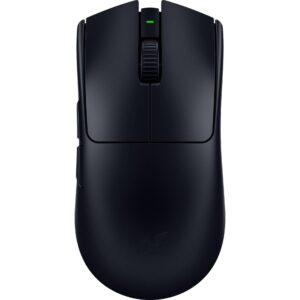
- Razer Viper V3 Pro: a similar symmetrical competitive shape with a published battery figure and a little more heft
The VS Score is calculated from the weighted specifications above, each measured against the median of comparable mice — a shortlisting guide, not a substitute for your own priorities. See how we score.