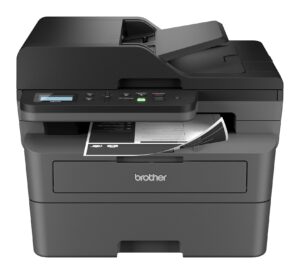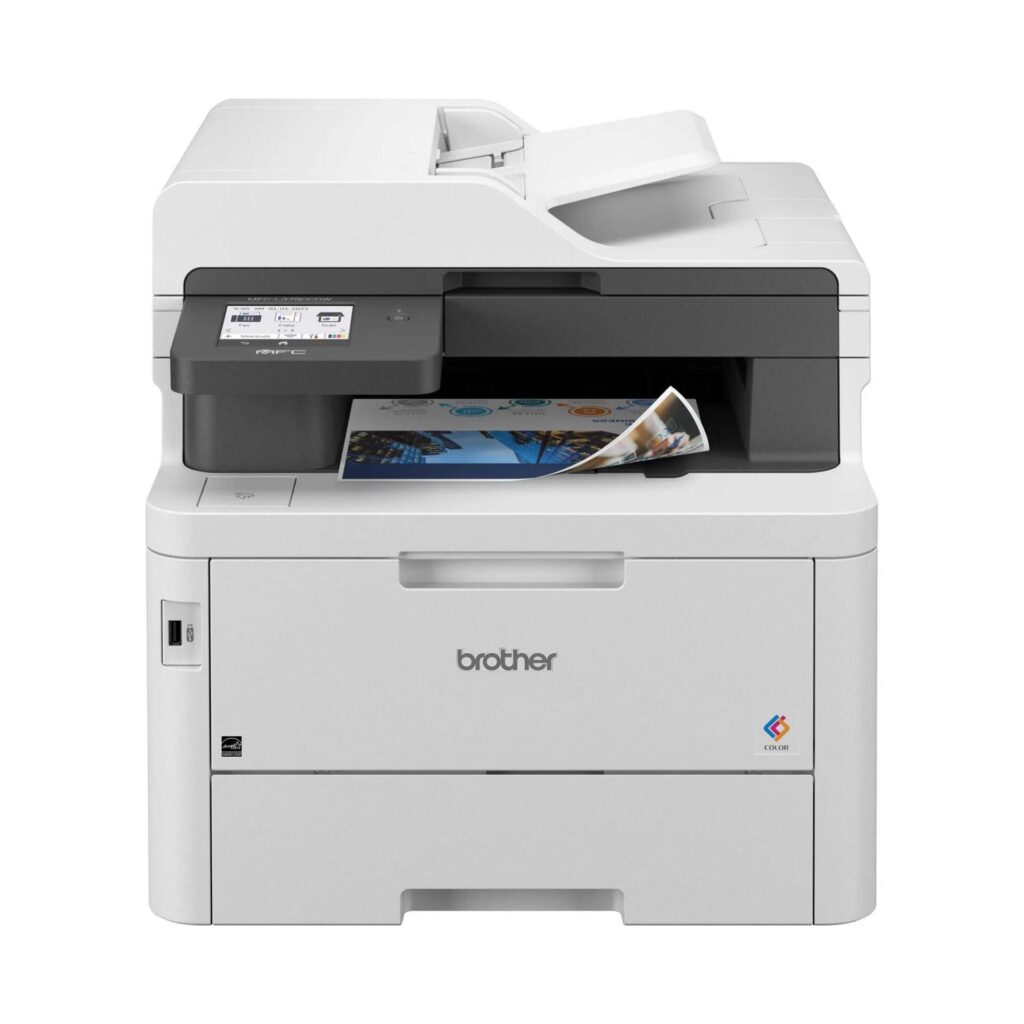
Brother MFC-L3780CDW: Specs, Price, Pros & Cons
Brother calls this line Digital Color, and the name hides a detail: the print engine uses an LED head where most color lasers use a scanning laser. For every practical purpose the MFC-L3780CDW prints like one. It sits at the top of Brother's small-office color range.
The scanner defines it. A document feeder captures both sides of each page in a single pass, so contracts and receipts turn into PDFs without anyone turning the pile over or standing beside the machine. Color pages print as fast as black ones, and the monthly duty cycle is rated for a busy small office.
The rest is small-office equipment. There is wired Ethernet and Wi-Fi, a large touchscreen with room for shortcuts, a card reader for NFC badges and a USB port for printing from a memory stick. Print resolution is 2,400 dpi, lower than inkjet figures and plenty for documents and business graphics.
What it gives up is portability and simple running costs. The body is heavy and needs a permanent spot near the people who feed it. Behind the four toners sit a drum, a belt and a waste box, each on its own replacement schedule, which surprises owners coming from an inkjet. The first page of a job is slow to appear, so one urgent sheet means a short wait at the machine.
It fits an office that scans as much paper as it prints, where a stack left in the feeder is done by the time someone comes back with a coffee. The printing side is strong too, but the feeder is the reason this model costs what it does.
Category strengths
Where the Brother MFC-L3780CDW beats the median
- A much higher print speed (color) ?31 ppm vs 9 ppm (median)
- A much higher print speed (black) ?31 ppm vs 16 ppm (median)
- A much higher monthly duty cycle ?50,000 pages vs 10,000 pages (median)
- A much higher input tray capacity ?250 sheets vs 150 sheets (median)
- Has duplex scanning ?
- Has touchscreen display ?
- A much higher output tray capacity ?150 sheets vs 67.5 sheets (median)
- A higher ADF capacity ?50 sheets vs 35 sheets (median)
- Has fax ?
Where the Brother MFC-L3780CDW trails the median
- A much heavier build ?21.7 kg vs 7.98 kg (median)
- A much lower print resolution ?2,400 dpi vs 4,800 dpi (median)
How this VS Score was computed
Score 85: each known spec is measured against the median of all printers (65 products), then weighted; 50 means level with that median. In classes of six or more, a value beyond the class’s 10th–90th percentile range counts as that limit, so one extreme product cannot set the scale. 66% of the scoreable weight could be used; unknown values, features not applicable to this class and proxies (battery capacity where a rated life exists) add or remove nothing.
| Specification | This product | Cohort median | Score weight | Points moved |
|---|---|---|---|---|
| Print speed (black) | 31 | 16 | 2 | +94.0 |
| Print speed (color) | 31 — capped at the class’s upper range (27) | 9 | 1 | +50.0 |
| Automatic duplex printing | Yes | 73% of the class have it | 1 | +50.0 |
| Automatic document feeder | Yes | 55% of the class have it | 1 | +50.0 |
| Input tray capacity | 250 | 150 | 1 | +33.0 |
| Duplex scanning | Yes | 23% of the class have it | 0.5 | +25.0 |
| Ethernet | Yes | 54% of the class have it | 0.5 | +25.0 |
| Touchscreen display | Yes | 45% of the class have it | 0.5 | +25.0 |
| Supertank / refillable ink | No | 30% of the class have it | 0.5 | −24.0 |
| Monthly duty cycle | 50,000 | 10,000 | 0.3 | +15.0 |
| Output tray capacity | 150 | 67.5 | 0.3 | +15.0 |
| Print resolution | 2,400 | 4,800 | 0.5 | −12.5 |
| ADF capacity | 50 | 35 | 0.5 | +10.5 |
| Fax | Yes | 35% of the class have it | 0.2 | +10.0 |
| Weight | 21.7 — capped at the class’s upper range (19.5) | 7.98 | 0.3 | −9.0 |
Not scored: Color printing (standard for the class (88% have it)); All-in-one (standard for the class (85% have it)); Wi-Fi (standard for the class (97% have it)); Wi-Fi Direct (standard for the class (90% have it)); USB (standard for the class (100% have it)); Apple AirPrint (standard for the class (97% have it)); Mobile app printing (standard for the class (100% have it)).
Editor’s note
This is the top of Brother's small-office color line, and the scanner is what justifies the price. The 50-sheet feeder captures both sides in a single pass at up to 58 images per minute, which changes what the machine is for: put a double-sided contract in the tray, walk away, and it is digitized before the coffee is made. Printers at half the price make you feed the stack twice.
Printing runs at 31 ppm in both black and color. There is Gigabit Ethernet, a 3.5-inch touchscreen that holds up to 48 programmable shortcuts, an NFC card reader and a USB host port. The 50,000-page monthly duty cycle is genuine small-office territory.
Two things deserve honest mention. Brother markets this line as Digital Color, and the engine uses an LED print head rather than a scanning laser unit. In practice it behaves like a color laser and is classified as one here, but the marketing name is doing some work.
The other is consumables. Four toners are only the start. There is a separate drum, a belt unit and a waste toner box, each with its own replacement interval. That stack is normal for color lasers and completely unexpected for anyone arriving from an inkjet, and it is the real cost-of-ownership story.
Smaller irritations: the first page takes about 12.5 seconds, so this is not the machine for one boarding pass in a hurry. Standard input is a single 250-sheet tray plus a 30-sheet bypass, and a second tray is a paid extra. At 47.8 pounds it needs a permanent home.
If your office scans as much as it prints, I think this earns its money. If it mostly prints, you are paying for a scanner you will not use.
Specifications
Quality bars show where each figure sits between the lowest and highest of the 65 printers this VS Score is measured against.
Printing
Scanning & copying
Paper handling
Connectivity
Design
Sources and verification
Where the specifications come from
- Official product pagebrother-usa.com
- Independent testingrtings.com
Verification
- First published
- Specifications last checked
- Sheet completeness
- 24 of 24 specifications verified; the rest show as Unknown and are never estimated or scored
- Page type
- Product specification page — Compiled from the manufacturer’s published specifications and the cited sources; this is not a hands-on test.
- Basis
- Research-based: specifications and editorial text were compiled from the documents listed here and the manufacturer’s published data. We have not tested this unit ourselves; where independent measurements are mentioned they belong to the linked publication.
Where to buy
Prices and availability may change. Check the retailer before buying. We may earn a commission on purchases.
Price history
Printers with similar specs to the Brother MFC-L3780CDW
Ratings & reviews
No reviews yet. Be the first to share your experience.
The bottom line
The Brother MFC-L3780CDW earns a VS Score of 85, above the median of the 65 printers it is measured against (a score of 50 is level with that median).
- Who it’s for
- Small offices that scan as much as they print. The single-pass duplex feeder is the feature worth paying for here, more than the print engine.
- Who should look elsewhere
- Offices that print lightly or occasionally. A slow first page and four separate consumable parts make it an expensive way to print a few pages a week.
- The trade-off that matters
- Workgroup scanning speed and color laser output against a running-cost structure inkjet owners do not expect: toner, drum, belt and waste box all replace on their own schedules.
- The main alternative
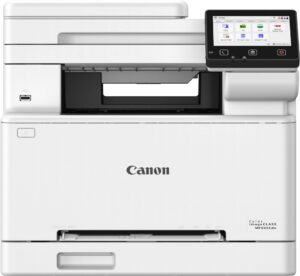
- Canon Color imageCLASS MF665Cdw is slower at 26 ppm and lower resolution, but it also scans both sides in one pass and carries a three-year warranty against Brother's one.
The VS Score is calculated from the weighted specifications above, each measured against the median of comparable printers — a shortlisting guide, not a substitute for your own priorities. See how we score.