No current price: sold on Dreo's own store ($99.99), which our price feeds do not cover
22 facts in comparison
Coway Airmega 200M vs Dreo Air Purifier 338S
Light sleepers should start with the noise floor. Dreo rates the 338S at 18 dB on its lowest setting, while Coway lists the Airmega 200M at 24.4 dB and gives it no dedicated sleep mode to fall back on. Six decibels is an easy gap to hear in a silent room.
That makes the 338S look like the obvious bedroom pick, and for a small bedroom it is. The 200M moves more than twice as much air, though, enough for a standard living room, while the Dreo is sized for a bedroom or home office. These two are aimed at different rooms, and the first decision is which room the purifier is for.
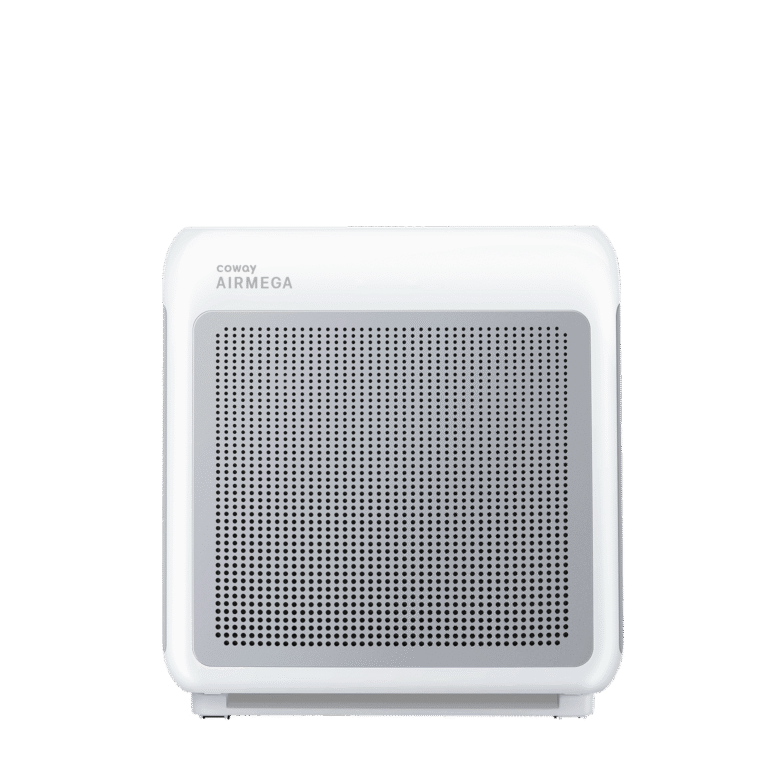
Coway leaves out every modern convenience, with no Wi-Fi, no app and no voice control, only buttons, LEDs and a sensor ring that glows blue, purple or red. In return the 200M carries the guts of Coway's long-running Mighty, with a real dust sensor, an auto mode that reacts on its own, an Eco setting that stops the fan after half an hour of clean air, and a bipolar ionizer you can switch off.
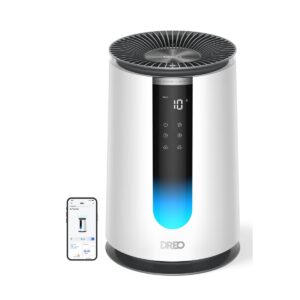
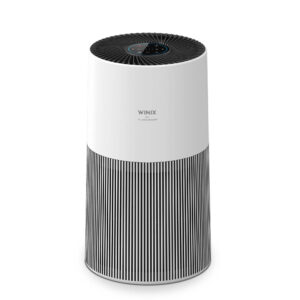
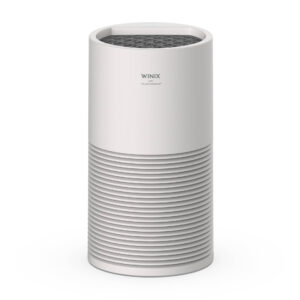
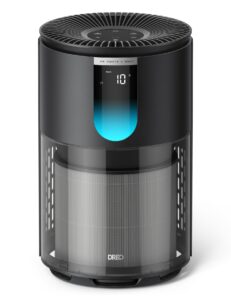
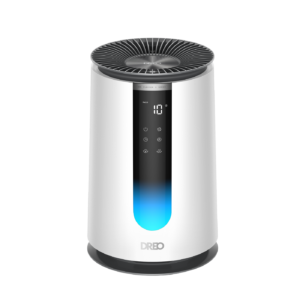
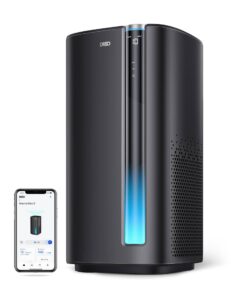
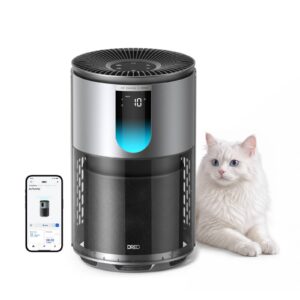
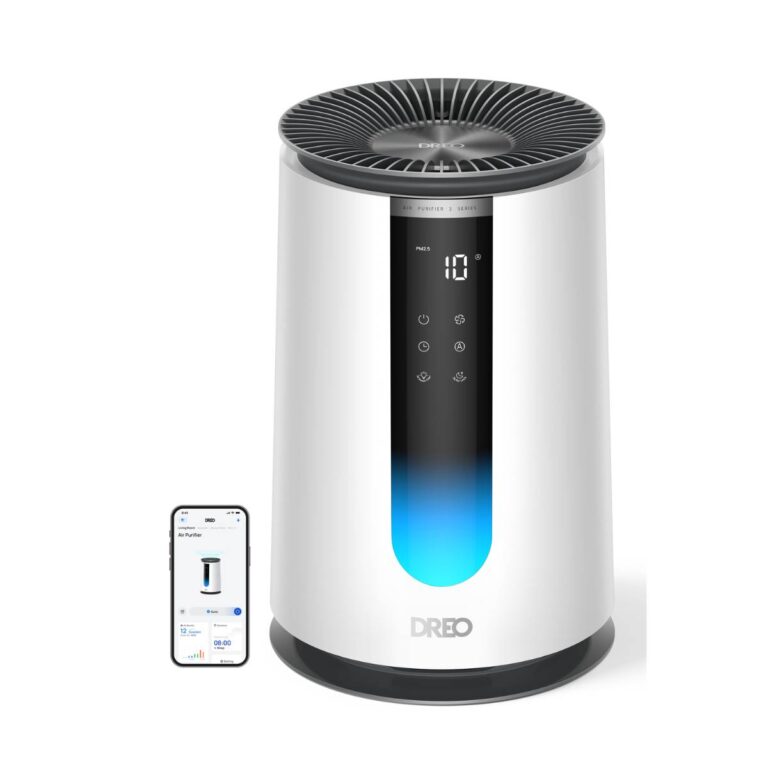
The 338S is a small cylinder, near silent at the bottom of its range, that takes schedules from a phone app and commands from a voice assistant, so nobody has to cross a dark room to change its speed.
For upkeep, the Coway pairs a washable pre-filter with two replaceable parts on separate clocks, a deodorization filter every six months and a True HEPA layer once a year. The Dreo runs one three-stage filter and lights a reminder when it is due. Dreo gives no replacement interval for that filter, so the Coway is the only one of the two whose yearly filter bill you can work out before buying.
Editor’s note
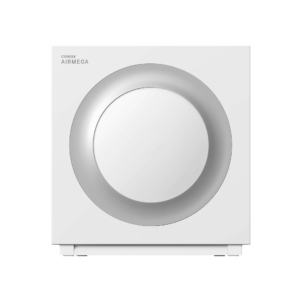
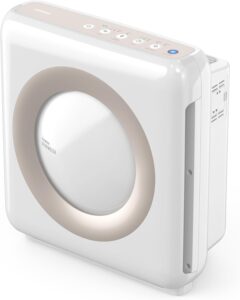
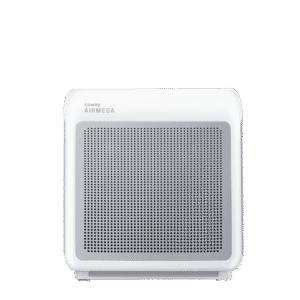
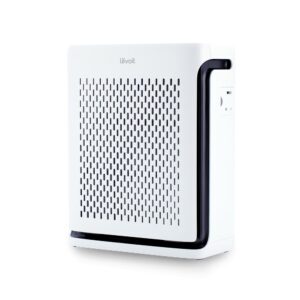
Coway's 200M is the AP-1512HH Mighty in a squarer case, with a 246 CFM smoke CADR and a sensor-driven auto mode that has earned its reputation. Flat out it reaches 55.1 dB and draws a stout 82 W, which is fine for clearing a living room after cooking and too loud for anyone trying to sleep beside it.
The 338S does fewer things and does them gently. Six fan speeds, four airflow modes and a timer are generous for its size, and the app is the reason to choose it over Dreo's plain 338. Its 115 CFM, which Dreo labels a CADR, is a bedroom's worth of air. It is also the easier one to place, a compact cylinder that tucks beside a bed where the Coway's boxy body would crowd a nightstand.
Head-to-head points: every spec is scaled between these products only, so a product can score high here and modestly on its own page, where the VS Score measures it against the median of its class.
Where the Coway Airmega 200M beats the Dreo Air Purifier 338S
- A much higher CADR (smoke) ?246 CFM vs 115 CFM
- A much higher coverage area ?361 sq ft vs 178 sq ft
- More filtration stages ?4 vs 3
Where the Dreo Air Purifier 338S beats the Coway Airmega 200M
- A lower min noise level ?18 dB vs 24.4 dB
- Has sleep mode ?
- Has app control ?
- Has voice assistant ?
Key real-world differences
The spec sheet pulls in both directions. These are the gaps big enough to shape the decision — with the actual figures, and what each one means in real-world use.
- CADR (smoke)Performance246 CFM vs 115 CFM — 2.1× more for the Coway Airmega 200M
Clean Air Delivery Rate — how quickly smoke particles are scrubbed from the air.
- Coverage areaPerformance361 sq ft vs 178 sq ft — 2× more for the Coway Airmega 200M
The room size the purifier is rated to clean effectively.
- Sleep modeNoise & powerNo vs Yes — only the Dreo Air Purifier 338S has it
A dimmed, near-silent mode for overnight use.
- App controlSmart featuresNo vs Yes — only the Dreo Air Purifier 338S has it
Control and monitor it from a phone app.
- Min noise levelNoise & power24.4 dB vs 18 dB — 26.2% less for the Dreo Air Purifier 338S
The lowest-speed noise output; quieter suits bedrooms.
Which one should you buy?
There is no single answer — it depends on what you will actually use it for. Match your priority to the pick below.
- Best for performance Coway Airmega 200M takes the category 100 to 0 — driven by CADR (smoke) (246 CFM vs 115 CFM).
- Best for noise & power Dreo Air Purifier 338S takes the category 100 to 0 — driven by sleep mode (No vs Yes).
- Best for smart features Dreo Air Purifier 338S takes the category 100 to 72 — driven by app control (No vs Yes).
- Top overall score Coway Airmega 200M tops the overall VS Score at 76 while winning 1 of 4 categories outright.
Where each one falls short
Coway Airmega 200M
- Sleep mode: No vs Yes
- App control: No vs Yes
- Min noise level: 24.4 dB vs 18 dB
Dreo Air Purifier 338S
- CADR (smoke): 246 CFM vs 115 CFM
- Coverage area: 361 sq ft vs 178 sq ft
- Filtration stages: 4 vs 3
- 8 specs are unreported (shown as Unknown) and excluded from its scores.
What matters to you?
Drag the sliders to weight each category and re-rank the products to suit your priorities.
Score breakdown
Performance
Filtration
Noise & power
Design
Smart features
Specs last verified September 24, 2026Coway Airmega 200M: 22 of 22 specs verified (100%)Dreo Air Purifier 338S: 14 of 22 specs verified (64%)Unverified specs show as Unknown — never estimated, never scored
Where to buy
No price is available to track yet.
Prices and availability may change. Check the retailer before buying. We may earn a commission on purchases.
What reviewers say
The bottom line
The 338S is the buy for a bedroom, nursery or office where quiet nights and phone scheduling count most.
The Dreo will fall behind in a lounge, and the Coway is more machine, and more noise, than a small bedroom needs, so neither swaps cleanly into the other's room.
For a living room, or a large bedroom shared with someone who sleeps through a fan, the 200M is the stronger choice. Its 361 square foot rating and a decade of proven Coway hardware outweigh the missing app, and the ionizer stays off unless you want it.
Latest comparisons