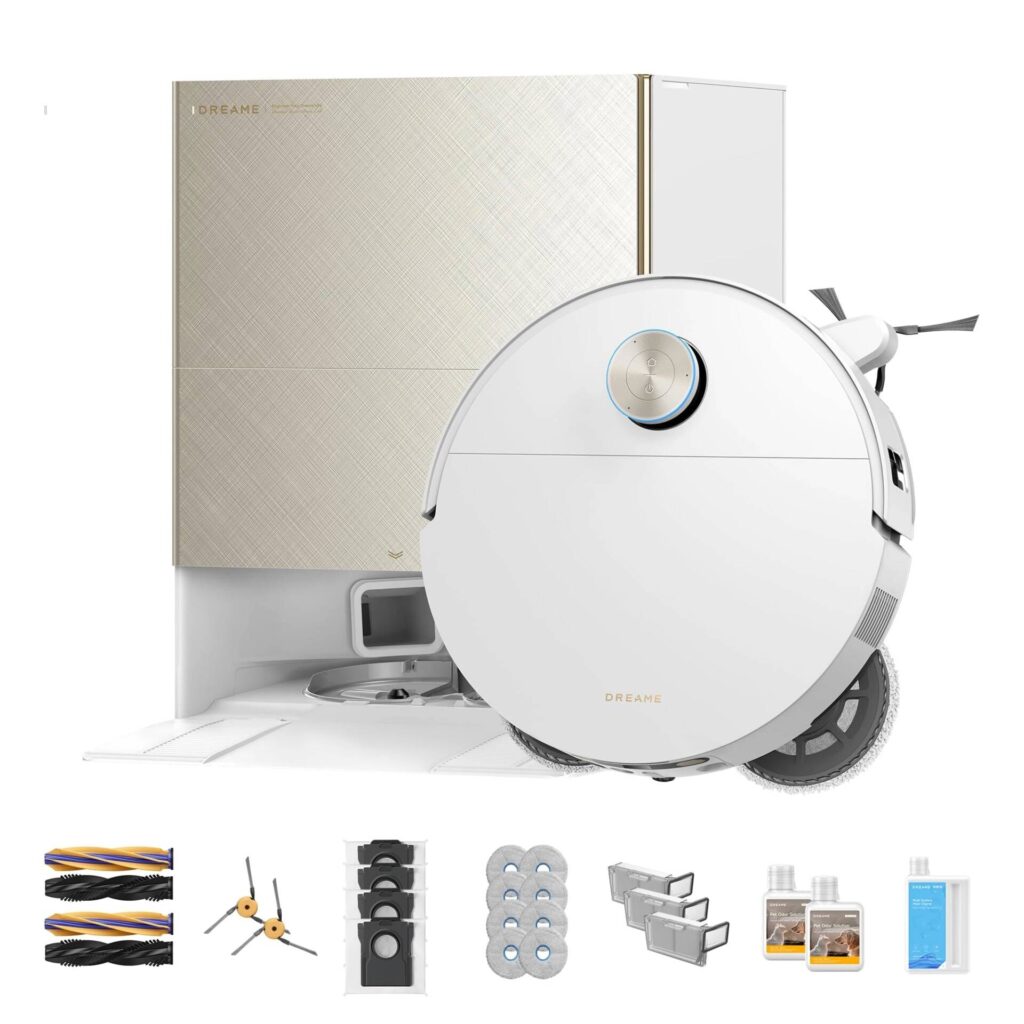
Dreame X60 Max Ultra Complete: Specs, Price, Pros & Cons
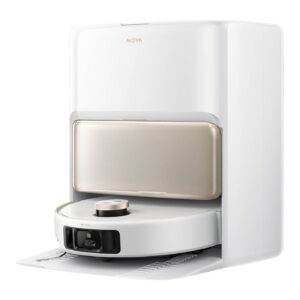
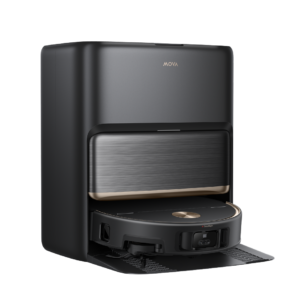
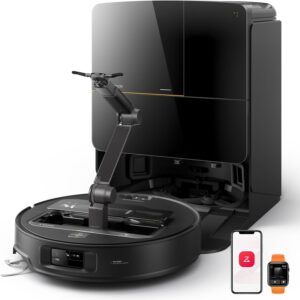
Dreame built the X60 Max Ultra Complete to get into two places most robots miss: the low gap under a sofa and the room behind a raised door saddle. Both are common reasons a first robot ends up disappointing, and this one is designed to fix them together.
The first comes from its height. A laser turret that sinks into the body keeps the robot flat enough for beds and sofas that stop taller machines at the edge, so the dust that collects under them gets cleaned on the same schedule as the open floor. The second comes from a chassis that lifts itself over tall thresholds, so an old house with raised saddles between rooms does not end up cleaned one room at a time.
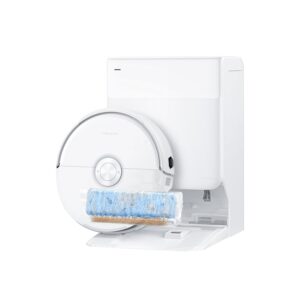
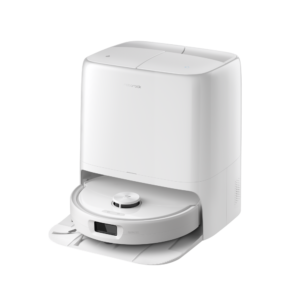
Around those two tricks is Dreame's current flagship list. Suction is very high, the battery is a 6,400 mAh cell, and twin spinning mops swing outward to reach baseboards and corners. The base station washes the pads hot, dries them, refills the robot's water between passes, and keeps two detergents loaded at once, one for floors and one for pet smells. Obstacle avoidance runs on a pair of cameras with a light projector, which helps with cables and small objects left on the floor.
It suits a household with pets, hard floors, a few rugs and furniture that has already defeated one robot. The cost of all that hardware is space, since the base needs a permanent corner and makes itself heard while it washes and dries. The robot's own bin is also small, so it heads back to the base often on a messy day.
Category strengths
Where the Dreame X60 Max Ultra Complete beats the median
- Much stronger suction ?35,000 Pa vs 19,750 Pa (median)
- A much higher threshold clearance ?45 mm vs 24 mm (median)
- A bigger battery ?6,400 mAh vs 5,200 mAh (median)
- A higher mop wash temperature ?100 °C vs 75 °C (median)
- A more compact design ?80 mm vs 96.8 mm (median)
Where the Dreame X60 Max Ultra Complete trails the median
- A smaller dustbin ?235 ml vs 300 ml (median)
How this VS Score was computed
Score 70: each known spec is measured against the median of all robot vacuums (58 products), then weighted; 50 means level with that median. In classes of six or more, a value beyond the class’s 10th–90th percentile range counts as that limit, so one extreme product cannot set the scale. 39% of the scoreable weight could be used; unknown values, features not applicable to this class and proxies (battery capacity where a rated life exists) add or remove nothing.
| Specification | This product | Cohort median | Score weight | Points moved |
|---|---|---|---|---|
| Suction power | 35,000 — capped at the class’s upper range (31,000) | 19,750 | 1.2 | +33.6 |
| Mopping | Yes | 79% of the class have it | 0.6 | +30.0 |
| Edge-cleaning extension | Yes | 79% of the class have it | 0.4 | +20.0 |
| Dirt detection & re-mop | Yes | 79% of the class have it | 0.4 | +20.0 |
| HEPA filter | No | 29% of the class have it | 0.4 | −19.2 |
| Automatic detergent dispenser | Yes | 76% of the class have it | 0.3 | +15.0 |
| Threshold clearance | 45 | 24 | 0.3 | +13.2 |
| Battery capacity | 6,400 | 5,200 | 0.5 | +6.0 |
| Height | 80 | 96.8 | 0.5 | +5.5 |
| Mop wash temperature | 100 | 75 | 0.3 | +5.1 |
| Dustbin capacity | 235 | 300 | 0.4 | −4.4 |
| Navigation | LiDAR | LiDAR | 1 | +0.0 |
Not scored: Mop lift (unknown: not scored); Carpet detection (standard for the class (98% have it)); Cleaning modes (unknown: not scored); Max cleaning area (unknown: not scored); Mapping (standard for the class (98% have it)); Multi-floor maps (unknown: not scored); Obstacle avoidance (standard for the class (100% have it)); No-go zones (standard for the class (100% have it)); Runtime (unknown: not scored); Recharge & resume (standard for the class (95% have it)); Self-empty dock (standard for the class (91% have it)); Auto-refill mop (standard for the class (87% have it)); Mop self-cleaning (standard for the class (92% have it)); Automatic mop removal (unknown: not scored); Warm-air drying temperature (unknown: not scored); Water tank (unknown: not scored); Noise level (unknown: not scored); App control (standard for the class (100% have it)); Voice assistant (standard for the class (100% have it)); Scheduling (standard for the class (100% have it)); Zone / room cleaning (standard for the class (100% have it)); Washable filter (standard for the class (88% have it)); Anti-tangle brush (standard for the class (98% have it)); Removable mop pads (standard for the class (90% have it)).
Editor’s note
Dreame's pitch for the X60 Max Ultra Complete is that it goes where other flagship robots cannot. At 79.5 mm tall with a LiDAR turret that retracts into the body, it clears the sub-80 mm gap under a lot of sofas and beds that taller pucks with fixed towers cannot enter. If you have low furniture and have been disappointed before, that single figure may matter more than anything else on the spec sheet.
The rest is a well-equipped 2026 flagship. Suction is quoted at 35,000 Pa, the dual spinning mops swing outward to reach edges and corners, and the base station washes the pads with 100C water and refills the onboard tank between passes. Twin detergent compartments let you keep a general floor detergent and a pet-odor one loaded at once, which helps in a house with animals.
It is also demanding. The base station is large and needs a permanent spot with clearance, and a machine that washes mops with boiling water and dries them with hot air uses meaningful power and makes noise doing it. The 235ml onboard dustbin is small, so it leans heavily on frequent trips back to the dock. That is fine in an open plan and more disruptive in a house full of narrow doorways.
Obstacle avoidance now runs on dual cameras with a projector rather than structured light alone, which handles cables and low objects far better than previous generations, though no robot yet handles a floor strewn with socks and toys.
Buy it if you have low furniture, hard floors with rugs, pets, and you want mopping handled without touching a pad. Skip it if you live in a small apartment where a simpler robot would do, or if you cannot give the base station the space and permanent plumbing-free corner it needs.
Specifications
Quality bars show where each figure sits between the lowest and highest of the 58 robot vacuums this VS Score is measured against.
Cleaning
Navigation
Battery & dock
Design
Smart features
Maintenance & filtration
Sources and verification
Where the specifications come from
- Official product pagedreametech.com
- Independent testingrtings.com
Verification
- First published
- Specifications last checked
- Sheet completeness
- 29 of 39 specifications verified; the rest show as Unknown and are never estimated or scored
- Page type
- Product specification page — Compiled from the manufacturer’s published specifications and the cited sources; this is not a hands-on test.
- Basis
- Research-based: specifications and editorial text were compiled from the documents listed here and the manufacturer’s published data. We have not tested this unit ourselves; where independent measurements are mentioned they belong to the linked publication.
Where to buy
Prices and availability may change. Check the retailer before buying. We may earn a commission on purchases.
Price history
Robot Vacuums with similar specs to the Dreame X60 Max Ultra Complete
Ratings & reviews
No reviews yet. Be the first to share your experience.
The bottom line
The Dreame X60 Max Ultra Complete earns a VS Score of 70 on the 39% of specifications we could compare like for like — an indication, not a ranking.
- Who it’s for
- Homes where the sofas and beds sit too low for the usual robot, especially with pets and hard floors that need mopping as often as vacuuming.
- Who should look elsewhere
- A small apartment, or a home with no permanent corner to spare for a large base station. A simpler robot covers that job with far less hardware.
- The trade-off that matters
- The tiny onboard bin sends the robot back to the dock often, so every run leans on that big, noisy base.
- The main alternative
- Roborock Saros Z70: the other flagship built low enough for sofa gaps, with its own self-washing mop dock, and the one to price this Dreame against.
The VS Score is calculated from the weighted specifications above, each measured against the median of comparable robot vacuums — a shortlisting guide, not a substitute for your own priorities. See how we score.