Logitech G915 X LIGHTSPEED: Specs, Features, Pros & Cons
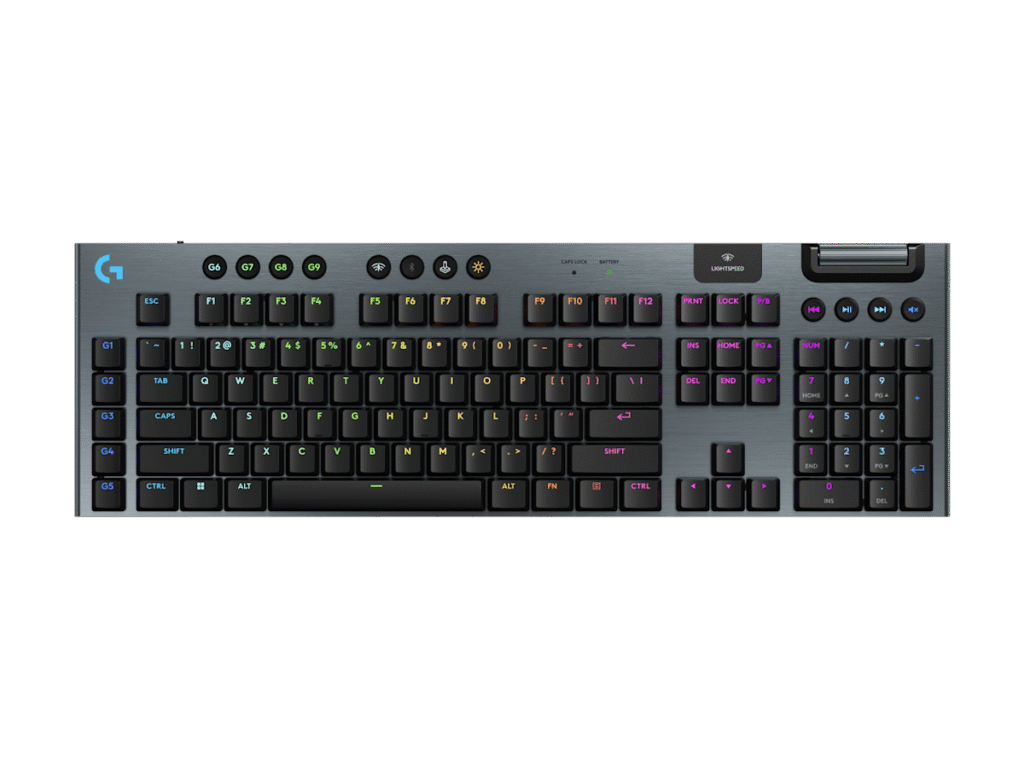
Full-size mechanical keyboards that are both low-profile and wireless are still rare, and the G915 X LIGHTSPEED is one of them. It is Logitech's update of the original G915, sold next to a tenkeyless twin that uses the same switches and the same radio hardware.
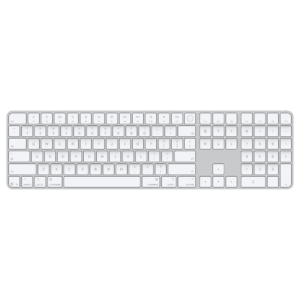
The number pad is the reason to pick this version. Anyone who types figures into spreadsheets, binds macros to the keypad in games or edits with a pad full of shortcuts gets it without a second device on the desk. It also makes this a wide board, which is the question the TKL twin exists to answer.
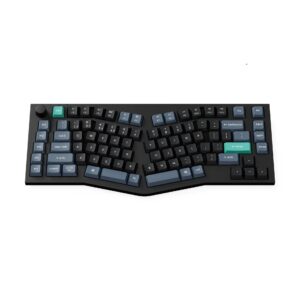
It is a finished product, and that shapes who it suits. The switches are Logitech's own and the keycaps are an unusual profile, so what arrives in the box is essentially what you will be using years later. Keychron's K5 Max takes the other route to the same layout, with hot-swap sockets on some versions and a low-profile board that invites tinkering. Someone who enjoys changing switches will be happier there. Someone who wants to unpack a keyboard and never think about it again is who Logitech had in mind.
Its one clear gap is the missing hot-swap sockets, and a buyer who has read this far probably never planned to swap anything, or to fit a different set of keycaps. What no spec sheet can show is how shallow keys feel after a long day of typing, so try one in a shop if your hands are used to a standard-height board.
Category strengths
Where the Logitech G915 X LIGHTSPEED beats the median
- Much longer battery life ?800 h vs 325 h (median)
Where the Logitech G915 X LIGHTSPEED trails the median
- No hot-swappable switches ?
How this VS Score was computed
Score 44: each known spec is measured against the median of all keyboards (101 products), then weighted; 50 means level with that median. In classes of six or more, a value beyond the class’s 10th–90th percentile range counts as that limit, so one extreme product cannot set the scale. 52% of the scoreable weight could be used; unknown values, features not applicable to this class and proxies (battery capacity where a rated life exists) add or remove nothing.
| Specification | This product | Cohort median | Score weight | Points moved |
|---|---|---|---|---|
| Battery life | 800 | 325 | 0.6 | +30.0 |
| Hot-swappable | No | 61% of the class have it | 0.6 | −28.8 |
| Rapid trigger | No | 25% of the class have it | 0.5 | −24.0 |
| Adjustable actuation | No | 24% of the class have it | 0.4 | −19.2 |
| Rotary knob | Yes | 53% of the class have it | 0.2 | +10.0 |
| Switch technology | Mechanical | Mechanical | 1 | +0.0 |
| Polling rate | 1,000 | 1,000 | 0.7 | +0.0 |
| Connection | 3 | 3 | 0.8 | +0.0 |
| Keycap material | PBT | PBT | 0.4 | +0.0 |
| Backlight | RGB | RGB | 0.3 | +0.0 |
Not scored: Actuation force (unknown: not scored); N-key rollover (unknown: not scored); Analog input (not applicable: only 14% of this class have it); Wired latency (unknown: not scored); Wireless latency (unknown: not scored); Front height (unknown: not scored); Bluetooth devices (unknown: not scored); Battery capacity (unknown: not scored); USB passthrough (not applicable: only 4% of this class have it); Sound dampening (unknown: not scored); Programmable keys (standard for the class (99% have it)); Media controls (standard for the class (97% have it)); Onboard profiles (standard for the class (89% have it)); Configuration software (standard for the class (95% have it)).
Editor’s note
The full-size G915 X is the keyboard for someone who wants a number pad, a media roller and no cable, and is willing to pay for all three. The low-profile design is the defining choice: at 23 millimeters tall it sits closer to a laptop keyboard than a mechanical one, which may feel more comfortable to you or simply shallow.
Connectivity is the strongest part. You get Logitech's LIGHTSPEED 2.4 GHz for gaming, Bluetooth for a second machine, and wired USB-C that carries data rather than only charging, which was a limitation on some earlier wireless boards. Battery life runs from roughly 36 hours with the lighting at full to around 800 hours with it off, so how you use RGB matters more than the number on the box.
The switches are Logitech's own low-profile GL mechanicals in linear, tactile or clicky. They are good, but the board is not hot-swappable and low-profile keycaps have a fraction of the aftermarket that standard MX-stem boards enjoy. If customizing switches and caps is part of the appeal of mechanical keyboards for you, this is the wrong one.
Build quality justifies some of the price. The top plate is brushed aluminum, the keycaps are double-shot PBT rather than the ABS used on the previous generation, and there are nine dedicated G keys plus a proper volume roller. Profiles store onboard, so your remapping travels to a machine without G HUB installed.
The full-size layout pushes your mouse hand noticeably further right, which is the one reason I would steer a low-sensitivity player to the TKL version.
Specifications
Quality bars show where each figure sits between the lowest and highest of the 101 keyboards this VS Score is measured against.
Switches & typing
Performance
Layout & size
Connectivity
Build & sound
Features
Sources and verification
Where the specifications come from
- Official product pagelogitechg.com
- Independent testingrtings.com
Verification
- First published
- Specifications last checked
- Sheet completeness
- 20 of 34 specifications verified; the rest show as Unknown and are never estimated or scored
- Page type
- Product specification page — Compiled from the manufacturer’s published specifications and the cited sources; this is not a hands-on test.
- Basis
- Research-based: specifications and editorial text were compiled from the documents listed here and the manufacturer’s published data. We have not tested this unit ourselves; where independent measurements are mentioned they belong to the linked publication.
Keyboards with similar specs to the Logitech G915 X LIGHTSPEED
Ratings & reviews
No reviews yet. Be the first to share your experience.
The bottom line
The Logitech G915 X LIGHTSPEED earns a VS Score of 44, below the median of the 101 keyboards it is measured against (a score of 50 is level with that median).
- Who it’s for
- Desk owners who want a cable-free setup with a numpad, a volume roller and macro keys, and who like low-profile keys.
- Who should look elsewhere
- Low-sensitivity players who need mouse room, and anyone who wants to swap switches or keycaps later, should look elsewhere.
- The trade-off that matters
- The lighting decides the battery. Run the RGB bright and it needs regular charging, switch it off and charging becomes rare.
- The main alternative
- Logitech G915 X LIGHTSPEED TKL: the same board without the numpad, leaving more room for the mouse.
The VS Score is calculated from the weighted specifications above, each measured against the median of comparable keyboards — a shortlisting guide, not a substitute for your own priorities. See how we score.