SteelSeries Prime: Specs, Features, Pros & Cons
The cable is the first thing to decide about. The Prime is wired, deliberately, with no wireless twin at the same price, which in a market that has spent several years moving the other way now amounts to a statement of intent.
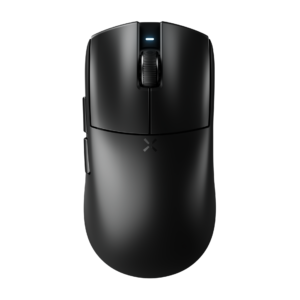
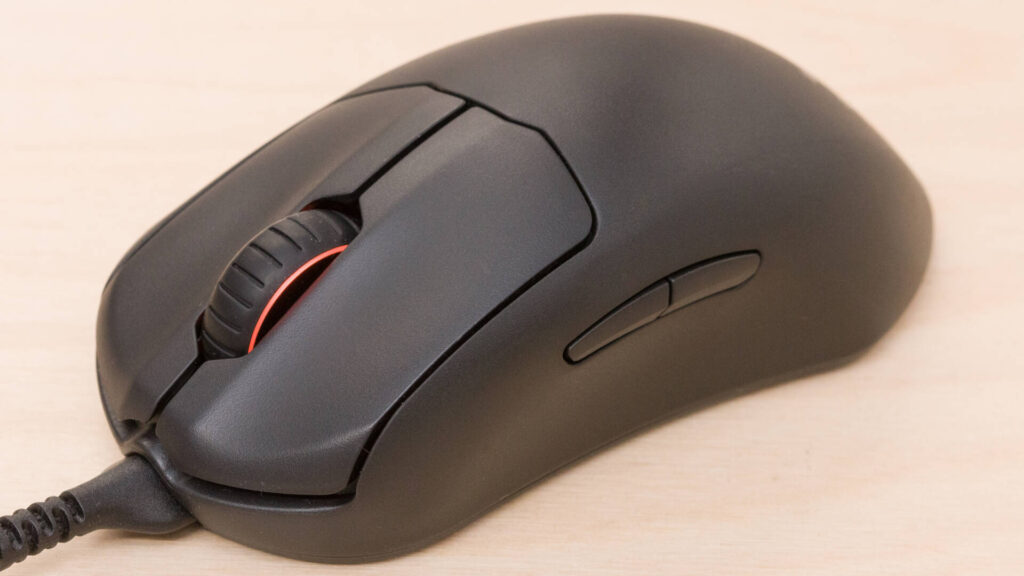
It belongs to SteelSeries' competitive range, and it was built with input from players whose living depends on the outcome. That shows less in what it has than in what it does without: no second radio to charge or pair, no tilting wheel, no adjustable weights, no thumb shelf. The shape is right-handed and conventional, the button count is small, and the surface is plain.
The useful consequence of dropping the radio is not only cost. A wired mouse has no battery to age, nothing to charge before a session, and no power-saving behavior to think about. For someone who plays at one desk and never carries the mouse anywhere, that is a simplification, and it is the argument the whole product rests on.
It is also where the objection lives. If a trailing cable irritates you, no amount of engineering elsewhere will fix it, and the mouse offers no upgrade path. The same austerity that makes it good for aiming makes it poor company for spreadsheets, where the missing scroll behavior and the modest button count start to grate within an afternoon.
Priced below the wireless flagships and above the disposable end of the market, it is aimed at players who would rather spend the difference on the parts they touch than on convenience. Anyone who wants one mouse to cover both work and play should look at something more generously equipped.
Category strengths
Where the SteelSeries Prime beats the median
- A lighter build ?69 g vs 89 g (median)
- Has RGB lighting ?
- A higher switch lifespan ?100 million clicks vs 80 million clicks (median)
Where the SteelSeries Prime trails the median
- Fewer connection options ?
- No USB-C charging ?
- A lower max sensitivity ?18,000 DPI vs 25,600 DPI (median)
- A lower max tracking speed ?450 IPS vs 650 IPS (median)
How this VS Score was computed
Score 44: each known spec is measured against the median of all mice (81 products), then weighted; 50 means level with that median. In classes of six or more, a value beyond the class’s 10th–90th percentile range counts as that limit, so one extreme product cannot set the scale. 62% of the scoreable weight could be used; unknown values, features not applicable to this class and proxies (battery capacity where a rated life exists) add or remove nothing.
| Specification | This product | Cohort median | Score weight | Points moved |
|---|---|---|---|---|
| Connection | 1 | 2 | 0.8 | −20.0 |
| Max sensitivity | 18,000 | 25,600 | 1 | −15.0 |
| Adjustable lift-off distance | Yes | 61% of the class have it | 0.3 | +15.0 |
| USB-C charging | No | 67% of the class have it | 0.3 | −14.4 |
| Weight | 69 | 89 | 1 | +14.0 |
| Max tracking speed | 450 | 650 | 0.8 | −12.0 |
| RGB lighting | Yes | 46% of the class have it | 0.2 | +10.0 |
| Horizontal scrolling | No | 45% of the class have it | 0.2 | −9.6 |
| Free-spin scroll wheel | No | 34% of the class have it | 0.2 | −9.6 |
| Switch lifespan | 100 | 80 | 0.2 | +2.6 |
| Max acceleration | 50 | 50 | 0.4 | +0.0 |
| Polling rate | 1,000 | 1,000 | 0.8 | +0.0 |
| Buttons | 6 | 6 | 0.6 | +0.0 |
Not scored: Grip styles (unknown: not scored); Click latency (unknown: not scored); Debounce adjustment (unknown: not scored); Wireless polling rate (unknown: not scored); Battery life (unknown: not scored); Battery capacity (unknown: not scored); Quick charge (unknown: not scored); Wireless charging (not applicable: only 14% of this class have it); Onboard memory (standard for the class (86% have it)); Software customization (standard for the class (97% have it)); Adjustable weights (not applicable: only 2% of this class have it).
Editor’s note
The Prime is SteelSeries stripping a mouse down to what competitive players use, and the most interesting specification is the switch.
Prestige OM switches are optical-magnetic: the click is registered by light rather than metal contacts, with a magnet returning the button. That removes the debounce delay a mechanical switch needs and, more usefully, removes the double-click fault that eventually afflicts mechanical mouse switches as their contacts wear. They are rated to 100 million clicks.
The other detail worth having is adjustable lift-off distance: you set how far the mouse can be raised before it stops tracking, which matters if you play at low sensitivity and lift and reposition constantly. Few mice at this price expose it.
The sensor is TrueMove Pro at 18,000 DPI with 450 IPS tracking, the weight is 69 g, the feet are PTFE and the cable is a 2 m braided SuperMesh that is flexible enough not to fight you. The shape is right-handed with six buttons.
What is absent is deliberate: no wireless, no free-spinning wheel, no horizontal scrolling, no adjustable weights. It is wired, light and shaped for aiming.
Buy it if you play competitively, sit at one desk and want optical switches without paying for wireless. Buy a wireless mouse if the cable bothers you, or a productivity mouse if the same device has to handle spreadsheets.
Specifications
Quality bars show where each figure sits between the lowest and highest of the 81 mice this VS Score is measured against.
Sensor & tracking
Design & handling
Switches & latency
Connectivity
Battery
Features
Sources and verification
Where the specifications come from
- Official product pagesteelseries.com
- Independent testingrtings.com
Verification
- First published
- Specifications last checked
- Sheet completeness
- 23 of 34 specifications verified; the rest show as Unknown and are never estimated or scored
- Page type
- Product specification page — Compiled from the manufacturer’s published specifications and the cited sources; this is not a hands-on test.
- Basis
- Research-based: specifications and editorial text were compiled from the documents listed here and the manufacturer’s published data. We have not tested this unit ourselves; where independent measurements are mentioned they belong to the linked publication.
Where to buy
Prices and availability may change. Check the retailer before buying. We may earn a commission on purchases.
Mice with similar specs to the SteelSeries Prime
Ratings & reviews
No reviews yet. Be the first to share your experience.
The bottom line
The SteelSeries Prime earns a VS Score of 44, below the median of the 81 mice it is measured against (a score of 50 is level with that median).
- Who it’s for
- Competitive players at a single desk who lift and reposition a lot and want switches that will not develop a double-click fault.
- Who should look elsewhere
- If the same mouse has to handle spreadsheets, or a cable annoys you, look elsewhere.
- The trade-off that matters
- Going wired saves money and removes charging, and there is no wireless twin to move to if the cable starts to grate.
- The main alternative
- Razer DeathAdder V3 HyperSpeed: a light right-handed competitive shape without the cable
The VS Score is calculated from the weighted specifications above, each measured against the median of comparable mice — a shortlisting guide, not a substitute for your own priorities. See how we score.