iRobot Roomba 105: Specs, Features, Pros & Cons
The name tells you almost nothing. iRobot's move to plain three-digit numbers replaced a lineup of e-series, i-series and j-series badges that at least hinted at what a machine could do, and a shopper looking at a Roomba 105 cannot infer from the digits whether it mops, whether it maps, or how far it sits below the models above it. It is the entry point of the current range, and it is a vacuum.
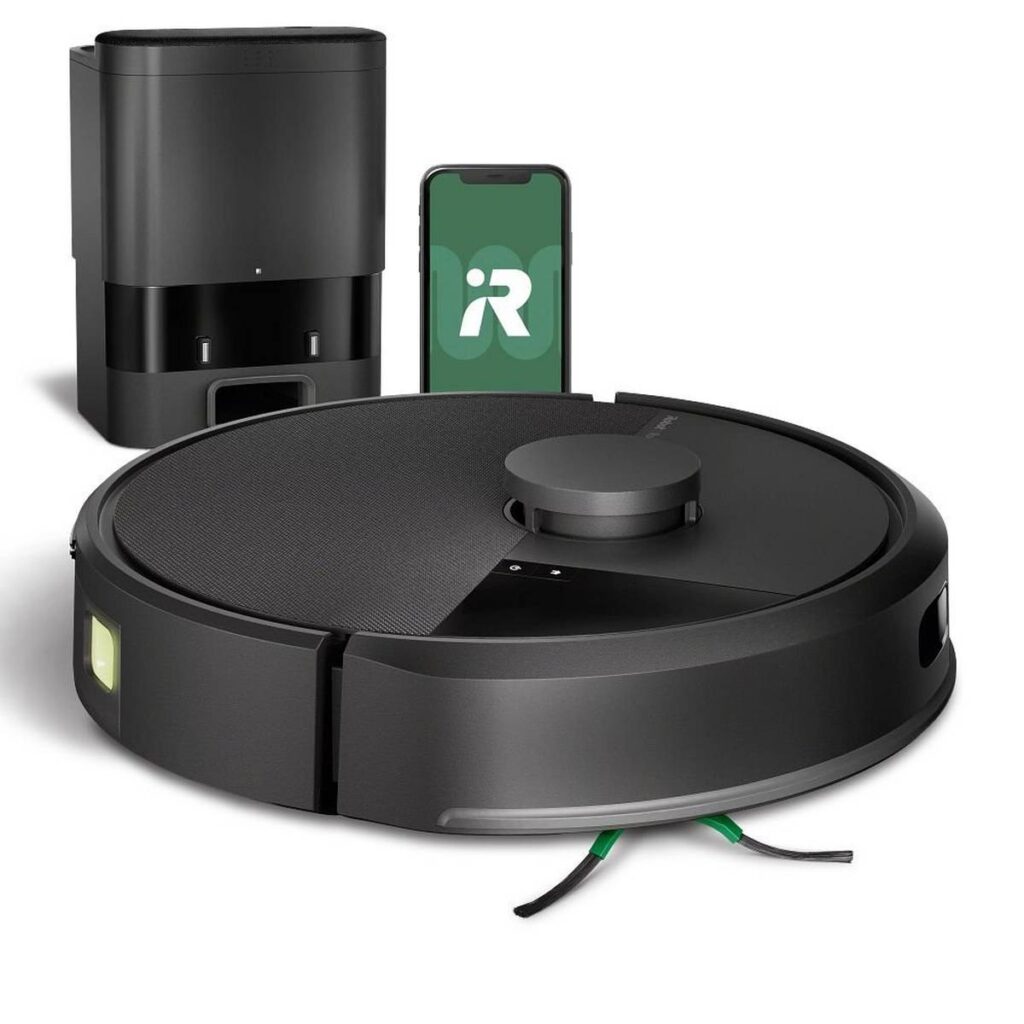
What defines it is a concession iRobot resisted for years. The company built its reputation on cameras and bump sensors, and on the argument that a robot should learn a home gradually rather than scan it. The cheaper competition fitted spinning laser turrets instead, mapped a house on the first run, cleaned in orderly rows and did it at prices iRobot could not match. This model is the answer to that: a laser-guided Roomba at a mainstream price, paired with a base that empties the robot into a bag so the machine looks after itself between services.
The omissions are what hold the price down. There is no mopping here and no way to add it later. Filtration is basic. Obstacle handling depends on what a laser can see, which is reliable for walls, table legs and furniture, and poor at the flat soft clutter that defeats robots: a charging cable, a sock, a pet accident on a dark floor.
The robot joins only a 2.4 GHz network, and iRobot asks for the phone to be on that network during setup as well. Afterward the phone can move back to 5 GHz while the robot stays put.
Category strengths
Where the iRobot Roomba 105 trails the median
- No a mop function ?
- No carpet detection ?
- No edge-cleaning extension ?
- No auto-refill mop ?
- No mop self-cleaning ?
- No dirt detection & re-mop ?
- No automatic detergent dispenser ?
- No removable mop pads ?
- Fewer multi-floor maps ?3 vs 4 (median)
- Fewer cleaning modes ?
How this VS Score was computed
Score 18: each known spec is measured against the median of all robot vacuums (58 products), then weighted; 50 means level with that median. In classes of six or more, a value beyond the class’s 10th–90th percentile range counts as that limit, so one extreme product cannot set the scale. 38% of the scoreable weight could be used; unknown values, features not applicable to this class and proxies (battery capacity where a rated life exists) add or remove nothing.
| Specification | This product | Cohort median | Score weight | Points moved |
|---|---|---|---|---|
| Mopping | No | 79% of the class have it | 0.6 | −28.8 |
| Carpet detection | No | 98% of the class have it | 0.4 | −19.2 |
| Edge-cleaning extension | No | 79% of the class have it | 0.4 | −19.2 |
| Auto-refill mop | No | 87% of the class have it | 0.4 | −19.2 |
| Mop self-cleaning | No | 92% of the class have it | 0.4 | −19.2 |
| Automatic mop removal | No | 37% of the class have it | 0.4 | −19.2 |
| Dirt detection & re-mop | No | 79% of the class have it | 0.4 | −19.2 |
| HEPA filter | No | 29% of the class have it | 0.4 | −19.2 |
| Automatic detergent dispenser | No | 76% of the class have it | 0.3 | −14.4 |
| Removable mop pads | No | 90% of the class have it | 0.2 | −9.6 |
| Multi-floor maps | 3 | 4 | 0.4 | −4.8 |
| Cleaning modes | 3 | 4 | 0.3 | −3.6 |
| Height | 103.9 | 96.8 | 0.5 | −1.5 |
| Navigation | LiDAR | LiDAR | 1 | +0.0 |
Not scored: Suction power (unknown: not scored); Mop lift (unknown: not scored); Max cleaning area (unknown: not scored); Mapping (standard for the class (98% have it)); Obstacle avoidance (standard for the class (100% have it)); No-go zones (standard for the class (100% have it)); Threshold clearance (unknown: not scored); Battery capacity (unknown: not scored); Runtime (unknown: not scored); Recharge & resume (standard for the class (95% have it)); Self-empty dock (standard for the class (91% have it)); Mop wash temperature (unknown: not scored); Warm-air drying temperature (unknown: not scored); Dustbin capacity (unknown: not scored); Water tank (unknown: not scored); Noise level (unknown: not scored); App control (standard for the class (100% have it)); Voice assistant (standard for the class (100% have it)); Scheduling (standard for the class (100% have it)); Zone / room cleaning (standard for the class (100% have it)); Washable filter (unknown: not scored); Anti-tangle brush (unknown: not scored).
Editor’s note
The Roomba 105 is iRobot's answer to the cheaper LiDAR robots that had been undercutting it, and the navigation is the important change.
Earlier Roombas in this price bracket bounced around semi-randomly or used a camera that needed light to see. This one uses ClearView LiDAR, which maps a home in about ten minutes, cleans in orderly rows and works in the dark, so a scheduled overnight clean is viable. It stores up to three maps, which covers a multistory house, and supports keep-out zones and room-by-room cleaning through the app.
The AutoEmpty dock is the other practical feature: the robot empties itself into a bag that holds roughly 75 days of debris, which reduces the chore to changing a bag every couple of months.
This is a vacuum only. There is no mopping, and the Combo version is a different product. iRobot advertises suction as "70x" that of the old 600 series and publishes no figure in pascals, so it cannot be compared numerically against the Chinese brands that do quote Pa. And obstacle avoidance on a LiDAR-only robot is weaker than on models with a forward camera, so cables and socks are still a risk.
The running cost to budget for is the dock bags, plus a robot filter every three to six months and a main brush every six to twelve, all on the maintenance chart in iRobot's owner's guide. The brush is a bristle type, and iRobot keeps its rubber brushes for the Plus and Max models.
Specifications
Quality bars show where each figure sits between the lowest and highest of the 58 robot vacuums this VS Score is measured against.
Cleaning
Navigation
Battery & dock
Design
Smart features
Maintenance & filtration
Sources and verification
Where the specifications come from
- Official product pageirobot.com
- Datasheet or manualprod-help-content.care.irobotapi.com
- Independent testingrtings.com
Verification
- First published
- Specifications last checked
- Sheet completeness
- 25 of 39 specifications verified; the rest show as Unknown and are never estimated or scored
- Page type
- Product specification page — Compiled from the manufacturer’s published specifications and the cited sources; this is not a hands-on test.
- Basis
- Research-based: specifications and editorial text were compiled from the documents listed here and the manufacturer’s published data. We have not tested this unit ourselves; where independent measurements are mentioned they belong to the linked publication.
Robot Vacuums with similar specs to the iRobot Roomba 105
Ratings & reviews
No reviews yet. Be the first to share your experience.
The bottom line
The iRobot Roomba 105 earns a VS Score of 18 on the 38% of specifications we could compare like for like — an indication, not a ranking.
- Who it’s for
- A first robot for hard floors or low carpet in a fairly tidy home, where orderly night-time runs matter and emptying the dock bag is the only chore it should ask for.
- Who should look elsewhere
- Homes with cables, socks or pet accidents on the floor. With laser sensing and no forward camera, it sees walls and chair legs well and flat clutter poorly.
- The trade-off that matters
- Laser navigation makes it fast and methodical even in the dark, but it dodges obstacles less reliably than a camera-guided Roomba, so the floor needs a quick tidy before each run.
- The main alternative
- iRobot Roomba 205 DustCompactor: the next model up compacts debris inside the robot, so there is no dock bag to keep buying.
The VS Score is calculated from the weighted specifications above, each measured against the median of comparable robot vacuums — a shortlisting guide, not a substitute for your own priorities. See how we score.