iRobot Roomba Max 705: Specs, Features, Pros & Cons
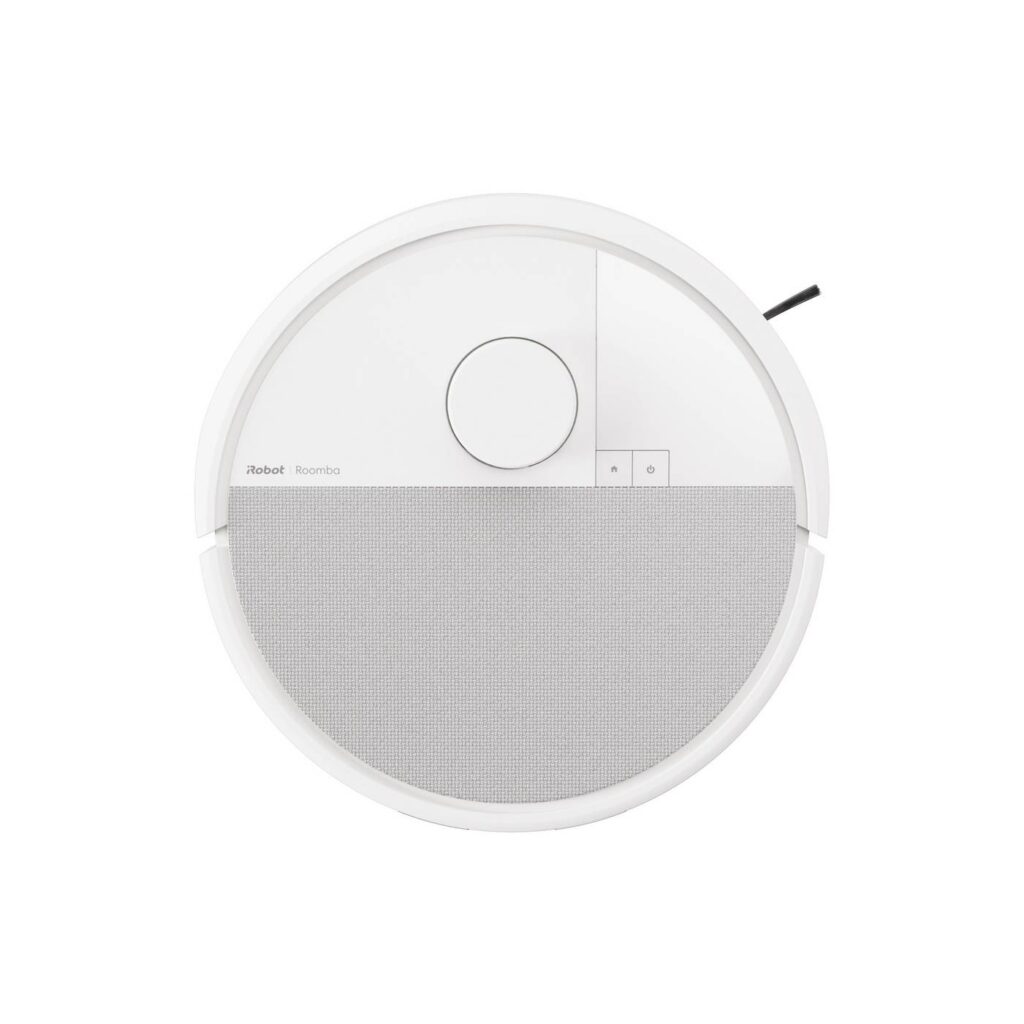
A laser turret on the lid marks the Max 705 as a different kind of Roomba, and it also sets the robot's height at 104.1 mm, taller than most robots here. The turret works alongside a forward camera, so the robot plans its route with one and picks out cables and socks with the other.
This is the vacuum-only member of iRobot's Max family. It has no mop of any kind, no water tank and no pad, and it shares its name with a Max 705 Combo that does mop. Further up the family, the Max 775 adds a roller mop and a dock with heated water.
The mapping sets it apart from older Roombas. It keeps plans for several floors, lets you send it to a single room, and runs in orderly rows. Two rubber brushrolls sit underneath in place of a bristle bar. Obstacle avoidance comes from the camera, which also picks out pet mess. The dock empties the bin and takes weeks of debris before anyone has to open it, and the app controls the rest.
What it gives up follows from its brief. There is no mopping at all, iRobot lists no HEPA filter, and the height leaves the dust under a low sofa where it is. The same turret that steers it so well adds to the height that keeps it out of that gap.
The Max 705 is iRobot's answer for a two-story house of carpet and hard floor, where the robot's job is to vacuum on a schedule, stay out of trouble and be forgotten about between bin days. A household that also wants the floors washed is looking at the wrong Max.
Category strengths
Where the iRobot Roomba Max 705 beats the median
- More multi-floor maps ?5 vs 4 (median)
Where the iRobot Roomba Max 705 trails the median
- No a mop function ?
- A slightly taller design ?104.1 mm vs 96.8 mm (median)
How this VS Score was computed
Score 35: each known spec is measured against the median of all robot vacuums (58 products), then weighted; 50 means level with that median. In classes of six or more, a value beyond the class’s 10th–90th percentile range counts as that limit, so one extreme product cannot set the scale. 18% of the scoreable weight could be used; unknown values, features not applicable to this class and proxies (battery capacity where a rated life exists) add or remove nothing.
| Specification | This product | Cohort median | Score weight | Points moved |
|---|---|---|---|---|
| Mopping | No | 79% of the class have it | 0.6 | −28.8 |
| HEPA filter | No | 29% of the class have it | 0.4 | −19.2 |
| Multi-floor maps | 5 | 4 | 0.4 | +5.2 |
| Height | 104.1 | 96.8 | 0.5 | −2.0 |
| Navigation | LiDAR | LiDAR | 1 | +0.0 |
Not scored: Suction power (unknown: not scored); Mop lift (unknown: not scored); Carpet detection (unknown: not scored); Edge-cleaning extension (unknown: not scored); Cleaning modes (unknown: not scored); Max cleaning area (unknown: not scored); Mapping (standard for the class (98% have it)); Obstacle avoidance (standard for the class (100% have it)); No-go zones (unknown: not scored); Threshold clearance (unknown: not scored); Battery capacity (unknown: not scored); Runtime (unknown: not scored); Recharge & resume (unknown: not scored); Self-empty dock (standard for the class (91% have it)); Auto-refill mop (unknown: not scored); Mop self-cleaning (unknown: not scored); Automatic mop removal (unknown: not scored); Mop wash temperature (unknown: not scored); Warm-air drying temperature (unknown: not scored); Automatic detergent dispenser (unknown: not scored); Dirt detection & re-mop (unknown: not scored); Dustbin capacity (unknown: not scored); Water tank (unknown: not scored); Noise level (unknown: not scored); App control (standard for the class (100% have it)).
Editor’s note
The Max 705 is iRobot's answer to the criticism that dogged Roombas for years: that they wandered around bumping into things while rivals had been mapping rooms properly since 2017. This one navigates with a LiDAR turret on top plus a forward-facing camera, and the difference is immediately obvious. It runs in neat rows, knows where it has been, and finishes each room instead of giving up in a corner.
That mapping brings the features that make a robot vacuum worth owning. It stores up to five floor plans, so a two-story house works without re-teaching it, and you can send it to clean one room on request instead of setting it loose on the whole floor. The camera-based obstacle avoidance handles the usual hazards (cables, socks, pet mess), though no robot in this class avoids everything, and a floor tidied first still cleans better.
The dock empties the robot automatically and holds roughly two months of debris, which is the single feature most likely to change whether you use the thing. Two rubber brushrolls replace the old bristle bar and do resist hair tangling, which matters in a house with long hair or a shedding dog.
This is the Vac model: it vacuums and does not mop. The Max 705 Combo is a separate product with a pad, and the two are easy to confuse because the names differ by one word. There is no self-washing mop base here at any price.
Buy it if you want reliable mapped vacuuming on carpet and hard floors and want to empty a bin every couple of months rather than every couple of days. Look at the Combo line instead if mopping matters to you.
Specifications
Quality bars show where each figure sits between the lowest and highest of the 58 robot vacuums this VS Score is measured against.
Cleaning
Navigation
Battery & dock
Design
Smart features
Maintenance & filtration
Sources and verification
Where the specifications come from
- Official product pageirobot.com
- Independent testingrtings.com
Verification
- First published
- Specifications last checked
- Sheet completeness
- 10 of 39 specifications verified; the rest show as Unknown and are never estimated or scored
- Page type
- Product specification page — Compiled from the manufacturer’s published specifications and the cited sources; this is not a hands-on test.
- Basis
- Research-based: specifications and editorial text were compiled from the documents listed here and the manufacturer’s published data. We have not tested this unit ourselves; where independent measurements are mentioned they belong to the linked publication.
Robot Vacuums with similar specs to the iRobot Roomba Max 705
Ratings & reviews
No reviews yet. Be the first to share your experience.
The bottom line
The iRobot Roomba Max 705 earns a VS Score of 35 on the 18% of specifications we could compare like for like — an indication, not a ranking.
- Who it’s for
- A two-story house with carpet and hard floors, where mapped room-by-room vacuuming matters and the bin can be forgotten for weeks at a time.
- Who should look elsewhere
- Look elsewhere if the floors need washing. This is the vacuum-only Max, and the mopping Combo is a separate machine with a near-identical name.
- The trade-off that matters
- It gives up mopping entirely to put the money into navigation and the self-emptying dock, so wet spills and sticky kitchen floors stay a manual job.
- The main alternative
- iRobot Roomba Max 775: the same Max family with a self-washing roller mop and a heated-water dock, for a home that wants floors washed as well.
The VS Score is calculated from the weighted specifications above, each measured against the median of comparable robot vacuums — a shortlisting guide, not a substitute for your own priorities. See how we score.