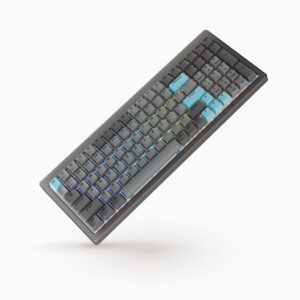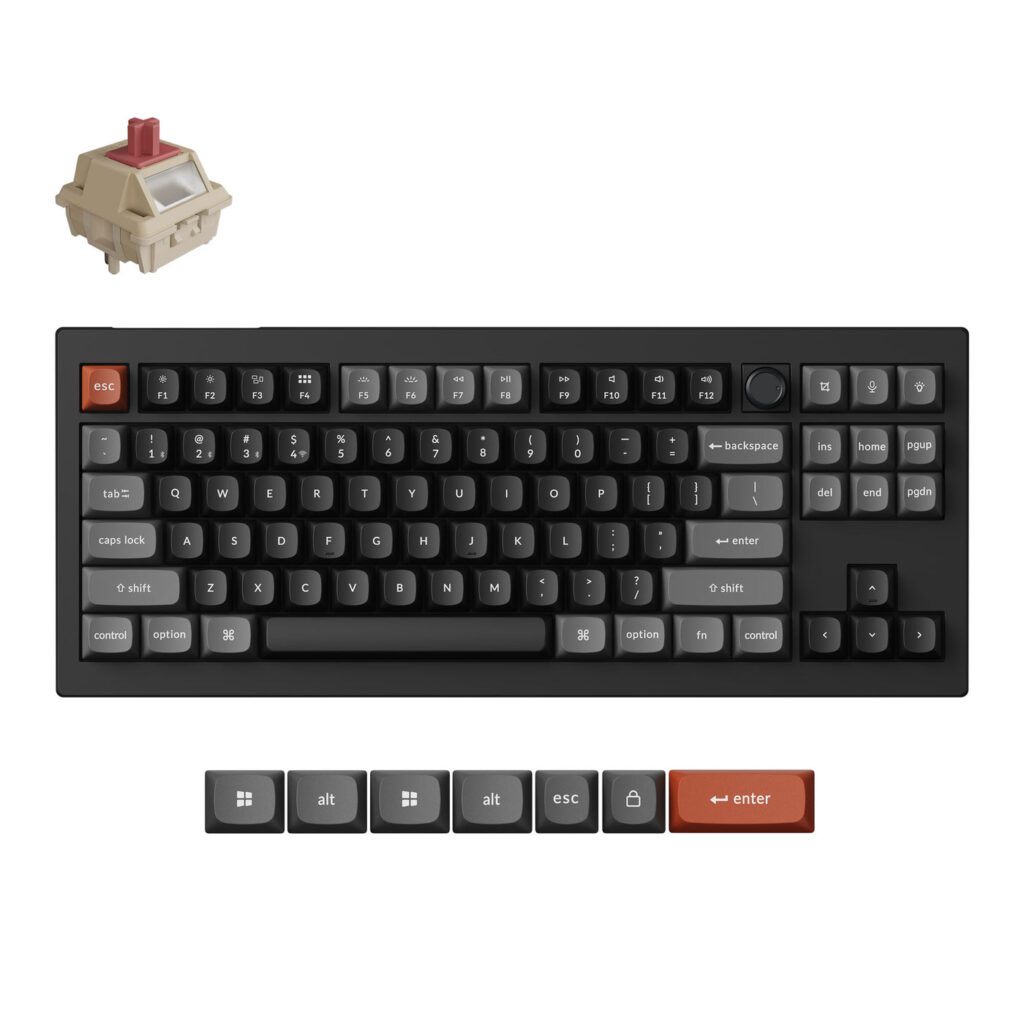
Keychron V3 Ultra 8K: Specs, Features, Pros & Cons
Keychron's V line is the plastic-cased, cheaper counterpart to its aluminum Q boards, and the V3 Ultra 8K is where that line stopped compromising on speed.
It polls at 8,000 Hz over the USB-C cable and over its 2.4 GHz dongle alike, a rate that until recently belonged exclusively to wired hardware. The qualifier that matters is Bluetooth, where polling falls to 125 Hz. That is perfectly good for typing and useless for competitive play, so the practical arrangement is the dongle on your main machine and Bluetooth for a tablet or laptop alongside it.
Going wireless buys battery rather than costing it. A 4,000 mAh cell gives up to 660 hours with the backlight off, or around 200 hours at low RGB brightness, and it charges over USB-C while you carry on working.
The chassis is polycarbonate, the main reason it costs roughly a third of what a milled-metal Q board does. At 960 grams it moves between desks easily, and the polycarbonate plate with pre-lubed Silk POM switches gives a softer, deeper sound than steel and aluminum produce.
The rest is generously specified: double-shot PBT keycaps, screw-in PCB stabilizers, south-facing RGB, full n-key rollover wired and wireless, and QMK-style remapping through a browser-based configurator instead of an installed application.
The layout is a tenkeyless, so arrows and navigation keys are present and the number pad is not.
This one suits someone who wants wired-class response without a cable across the desk and is content with a plastic case. Anyone set on metal should be looking at the Q range.
Category strengths
Where the Keychron V3 Ultra 8K beats the median
- A much higher polling rate ?8,000 Hz vs 1,000 Hz (median)
- Much longer battery life ?660 h vs 325 h (median)
Where the Keychron V3 Ultra 8K trails the median
- A higher front height ?23.6 mm vs 20.2 mm (median)
How this VS Score was computed
Score 59: each known spec is measured against the median of all keyboards (101 products), then weighted; 50 means level with that median. In classes of six or more, a value beyond the class’s 10th–90th percentile range counts as that limit, so one extreme product cannot set the scale. 52% of the scoreable weight could be used; unknown values, features not applicable to this class and proxies (battery capacity where a rated life exists) add or remove nothing.
| Specification | This product | Cohort median | Score weight | Points moved |
|---|---|---|---|---|
| Polling rate | 8,000 | 1,000 | 0.7 | +35.0 |
| Hot-swappable | Yes | 61% of the class have it | 0.6 | +30.0 |
| Battery life | 660 | 325 | 0.6 | +30.0 |
| Rapid trigger | No | 25% of the class have it | 0.5 | −24.0 |
| Adjustable actuation | No | 24% of the class have it | 0.4 | −19.2 |
| Front height | 23.6 — capped at the class’s upper range (22.85) | 20.2 | 0.2 | −1.2 |
| Switch technology | Mechanical | Mechanical | 1 | +0.0 |
| Connection | 3 | 3 | 0.8 | +0.0 |
| Keycap material | PBT | PBT | 0.4 | +0.0 |
| Backlight | RGB | RGB | 0.3 | +0.0 |
Not scored: Actuation force (unknown: not scored); N-key rollover (standard for the class (85% have it)); Analog input (not applicable: only 14% of this class have it); Wired latency (unknown: not scored); Wireless latency (unknown: not scored); Bluetooth devices (unknown: not scored); Battery capacity (capacity is a proxy; the rated battery life is scored instead); USB passthrough (not applicable: only 4% of this class have it); Sound dampening (unknown: not scored); Programmable keys (standard for the class (99% have it)); Media controls (unknown: not scored); Rotary knob (unknown: not scored); Onboard profiles (unknown: not scored); Configuration software (standard for the class (95% have it)).
Editor’s note
The V3 Ultra 8K is the board I would point at someone who wants one keyboard for a work laptop and a gaming desktop without keeping two sets of habits. The dongle side behaves like a wired board in everything that matters, and the Bluetooth side covers the machines where latency is irrelevant.
In use, the polling headline needs a system that keeps up: at the full rate the board generates eight times the USB traffic of an ordinary keyboard, and on a busy machine the practical gain over a lower setting is invisible outside competitive play. Setting it down a notch costs nothing you can feel and buys battery.
The sound is the pleasant surprise. Plastic case, polycarbonate plate and factory-lubed switches produce a deeper, softer note than most metal boards manage as shipped. It is a different result, not a cheaper one, and worth hearing before assuming the Q line is the upgrade.
Treat the lighting as the battery decision it is. Off, you charge a few times a year. Lit, the cable becomes a weekly guest.
Skip it if you want a metal case (that is what the Q range is for) or if your wireless plans revolve around Bluetooth, which is the one link on this board that is merely ordinary.
Specifications
Quality bars show where each figure sits between the lowest and highest of the 101 keyboards this VS Score is measured against.
Switches & typing
Performance
Layout & size
Connectivity
Build & sound
Features
Sources and verification
Where the specifications come from
- Official product pagekeychron.com
- Independent testingrtings.com
Verification
- First published
- Specifications last checked
- Sheet completeness
- 24 of 34 specifications verified; the rest show as Unknown and are never estimated or scored
- Page type
- Product specification page — Compiled from the manufacturer’s published specifications and the cited sources; this is not a hands-on test.
- Basis
- Research-based: specifications and editorial text were compiled from the documents listed here and the manufacturer’s published data. We have not tested this unit ourselves; where independent measurements are mentioned they belong to the linked publication.
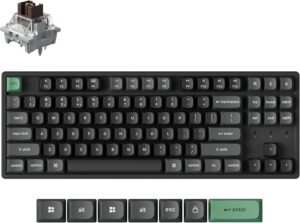
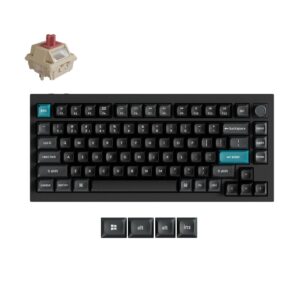
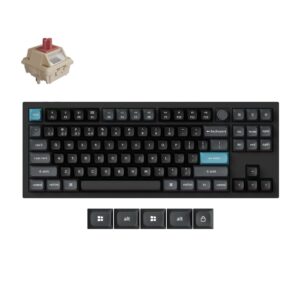
Keyboards with similar specs to the Keychron V3 Ultra 8K
Ratings & reviews
No reviews yet. Be the first to share your experience.
The bottom line
The Keychron V3 Ultra 8K earns a VS Score of 59, above the median of the 101 keyboards it is measured against (a score of 50 is level with that median).
- Who it’s for
- One keyboard for a gaming desktop and a work laptop: wired-class response on the dongle, Bluetooth for the machines where latency does not matter.
- Who should look elsewhere
- Anyone set on a metal case, and anyone planning to game over Bluetooth, the board's one ordinary link.
- The trade-off that matters
- Wired-grade speed without the cable, in a plastic case that keeps the price at a third of the aluminum line.
- The main alternative
- Keychron Q3 Ultra 8K: the same formula in milled aluminum, for those who want the heft and will pay for it.
The VS Score is calculated from the weighted specifications above, each measured against the median of comparable keyboards — a shortlisting guide, not a substitute for your own priorities. See how we score.