iRobot Roomba Plus 415: Specs, Features, Pros & Cons
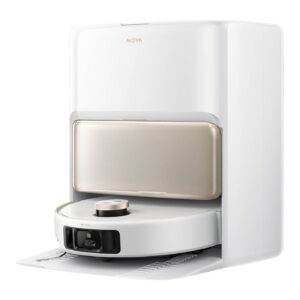
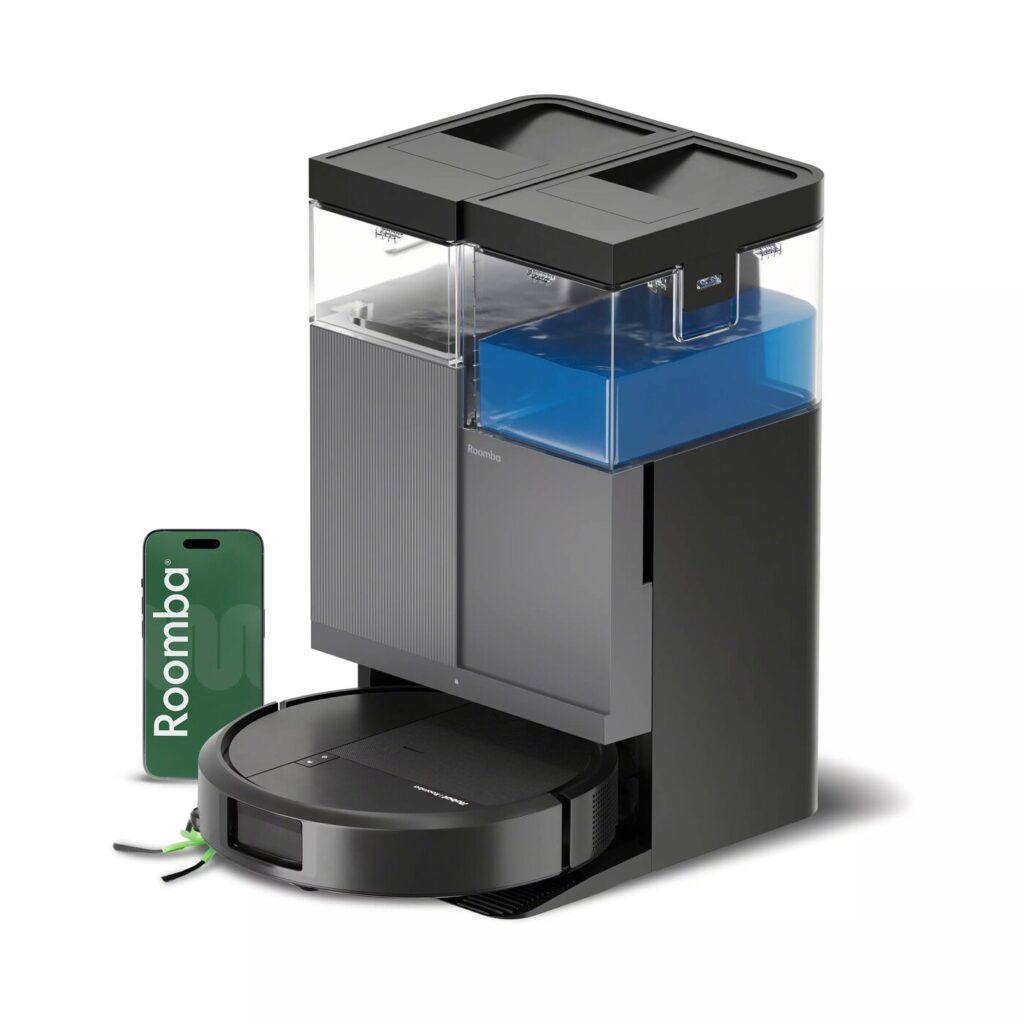
The Plus 415 is a Roomba that mops with a pair of spinning pads, presses them down on dried marks with what iRobot calls SmartScrub, and lifts them when it senses carpet. It is the first step into iRobot's Plus series, which climbs through two pricier Plus models to the Max flagship at the top.
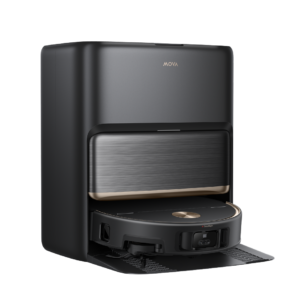
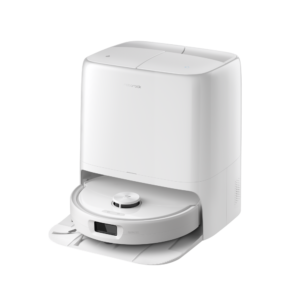
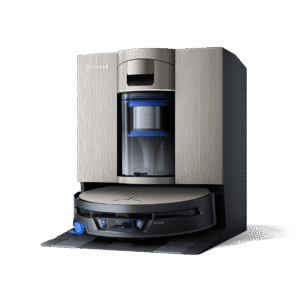
Its dock is the reason the series exists. AutoWash empties the bin, rewets and washes the pads, and dries them with warm air, so the mopping routine needs little from you between runs. ClearView LiDAR draws the map, the app schedules the runs, and Alexa, Siri or Google can start them.
A few details get less attention than the dock. iRobot rates the battery at 5,200 mAh and gives no runtime to go with it. Maps for three floors are stored, and an edge-cleaning extension reaches toward baseboards. Low furniture that stops the taller flagships is within reach, since the body is slim for a robot with a washing dock.
The cuts are small and specific. Drying air runs slightly cooler than on most rivals and the pads lift slightly less. The pads also stay on the robot, with no automatic removal before a carpet run. Obstacle handling uses the standard ClearView package, without the camera recognition of the Pro perception package higher in the range, so a stray sock is more likely to get swept up than avoided.
It is also a new machine with little independent testing behind it, and iRobot's own spec sheet is short on numbers. A tidy apartment or a mid-size home of hard floors gets the most from it, since the dock's routine is the point and a clear floor asks nothing of the perception it lacks.
Category strengths
Where the iRobot Roomba Plus 415 beats the median
- A more compact design ?83.6 mm vs 96.8 mm (median)
Where the iRobot Roomba Plus 415 trails the median
- Fewer multi-floor maps ?3 vs 4 (median)
- A slightly lower warm-air drying temperature ?45 °C vs 50 °C (median)
- A slightly lower mop lift ?10 mm vs 10.5 mm (median)
How this VS Score was computed
Score 56: each known spec is measured against the median of all robot vacuums (58 products), then weighted; 50 means level with that median. In classes of six or more, a value beyond the class’s 10th–90th percentile range counts as that limit, so one extreme product cannot set the scale. 29% of the scoreable weight could be used; unknown values, features not applicable to this class and proxies (battery capacity where a rated life exists) add or remove nothing.
| Specification | This product | Cohort median | Score weight | Points moved |
|---|---|---|---|---|
| Mopping | Yes | 79% of the class have it | 0.6 | +30.0 |
| Edge-cleaning extension | Yes | 79% of the class have it | 0.4 | +20.0 |
| Automatic mop removal | No | 37% of the class have it | 0.4 | −19.2 |
| Multi-floor maps | 3 | 4 | 0.4 | −4.8 |
| Height | 83.6 | 96.8 | 0.5 | +4.0 |
| Warm-air drying temperature | 45 | 50 | 0.2 | −1.0 |
| Mop lift | 10 | 10.5 | 0.3 | −0.6 |
| Cleaning modes | 4 | 4 | 0.3 | +0.0 |
| Navigation | LiDAR | LiDAR | 1 | +0.0 |
| Battery capacity | 5,200 | 5,200 | 0.5 | +0.0 |
Not scored: Suction power (unknown: not scored); Carpet detection (standard for the class (98% have it)); Max cleaning area (unknown: not scored); Mapping (standard for the class (98% have it)); Obstacle avoidance (standard for the class (100% have it)); No-go zones (unknown: not scored); Threshold clearance (unknown: not scored); Runtime (unknown: not scored); Recharge & resume (unknown: not scored); Self-empty dock (standard for the class (91% have it)); Auto-refill mop (standard for the class (87% have it)); Mop self-cleaning (standard for the class (92% have it)); Mop wash temperature (unknown: not scored); Automatic detergent dispenser (unknown: not scored); Dirt detection & re-mop (unknown: not scored); Dustbin capacity (unknown: not scored); Water tank (unknown: not scored); Noise level (unknown: not scored); App control (standard for the class (100% have it)); Voice assistant (standard for the class (100% have it)); Scheduling (standard for the class (100% have it)); Zone / room cleaning (standard for the class (100% have it)); HEPA filter (unknown: not scored); Washable filter (unknown: not scored); Anti-tangle brush (standard for the class (98% have it)).
Editor’s note
iRobot built its 2026 self-maintaining generation around the AutoWash dock, and this model is the cheapest way into it, well below the flagship Max 775. What the savings leave out is easier to list than what they keep.
The chassis stands 3.3 inches tall, slim by current standards, so it slides under sofas and beds that the taller flagships bump against. The dock dries the pads at 45 degrees. Carpet detection, SmartScrub pressure, app scheduling and voice control all carry over from the pricier models.
The difference is perception. Against the Plus 515 and 575 above it, this model runs the standard ClearView package rather than the Pro version with camera-assisted obstacle recognition, so it maps a home confidently but treats small clutter on the floor as something to drive through. On a clear floor that costs little. On a cluttered one it becomes a daily chore of picking things up before a run.
iRobot publishes no runtime for this model, and the 20,000 Pa suction claim in Amazon's title appears nowhere in iRobot's own materials.
The buying logic inside the family is easy to follow. The 515 adds capacity and runtime for a little more money, and the 575 adds the Pro perception stack. For daily hard-floor upkeep in a tidy home, neither upgrade changes the routine much, and this is the cheapest way to stop thinking about vacuuming, which is the whole point of the category.
Specifications
Quality bars show where each figure sits between the lowest and highest of the 58 robot vacuums this VS Score is measured against.
Cleaning
Navigation
Battery & dock
Design
Smart features
Maintenance & filtration
Sources and verification
Where the specifications come from
- Official product pageirobot.com
- Retailer listing (cross-check)amazon.com
Verification
- First published
- Specifications last checked
- Sheet completeness
- 25 of 39 specifications verified; the rest show as Unknown and are never estimated or scored
- Page type
- Product specification page — Compiled from the manufacturer’s published specifications and the cited sources; this is not a hands-on test.
- Basis
- Research-based: specifications and editorial text were compiled from the documents listed here and the manufacturer’s published data. We have not tested this unit ourselves; where independent measurements are mentioned they belong to the linked publication.
Robot Vacuums with similar specs to the iRobot Roomba Plus 415
Ratings & reviews
No reviews yet. Be the first to share your experience.
The bottom line
The iRobot Roomba Plus 415 earns a VS Score of 56 on the 29% of specifications we could compare like for like — an indication, not a ranking.
- Who it’s for
- Apartments and mid-size hard-floor homes wanting the self-maintaining dock experience (wash, dry, empty) at the family's lowest price.
- Who should look elsewhere
- Cluttered floors: the standard ClearView package maps well but lacks the Pro tier's obstacle recognition, and stray cables and socks are its weakness.
- The trade-off that matters
- You pay less than for the Pro-perception models above it by giving up camera obstacle recognition and a published runtime, which is fine in tidy homes and risky in busy ones.
- The main alternative
- iRobot Roomba Plus 575: adds ClearView Pro perception and threshold climbing for the step-up money.
The VS Score is calculated from the weighted specifications above, each measured against the median of comparable robot vacuums — a shortlisting guide, not a substitute for your own priorities. See how we score.