Ducky One X: Specs, Features, Pros & Cons
Ducky spent years building a reputation among people who care what a keyboard sounds like, which makes the One X an unexpected turn: it is an esports board, built around switches that report how far a key has been pressed, where ordinary switches only register whether it has.
That analog reading is what enables the gaming features. Actuation depth becomes adjustable, keys can reset the instant they start traveling back up, and a single key can be made to do different things at different depths. For a player that means finer control over movement. For everyone else it mostly means the keyboard can be tuned to trigger earlier or later than an ordinary switch would.
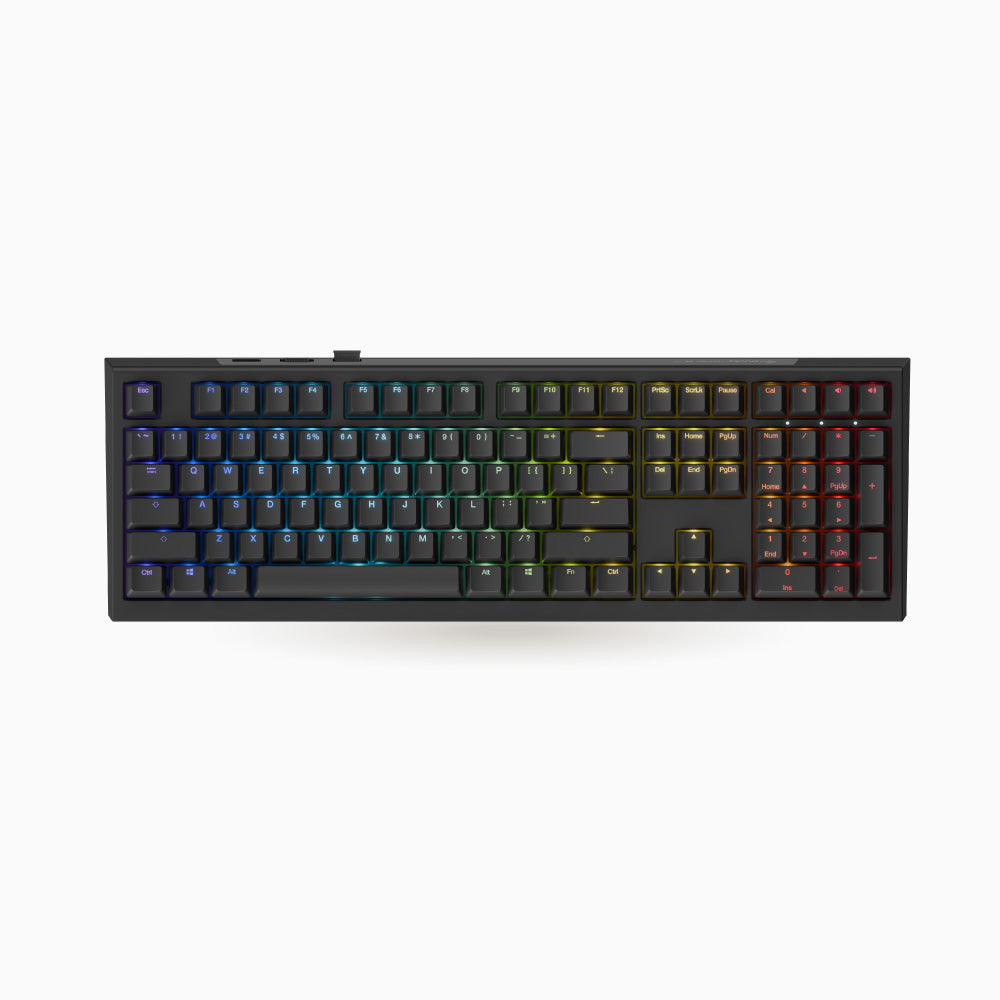
What makes the One X unusual is the company its internals keep. Gasket mounting, a steel plate, multiple layers of damping and high-density double-shot PBT keycaps are the vocabulary of enthusiast typing boards, and they almost never turn up in the same product as competitive-gaming internals. Wireless is offered in both the low-latency and Bluetooth varieties, which analog keyboards have historically struggled to provide because of how much power the sensing consumes.
The switches are proprietary, so the hot-swap sockets exist for replacement, and there is no aftermarket to browse. The stabilizers are mounted to the plate instead of screwed into the circuit board, which is the cheaper arrangement and the one more likely to rattle as it ages. And being first carries a cost in certainty: inductive sensing has a far shorter track record in keyboards than the magnetic approach it competes with, so long-term consistency is something buyers will learn about after the fact.
Category strengths
Where the Ducky One X beats the median
- Has rapid trigger ?
- Has adjustable actuation ?
- Has analog input ?
- A lighter actuation force ?40 g vs 45 g (median)
How this VS Score was computed
Score 73: each known spec is measured against the median of all keyboards (101 products), then weighted; 50 means level with that median. In classes of six or more, a value beyond the class’s 10th–90th percentile range counts as that limit, so one extreme product cannot set the scale. 45% of the scoreable weight could be used; unknown values, features not applicable to this class and proxies (battery capacity where a rated life exists) add or remove nothing.
| Specification | This product | Cohort median | Score weight | Points moved |
|---|---|---|---|---|
| Hot-swappable | Yes | 61% of the class have it | 0.6 | +30.0 |
| Rapid trigger | Yes | 25% of the class have it | 0.5 | +25.0 |
| Adjustable actuation | Yes | 24% of the class have it | 0.4 | +20.0 |
| Analog input | Yes | 14% of the class have it | 0.4 | +20.0 |
| Sound dampening | Yes | 76% of the class have it | 0.3 | +15.0 |
| Actuation force | 40 | 45 | 0.4 | +2.4 |
| Polling rate | 1,000 | 1,000 | 0.7 | +0.0 |
| Connection | 3 | 3 | 0.8 | +0.0 |
| Keycap material | PBT | PBT | 0.4 | +0.0 |
| Backlight | RGB | RGB | 0.3 | +0.0 |
Not scored: Switch technology (unknown: not scored); N-key rollover (unknown: not scored); Wired latency (unknown: not scored); Wireless latency (unknown: not scored); Front height (unknown: not scored); Bluetooth devices (unknown: not scored); Battery life (unknown: not scored); Battery capacity (unknown: not scored); USB passthrough (not applicable: only 4% of this class have it); Programmable keys (standard for the class (99% have it)); Media controls (unknown: not scored); Rotary knob (unknown: not scored); Onboard profiles (unknown: not scored); Configuration software (standard for the class (95% have it)).
Editor’s note
The One X is doing something novel, and the distinction is worth getting right. Almost every analog gaming keyboard uses Hall effect switches, which read a magnet. Ducky's use inductive sensing instead, a different physical principle that they argue is more consistent and considerably more power-efficient. That efficiency claim is the interesting part, because it is what makes an analog board practical on a battery at all.
The gaming features follow from the analog sensing: adjustable actuation across the full 3.5 mm of travel, rapid trigger, and multi-point triggers that fire different actions at different depths. The switches are linear with a 40 g initial force.
What sets it apart from most gaming boards is that Ducky did not stop there. The case is gasket-mounted with seven layers of dampening, the plate is SPCC steel, and the keycaps are high-density double-shot PBT. That is enthusiast typing hardware wrapped around esports internals, and the two rarely arrive together.
Two things temper it. Polling is 1,000 Hz, which is odd for a board of this generation and price when rivals, including some cheaper ones, run at 8,000 Hz. And the stabilizers are plate-mount, the cheaper approach next to screw-in PCB stabilizers, and they typically rattle more over time.
Being first also means the switches are proprietary, so the hot-swap sockets are useful for replacements only, and there is no aftermarket to explore.
Buy it if you want analog control and a keyboard that sounds good doing it, with the freedom of tri-mode wireless. Skip it if polling rate is the number you optimize for.
Specifications
Quality bars show where each figure sits between the lowest and highest of the 101 keyboards this VS Score is measured against.
Switches & typing
Performance
Layout & size
Connectivity
Build & sound
Features
Sources and verification
Where the specifications come from
- Official product pageducky.global
- Independent testingrtings.com
Verification
- First published
- Specifications last checked
- Sheet completeness
- 22 of 34 specifications verified; the rest show as Unknown and are never estimated or scored
- Page type
- Product specification page — Compiled from the manufacturer’s published specifications and the cited sources; this is not a hands-on test.
- Basis
- Research-based: specifications and editorial text were compiled from the documents listed here and the manufacturer’s published data. We have not tested this unit ourselves; where independent measurements are mentioned they belong to the linked publication.
Keyboards with similar specs to the Ducky One X
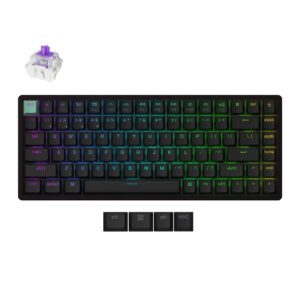
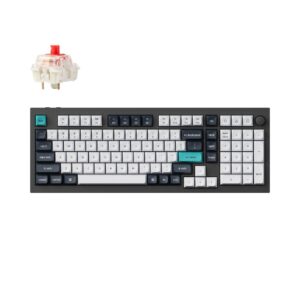
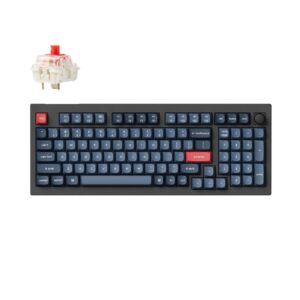
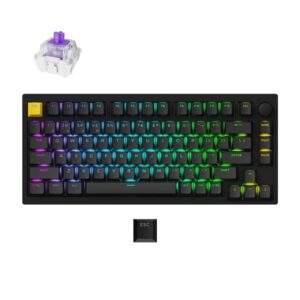
Ratings & reviews
No reviews yet. Be the first to share your experience.
The bottom line
The Ducky One X earns a VS Score of 73, above the median of the 101 keyboards it is measured against (a score of 50 is level with that median).
- Who it’s for
- A player who wants analog control and tri-mode wireless on a board that also types like an enthusiast keyboard.
- Who should look elsewhere
- If polling rate is the figure you optimize for, look elsewhere. The same goes for anyone who wants to experiment with switches.
- The trade-off that matters
- The sensing is new. Inductive switches have little track record in keyboards, so their consistency after years of use is something owners will learn first-hand.
- The main alternative
- Keychron Q6 HE 8K: a full-size analog board with faster polling in a milled aluminum case, if wireless matters less than speed.
The VS Score is calculated from the weighted specifications above, each measured against the median of comparable keyboards — a shortlisting guide, not a substitute for your own priorities. See how we score.