NuPhy Node75 Low-Profile: Specs, Features, Pros & Cons
Hot-swap sockets on a low-profile keyboard are rare enough to lead with. Thin boards usually solder their switches, because the room a socket needs is exactly the room the design exists to remove, so a switch failure two years in normally means a dead keyboard. The Node75 keeps them, under NuPhy's own low-profile Nano switches.
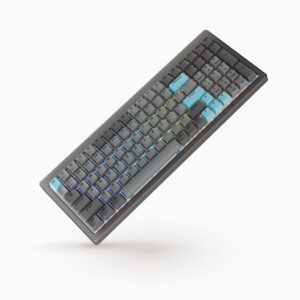
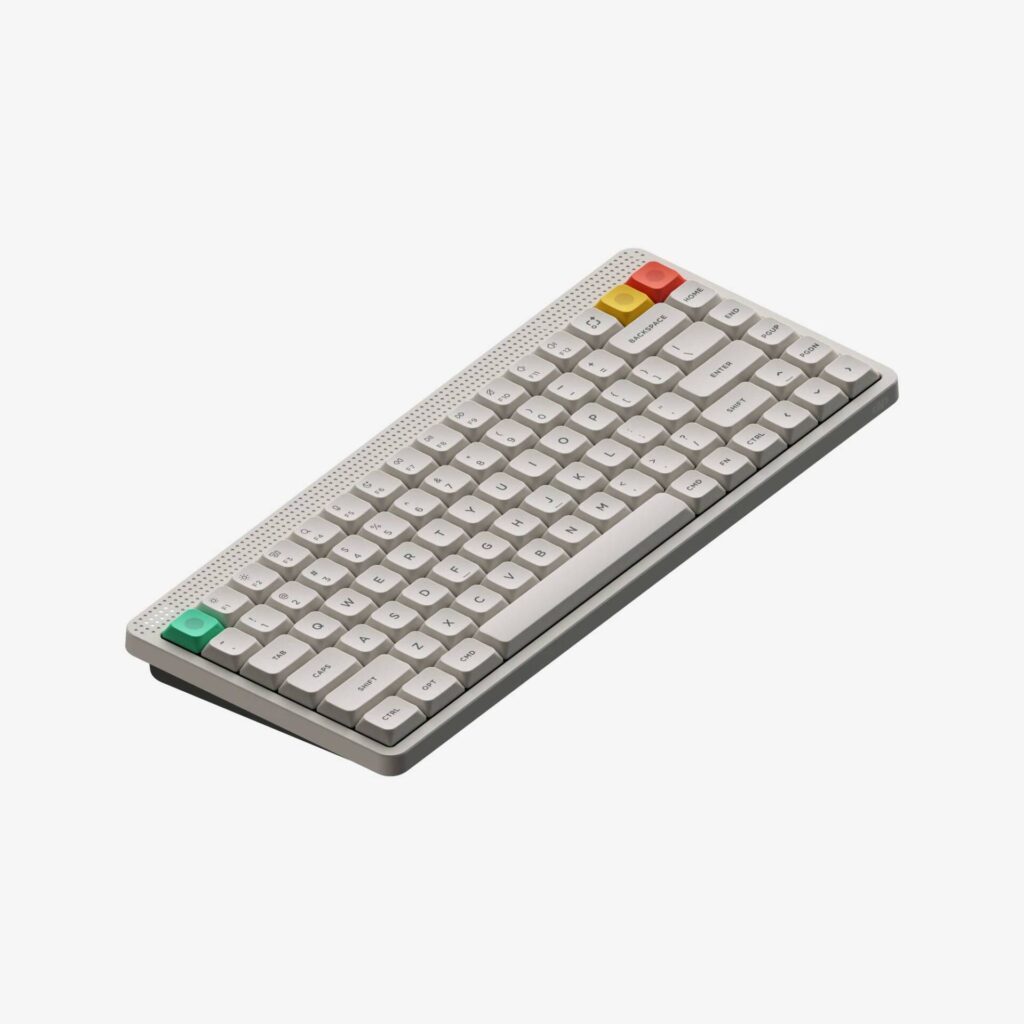
Height is the reason to want it at all. At 13.2 mm at the front it sits far below a standard mechanical board, which keeps wrists closer to flat and makes a wrist rest optional rather than a purchase made a month later. The switches still give a defined actuation you can feel, so it avoids the mushy compromise that thin office keyboards usually involve.
The 75% layout keeps the function row and a right-hand navigation column while dropping the numpad, and at 317 mm wide it leaves genuine room for a mouse. A gasket mount over a polycarbonate plate softens the sound noticeably against a plate-mounted budget board, and the keycaps are PBT. The case is ABS and the whole thing comes to 659 grams, light enough to move between desks and light enough to shift under a heavy hand.
Two figures need reading carefully before the table below. The 3,000 mAh cell is quoted at up to a thousand hours, but that assumes the lighting is off, and running the RGB collapses it. Polling is 1,000 Hz against the 8,000 Hz now common on gaming boards, which is irrelevant for typing and for most games but a hard stop for anyone chasing the last millisecond of input delay. Neither figure is dishonest; both are simply quoted under conditions the buyer has to supply.
Category strengths
Where the NuPhy Node75 Low-Profile beats the average
- More connection options ?
- Has hot-swappable switches ?
- A lower front height ?13.2 mm vs 21.72 mm (avg)
- Has n-key rollover ?
- Has configuration software ?
- Has media controls ?
- Has programmable keys ?
Where the NuPhy Node75 Low-Profile trails the average
- A much lower polling rate ?1,000 Hz vs 3,902.44 Hz (avg)
- Shorter battery life ?1,000 h vs 1,427.96 h (avg)
- No adjustable actuation ?
- No analog input ?
- A smaller battery ?3,000 mAh vs 3,479.78 mAh (avg)
- No USB passthrough ?
- Fewer Bluetooth devices ?3 vs 3.07 (avg)
Editor’s note
The Node75 is the size most people should look at first in NuPhy's low-profile range, and the board I would hand to someone whose wrists complain by mid-afternoon on a normal mechanical.
In use, the flat posture is the whole experience: hands hover less, a wrist rest becomes optional, and the switches still give a defined point you can feel. The gasket mount does its quiet work too; the sound is softer and lower than a budget plate-mounted board, which colleagues on calls will appreciate.
Lightness cuts both ways. Moving it between desks is effortless, and a heavy-handed gaming session can walk it a centimetre across the desk; a thin deskmat settles it.
Read the battery the way the sheet does not: the four-digit figure assumes the lighting is off, and the RGB collapses it. Off is the sensible default anyway – the caps are not shine-through.
The hot-swap sockets are the longevity argument, rare at this height: a failed switch in two years is a five-minute fix rather than a dead keyboard, and NuPhy's low-profile switch family gives options without soldering.
Wrong for numpad users, and for competitive players chasing polling headroom this is not the board. For everyone who types all day and wants the desk space back, it is an easy recommendation.
Specifications
Quality bars are generated automatically against 100 other keyboards.
Switches & typing
Performance
Layout & size
Connectivity
Build & sound
Features
Sources and verification
Where the specifications come from
- Official product pagenuphy.com
- Independent testingrtings.com
Verification
- First published
- Specifications last checked
- Sheet completeness
- 27 of 34 specifications verified; the rest show as Unknown and are never estimated or scored
- Basis
- Research-based: specifications and editorial text were compiled from the documents listed here and the manufacturer’s published data. We have not tested this unit ourselves; where independent measurements are mentioned they belong to the linked publication.
Keyboards with similar specs to the NuPhy Node75 Low-Profile
Ratings & reviews
No reviews yet. Be the first to share your experience.
The bottom line
The NuPhy Node75 Low-Profile earns a VS Score of 45, a solid mid-pack result among the 101 keyboards we compare here.
- Who it’s for
- All-day typists who want mechanical feel at laptop height, with desk space back and a wrist rest made optional.
- Who should look elsewhere
- Numpad users, competitive players chasing polling headroom, and heavy-handed gamers bothered by a light board that can shift.
- The trade-off that matters
- Rare hot-swap longevity in a thin board, paid for with an ABS case, a battery figure that assumes the lights stay off, and standard polling.
- The main alternative
- NuPhy Air75 V3 – the sibling take on the same size, worth cross-shopping on switch feel and deck height.
The VS Score is calculated from the weighted specifications above, compared with every other keyboard we track — a shortlisting guide, not a substitute for your own priorities. See how we score.