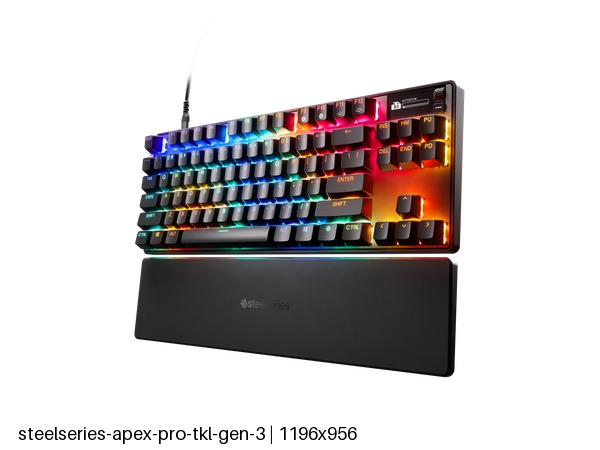
SteelSeries Apex Pro TKL Gen 3: Specs, Features, Pros & Cons
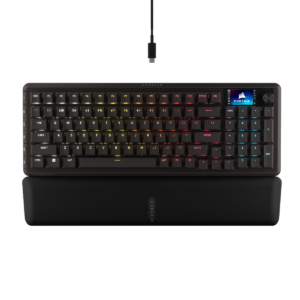
Nothing about the Apex Pro TKL Gen 3 looks unusual on a desk. It is a standard tenkeyless with an aluminum top plate, PBT keycaps, per-key lighting and a volume wheel in the corner, and the difference sits under the keys, where SteelSeries' magnetic OmniPoint switches measure how far each key has traveled.
That measurement is put to two uses. You choose the depth at which a key fires, shallow for movement and deeper for everything else, and rapid trigger resets a key as soon as it starts to rise. Profiles for those settings are stored on the board, so a tuned setup follows it to another computer. Analog input is not offered, so the keys cannot act as joystick axes.
In the magnetic category it takes the conservative position. The layout needs no relearning, and the case is dampened for a quieter sound. SteelSeries has kept it wired and kept the switches soldered in place, which sets it apart from rivals that have moved to hot-swap sockets and wireless modes. Those choices define who should look elsewhere. Anyone who wants to try different switches later, play from a sofa, or steer a racing game with the keys will find the board closed to those plans.
Shooter players on one fixed desk, who want the tuning benefits of magnetic switches and have no interest in the hobby side of keyboards, get what they came for. Coming from a conventional gaming board, you gain the new features without learning a new shape and lose nothing you were using before.
Category strengths
Where the SteelSeries Apex Pro TKL Gen 3 beats the median
- Has rapid trigger ?
- Has adjustable actuation ?
Where the SteelSeries Apex Pro TKL Gen 3 trails the median
- A much higher wired latency ?0.7 ms vs 0.13 ms (median)
- No hot-swappable switches ?
- Fewer connection options ?
How this VS Score was computed
Score 53: each known spec is measured against the median of all keyboards (101 products), then weighted; 50 means level with that median. In classes of six or more, a value beyond the class’s 10th–90th percentile range counts as that limit, so one extreme product cannot set the scale. 50% of the scoreable weight could be used; unknown values, features not applicable to this class and proxies (battery capacity where a rated life exists) add or remove nothing.
| Specification | This product | Cohort median | Score weight | Points moved |
|---|---|---|---|---|
| Switch technology | Hall effect | Mechanical | 1 | +33.0 |
| Wired latency | 0.7 | 0.13 | 0.8 | −32.8 |
| Hot-swappable | No | 61% of the class have it | 0.6 | −28.8 |
| Connection | 1 | 3 | 0.8 | −26.4 |
| Rapid trigger | Yes | 25% of the class have it | 0.5 | +25.0 |
| Adjustable actuation | Yes | 24% of the class have it | 0.4 | +20.0 |
| Sound dampening | Yes | 76% of the class have it | 0.3 | +15.0 |
| Rotary knob | Yes | 54% of the class have it | 0.2 | +10.0 |
| Keycap material | PBT | PBT | 0.4 | +0.0 |
| Backlight | RGB | RGB | 0.3 | +0.0 |
Not scored: Actuation force (unknown: not scored); N-key rollover (unknown: not scored); Analog input (not applicable: only 14% of this class have it); Polling rate (unknown: not scored); Wireless latency (unknown: not scored); Front height (unknown: not scored); Bluetooth devices (unknown: not scored); Battery life (unknown: not scored); Battery capacity (unknown: not scored); USB passthrough (unknown: not scored); Programmable keys (standard for the class (99% have it)); Media controls (standard for the class (98% have it)); Onboard profiles (standard for the class (89% have it)); Configuration software (standard for the class (95% have it)).
Editor’s note
The Apex Pro TKL Gen 3 is SteelSeries' magnetic-switch board, and it is aimed at competitive play to the exclusion of nearly everything else.
The OmniPoint 3.0 switches allow actuation anywhere in the travel and support rapid trigger, which resets a key the moment it starts moving upward. That is the feature that changes how counter-strafing feels. Bottom-out force is 45 g and the layout is a standard TKL, so nothing has to be relearned.
Two omissions are deliberate and both narrow its appeal. It is wired only, which is defensible on a competitive board. And the switches are not hot-swappable, so what you buy is what you keep, which is unusual in 2026, when even mid-priced boards let you change switches. Analog input is also absent, so despite the magnetic sensing, keys cannot act as joystick axes for racing or flight games. Rapid trigger and adjustable actuation are what the sensing is used for here.
The build is good rather than exotic: an aluminum top plate, double-shot PBT keycaps, sound dampening, a volume roller with media controls, per-key RGB and onboard profiles.
Buy it if you want adjustable actuation and rapid trigger with a full TKL layout and a volume wheel. Buy elsewhere if you want to change switches later, play wirelessly, or need analog axes.
Specifications
Quality bars show where each figure sits between the lowest and highest of the 101 keyboards this VS Score is measured against.
Switches & typing
Performance
Layout & size
Connectivity
Build & sound
Features
Sources and verification
Where the specifications come from
- Official product pagesteelseries.com
Verification
- First published
- Specifications last checked
- Sheet completeness
- 21 of 34 specifications verified; the rest show as Unknown and are never estimated or scored
- Page type
- Product specification page — Compiled from the manufacturer’s published specifications and the cited sources; this is not a hands-on test.
- Basis
- Research-based: specifications and editorial text were compiled from the documents listed here and the manufacturer’s published data. We have not tested this unit ourselves; where independent measurements are mentioned they belong to the linked publication.
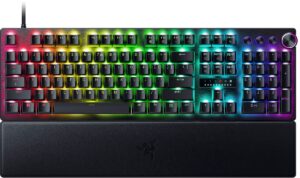
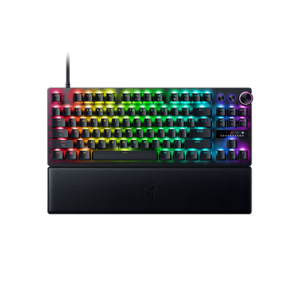
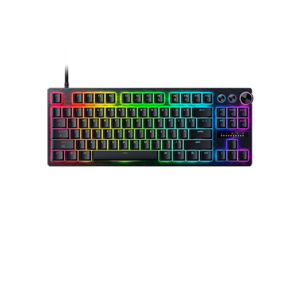
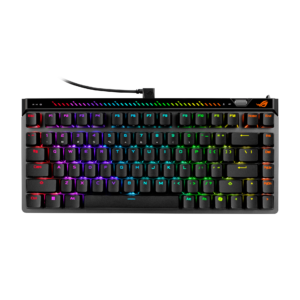
Keyboards with similar specs to the SteelSeries Apex Pro TKL Gen 3
Ratings & reviews
No reviews yet. Be the first to share your experience.
The bottom line
The SteelSeries Apex Pro TKL Gen 3 earns a VS Score of 53, above the median of the 101 keyboards it is measured against (a score of 50 is level with that median).
- Who it’s for
- A shooter player who wants rapid trigger and a tunable actuation point on a familiar tenkeyless layout, with a volume wheel within reach.
- Who should look elsewhere
- Look elsewhere for analog joystick axes in racing or flight games, for wireless, or for the option to change switches later.
- The trade-off that matters
- The switches are fixed. Magnetic boards are now often hot-swappable, and buying this one means the feel on day one is the feel for its whole life.
- The main alternative
- Wooting 80HE: a TKL-sized magnetic board that adds analog input and hot-swap sockets.
The VS Score is calculated from the weighted specifications above, each measured against the median of comparable keyboards — a shortlisting guide, not a substitute for your own priorities. See how we score.