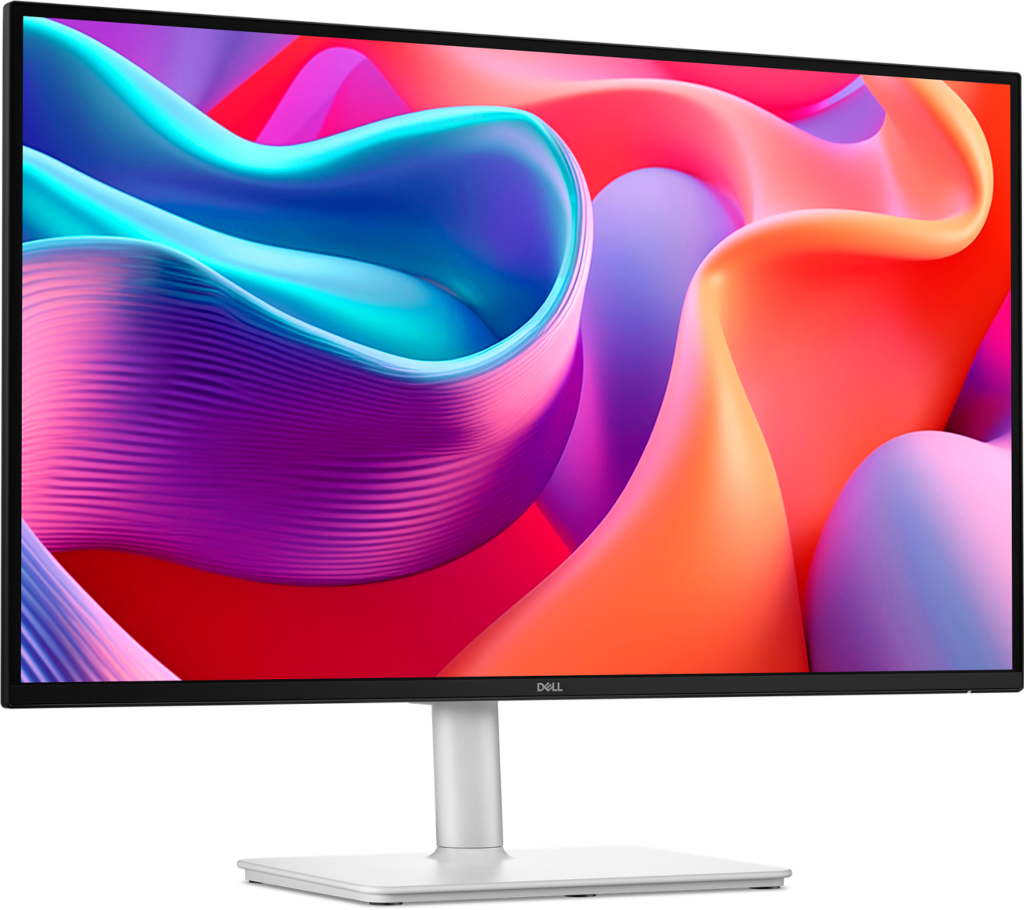
Dell S2725DC: Specs, Price, Pros & Cons
Dell makes its 27-inch S-series in a sharper 4K version and in this QHD one, and the lower resolution changes who the monitor is for. At 109 ppi the S2725DC is sharp enough for a normal desk distance, and a graphics card has far fewer pixels to fill at its full refresh rate than on the 4K sibling.
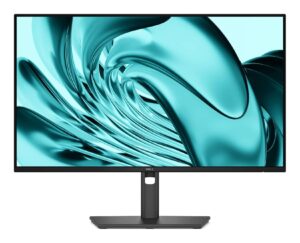
The defining part is the USB-C port. One cable carries picture, data and charging from a laptop, so a work machine plugs in once in the morning and the monitor takes care of the rest. A USB hub, built-in speakers and a stand with height adjustment sit around it, which makes the monitor a small dock for a laptop that already has everything else.
The panel is IPS, with the wide viewing angles that suit a screen shared between two people or seen from the side. Contrast is higher than on most IPS screens, though it still falls well short of an OLED in a dark room. Adaptive sync comes through FreeSync.
What it gives up is the top end of the picture. There is no HDR mode, peak brightness is modest, and Dell publishes no wide-gamut color figure, so color-critical print and video work belong elsewhere. The refresh rate trails the dedicated gaming monitors too, and there is a single HDMI port for a console.
The desk this suits holds a laptop during working hours and a game or two in the evening. A desk that reads and writes all day and rarely plays is the one the 4K sibling was built for, with sharper text in place of the extra frames.
Category strengths
Where the Dell S2725DC beats the median
- Has USB-C ?
- A much higher contrast ratio ?1500:1 vs 1000:1 (median)
- Has built-in speakers ?
- Has USB hub ?
Where the Dell S2725DC trails the median
- A lower refresh rate ?144 Hz vs 180 Hz (median)
- Fewer HDMI ports ?1 vs 2 (median)
- Lower peak brightness ?350 nits vs 400 nits (median)
- A lower color depth ?8 bit vs 10 bit (median)
How this VS Score was computed
Score 52: each known spec is measured against the median of IPS gaming monitors, 27 to 31 inches (29 products), then weighted; 50 means level with that median. In classes of six or more, a value beyond the class’s 10th–90th percentile range counts as that limit, so one extreme product cannot set the scale. 69% of the scoreable weight could be used; unknown values, features not applicable to this class and proxies (battery capacity where a rated life exists) add or remove nothing.
| Specification | This product | Cohort median | Score weight | Points moved |
|---|---|---|---|---|
| USB-C | Yes | 24% of the class have it | 0.5 | +25.0 |
| Height adjustment | Yes | 79% of the class have it | 0.4 | +20.0 |
| Contrast ratio | 1,500 | 1,000 | 0.6 | +15.0 |
| Adaptive sync | FreeSync | G-Sync Compatible | 0.6 | −15.0 |
| HDR | None | DisplayHDR 400 | 0.5 | −12.5 |
| Refresh rate | 144 | 180 | 1.2 | −12.0 |
| Swivel | Yes | 64% of the class have it | 0.2 | +10.0 |
| HDMI ports | 1 | 2 | 0.4 | −10.0 |
| Built-in speakers | Yes | 31% of the class have it | 0.2 | +10.0 |
| Peak brightness | 350 | 400 | 0.8 | −4.8 |
| Color depth | 8 | 10 | 0.3 | −3.0 |
| USB hub | Yes | 50% of the class have it | 0.05 | +2.3 |
| Pivot | Yes | 75% of the class have it | 0.02 | +1.0 |
| Screen size | 27 | 27 | 1.2 | +0.0 |
| Resolution | 1440p | 1440p | 1.2 | +0.0 |
| Panel type | IPS | IPS | 0.8 | +0.0 |
| Response time | 1 | 1 | 0.8 | +0.0 |
| Pixel density | 109 | 109 | 0.5 | +0.0 |
| DisplayPort inputs | 1 | 1 | 0.4 | +0.0 |
| USB-C power delivery | 65 | 65 | 0.05 | +0.0 |
Not scored: DCI-P3 coverage (unknown: not scored); Local dimming (not applicable: only 17% of this class have it); Local dimming zones (unknown: not scored); Variable refresh rate (standard for the class (100% have it)); Motion blur reduction (unknown: not scored); Input lag (unknown: not scored); Tilt (standard for the class (100% have it)); Headphone output (standard for the class (86% have it)); KVM switch (not applicable: only 0% of this class have it); Webcam (not applicable: only 0% of this class have it); Microphone (not applicable: only 0% of this class have it); Ethernet (not applicable: only 0% of this class have it); Picture-by-picture (not applicable: only 14% of this class have it).
Editor’s note
For most people choosing between Dell's two S-series models at this size, this QHD one is the smarter buy, and the reason is the graphics card they already own. It reaches its 144 Hz ceiling on a mid-range card, where the sharper sibling asks for a much faster one to do the same.
The USB-C port delivers 65 W. That keeps a thin-and-light laptop charged through a working day. A gaming laptop or a larger workstation under load draws more than that, so it will drain slowly while plugged in or still want its own charger on the desk. Check your laptop's charger rating before counting on the single cable.
The panel is 8-bit and bright enough for an office with the blinds open, at 350 nits. In a dark room its 1500:1 contrast holds up better than most IPS screens and still looks gray next to any OLED.
Consoles send 120 Hz at most, so the HDMI 2.1 input gives a PlayStation or an Xbox everything it can output at this resolution. The DisplayPort 1.4 input is there for a desktop tower, which leaves a laptop, a PC and a console connected at once without swapping cables. A headphone socket sits alongside the speakers, a small thing that saves reaching round to the laptop.
For me the case for it rests on that one USB-C cable. Without a laptop in the picture, a cheaper QHD panel without the port does the same job, and the extra money buys very little. With one, it turns a laptop into a desk setup with a single plug.
Specifications
Quality bars show where each figure sits between the lowest and highest of the 29 IPS gaming monitors, 27 to 31 inches this VS Score is measured against.
Picture
Gaming
Ergonomics & design
Connectivity
Features
Sources and verification
Where the specifications come from
- Datasheet or manualdell.com
- Independent testingrtings.com
Verification
- First published
- Specifications last checked
- Sheet completeness
- 36 of 42 specifications verified; the rest show as Unknown and are never estimated or scored
- Page type
- Product specification page — Compiled from the manufacturer’s published specifications and the cited sources; this is not a hands-on test.
- Basis
- Research-based: specifications and editorial text were compiled from the documents listed here and the manufacturer’s published data. We have not tested this unit ourselves; where independent measurements are mentioned they belong to the linked publication.
Where to buy
Prices and availability may change. Check the retailer before buying. We may earn a commission on purchases.
Price history
Monitors with similar specs to the Dell S2725DC
Ratings & reviews
No reviews yet. Be the first to share your experience.
The bottom line
The Dell S2725DC earns a VS Score of 52, above the median of the 29 IPS gaming monitors, 27 to 31 inches it is measured against (a score of 50 is level with that median).
- Who it’s for
- Someone who works from a laptop by day and games casually in the evening, wanting a single USB-C cable and a frame rate that a mid-range card can hold.
- Who should look elsewhere
- Color-critical creators and anyone chasing HDR or deep blacks. There is no wide-gamut figure and no HDR mode.
- The trade-off that matters
- The lower resolution makes games easy to run and costs some text sharpness next to Dell's sharper sibling.
- The main alternative
- Dell S2725QC: the sharper sibling with the same USB-C charging, for more reading than gaming at a lower refresh rate.
The VS Score is calculated from the weighted specifications above, each measured against the median of comparable IPS gaming monitors, 27 to 31 inches — a shortlisting guide, not a substitute for your own priorities. See how we score.