Ducky OK-M-75: Specs, Features, Pros & Cons
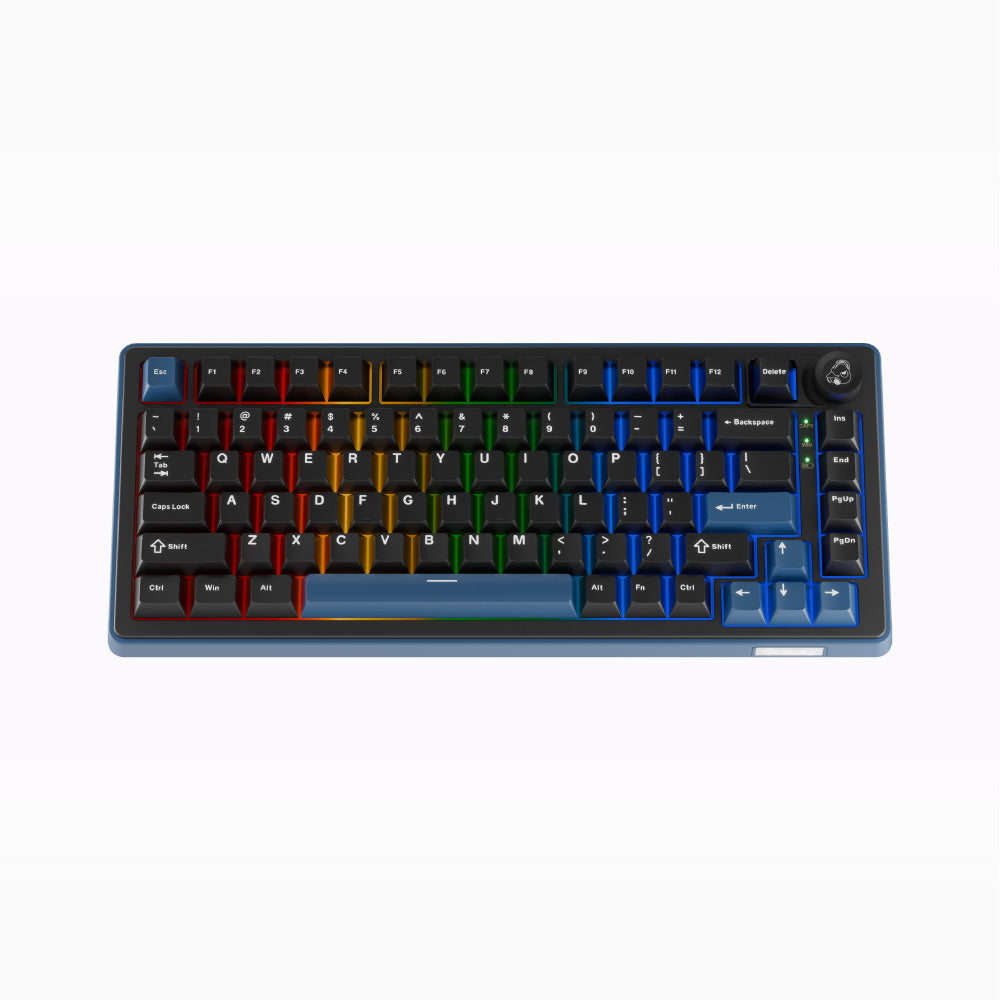
Ducky's attempt at an entry-level enthusiast board, and for once the phrase means something: it has the construction features people used to build custom keyboards for, at a price that does not require it.
Gasket mounting and five layers of internal dampening do the heavy lifting, killing the hollow ping and case echo that make cheap boards sound cheap. The keycaps are doubleshot PBT, so the legends will not wear and the texture will not go shiny — not a given at this money.
Category strengths
Where the Ducky OK-M-75 beats the average
- Has hot-swappable switches ?
- Has rotary knob ?
- Has n-key rollover ?
- Has sound dampening ?
- Has configuration software ?
- Has media controls ?
- Has programmable keys ?
Where the Ducky OK-M-75 trails the average
- Fewer connection options ?
- No analog input ?
Editor’s note
The OK-M-75 is Ducky's attempt at an entry-level enthusiast board, and for once the phrase means something: it has the construction features people used to build custom keyboards for, at a price that does not require it.
Gasket mounting and five layers of internal dampening do the heavy lifting. Together they kill the hollow ping and case echo that make cheap boards sound cheap, and the result is a muted, slightly thocky sound straight out of the box. The keycaps are PBT doubleshot in Cherry profile, so the legends will not wear off and the texture will not go shiny, which is not a given at this money. Switches are hot-swappable, so you can change the feel without soldering, and the plate is polycarbonate rather than steel, which adds a little flex.
The 75% layout keeps the function row and adds a right-hand column plus a volume knob, so you lose the numpad and almost nothing else. At 337 x 142 mm and just over a kilogram it is dense and stays put. Three typing angles are provided, and configuration is through VIA in a browser rather than a driver install.
Two cautions. Ducky's case is ABS rather than aluminium, so this is not a premium-feeling slab. More importantly, Ducky's own product page contradicts itself and its retailers on switches and connectivity — the page's spec line claims magnetic switches, wired-only, and an 8,000 Hz polling rate, while its prose, its firmware files and every retailer describe a mechanical, hot-swappable, tri-mode board at 1,000 Hz.
Buy it if you want gasket mounting, real PBT caps and a knob for under most enthusiast prices, and you are happy to swap switches yourself.
Check the exact listing before ordering. Ducky's own documentation is unreliable on this model, so confirm the switch type and wireless modes with the seller.
Specifications
Quality bars are generated automatically against 100 other keyboards.
Switches & typing
Performance
Layout & size
Connectivity
Build & sound
Features
Sources and verification
Where the specifications come from
- Independent testingrtings.com
Verification
- First published
- Specifications last checked
- Sheet completeness
- 21 of 34 specifications verified; the rest show as Unknown and are never estimated or scored
- Basis
- Research-based: specifications and editorial text were compiled from the documents listed here and the manufacturer’s published data. We have not tested this unit ourselves; where independent measurements are mentioned they belong to the linked publication.
Keyboards with similar specs to the Ducky OK-M-75
Ratings & reviews
No reviews yet. Be the first to share your experience.
The bottom line
The Ducky OK-M-75 earns a VS Score of 49, a solid mid-pack result among the 101 keyboards we compare here. It stands out for hot-swappable switches, rotary knob and n-key rollover. Just be aware of fewer connection options and the missing analog input before you buy. Weigh those trade-offs against what matters most to you.
The VS Score is calculated from the weighted specifications above, compared with every other keyboard we track — a shortlisting guide, not a substitute for your own priorities. See how we score.