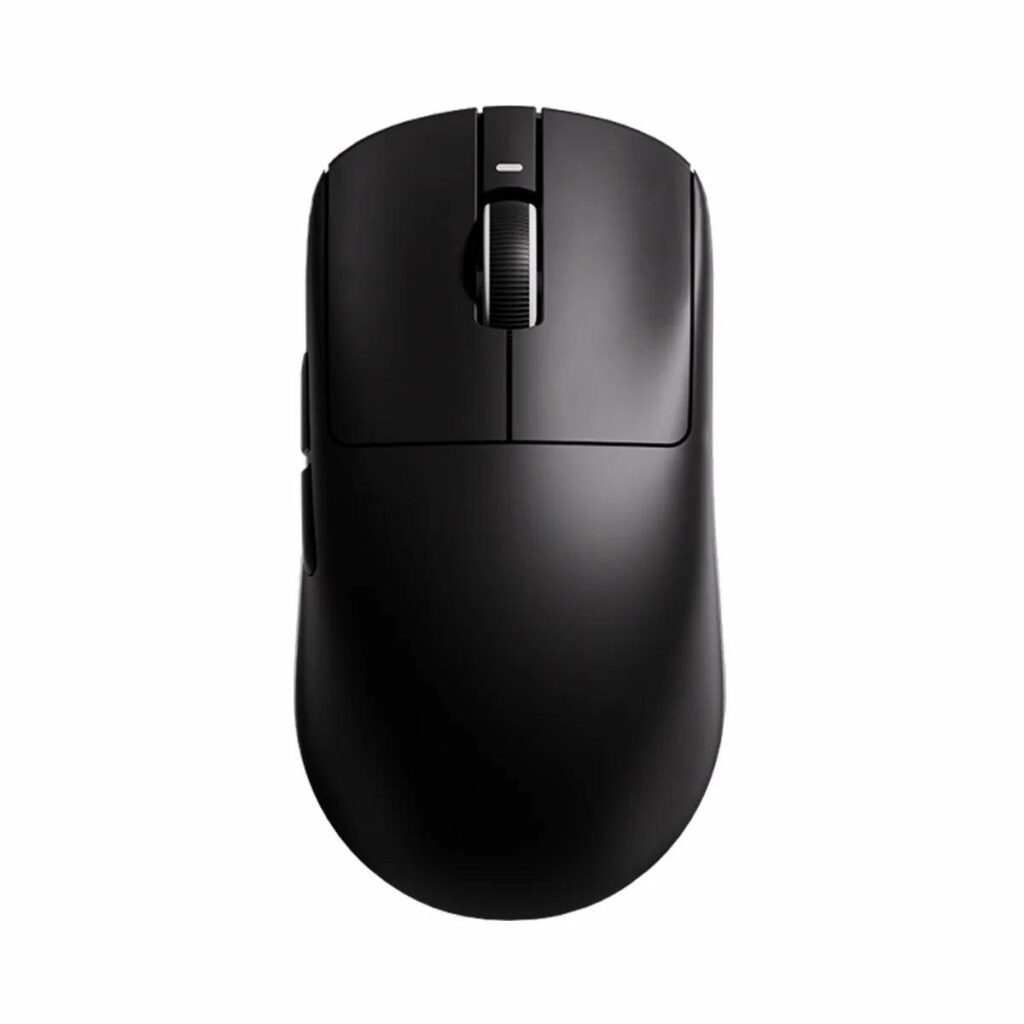
VXE R1 Pro: Specs, Features, Pros & Cons
A featherweight wireless mouse used to be an enthusiast object, sold in small runs at a price that assumed you had already decided it mattered. The R1 Pro is evidence of how completely that has changed: the same category, the same broad shape, at a price that no longer needs justifying.
VXE has built it around a well-regarded PixArt sensor and a low symmetrical shell that ATK's store lists for claw, palm and fingertip grips, with USB-C charging. The interesting decision is the polling rate, which sits between the two values almost everyone else offers. That middle setting needs ATK's 4K dongle, though, and the receiver ATK lists for the box is its standard 1K one.
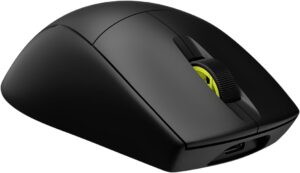
What defines the mouse day to day is less the components than the omissions. There is no lighting, no tilting wheel, no free-spinning scroll and no second thumb cluster. On a budget mouse that austerity is usually a cost decision rather than a design one, but the effect is the same: a light, plain object that does a single job without argument.
VXE's own page gives one set of figures for six R1 models, with weight as a range and polling as 125 to 4,000 Hz. The per-model detail sits in a comparison table on ATK's store, and that table gives this model a smaller battery than the R1 PRO MAX beside it, the sibling worth comparing before ordering.
Category strengths
Where the VXE R1 Pro beats the median
- A much higher polling rate ?4,000 Hz vs 1,000 Hz (median)
- A much higher wireless polling rate ?4,000 Hz vs 1,000 Hz (median)
- A much lighter build ?48 g vs 89 g (median)
- More supported grip styles ?
- A slightly higher max sensitivity ?26,000 DPI vs 25,600 DPI (median)
Where the VXE R1 Pro trails the median
- Shorter battery life ?75 h vs 130 h (median)
- Fewer buttons ?5 vs 6 (median)
How this VS Score was computed
Score 61: each known spec is measured against the median of all mice (83 products), then weighted; 50 means level with that median. In classes of six or more, a value beyond the class’s 10th–90th percentile range counts as that limit, so one extreme product cannot set the scale. 69% of the scoreable weight could be used; unknown values, features not applicable to this class and proxies (battery capacity where a rated life exists) add or remove nothing.
| Specification | This product | Cohort median | Score weight | Points moved |
|---|---|---|---|---|
| Polling rate | 4,000 | 1,000 | 0.8 | +40.0 |
| Weight | 48 — capped at the class’s lower range (49.5) | 89 | 1 | +40.0 |
| Wireless polling rate | 4,000 | 1,000 | 0.5 | +25.0 |
| Battery life | 75 | 130 | 0.8 | −16.8 |
| USB-C charging | Yes | 68% of the class have it | 0.3 | +15.0 |
| Grip styles | 3 | 2 | 0.4 | +10.0 |
| Horizontal scrolling | No | 46% of the class have it | 0.2 | −9.6 |
| Free-spin scroll wheel | No | 36% of the class have it | 0.2 | −9.6 |
| RGB lighting | No | 48% of the class have it | 0.2 | −9.6 |
| Buttons | 5 | 6 | 0.6 | −4.8 |
| Max sensitivity | 26,000 | 25,600 | 1 | +1.0 |
| Max tracking speed | 650 | 650 | 0.8 | +0.0 |
| Connection | 2 | 2 | 0.8 | +0.0 |
Not scored: Max acceleration (unknown: not scored); Adjustable lift-off distance (unknown: not scored); Click latency (unknown: not scored); Switch lifespan (unknown: not scored); Debounce adjustment (unknown: not scored); Battery capacity (capacity is a proxy; the rated battery life is scored instead); Quick charge (unknown: not scored); Wireless charging (unknown: not scored); Onboard memory (unknown: not scored); Software customization (standard for the class (98% have it)); Adjustable weights (not applicable: only 2% of this class have it).
Editor’s note
The R1 Pro is an inexpensive lightweight with an unusual polling rate: 4,000 Hz.
Almost every mouse sits at either 1,000 Hz or 8,000 Hz. The R1 Pro's rate is the sensible middle, and arguably the better engineering choice: it captures most of the smoothness benefit on a high-refresh monitor while drawing far less power than an 8 kHz radio, which is what wrecks battery life on competitive flagships. Few manufacturers offer it.
A PixArt PAW3395 sensor at 26,000 DPI with 650 IPS of tracking is the same part fitted to mice several times the price, and the shell weighs 48 g at 120.6 x 64 x 37.8 mm on PTFE feet. The switches are Huano Ice Berry Pink Dot.
The usual caution about a smaller brand applies to support and spares rather than to the hardware.
It is spare by design: five buttons, no RGB, no horizontal scrolling, no free-spinning wheel. The battery is small too. ATK lists 250 mAh and 75 hours at the standard rate, so a player who runs the 4K dongle every evening should expect to charge it sooner, while the R1 PRO MAX carries twice the cell for six grams more.
Specifications
Quality bars show where each figure sits between the lowest and highest of the 83 mice this VS Score is measured against.
Sensor & tracking
Design & handling
Switches & latency
Connectivity
Battery
Features
Sources and verification
Where the specifications come from
- Official product pagevxe.com
Verification
- First published
- Specifications last checked
- Sheet completeness
- 25 of 34 specifications verified; the rest show as Unknown and are never estimated or scored
- Page type
- Product specification page — Compiled from the manufacturer’s published specifications and the cited sources; this is not a hands-on test.
- Basis
- Research-based: specifications and editorial text were compiled from the documents listed here and the manufacturer’s published data. We have not tested this unit ourselves; where independent measurements are mentioned they belong to the linked publication.
Where to buy
Prices and availability may change. Check the retailer before buying. We may earn a commission on purchases.
Mice with similar specs to the VXE R1 Pro
Ratings & reviews
No reviews yet. Be the first to share your experience.
The bottom line
The VXE R1 Pro earns a VS Score of 61, above the median of the 83 mice it is measured against (a score of 50 is level with that median).
- Who it’s for
- A player on a budget who wants a light wireless mouse with a current sensor, and is fine with a smaller brand's support and documentation.
- Who should look elsewhere
- Look elsewhere if you need extra buttons for work, a large shell for a full palm grip, or a maker with a support line.
- The trade-off that matters
- Running at 4,000 Hz means buying ATK's 4K dongle and charging a small battery more often, so the feature that sets it apart costs extra on both counts.
- The main alternative
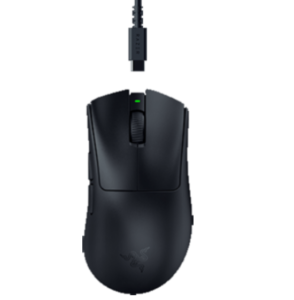
- Razer Viper V3 Pro: an established brand's light symmetrical mouse that ships with its 8K receiver in the box.
The VS Score is calculated from the weighted specifications above, each measured against the median of comparable mice — a shortlisting guide, not a substitute for your own priorities. See how we score.