MCHOSE L7 Pro: Specs, Price, Pros & Cons
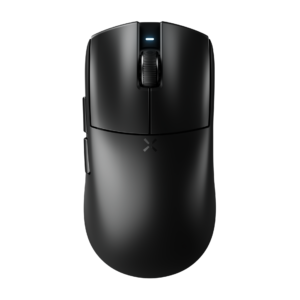
MCHOSE is a newer brand, and the L7 Pro is its bid to match flagship spec sheets in a small, very light shell. On paper it has no weak figure at all.
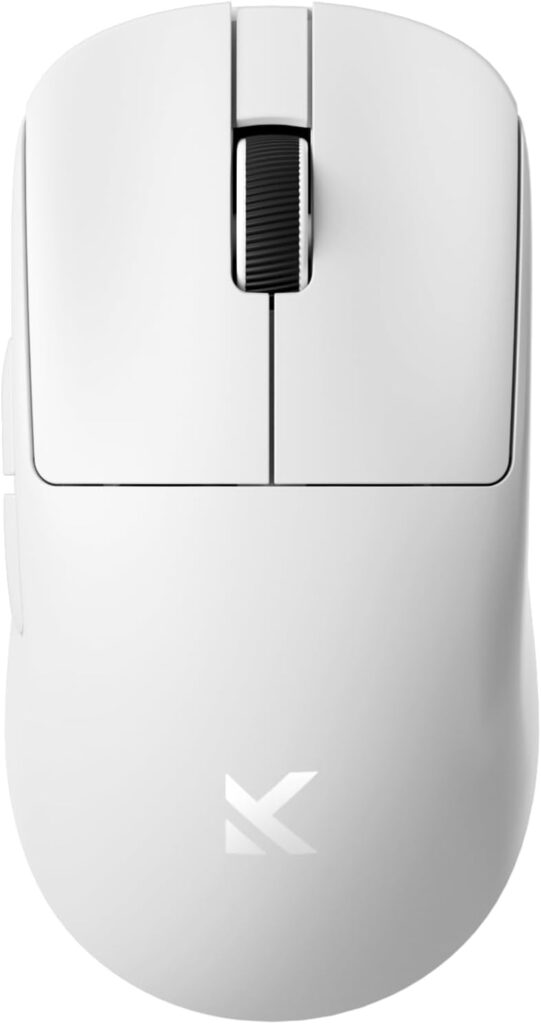
The body is ambidextrous and compact, shaped for a claw or fingertip grip, with six buttons and no lighting, and it is very light. It connects three ways, by cable, by a dongle or over Bluetooth, and charges over USB-C. The sensor is PixArt's PAW3395, rated for 50 G of acceleration. The fast report rate runs on the radio too, matching flagship mice over the cable and the dongle alike. MCHOSE's software handles the settings. A braided USB-C cable comes with it for wired play, and the switches are Omron parts, a known name even where the rating is missing.
MCHOSE has also left gaps. There is no rated battery life and no rated switch life for this model, so two figures buyers usually compare are missing. A small cell driven at speed will need the cable often, and owners will learn how often by using it. A newer brand also means less history to judge. The software, the firmware updates and the long-term support are less known than those of the older gaming brands, and a mouse bought to last years depends on them.
The L7 Pro suits a claw or fingertip player who wants the fastest wireless reporting and a Bluetooth option in one small shell at a lower price than the established names. Palm grippers with large hands will find it cramped, and buyers who want every figure on paper before paying will find two of them absent.
Category strengths
Where the MCHOSE L7 Pro beats the median
- A much higher polling rate ?8,000 Hz vs 1,000 Hz (median)
- A much higher wireless polling rate ?8,000 Hz vs 1,000 Hz (median)
- A much lighter build ?40.7 g vs 89 g (median)
- More connection options ?
- A slightly higher max sensitivity ?26,000 DPI vs 25,600 DPI (median)
How this VS Score was computed
Score 72: each known spec is measured against the median of all mice (81 products), then weighted; 50 means level with that median. In classes of six or more, a value beyond the class’s 10th–90th percentile range counts as that limit, so one extreme product cannot set the scale. 56% of the scoreable weight could be used; unknown values, features not applicable to this class and proxies (battery capacity where a rated life exists) add or remove nothing.
| Specification | This product | Cohort median | Score weight | Points moved |
|---|---|---|---|---|
| Polling rate | 8,000 | 1,000 | 0.8 | +40.0 |
| Weight | 40.7 — capped at the class’s lower range (52.5) | 89 | 1 | +35.0 |
| Wireless polling rate | 8,000 | 1,000 | 0.5 | +25.0 |
| Connection | 3 | 2 | 0.8 | +20.0 |
| USB-C charging | Yes | 67% of the class have it | 0.3 | +15.0 |
| Max sensitivity | 26,000 | 25,600 | 1 | +1.0 |
| Max tracking speed | 650 | 650 | 0.8 | +0.0 |
| Max acceleration | 50 | 50 | 0.4 | +0.0 |
| Buttons | 6 | 6 | 0.6 | +0.0 |
Not scored: Adjustable lift-off distance (unknown: not scored); Grip styles (unknown: not scored); Horizontal scrolling (unknown: not scored); Free-spin scroll wheel (unknown: not scored); Click latency (unknown: not scored); Switch lifespan (unknown: not scored); Debounce adjustment (unknown: not scored); Battery life (unknown: not scored); Battery capacity (unknown: not scored); Quick charge (unknown: not scored); Wireless charging (not applicable: only 14% of this class have it); Onboard memory (unknown: not scored); Software customization (standard for the class (97% have it)); Adjustable weights (not applicable: only 2% of this class have it); RGB lighting (unknown: not scored).
Editor’s note
The L7 Pro is a specification-per-dollar outlier, and the combination it manages is one that usually costs a great deal more.
It weighs 40.7 g, connects three ways (wired, 2.4 GHz and Bluetooth) and polls at 8,000 Hz over the wireless link as well as the cable. Each is common on its own, and all three together are rare. Very light wireless mice normally drop Bluetooth to save weight and power, and wireless polling that fast is typically reserved for flagship models, because sustaining that report rate over radio is considerably harder than over a wire.
The sensor is a PixArt PAW3395 at 26,000 DPI with 650 IPS of tracking (the same part used in mice at several times the price), with Omron D2FP-FN2 switches, a braided USB-C cable and USB-C charging. The shell is ambidextrous at 115.6 x 60.6 x 36 mm, which is small and suits a claw or fingertip grip.
Two things are not published for this model: battery life and switch rating. At 40 g the cell is necessarily small, and polling at that rate consumes power quickly, so expect to charge it often. That is physics rather than a criticism.
Buy it if you want flagship polling and a current sensor in a very light wireless mouse for less money, and you are comfortable with a newer brand. Buy an established name if long-term software support matters.
Specifications
Quality bars show where each figure sits between the lowest and highest of the 81 mice this VS Score is measured against.
Sensor & tracking
Design & handling
Switches & latency
Connectivity
Battery
Features
Sources and verification
Where the specifications come from
- Official product pagemchose.store
- Independent testingrtings.com
Verification
- First published
- Specifications last checked
- Sheet completeness
- 21 of 34 specifications verified; the rest show as Unknown and are never estimated or scored
- Page type
- Product specification page — Compiled from the manufacturer’s published specifications and the cited sources; this is not a hands-on test.
- Basis
- Research-based: specifications and editorial text were compiled from the documents listed here and the manufacturer’s published data. We have not tested this unit ourselves; where independent measurements are mentioned they belong to the linked publication.
Where to buy
Prices and availability may change. Check the retailer before buying. We may earn a commission on purchases.
Price history
Mice with similar specs to the MCHOSE L7 Pro
Ratings & reviews
No reviews yet. Be the first to share your experience.
The bottom line
The MCHOSE L7 Pro earns a VS Score of 72, above the median of the 81 mice it is measured against (a score of 50 is level with that median).
- Who it’s for
- Claw and fingertip players who want very fast wireless reporting and Bluetooth in one tiny shell without paying flagship money.
- Who should look elsewhere
- Buyers who want to know how long a charge lasts before they pay, since the maker does not say, and anyone who palms a mouse with a large hand.
- The trade-off that matters
- Unknown endurance. A small cell driven at a high report rate will need frequent charging, and without a published figure you learn how often only after buying.
- The main alternative
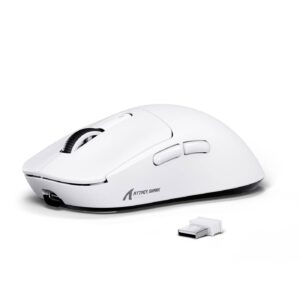
- ATTACK SHARK X3: a similar small tri-mode shell that swaps the fast polling for a long published battery figure
The VS Score is calculated from the weighted specifications above, each measured against the median of comparable mice — a shortlisting guide, not a substitute for your own priorities. See how we score.