42 facts in comparison
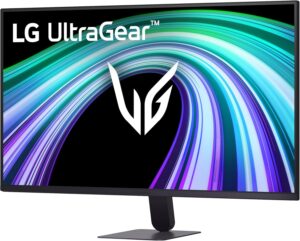
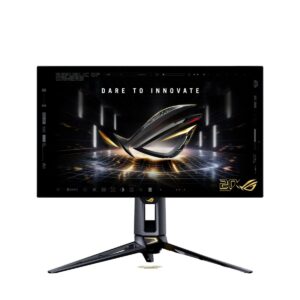
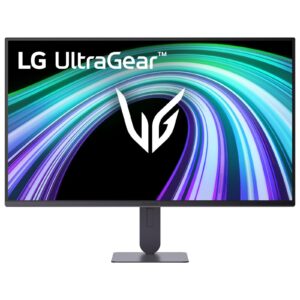
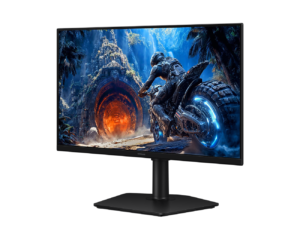
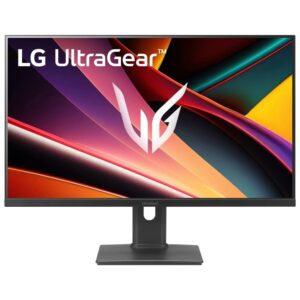
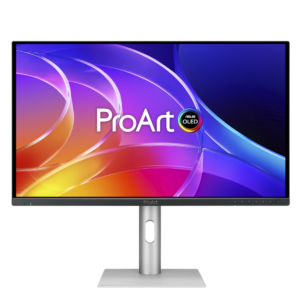
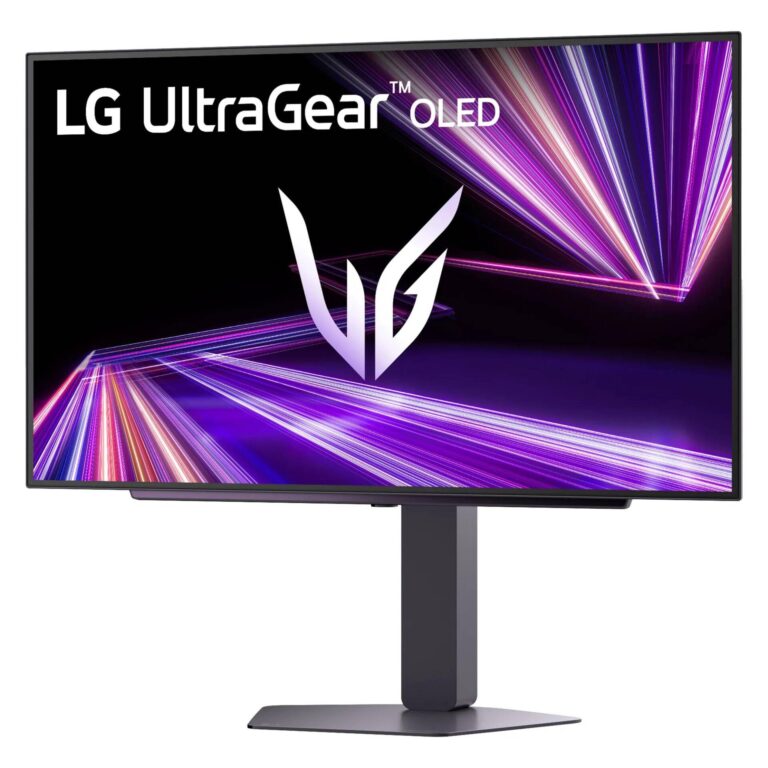
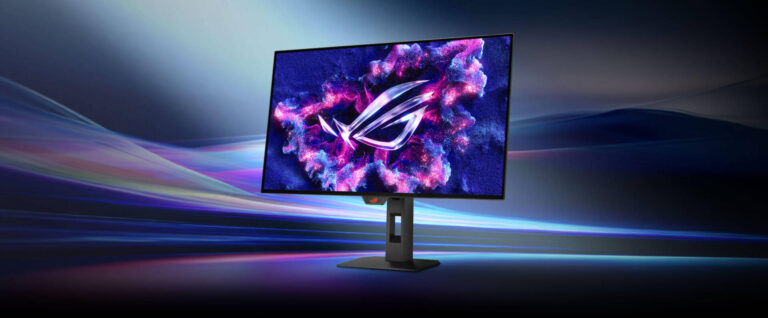
LG 27GX704A-B vs ASUS ROG Strix OLED XG27AQWMG
Two 27-inch 1440p WOLED monitors from the same generation, close enough on panel that the ports decide it.
The ASUS uses a Tandem WOLED, two emissive layers stacked, which is how it reaches 1,500 nits peak against the LG's 1,300. Both are large figures by OLED standards, where 1,000 nits was the ceiling until recently, and the gap matters less in practice than on paper: the ASUS is brighter in small highlights, and neither looks flat in HDR. ASUS also quotes marginally wider colour, 99.5 per cent DCI-P3 against 98.5, and a faster refresh, 280 Hz against 240.
The LG's case is the back panel. It has two HDMI 2.1 inputs to the ASUS's one, plus a USB hub the ASUS does not have. If a console and a PC both live on this monitor, that second input is the difference between swapping cables and not. Neither has USB-C and neither has a KVM, so a laptop still needs its own dock.
Everything else is shared: 110 pixels per inch, 0.03 ms response, a quoted 1,500,000:1 contrast, 10-bit colour, a glossy coating, and full height, tilt, swivel and pivot adjustment on a 100 mm VESA pattern.
Buy the ASUS if this is a PC-only desk and you want the brighter, faster panel. Buy the LG if a console shares the monitor, or if you want somewhere to plug a keyboard and a dongle. At 110 ppi neither is a text monitor first - these are gaming panels that happen to be very good at film, and both will show the same glossy reflection of a window behind you.
Where the LG 27GX704A-B beats the ASUS ROG Strix OLED XG27AQWMG
- More HDMI ports ?2 vs 1
Where the ASUS ROG Strix OLED XG27AQWMG beats the LG 27GX704A-B
- A higher refresh rate ?280 Hz vs 240 Hz
- Higher peak brightness ?1,500 nits vs 1,300 nits
- Slightly wider DCI-P3 colour coverage ?99.5 % vs 98.5 %
Key real-world differences
The spec sheet pulls in both directions. These are the gaps big enough to shape the decision — with the actual figures, and what each one means in real-world use.
- HDMI portsConnectivity2 vs 1 — 2× more for the LG 27GX704A-B
More HDMI inputs connect more devices.
- Refresh ratePicture240 Hz vs 280 Hz — 14% more for the ASUS ROG Strix OLED XG27AQWMG
Higher refresh rates are smoother for gaming and scrolling.
The step from 60 to 120 Hz is obvious; differences above 120 Hz are far subtler in everyday use.
- Peak brightnessPicture1,300 nits vs 1,500 nits — 13% more for the ASUS ROG Strix OLED XG27AQWMG
Higher brightness makes HDR highlights pop.
Which one should you buy?
There is no single answer — it depends on what you will actually use it for. Match your priority to the pick below.
- Best for picture ASUS ROG Strix OLED XG27AQWMG takes the category 100 to 71 — driven by refresh rate (240 Hz vs 280 Hz).
- Best for connectivity LG 27GX704A-B takes the category 100 to 67 — driven by HDMI ports (2 vs 1).
- The safe all-rounder ASUS ROG Strix OLED XG27AQWMG wins more of the categories that carry real weight, topping the overall VS Score at 97.
Where each one falls short
LG 27GX704A-B
- Refresh rate: 240 Hz vs 280 Hz
- Peak brightness: 1,300 nits vs 1,500 nits
- 10 specs are unreported (shown as Unknown) and excluded from its scores.
ASUS ROG Strix OLED XG27AQWMG
- HDMI ports: 2 vs 1
- 13 specs are unreported (shown as Unknown) and excluded from its scores.
What matters to you?
Drag the sliders to weight each category and re-rank the products to suit your priorities.
Score breakdown
Picture
Gaming
Ergonomics & design
Connectivity
Features
Specs last verified July 25, 2026LG 27GX704A-B: 32 of 42 specs verified (76%)ASUS ROG Strix OLED XG27AQWMG: 29 of 42 specs verified (69%)Unverified specs show as Unknown — never estimated, never scored
What reviewers say
The bottom line
The ASUS ROG Strix OLED XG27AQWMG is the clear winner, scoring 97 to 80 on our VS Score. It leads on Picture. The LG 27GX704A-B answers back with stronger Connectivity. Pick the ASUS ROG Strix OLED XG27AQWMG unless Connectivity matters most to you — then the LG 27GX704A-B is the smarter buy.

Latest comparisons
 vs
vs
 vs
vs vsvsvs
 vs
vs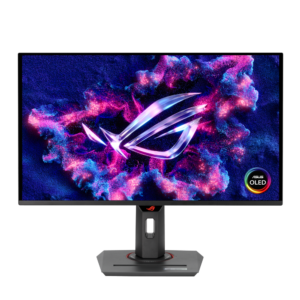 vs
vs vs
vs vs
vs
 vs
vs
 vs
vs vs
vsLatest Monitors