Logitech Alto Keys K98M: Specs, Features, Pros & Cons
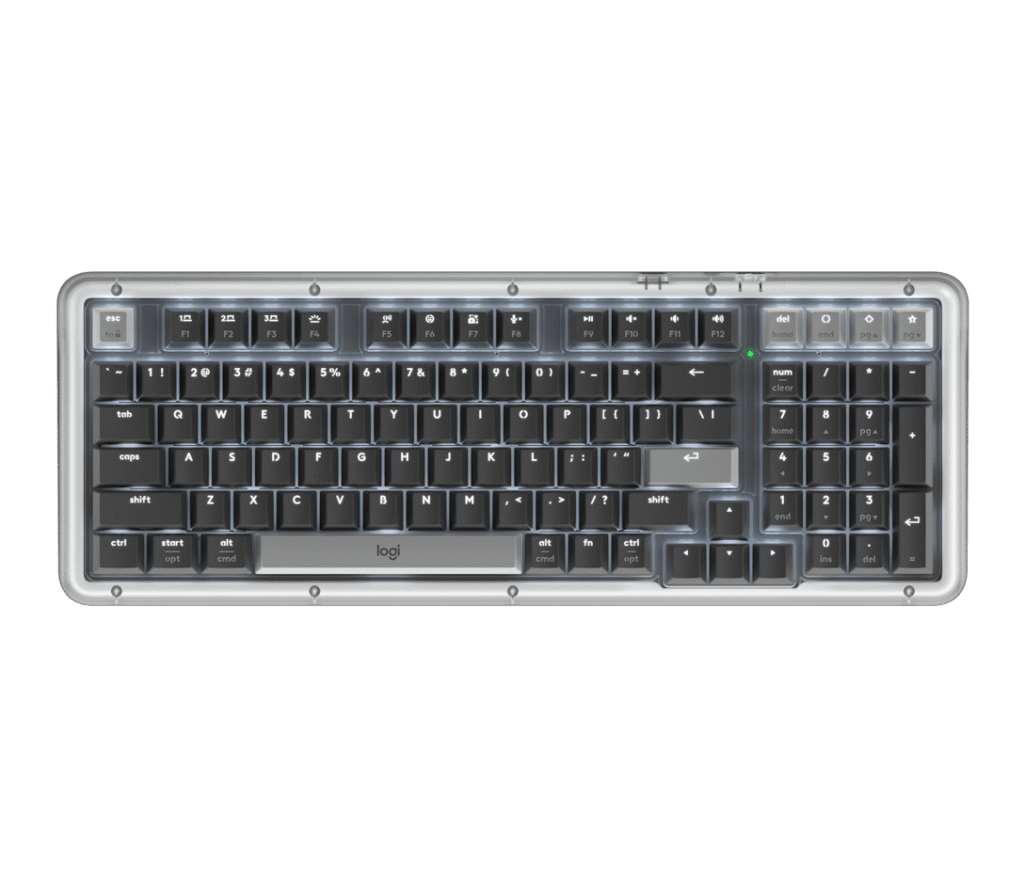
Logitech has sold mechanical keyboards before, but the Alto Keys K98M is the first to borrow the construction ideas enthusiast board builders have spent a decade arguing about. It is gasket mounted, with layers of damping material inside, aimed at the softer and quieter sound that separates a modern custom keyboard from the loud office mechanicals of ten years ago.
The layout is the defining compromise. It keeps a number pad but compresses the space around it, so the navigation cluster and several editing keys sit in tighter or different positions than they would on a conventional full-size board. If you work in spreadsheets by touch, that is a real adjustment period, and it is worth mapping against your own habits before buying.
Connectivity is aimed squarely at a desk with more than one machine on it. The keyboard pairs over Bluetooth or Logitech's own wireless receiver and moves between devices without re-pairing, which is the feature that tends to justify keyboards in this class more than any typing characteristic.
There are two caveats. This is not an enthusiast keyboard in the firmware sense: customization happens through Logitech's desktop application rather than on the board, so the remapping does not travel with the keyboard to another computer. And a quiet mechanical keyboard is still mechanical, taller and more audible than the flat scissor-switch boards Logitech is better known for in offices. Anyone sharing a room should listen to the specific switch before trusting the category. Layouts and bundled receivers also vary by region, and siblings carry similar names, so confirm a listing matches this model exactly.
Category strengths
Where the Logitech Alto Keys K98M trails the median
- Fewer connection options ?
How this VS Score was computed
Score 53: each known spec is measured against the median of all keyboards (101 products), then weighted; 50 means level with that median. In classes of six or more, a value beyond the class’s 10th–90th percentile range counts as that limit, so one extreme product cannot set the scale. 32% of the scoreable weight could be used; unknown values, features not applicable to this class and proxies (battery capacity where a rated life exists) add or remove nothing.
| Specification | This product | Cohort median | Score weight | Points moved |
|---|---|---|---|---|
| Hot-swappable | Yes | 61% of the class have it | 0.6 | +30.0 |
| Connection | 2 | 3 | 0.8 | −13.6 |
| Backlight | White | RGB | 0.3 | −7.5 |
| Switch technology | Mechanical | Mechanical | 1 | +0.0 |
| Bluetooth devices | 3 | 3 | 0.3 | +0.0 |
| Keycap material | PBT | PBT | 0.4 | +0.0 |
Not scored: Actuation force (unknown: not scored); N-key rollover (unknown: not scored); Adjustable actuation (unknown: not scored); Analog input (not applicable: only 14% of this class have it); Polling rate (unknown: not scored); Wired latency (unknown: not scored); Wireless latency (unknown: not scored); Rapid trigger (unknown: not scored); Front height (unknown: not scored); Battery life (unknown: not scored); Battery capacity (unknown: not scored); USB passthrough (unknown: not scored); Sound dampening (unknown: not scored); Programmable keys (standard for the class (99% have it)); Media controls (unknown: not scored); Rotary knob (unknown: not scored); Onboard profiles (unknown: not scored); Configuration software (standard for the class (95% have it)).
Editor’s note
Alto Keys K98M is a compact full-size mechanical keyboard designed for workspaces that want a number pad without the width of a traditional 104-key board. The gasket-mounted construction and multi-layer damping target a softer, quieter sound than older office mechanical keyboards, while Bluetooth, Logi Bolt, and USB-C connectivity make it practical across a desktop, laptop, and tablet.
The condensed layout moves several navigation functions and may take adjustment for anyone doing spreadsheet or editing work by touch. Mechanical switches also remain taller and noisier than Logitech's scissor-switch office boards, even with damping. Buyers in shared rooms should listen to the chosen switch rather than assume every K98M is quiet. Key layout and included receiver can vary by region.
Logitech's product page should be the reference for dimensions, weight, device switching, battery rating, switch choices, and Easy-Switch behavior. The keyboard works with Logi Options+ for customization but is not a QMK/VIA enthusiast board, and switch hot-swap support must be confirmed for the exact SKU before being claimed. Rechargeable battery life depends heavily on backlight use.
It suits office workers, writers, and mixed-device desks that need a number pad and prefer a cushioned mechanical feel. It is less appropriate for competitive gaming where latency tuning matters, or for anyone who wants complete firmware-level remapping. Match any price to Alto Keys K98M exactly. MX Mechanical, Signature Slim, and regional K98 variants should not be treated as the same product.
The keyboard makes most sense for a shared home-office desk where several devices and a number pad are useful. Check the regional key layout and OS legends because retailer photographs may not match delivered stock. Gamers needing high polling, rapid-trigger behavior, or extensive remapping should choose a purpose-built gaming board.
Specifications
Quality bars show where each figure sits between the lowest and highest of the 101 keyboards this VS Score is measured against.
Switches & typing
Performance
Layout & size
Connectivity
Build & sound
Features
Sources and verification
Where the specifications come from
- Official product pagelogitech.com
- Independent testingrtings.com
Verification
- First published
- Specifications last checked
- Sheet completeness
- 16 of 34 specifications verified; the rest show as Unknown and are never estimated or scored
- Page type
- Product specification page — Compiled from the manufacturer’s published specifications and the cited sources; this is not a hands-on test.
- Basis
- Research-based: specifications and editorial text were compiled from the documents listed here and the manufacturer’s published data. We have not tested this unit ourselves; where independent measurements are mentioned they belong to the linked publication.
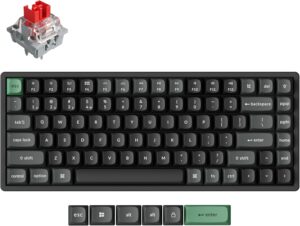
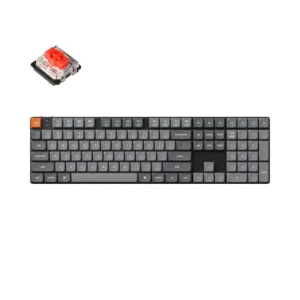
Keyboards with similar specs to the Logitech Alto Keys K98M
Ratings & reviews
No reviews yet. Be the first to share your experience.
The bottom line
The Logitech Alto Keys K98M earns a VS Score of 53 on the 32% of specifications we could compare like for like — an indication, not a ranking.
- Who it’s for
- A home-office worker with a laptop, desktop and tablet on one desk who wants a numpad and a cushioned mechanical feel.
- Who should look elsewhere
- Competitive gamers, and anyone who wants remaps stored in the board itself, should look elsewhere. In a shared room, listen to the chosen switch first.
- The trade-off that matters
- It sits high and still makes noise. Damping softens the sound, but next to a flat scissor board it is louder and a wrist rest helps.
- The main alternative
- Logitech MX Keys S: a flat, near-silent scissor board with the same multi-device switching, for a shared room.
The VS Score is calculated from the weighted specifications above, each measured against the median of comparable keyboards — a shortlisting guide, not a substitute for your own priorities. See how we score.