Keychron B36: Specs, Features, Pros & Cons
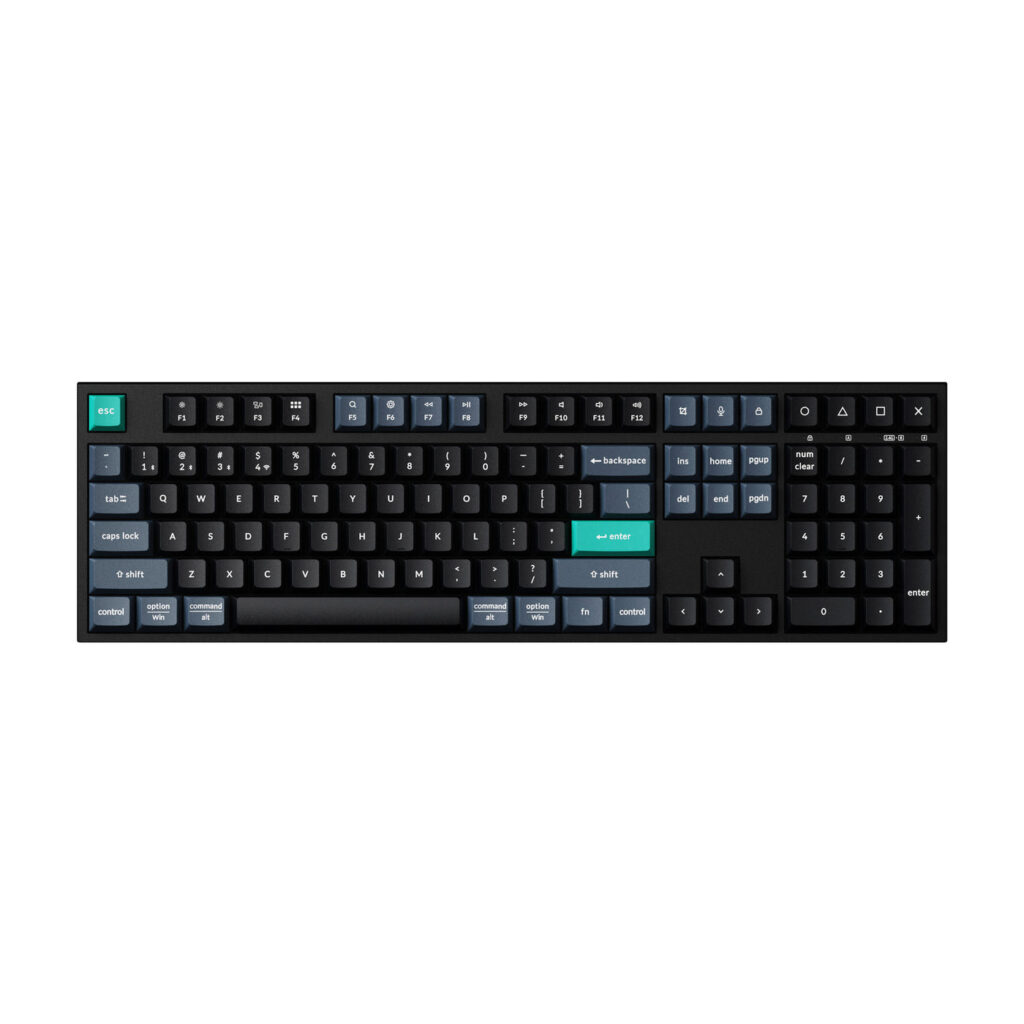
Keychron's quiet scissor-key range gets its full-size member in the B36, a board that adds a number pad to the tenkeyless B33 and keeps everything else the same.
That keypad decides who should buy it. Invoices, spreadsheets, stock counts and any work where figures go in by touch run faster on a keypad than on the top row. Anyone who rarely enters numbers carries the extra width for nothing, because a keypad moves the mouse further out on every working day.
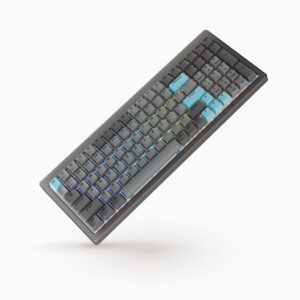
The keys use a scissor mechanism, the short and quiet stroke of a laptop, and the board stays low at the front, close to laptop height. It connects over a cable, a receiver or Bluetooth with three saved pairings, so a work laptop, a desktop and a tablet can share it. Remapping runs in Keychron's Launcher in a browser, which suits a work computer where installing drivers is blocked. Three shortfalls follow from the design. The switches are soldered, which is standard for scissor keys. There is no N-key rollover, so several keys held at once in a game can drop a press. There is no sound dampening, though a stroke this short makes little noise in the first place. The case and keycaps are ABS and will pick up a shine.
It is wider than the B33 by the span of the keypad and belongs on a desk, not in a bag. There is no backlight either, so it is a keyboard for a lit office or a bright home desk. The buyer it suits works on figures all day, often next to other people or on calls, and moves between machines without wanting to pair anything again.
Category strengths
Where the Keychron B36 beats the median
- A lower front height ?17.94 mm vs 20.2 mm (median)
Where the Keychron B36 trails the median
- No hot-swappable switches ?
- No n-key rollover ?
- No sound dampening ?
- No onboard profiles ?
- No rotary knob ?
- Slightly shorter battery life ?320 h vs 325 h (median)
How this VS Score was computed
Score 25: each known spec is measured against the median of all keyboards (101 products), then weighted; 50 means level with that median. In classes of six or more, a value beyond the class’s 10th–90th percentile range counts as that limit, so one extreme product cannot set the scale. 67% of the scoreable weight could be used; unknown values, features not applicable to this class and proxies (battery capacity where a rated life exists) add or remove nothing.
| Specification | This product | Cohort median | Score weight | Points moved |
|---|---|---|---|---|
| Hot-swappable | No | 61% of the class have it | 0.6 | −28.8 |
| N-key rollover | No | 85% of the class have it | 0.5 | −24.0 |
| Rapid trigger | No | 25% of the class have it | 0.5 | −24.0 |
| Adjustable actuation | No | 24% of the class have it | 0.4 | −19.2 |
| Switch technology | Membrane | Mechanical | 1 | −17.0 |
| Sound dampening | No | 76% of the class have it | 0.3 | −14.4 |
| Backlight | None | RGB | 0.3 | −14.4 |
| Onboard profiles | No | 89% of the class have it | 0.3 | −14.4 |
| Keycap material | ABS | PBT | 0.4 | −10.0 |
| Rotary knob | No | 53% of the class have it | 0.2 | −9.6 |
| Front height | 17.94 | 20.2 | 0.2 | +1.2 |
| Battery life | 320 | 325 | 0.6 | −0.6 |
| Polling rate | 1,000 | 1,000 | 0.7 | +0.0 |
| Connection | 3 | 3 | 0.8 | +0.0 |
| Bluetooth devices | 3 | 3 | 0.3 | +0.0 |
Not scored: Actuation force (unknown: not scored); Analog input (not applicable: only 14% of this class have it); Wired latency (unknown: not scored); Wireless latency (unknown: not scored); Battery capacity (capacity is a proxy; the rated battery life is scored instead); USB passthrough (not applicable: only 4% of this class have it); Programmable keys (standard for the class (99% have it)); Media controls (standard for the class (97% have it)); Configuration software (standard for the class (95% have it)).
Editor’s note
The B36 is the B33 with a number pad bolted on, and if you do data entry that single difference decides it.
Everything that makes the B33 good carries over. The scissor mechanism keeps typing quiet enough for a shared office or a call, the 800 mAh battery is rated for up to 320 hours, and you get 2.4 GHz, Bluetooth 5.2 across three devices and USB-C wired. Keychron's Launcher remaps keys in a browser with nothing to install. It is 650 grams and 108 keys in a 437 mm full-size footprint.
That footprint is the trade. A full-size board pushes your mouse hand further right, which over a working day is the single most common cause of shoulder strain at a desk. If you do not use a number pad, the B33 is the better ergonomic choice for the same money.
The limitations are identical to its sibling and worth repeating. There is no backlight of any kind. Keychron states that N-key rollover is not supported, so simultaneous key presses can drop in games. Both the case and the keycaps are ABS, which will shine over time. Bluetooth polling is 125 Hz against 1000 Hz on the receiver and wired, so use the receiver if latency matters. Nothing here is hot-swappable.
Buy it if you work with spreadsheets, invoices or anything numeric, want it quiet, and want to switch between a few machines without fuss.
Skip it if you do not use the number pad, in which case take the B33 and keep your mouse closer, or if you want backlighting and a mechanical feel, in which case look at Keychron's C-series instead.
Specifications
Quality bars show where each figure sits between the lowest and highest of the 101 keyboards this VS Score is measured against.
Switches & typing
Performance
Layout & size
Connectivity
Build & sound
Features
Sources and verification
Where the specifications come from
- Official product pagekeychron.com
Verification
- First published
- Specifications last checked
- Sheet completeness
- 28 of 34 specifications verified; the rest show as Unknown and are never estimated or scored
- Page type
- Product specification page — Compiled from the manufacturer’s published specifications and the cited sources; this is not a hands-on test.
- Basis
- Research-based: specifications and editorial text were compiled from the documents listed here and the manufacturer’s published data. We have not tested this unit ourselves; where independent measurements are mentioned they belong to the linked publication.
Keyboards with similar specs to the Keychron B36
Ratings & reviews
No reviews yet. Be the first to share your experience.
The bottom line
The Keychron B36 earns a VS Score of 25, below the median of the 101 keyboards it is measured against (a score of 50 is level with that median).
- Who it’s for
- A person doing invoices, spreadsheets or data entry who wants the keypad, near-silent keys and easy switching between machines.
- Who should look elsewhere
- If you never touch the number pad, this is the wrong board. The same goes for anyone who needs a backlight or a mechanical feel.
- The trade-off that matters
- The keypad pushes the mouse further out all day, a real cost for anyone who does not use it constantly.
- The main alternative
- Keychron B33: the same keyboard without the keypad, for a closer mouse and a smaller footprint.
The VS Score is calculated from the weighted specifications above, each measured against the median of comparable keyboards — a shortlisting guide, not a substitute for your own priorities. See how we score.