Logitech Pebble Keys 2 K380s: Specs, Price, Pros & Cons
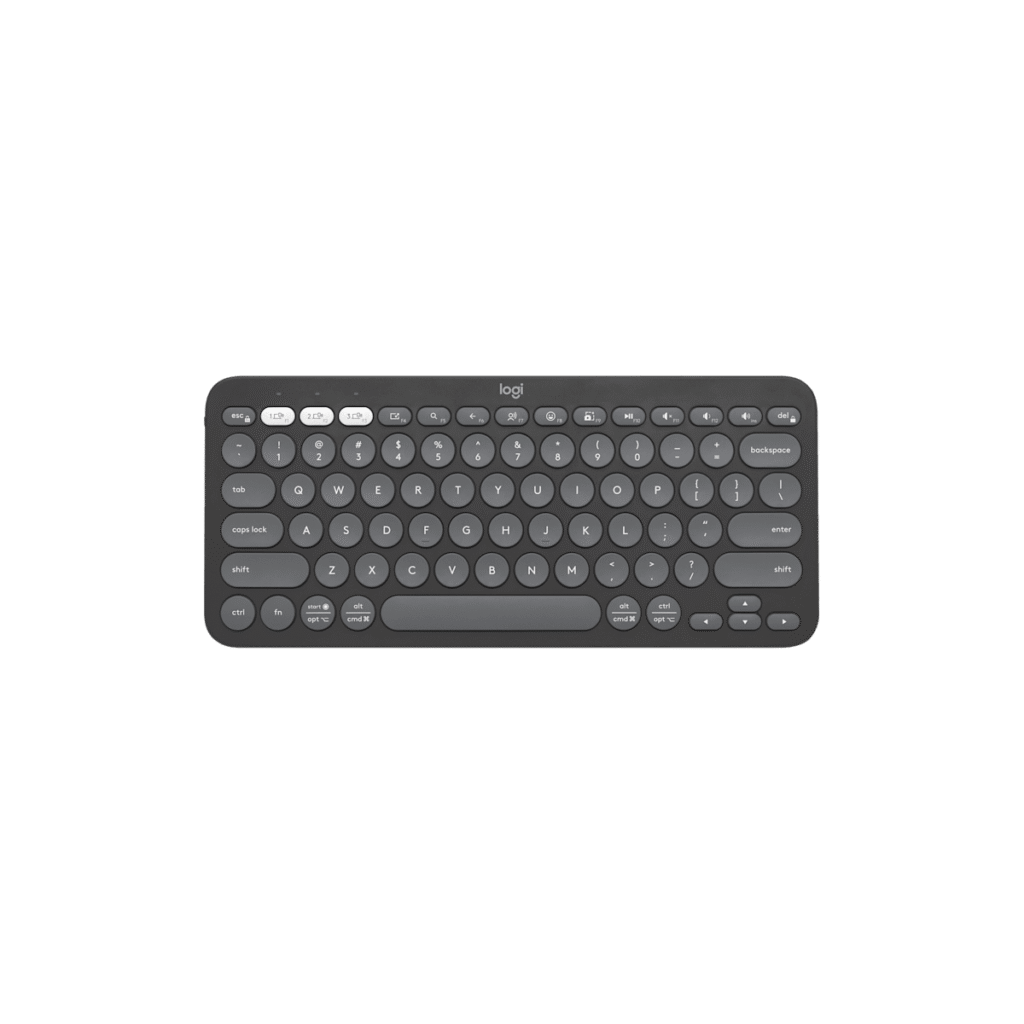
Round keycaps give the K380s its look, and they also shape how it types. A circle leaves more empty space between neighboring keys than a square of the same spacing, so the fingers have smaller targets until they learn the grid.
The rest of the design follows from where Logitech expects it to live, next to whatever phone, tablet or laptop is in use that day. At 279.5 mm wide and 124.2 mm deep it fits beside a tablet on a small cafe table, and its front edge is lower than most keyboards'. Three hosts can be paired together, each with its own key, over Bluetooth or a receiver.
Windows, macOS, iPadOS, iOS, Android and ChromeOS are all supported, and the key legends carry the alternate symbols for the different systems, so switching from an iPad to a Windows laptop does not mean guessing where a character went. Logitech's configuration software can remap keys on the computers that run it. Power comes from replaceable AAA batteries, so a dead keyboard is fixed with a spare pair from a drawer.
Its scissor switches have a short, quiet stroke, and they take more force to press than most keyboards, which asks a little more of the fingers over a long session.
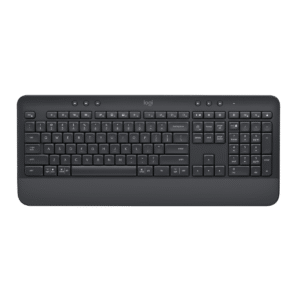
The compact layout also doubles up the function row, and there is no number pad or backlight. On a desk where one keyboard gets a whole working day, a full-size board such as the Signature K650 fits better. The K380s belongs in a bag, a lecture hall or a shared office, beside a screen that changes from one hour to the next.
Category strengths
Where the Logitech Pebble Keys 2 K380s beats the median
- A lower front height ?16.4 mm vs 20.2 mm (median)
Where the Logitech Pebble Keys 2 K380s trails the median
- No hot-swappable switches ?
- Fewer connection options ?
- A heavier actuation force ?60 g vs 45 g (median)
How this VS Score was computed
Score 29: each known spec is measured against the median of all keyboards (101 products), then weighted; 50 means level with that median. In classes of six or more, a value beyond the class’s 10th–90th percentile range counts as that limit, so one extreme product cannot set the scale. 28% of the scoreable weight could be used; unknown values, features not applicable to this class and proxies (battery capacity where a rated life exists) add or remove nothing.
| Specification | This product | Cohort median | Score weight | Points moved |
|---|---|---|---|---|
| Hot-swappable | No | 61% of the class have it | 0.6 | −28.8 |
| Switch technology | Membrane | Mechanical | 1 | −17.0 |
| Connection | 2 | 3 | 0.8 | −13.6 |
| Actuation force | 60 | 45 | 0.4 | −4.8 |
| Front height | 16.4 | 20.2 | 0.2 | +2.4 |
Not scored: N-key rollover (unknown: not scored); Adjustable actuation (unknown: not scored); Analog input (not applicable: only 14% of this class have it); Polling rate (unknown: not scored); Wired latency (unknown: not scored); Wireless latency (unknown: not scored); Rapid trigger (unknown: not scored); Bluetooth devices (unknown: not scored); Battery life (unknown: not scored); Battery capacity (unknown: not scored); USB passthrough (unknown: not scored); Keycap material (unknown: not scored); Sound dampening (unknown: not scored); Backlight (unknown: not scored); Programmable keys (unknown: not scored); Media controls (unknown: not scored); Rotary knob (unknown: not scored); Onboard profiles (unknown: not scored); Configuration software (standard for the class (95% have it)).
Editor’s note
The Pebble Keys 2 K380s is a small wireless keyboard built for moving between devices, and it does that better than almost anything at the price.
It pairs with three devices at once and switches between them with a dedicated key, so a tablet, a phone and a laptop can share one keyboard without re-pairing. It connects over Bluetooth Low Energy or a 2.4 GHz receiver, and it works across Windows, macOS, iPadOS, iOS, Android and Chrome OS, with the alternate symbols printed on the key legends so you are not left guessing.
The typing action is scissor-switch with 1.5 mm of travel and a 60 g actuation force, which is laptop-like: shallow, quiet and quick. Two AAA batteries last around 50 months, so charging never enters the picture. At 415 g with batteries and 16.4 mm thick it travels well.
Be realistic about what a keyboard this size gives up. There is no number pad, no backlight, and the compact layout means the function row and navigation keys share duties. Typing on it for a full working day is fine but not as comfortable as a full-size board with deeper travel, and scissor switches will not satisfy anyone who has used a mechanical keyboard.
Buy it if you type across several devices, work in cafes or shared spaces where noise matters, or want a keyboard for a tablet that is genuinely usable.
Choose a full-size keyboard such as the Signature K650 if this is your only one and it lives on a desk, and a mechanical board if typing feel is what you care about most.
Specifications
Quality bars show where each figure sits between the lowest and highest of the 101 keyboards this VS Score is measured against.
Switches & typing
Performance
Layout & size
Connectivity
Build & sound
Features
Sources and verification
Where the specifications come from
- Official product pagelogitech.com
- Independent testingrtings.com
Verification
- First published
- Specifications last checked
- Sheet completeness
- 12 of 34 specifications verified; the rest show as Unknown and are never estimated or scored
- Page type
- Product specification page — Compiled from the manufacturer’s published specifications and the cited sources; this is not a hands-on test.
- Basis
- Research-based: specifications and editorial text were compiled from the documents listed here and the manufacturer’s published data. We have not tested this unit ourselves; where independent measurements are mentioned they belong to the linked publication.
Where to buy
Prices and availability may change. Check the retailer before buying. We may earn a commission on purchases.
Price history
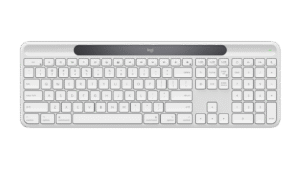
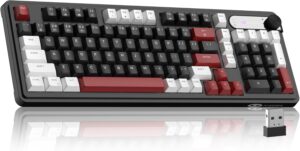
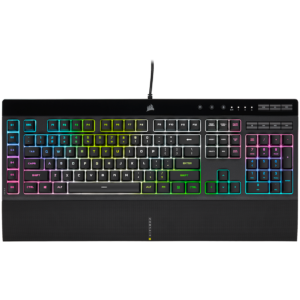
Keyboards with similar specs to the Logitech Pebble Keys 2 K380s
Ratings & reviews
No reviews yet. Be the first to share your experience.
The bottom line
The Logitech Pebble Keys 2 K380s earns a VS Score of 29 on the 28% of specifications we could compare like for like — an indication, not a ranking.
- Who it’s for
- A student or cafe worker who flips between a tablet, a phone and a laptop and wants one quiet keyboard that runs on ordinary batteries.
- Who should look elsewhere
- As the only keyboard on a desk you sit at all day, it falls short. Buy a full-size board for that, or a mechanical one if feel matters.
- The trade-off that matters
- Round, shallow keys keep it small and quiet, but the smaller key tops and short travel cost some accuracy and comfort over a long session.
- The main alternative
- Logitech Signature K650: full-size with a numpad and a palm rest, for a desk where the keyboard stays put.
The VS Score is calculated from the weighted specifications above, each measured against the median of comparable keyboards — a shortlisting guide, not a substitute for your own priorities. See how we score.